

In partnership with Greenworks Commercial
For years, Greenworks Commercial has been a dominant force in the evolution of professional landscaping, helping commercial turf crews transition smoothly from traditional gas-powered mowers and handheld equipment to high-performance battery systems. The company’s flagship Optimus line has proven that going green does not mean compromising on productivity, runtime, or sheer torque.
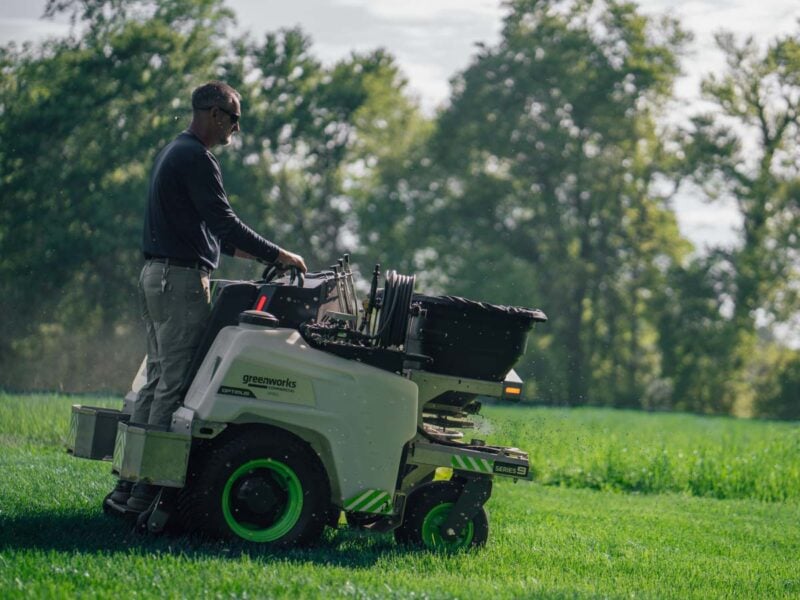
Now, Greenworks Commercial is expanding its footprint in the turf management sector with the introduction of the Optimus Sprayer Spreader. While eliminating fuel and emissions is a major selling point, this machine is capturing the attention of industry professionals for reasons that extend far beyond basic environmental benefits. By tackling chronic maintenance headaches, prioritizing operator ergonomics, and integrating advanced smart-fleet technology, Greenworks is challenging the status quo of large-scale chemical application.
To uncover how this machine changes the game, industry experts sat down with Tony Marchese, Senior Vice President of Sales for Greenworks Commercial, to explore the engineering philosophy behind the Optimus Sprayer Spreader and its profound impact on landscaping fleets.
Main Facts: Engineering the Next Generation of Turf Care
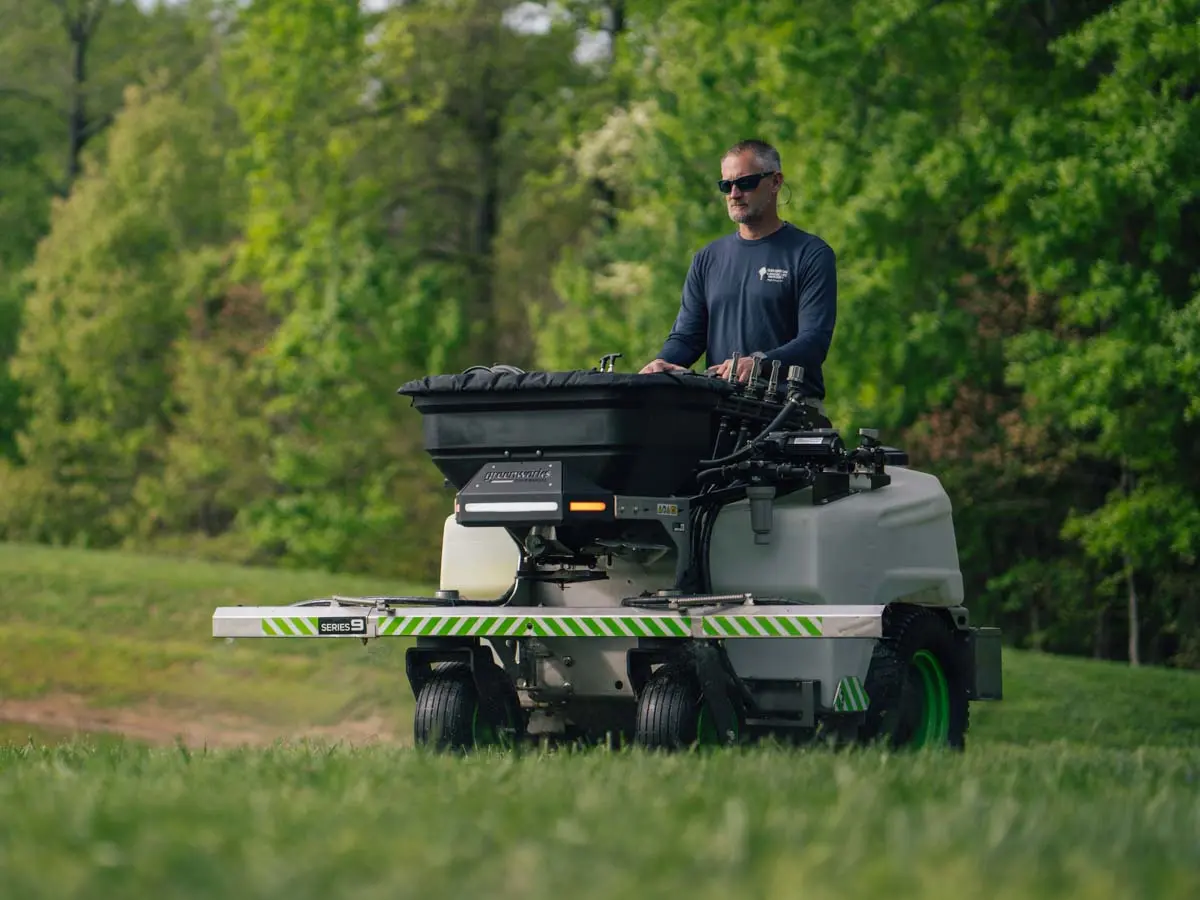
The Greenworks Commercial Optimus Sprayer Spreader is built to match—and in many cases exceed—the capabilities of the top-tier gas-powered machines currently dominating the market. Designed to withstand the punishing environment of daily fertilizer and pesticide application, the machine boasts a robust specification sheet:
- Capacity & Coverage: Equipped with a generous 60-gallon liquid tank and a spray boom capable of covering up to a 10-foot width, the machine can treat up to 5.5 acres on a single setup. For granular applications, the hopper holds up to 220 pounds of material.
- Power & Runtime: An 8 kWh battery system delivers up to two full workdays of runtime on a single charge. Recharging takes approximately two and a half hours, allowing crews to plug it in overnight and start the next shift with full confidence.
- Speed: With a top transport speed of 10 MPH, it outpaces the vast majority of competing gas models, increasing daily job-site efficiency.
- Price Point: Retailing at $24,999.99, the machine positions itself competitively within the commercial equipment market, particularly when factoring in the long-term savings on fuel and maintenance.
Chronology: The Evolution from Mower Platform to Sprayer Spreader
The development of the Optimus Sprayer Spreader did not happen in a vacuum. It represents the logical progression of Greenworks Commercial’s heavy-duty engineering roadmap.
Phase 1: Establishing the Foundation
Greenworks Commercial laid the groundwork for this release with the success of their Optimus 9-series mowing platforms. Over nearly a decade of refinement, the company perfected its electric drive systems, control interfaces, and wheel response to ensure that operators transitioning from gas-powered machines experienced a natural feel with a virtually non-existent learning curve.
Phase 2: Identifying the Core Pain Point
When engineering a stand-on sprayer spreader, Greenworks’ design team identified a major flaw inherent in traditional gas-powered units. Gas engines require massive amounts of air intake to operate. Because engines on traditional spreaders sit directly below the chemical application equipment, they systematically vacuum in airborne fertilizers and pesticides during operation. Over time, this ingestion degrades the engine block, fouls carburetors, and leads to frequent, expensive mechanical failures. Furthermore, accessing a gas engine buried beneath hoppers and spray plumbing is notoriously difficult for mechanics.
Phase 3: Building Resistance and Familiarity
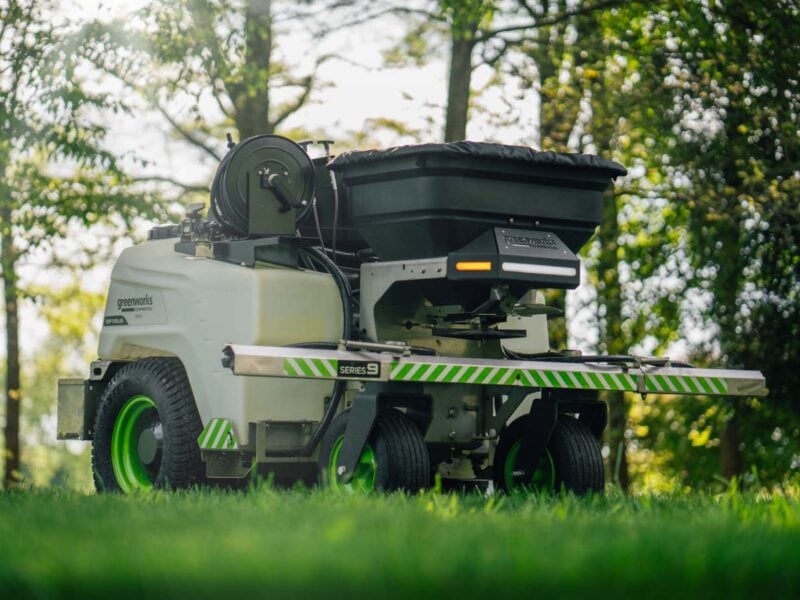
Leveraging the Optimus 9-series chassis, engineers embarked on a mission to maximize corrosion resistance. The resulting machine features an all-stainless-steel construction paired with specialized fertilizer-proof protections for critical components like wheel motors. Crucially, Greenworks chose not to reinvent the wheel regarding spray gear. They partnered with top U.S. manufacturers of spray equipment, ensuring that the plumbing, nozzles, and controls match the familiar components mechanics already service daily, keeping replacement parts widely accessible.
Supporting Data: Operational Metrics and Performance
When evaluating a shift to battery power, landscape contractors invariably ask about performance tradeoffs. Data from Greenworks Commercial highlights how the Optimus Sprayer Spreader stacks up against traditional combustion alternatives.
| Feature | Traditional Gas Units | Greenworks Optimus Sprayer Spreader |
|---|---|---|
| Noise Level (Operator Ear) | 85–95+ decibels | 66 decibels |
| Noise Level (At 50 feet) | 75+ decibels | 52 decibels |
| Top Speed | Variable (Typically 6–8 MPH) | 10 MPH |
| Tank Capacity | 50–60 gallons | 60 gallons |
| Granular Hopper Capacity | 150–200 pounds | 220 pounds |
| Daily Energy Costs | High (Gasoline/Oil consumption) | Low (Electric grid charging) |
| Thermal Output | High engine heat radiating to operator | Minimal heat generation |
The acoustic data is particularly striking. Operating at just 66 decibels at the operator’s ear and a mere 52 decibels from 50 feet away, the machine allows crew members to converse normally while working. Meanwhile, the integration of factory-installed LED lighting packages eliminates the need for aftermarket retrofits, enabling teams to extend their working hours into the early morning or late evening.
Official Responses: Insights from Tony Marchese
According to Tony Marchese, Senior Vice President of Sales for Greenworks Commercial, the reception from professional contractors has validated the company’s design choices.
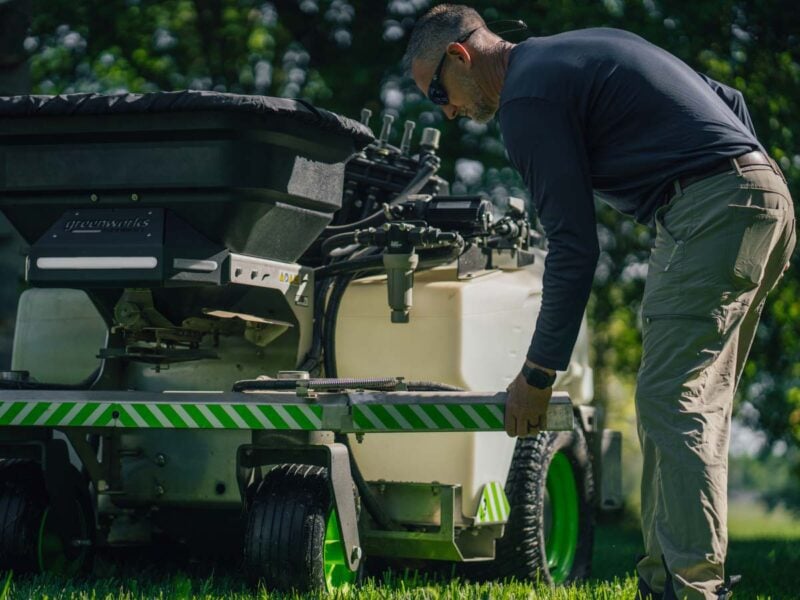
"Stand-on sprayer spreaders have historically been the bane of both field operators and shop mechanics," Marchese explains. "Mechanics hate them because the chemical drift destroys gas engines, and servicing them requires stripping down the entire spray apparatus. By removing the internal combustion engine entirely, we’ve eliminated the root cause of those maintenance nightmares."
Marchese also emphasizes the holistic approach to operator well-being. "Gas engines on stand-on units sit right beneath the operator, radiating intense heat on hot summer days while vibrating constantly and filling the worker’s airspace with exhaust fumes. The Optimus platform changes the entire dynamics of the workday. Operators stay cooler, experience far less fatigue, and remain focused and productive from the first property to the last."
Implications: Transforming Shop Maintenance and Fleet Management
The introduction of the Greenworks Commercial Optimus Sprayer Spreader carries significant implications for commercial landscaping businesses, touching everything from workshop overhead to high-level fleet management.
The Relief of the Maintenance Bay
For shop foremen and mechanics, the absence of a gas engine translates directly to reclaimed hours. Without carburetors to clean, oil to change, spark plugs to replace, and acid-corroded engine blocks to rebuild, workshop bandwidth opens up for higher-value tasks. Daily maintenance is stripped down to the essentials: greasing the front caster wheels, flushing out the tank, and hosing down the stainless-steel chassis.
Advanced Fleet Telematics and Security
Beyond mechanical simplicity, the Optimus platform brings digital intelligence to chemical application. Integrated 4G connectivity provides fleet managers with robust tracking capabilities:
- Remote Disabling: If a machine is stolen, managers can disable the unit remotely via cellular networks, rendering it undriveable until law enforcement recovers it.
- Job Verification: Fleet supervisors can verify exactly which properties their crews serviced and monitor the precise duration spent on each site.
- Self-Diagnostics: The onboard computer system constantly monitors performance metrics, self-diagnosing potential issues and communicating error codes directly to the operator or management dashboard.
Looking Ahead
With a retail price point of $24,999.99, the upfront investment is offset by zero fuel costs, drastically reduced maintenance outlays, and extended equipment lifespan. For contractors worried that a 52-inch footprint might be too large for tighter residential gates, Greenworks Commercial has already confirmed that a smaller model is slated for release in the near future.
As the landscaping industry faces increasing pressure to adopt sustainable, low-noise practices without sacrificing commercial-grade output, machines like the Optimus Sprayer Spreader prove that the future of turf care is already here—and it is fully charged.
To learn more about the Greenworks Commercial Optimus Sprayer Spreader or to find a local dealer, visit the official Greenworks Commercial website.
