

By John Davis
Main Facts: The Intersection of Power Generation and Single-Ply Dominance
In the landscape of modern commercial roofing, single-ply membrane systems—primarily Thermoplastic Polyolefin (TPO) and Polyvinyl Chloride (PVC)—have solidified their position as the undisputed industry standard. Valued for their durability, reflective properties, and relatively rapid installation times, these materials dominate low-slope commercial developments. However, the successful installation of single-ply roofing is entirely dependent on a critical, often overlooked variable: the reliability of job-site electrical power.
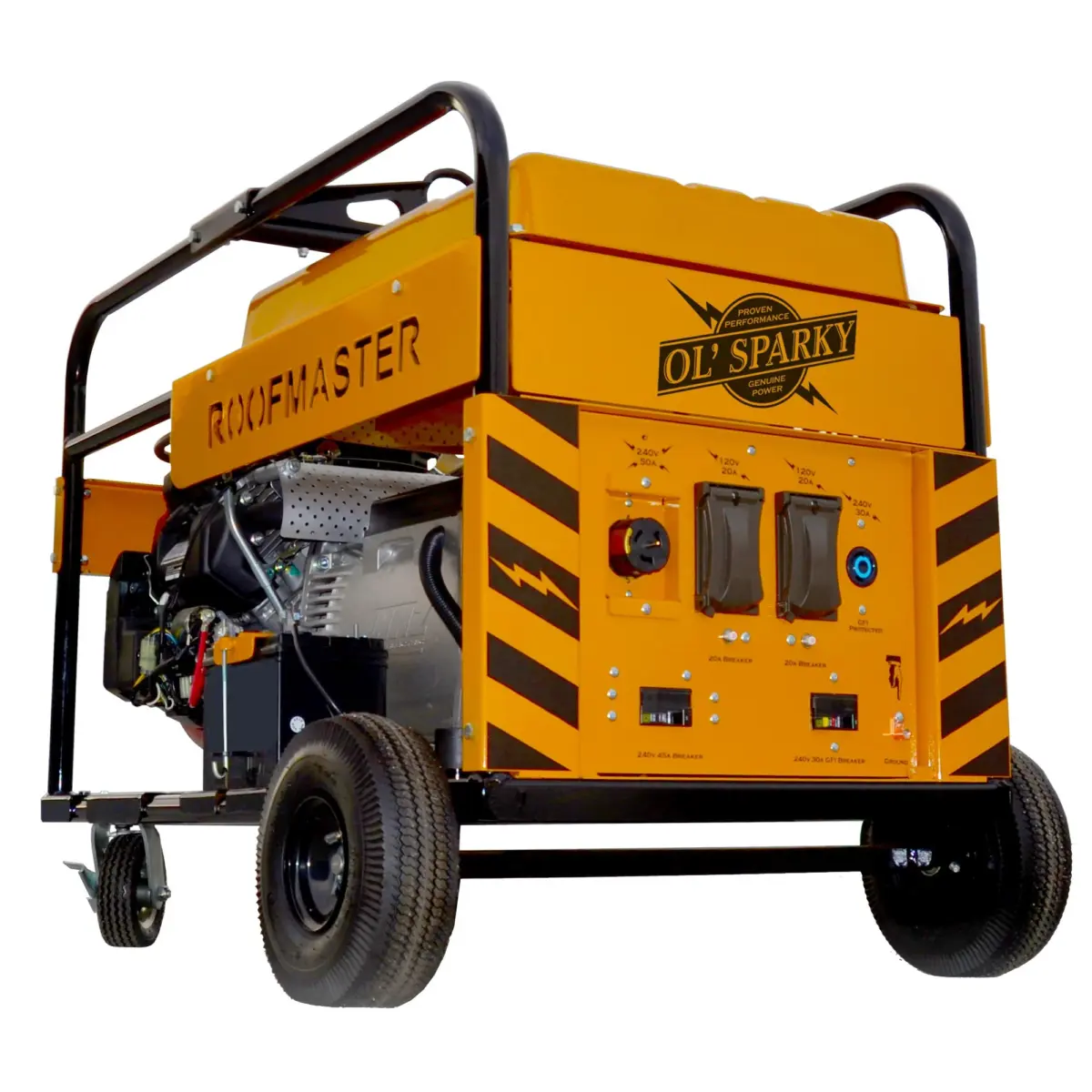
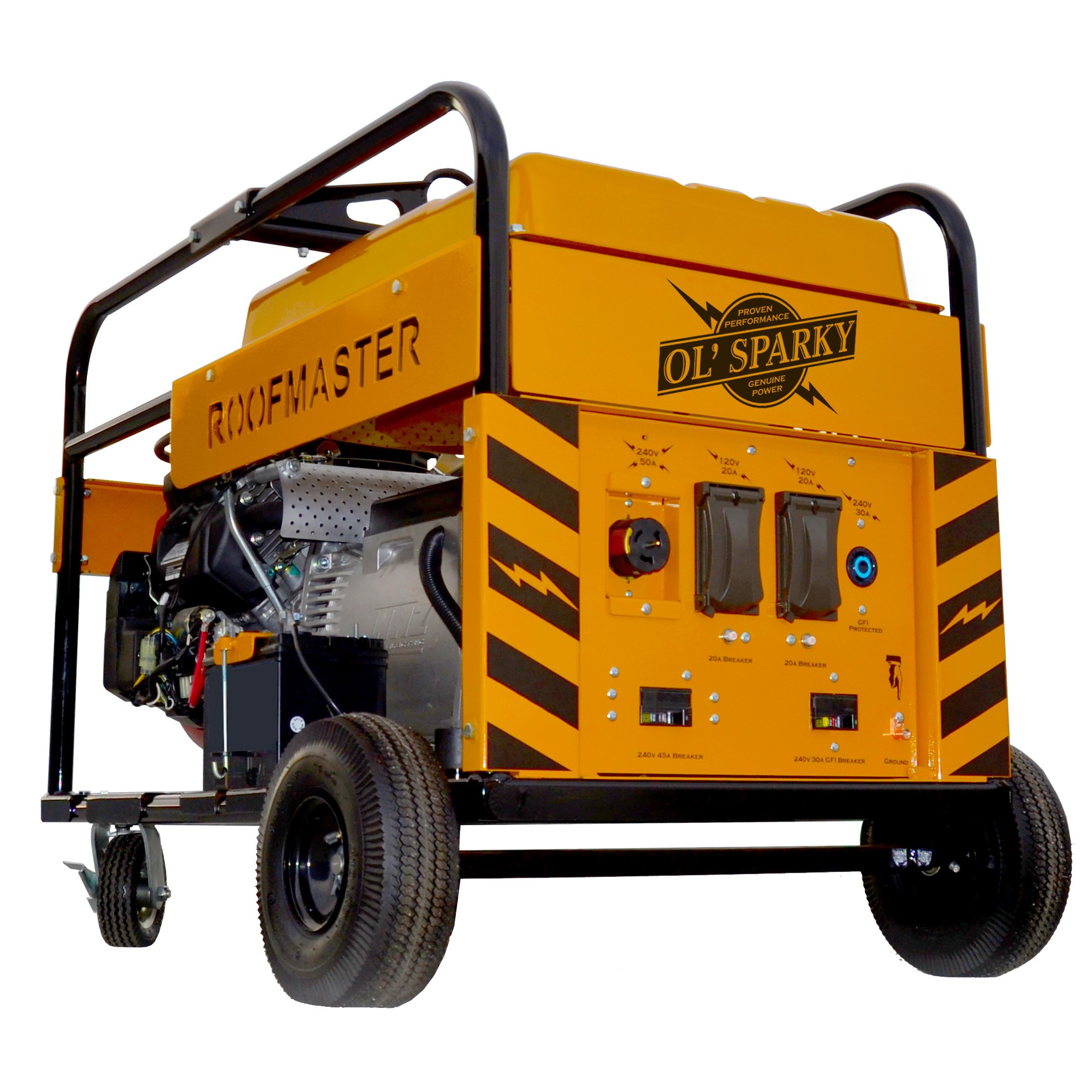
Unlike traditional asphalt or built-up roofing (BUR) systems that rely heavily on open-flame kettles and propane torches, single-ply systems are joined using highly sophisticated hot-air welding equipment. Automated and handheld hot-air welders, such as those manufactured by industry leader Leister, require clean, stable, and uninterrupted electrical power to achieve the precise temperatures necessary for molecular fusion.
On most commercial job sites, municipal grid power is either inaccessible or too distant to be practical. Consequently, contractors must rely on portable industrial generators. The generator is not merely an accessory; it is the lifeblood of the entire installation process. When a generator fluctuates in voltage or suffers mechanical failure, the entire production line grinds to a halt.
Despite the critical nature of these power sources, generator maintenance is frequently neglected until a catastrophic failure occurs. This comprehensive analysis explores the operational realities of generator upkeep, the technical relationship between power quality and welding performance, and the preventative maintenance protocols necessary to safeguard commercial roofing operations.
Chronology: The Evolution of Single-Ply Systems and Mobile Power Demands
To understand the current reliance on high-performance generators, one must trace the technological trajectory of the commercial roofing industry over the past four decades.
+-----------------------------------------------------------------------------+
| 1980s - 1990s: Rise of Single-Ply & Hand-Welding                            |
| * EPDM, PVC, and TPO emerge as alternatives to traditional BUR.             |
| * Simple heating tools require basic, unregulated portable generators.      |
+-----------------------------------------------------------------------------+
                                     |
                                     v
+-----------------------------------------------------------------------------+
| 2000s - 2010s: Technological Integration & Automation                       |
| * Introduction of advanced automatic welders (e.g., Leister Varimat).       |
| * Digital microprocessors require highly stable, clean voltage.             |
+-----------------------------------------------------------------------------+
                                     |
                                     v
+-----------------------------------------------------------------------------+
| 2020 - 2022: Pandemic-Era Supply Chain Disruptions                          |
| * Shortages of raw single-ply materials and new equipment.                  |
| * Contractors forced to extend the service life of existing machinery.      |
+-----------------------------------------------------------------------------+
                                     |
                                     v
+-----------------------------------------------------------------------------+
| Present Day: High-Demand Operational Environment                            |
| * Single-ply remains the largest commercial roofing segment.                |
| * Generator maintenance is recognized as a vital pillar of risk mitigation. |
+-----------------------------------------------------------------------------+
The Transition to Thermoplastics
In the late 20th century, the commercial roofing sector began shifting away from multi-layer bituminous systems toward single-ply membranes. This transition was accelerated by environmental regulations, rising labor costs, and a demand for energy-efficient "cool roofs." Early installations relied on solvent welding or simple hand-held heating tools. During this era, generators were rudimentary, open-frame units designed to provide raw wattage with little regard for voltage stability.
The Digitalization of Welding Equipment
By the mid-2000s, the introduction of automated welding machines revolutionized installation speeds. Equipment like the Leister Varimat utilized digital microprocessors to constantly monitor and adjust speed, airflow, and temperature. This technological leap introduced a new vulnerability: sensitive electronic control boards. Contractors quickly discovered that older, unregulated generators produced "dirty power"—characterized by voltage spikes and harmonic distortion—which routinely fried expensive welder circuitry.
The Supply Chain Bottlenecks of the 2020s
The COVID-19 pandemic and subsequent geopolitical tensions threw global supply chains into chaos. Single-ply membrane manufacturers faced severe raw material shortages, leading to unprecedented lead times. Concurrently, electronic component shortages made new hot-air welders and industrial generators difficult to procure.
This scarcity forced commercial roofing contractors to maximize the operational lifespan of their existing fleets. Routine maintenance shifted from a recommended best practice to a survival strategy. Units that had previously been run to failure were suddenly subjected to rigorous servicing schedules to avoid catastrophic project delays.
Supporting Data: The Cost of Power Fluctuations and Downtime
The technical correlation between generator performance and welding quality is measurable. To achieve a watertight, code-compliant weld, a thermoplastic membrane must be heated to its specific plasticizing window—typically between 650°F and 1,100°F (343°C to 593°C), depending on ambient temperature, wind, and material thickness.
The Mechanics of Voltage Drop
Hot-air welders are primarily resistive loads. According to Ohm’s Law ($P = V^2 / R$), the power ($P$) produced by a heating element is proportional to the square of the voltage ($V$) supplied.
- The 10% Rule: A mere 10% drop in supplied voltage results in an approximate 19% reduction in heat output.
- If a generator’s voltage drops from a nominal 230V to 207V under load, an automatic welder set to 1,000°F will struggle to maintain its target temperature. The machine may compensate by slowing its drive speed, which dramatically reduces daily square-footage yields, or it may fail to fuse the membrane entirely, leading to hidden cold welds that fail during subsequent inspection or wind-uplift events.
The Financial Impact of Downtime
The economic consequences of generator failure on a commercial roofing project are immediate and compounding:
| Expense Category | Estimated Cost / Impact (Per Occurrence) |
|---|---|
| Idle Labor Costs | A typical 6-person single-ply crew costs approximately $300 to $450 per hour in wages and benefits. A four-hour power failure translates to $1,200–$1,800 in lost productivity. |
| Material Waste | Partially welded seams that must be cut out and patched can waste hundreds of dollars in premium membrane and detail materials. |
| Liquidated Damages | Commercial contracts often carry strict completion deadlines with penalties ranging from $500 to $5,000 per day for late delivery. |
| Equipment Repair Costs | Replacing a damaged control board on an automatic welder damaged by a power surge can cost between $1,500 and $3,000, excluding shipping and shipping-related downtime. |
Official Responses and Best Practices: The Generator Maintenance Protocol
To mitigate these risks, industry experts, equipment manufacturers, and service technicians have established a definitive set of operational "Dos and Don’ts" for generator utilization on roofing job sites.
The "Dos" of Generator Maintenance
Do: Implement a Daily Fluid and Filter Regime
Roofing environments are inherently hostile to internal combustion engines. Asphalt dust, insulation fibers, and ambient debris quickly clog air intakes.
- Daily Action: Check engine oil levels before every shift. Operating a generator on a sloped roof or uneven ground can starve critical components of lubrication if the oil level is even slightly low.
- Air Filters: Inspect and clean air filters daily. Replace them immediately if they show signs of oil saturation or physical damage.
Do: Match Generator Capacity to Welder Requirements
A common mistake is utilizing a generator that is sized too closely to the nominal wattage of the welding equipment.
- Sizing Rule: A generator should ideally operate at no more than 70-80% of its continuous rated capacity. For example, running a Leister Varimat V2 (which draws approximately 4,600 watts) requires a generator with a minimum continuous output of 6,500 to 7,500 watts to handle the initial surge and maintain voltage stability.
Do: Monitor Extension Cord Gauges and Lengths
Voltage drop does not only occur within the generator; it is frequently introduced between the generator and the tool.
- Recommendation: Use heavy-duty, minimum 10-gauge (AWG) or 8-gauge extension cords for runs up to 100 feet. Never daisy-chain multiple thin gauge cords together, as this increases resistance and starves the welder of voltage.
[Generator Output: Stable 230V]
       │
       ▼
[10-Gauge heavy-duty cord (Under 100 ft)] ──► Negligible voltage drop ──► [Welder receives ~228V (Optimal)]
       │
       ▼
[14-Gauge thin cord (Over 100 ft)] ────────► High resistance ──────────► [Welder receives ~195V (System Error/Cold Weld)]
The "Don’ts" of Generator Maintenance
Don’t: Run the Generator Dry Under Load
Allowing a generator to run completely out of fuel while actively powering a welder is a leading cause of electrical damage.
- The Danger: As the engine sputters and dies, the generator’s alternator loses rotational speed, causing a rapid decay in voltage and frequency. This drop, followed by a potential final surge as the engine gasps for fuel, can easily destroy the sensitive microprocessors of connected welding tools. Always shut off the welder’s heating element and disconnect the power cord before refueling or shutting down the generator.
Don’t: Neglect Fuel Quality
Modern fuels containing ethanol attract moisture, which leads to phase separation and the formation of corrosive gum in the carburetor and fuel lines.
- Prevention: Always use fresh, stabilized fuel. For generators placed in seasonal storage, drain the fuel system completely or run the engine until the carburetor is dry.
Don’t: Ignore Grounding Protocols
Job-site safety and equipment longevity depend on proper grounding.
- The Risk: Failing to ground a generator properly can lead to dangerous ground faults, posing a severe electrocution hazard to workers operating in wet or damp conditions on a roof. Ensure the generator is grounded according to OSHA guidelines and the manufacturer’s specifications.
Implications: The Strategic Advantage of Proactive Equipment Management
As the commercial roofing sector continues to face tight margins, labor shortages, and demanding project schedules, the transition from reactive maintenance to a proactive, structured equipment management program is no longer optional. It is a critical differentiator that separates highly profitable contracting firms from those plagued by operational inefficiencies.
Warranty Preservation and Equipment Longevity
Both generator and welding tool manufacturers are increasingly stringent regarding warranty claims. If an authorized service center determines that a welder’s control board failed due to chronic exposure to low voltage or voltage spikes from an unmaintained generator, the repair warranty may be voided. By enforcing strict generator maintenance protocols, contractors protect their capital investments and ensure that warranty coverages remain intact.
Professional Service Infrastructure
While field maintenance is essential, certain diagnostic and repair tasks require specialized expertise. Recognizing this need, Roofmaster® Products Company has established dedicated service centers staffed by certified mechanics. Operating in key regional hubs, including Los Angeles, California, and Dallas-Fort Worth, Texas, these centers provide the technical support necessary to keep fleets running at peak efficiency.
From load-testing alternators to rebuilding engines and calibrating voltage regulators, utilizing certified repair facilities ensures that equipment meets OEM standards before it returns to the roof.
Ultimately, the humble generator should be viewed not as a simple utility, but as the foundation of the modern single-ply installation process. By investing in routine maintenance, training field crews in proper power management, and partnering with certified service centers, commercial roofing contractors can secure their operational chain, protect their high-value assets, and deliver the watertight integrity that building owners expect.
