

By John Davis
While supply chain disruptions and material shortages have occasionally hampered single-ply applications over the past few years, the sector remains far and away the largest and most dominant segment of the commercial roofing industry. As contractors continue to navigate high demand and tight project schedules, the reliability of their equipment has become a primary driver of profitability.
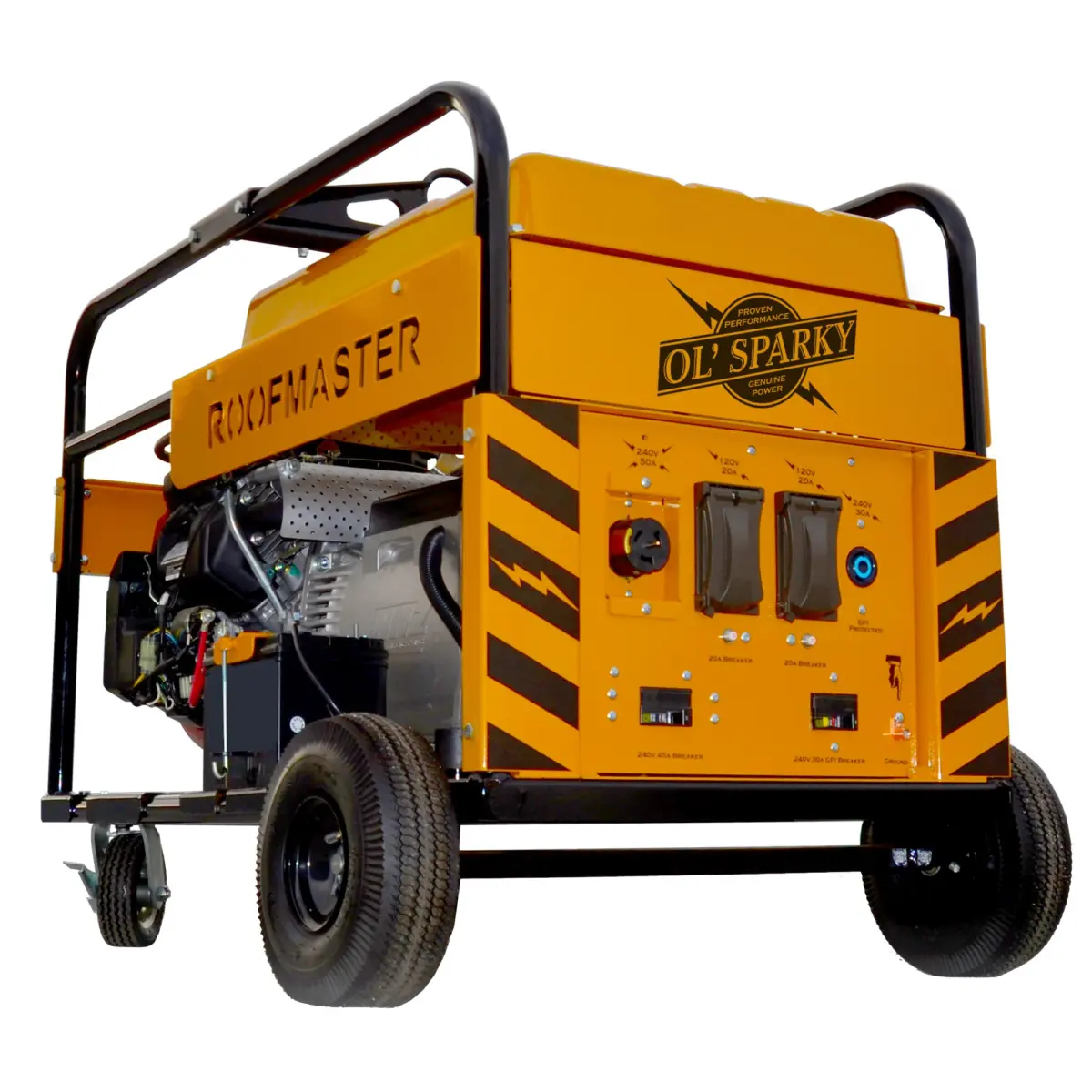
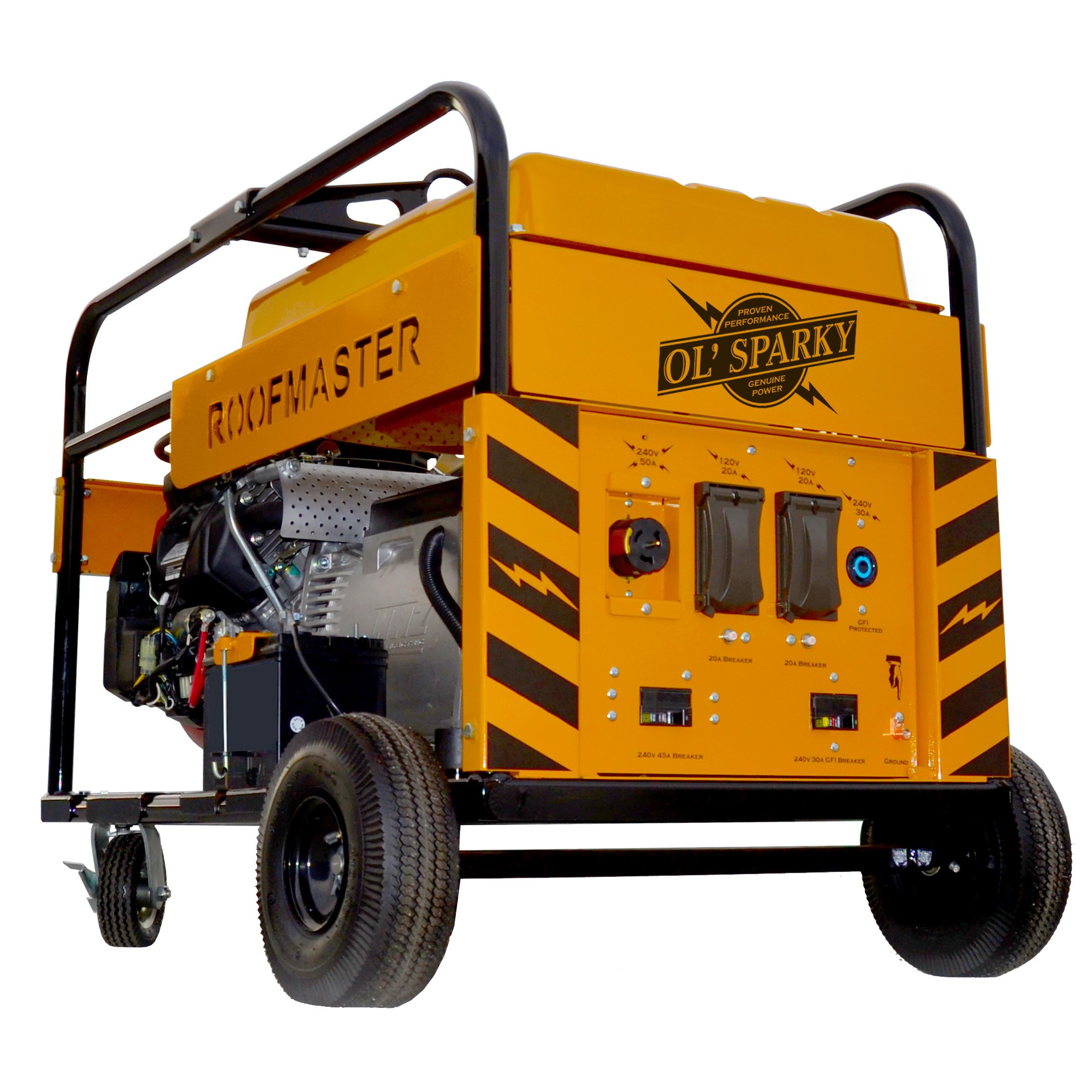
Among the tools essential to a successful single-ply installation, hot air welders—such as those manufactured by industry-leader Leister—are often given top billing. However, these sophisticated welding systems are entirely dependent on another, frequently overlooked piece of jobsite equipment: the portable generator.
A generator is the beating heart of a single-ply installation crew. When it fails, work grinds to an immediate halt, labor costs skyrocket, and deadlines are missed. Understanding the maintenance dos and don’ts of these rugged power plants is not merely a matter of equipment longevity; it is a critical business strategy.
Main Facts: The Intersection of Power Generation and Single-Ply Success
Single-ply roofing membranes, such as Thermoplastic Polyolefin (TPO) and Polyvinyl Chloride (PVC), require precise thermal welding to fuse overlapping sheets into a single, monolithic waterproof barrier. This process demands highly consistent electrical power.
+-----------------------------------------------------------------+
|                    THE SINGLE-PLY POWER CHAIN                   |
|                                                                 |
|  [ Portable Generator ] ---> [ Clean, Stable Voltage ] --->     |
|                                                                 |
|  ---> [ Hot Air Welder (e.g., Leister) ] ---> [ Flawless Seam ] |
+-----------------------------------------------------------------+
Automatic hot air welders utilize sensitive electronic circuit boards, heating elements, and drive motors that are highly vulnerable to power fluctuations. If a generator’s voltage drops or spikes, it can permanently damage the welder’s electronics or cause "cold welds"—seams that appear intact but fail under wind-uplift pressures, leading to catastrophic roof leaks and costly warranty claims.
To prevent these failures, commercial roofing contractors must treat their generators with the same level of care as their precision welding equipment. Roofmaster® Products Company, a leading provider of commercial roofing equipment and accessories, emphasizes that routine preventative maintenance is the single most effective way to avoid costly field failures. For units requiring specialized repair, Roofmaster® maintains fully equipped service centers staffed by certified mechanics in major regional hubs, including Los Angeles, California, and Dallas-Fort Worth, Texas.
Chronology: From Hot Asphalt to High-Voltage Generators
The commercial roofing landscape has undergone a dramatic technological evolution over the past half-century. Understanding how the industry arrived at its current state helps explain the critical importance of modern jobsite power management.
The Era of Built-Up Roofing (1970s–1980s)
For decades, the commercial roofing market was dominated by Built-Up Roofing (BUR) systems and modified bitumen. These installations relied on asphalt kettles, open flames, and heavy physical labor to melt and apply hot bitumen. Power requirements on the roof were minimal, limited primarily to small engines powering gravel spreaders or cutters.
The Rise of Single-Ply Membranes (1990s–2000s)
As environmental regulations tightened and building owners demanded more energy-efficient, reflective roofs, reflective white TPO and PVC single-ply membranes emerged as the preferred choice. This transition shifted the primary heat source from propane-fired asphalt kettles to electric hot air welders. Consequently, the demand for high-output, reliable, and clean electrical power on the roof became paramount.
The Electronics Integration Boom (2010s–Present)
Modern hot air welders evolved from simple heating elements to microchip-controlled, automated welding machines capable of adjusting speed and temperature based on ambient conditions. This technological leap required a corresponding evolution in generator technology. Contractors could no longer rely on cheap, utility-grade generators; they required clean-power generators equipped with Automatic Voltage Regulators (AVR) to protect sensitive digital control boards.
Post-Pandemic Supply Chain Bottlenecks (2020–2023)
Global supply chain disruptions severely limited the availability of both single-ply membranes and specialized electrical components for generators and welders. With replacement parts and new equipment on backorder for months, extending the operational lifespan of existing fleet generators through meticulous maintenance transformed from a best practice into an operational necessity.
Supporting Data: The Metrics of Power and Market Dominance
The reliance of the commercial roofing industry on robust electrical infrastructure is underscored by market share statistics and the technical specifications of modern welding equipment.
Single-Ply Market Share
According to industry data from the National Roofing Contractors Association (NRCA) and market research groups, single-ply membranes account for over 60% to 70% of all commercial low-slope roofing installations in the United States. TPO remains the individual market leader, followed closely by PVC and EPDM.
COMMERCIAL ROOFING MARKET SHARE BY SYSTEM TYPE
+----------------------------------------+---------+
| System Type                            | Share   |
+----------------------------------------+---------+
| Single-Ply Membranes (TPO, PVC, EPDM)  | 65%     |
| Modified Bitumen / Built-Up (BUR)      | 20%     |
| Metal Roofing                          | 10%     |
| Liquid-Applied & Others                |  5%     |
+----------------------------------------+---------+
Power Demands of High-Performance Welders
An automatic hot air welder like the Leister Varimat V2 operates at high wattages to maintain welding temperatures of up to 1,148°F (620°C).
- Voltage Requirement: 230 V (Single Phase)
- Power Consumption: 4600 W (Watts)
- Amperage: 20 A (Amps)
To run a single Varimat V2 safely without risking voltage drops, a generator must have a continuous output rating of at least 6,000 to 7,500 Watts, featuring an AVR system to keep voltage fluctuations within a strict $pm 1%$ tolerance. Running multiple hand welders and an automatic welder simultaneously requires even larger, industrial-grade tow-behind generators (often 15 to 25 kVA).
Cost of Failure Analysis
The financial consequences of generator neglect can be severe:
- Replacement Cost of an Automatic Welder Control Board: $1,500 – $3,000
- Labor Downtime Cost (4-man crew idle): $200 – $400 per hour
- Average Cost of a Seam Failure Leak Repair: $2,500 – $10,000+ (excluding potential interior property damage claims)
Generator Maintenance: The Dos and Don’ts
To assist roofing contractors in preserving their equipment and maintaining jobsite productivity, Roofmaster® has compiled a comprehensive checklist of generator maintenance dos and don’ts.
The Dos
- DO check the oil level daily: Roofing generators operate in hot, dusty environments. Running a generator even slightly low on oil can cause permanent engine damage or trigger automatic low-oil shutdown sensors, halting work mid-seam.
- DO use clean, fresh fuel and stabilizers: Gas and diesel left in generators during seasonal transitions can degrade, gumming up carburetors and fuel injectors. Always use fuel stabilizers and purchase fuel from high-volume, reputable stations to avoid water contamination.
- DO inspect and clean the air filter weekly: Commercial roofs are highly abrasive environments filled with dust, membrane shavings, and debris. Clean or replace the air filter regularly to ensure the engine breathes clean air, preventing power loss and premature wear.
- DO utilize a heavy-duty, proper gauge extension cord: Voltage drops occur over long distances. Using an undersized extension cord (e.g., 14-gauge instead of 10-gauge) starves the welder of power and forces the generator to work harder, risking damage to both units.
- DO ground the generator properly: Always follow OSHA and manufacturer guidelines for grounding the generator on-site to protect workers from electrical shock and ensure stable electrical reference points.
The Don’ts
- DON’T overload the generator: Never plug more equipment into a generator than its continuous (running) wattage rating allows. Overloading causes the engine to bog down, dropping both the voltage and frequency (Hertz), which can destroy electronic circuit boards in modern welders.
- DON’T run the generator dry under load: Allowing a generator to run completely out of fuel while actively powering a welder can cause a severe electrical surge as the engine sputters to a stop. Always turn off and unplug the welders before shutting down or refueling the generator.
- DON’T perform maintenance on a hot or running unit: Never change oil, spark plugs, or filters while the generator is running or hot to the touch. This presents severe burn, fire, and shock hazards.
- DON’T ignore warning signs: If a generator is surging (revving up and down), producing black smoke, or making unusual noises, shut it down immediately. Continuing to operate a malfunctioning generator will inevitably lead to more expensive repairs.
Official Responses and Expert Insights
Industry leaders emphasize that preventative maintenance must be viewed as an investment rather than an expense.
"We see generators come into our service centers every week that could have avoided catastrophic failure through simple, routine maintenance," says a senior service coordinator at Roofmaster®. "Roofing crews are focused on getting square footage installed quickly, and the generator is often left running in a corner of the roof, forgotten until it stops working. By then, the damage is done, and the contractor is facing thousands of dollars in lost labor and repair bills."
Certified mechanics at Roofmaster’s Los Angeles and Dallas-Fort Worth service centers note that fuel system contamination and neglected oil changes make up over 70% of all generator repairs.
"With the sophisticated nature of today’s digital inverter generators and high-output AVR units, you cannot simply patch things up with duct tape and wire," explains a lead technician at the Dallas-Fort Worth facility. "We use specialized diagnostic equipment to load-test generators, ensuring they deliver clean, stable sine waves before they go back to the jobsite. That’s the only way to guarantee they won’t burn out a contractor’s $8,000 Leister welder."
Implications: The Broad Impact on the Commercial Roofing Industry
The relationship between reliable jobsite power and successful single-ply installations has several far-reaching implications for the commercial roofing sector.
Operational Resilience and Competitive Advantage
As labor shortages continue to challenge the construction industry, contractors must maximize the efficiency of their existing crews. Crews equipped with well-maintained generators experience fewer work stoppages, allowing them to complete projects on schedule. This reliability enhances the contractor’s reputation with general contractors and building owners, securing a distinct competitive advantage.
Mitigation of Warranty and Liability Risks
In single-ply roofing, the integrity of the welded seam is the sole barrier against water intrusion. If a generator delivers unstable power, resulting in weak, inconsistent welds, the roof may fail prematurely. For contractors, this translates into expensive call-backs, potential litigation, and damage to their standing with major membrane manufacturers who authorize warranties.
The Value of Certified Support Networks
The complexity of modern generators and welding equipment means that in-house, "quick-fix" maintenance is no longer sufficient for complex electrical issues. Partnering with established, factory-certified service networks—such as Roofmaster’s centers in California and Texas—ensures that equipment is serviced according to precise manufacturer specifications. This collaborative approach minimizes downtime, protects valuable equipment warranties, and keeps roofing projects moving forward safely and efficiently.
