

Main Facts: The Hidden Dangers of the Quick-Fix Culture
As the commercial roofing industry undergoes rapid technological transformation, a persistent and dangerous legacy practice continues to threaten jobsite safety and equipment integrity: the improper use of duct tape for temporary tool and utility repairs. While roofing contractors have long been celebrated for their field ingenuity—finding creative, on-the-fly solutions to keep projects moving—certain "quick fixes" introduce severe, hidden vulnerabilities.
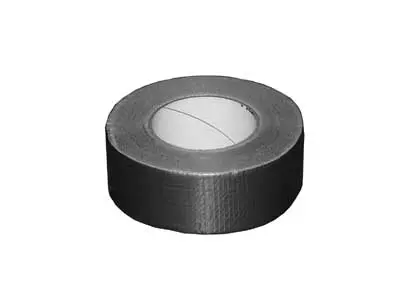
On any active jobsite, duct tape is often treated as a universal panacea. When a knee pad strap snaps or a work glove develops a hole in the thumb, a quick wrap of adhesive tape is a harmless and practical solution to extend the utility of personal protective equipment (PPE). However, this "tape-and-run" mentality frequently crosses the line into highly hazardous territory. Contractors regularly apply duct tape to critical utility components, such as leaking liquid petroleum (LP) propane hoses and damaged electrical extension cords.
This practice creates a profound, false sense of security. In the case of a propane hose, a leak presents an immediate fire and explosion hazard. While propane is treated with ethyl mercaptan to give it a distinct, warning odor, duct tape can temporarily mask or deflect minor gas escapes, delaying critical detection until a combustible concentration accumulates.
The hazard is even more insidious with electrical extension cords. Unlike gas, electrical currents cannot be seen or smelled. When a cord’s outer jacket is cut, exposing the inner insulated conductors—or worse, bare copper wires—wrapping the damage in duct tape or standard electrical tape does not restore the cord’s structural or insulating integrity. Instead, it hides a live, lethal hazard from plain sight.
Furthermore, these improvised repairs pose a direct threat to high-value, sensitive electronic equipment. Modern roofing relies heavily on automated and semi-automated tools, such as Leister hot-air welders, which require highly stable voltage and constant wattage to perform consistent, watertight seam welds. Damaged, taped cords often suffer from internal conductor degradation, leading to voltage fluctuations that can destroy the delicate microprocessor control boards of these multi-thousand-dollar machines.
Chronology: Seven Decades of Technological Evolution and Stagnant Field Habits
To understand how the roofing industry arrived at this safety crossroads, it is necessary to examine the technological evolution of the sector over the last seventy years.
[1954: Era of Built-Up Roofing (BUR)]
   │  • Heavy reliance on asphalt kettles, torches, and mechanical tools.
   │  • Low-tech job sites; basic hand tools repaired easily in the field.
   ▼
[1980s: Advent of Single-Ply Membranes]
   │  • Introduction of EPDM, PVC, and TPO systems.
   │  • Emergence of early hot-air welding equipment.
   ▼
[2000s: Digitalization of Roofing Equipment]
   │  • Microprocessor-controlled automatic welders (e.g., Leister).
   │  • Highly sensitive electronic components require precise, clean power.
   ▼
[2024: The Modern Safety & Tech Paradigm]
   │  • Strict OSHA enforcement and high liability costs.
   │  • Persistent "quick-fix" habits clash with sophisticated digital tool demands.
In 1954, when early industry pioneers began establishing dedicated roofing equipment distributorships, the roofing landscape was dominated by built-up roofing (BUR) systems involving hot asphalt kettles, felt layers, and basic hand tools. Equipment of this era was almost entirely mechanical. If a tool broke, a robust, improvised field repair was often sufficient to finish the day’s work without presenting a catastrophic hazard to the operator. Duct tape, originally developed during World War II as a waterproof sealing tape for ammunition cases, became a staple of the roofer’s toolbox due to its strength and versatility.
By the 1980s, the roofing industry experienced a major shift with the introduction of single-ply membranes like TPO (thermoplastic polyolefin) and PVC (polyvinyl chloride). These systems required heat-welding techniques, introducing electrical generators, extension cords, and hot-air hand tools to the roof deck. Despite this shift toward electrical utility reliance, field repair habits remained largely unchanged; workers continued to patch electrical cords and gas hoses with the same adhesive tapes used for mechanical tools.
By the 2000s and into the 2010s, roofing equipment transitioned from basic electrical heating elements to highly sophisticated digital machinery. Modern automatic hot-air welders now feature onboard computers, digital displays, and precise thermocouple feedback loops to monitor and adjust temperatures in real-time.
Today, in 2024, the industry operates in a highly regulated, high-tech environment. Yet, a disconnect remains: while the technology on the roof deck has advanced into the digital age, the field-repair culture of many crews remains stuck in the mid-20th century. The persistent reliance on duct tape for electrical and gas components now clashes directly with sophisticated digital tool demands and modern safety regulations.
Supporting Data: The Physics of Electrical Hazards and OSHA Standards
The dangers of taped extension cords are rooted in both electrical physics and federal safety standards. Understanding these factors highlights why quick fixes are highly dangerous.
The Mechanics of Insulation Failure and Impedance
An extension cord designed for industrial jobsite use features a heavy-duty, double-insulated design. The outer jacket is engineered to withstand abrasion, UV exposure, moisture, and mechanical crushing, protecting the individually insulated conductors inside.
When the outer jacket is sliced or worn through:
- Loss of Structural Tension: The cord loses its structural tension. Under normal pulling forces, the stress is transferred directly to the internal conductors rather than the outer jacket.
- Internal Friction and Shorting: This stress causes the copper strands within the conductors to stretch, break, and rub against each other, increasing resistance at the damaged point.
- Thermal Runaway: According to Joule’s Law ($P = I^2R$), any increase in resistance ($R$) at a point of high current draw ($I$) generates localized heat. Under a heavy load—such as running a 4,000-watt hot-air welder—this localized heat can melt duct tape, ignite nearby construction materials, or cause a sudden short-circuit.
- Voltage Drops: A compromised conductor causes voltage drops. Sensitive digital welders require a constant wattage. If the voltage drops due to cord damage, the machine’s control boards will attempt to draw more current to compensate, leading to overheating and eventual burnout of the tool’s internal electronics.
OSHA Regulatory Compliance
The Occupational Safety and Health Administration (OSHA) maintains strict standards regarding electrical safety on construction sites. The use of taped cords is one of the most frequently cited violations under 29 CFR 1926 Subpart K (Electrical).
| OSHA Standard | Requirement Details | Jobsite Application |
|---|---|---|
| 29 CFR 1926.405(a)(2)(ii)(J) | Extension cords must be of a marked, heavy-duty, or extra-heavy-duty type. | Flat-wire cords and light-duty household cords are strictly prohibited on jobsites. |
| 29 CFR 1926.416(e)(1) | Worn or frayed electrical cords or cables shall not be used. | Cords with cut outer jackets, even if taped, are deemed non-compliant and must be removed from service. |
| 29 CFR 1926.404(b)(1)(ii) | Ground-Fault Circuit Interrupters (GFCI) must protect all 120-volt, single-phase, 15- and 20-ampere receptacle outlets. | Damaged insulation allows moisture to enter, triggering GFCI trips that disrupt work. Taping the cord is an illegal attempt to bypass this safety feature. |
| 29 CFR 1926.405(g)(2)(iv) | Strain relief must be provided at joints and terminations. | Taped splices or repairs fail to provide the required mechanical strain relief, posing an immediate pull-out hazard. |
Official Responses: Regulatory Stances and Expert Recommendations
Industry regulatory bodies and safety experts are unanimous in their condemnation of improvised tape repairs on critical safety components.
OSHA Letters of Interpretation
OSHA has issued clear guidance regarding the repair of damaged extension cords. In official letters of interpretation, the agency states that wrapping a damaged cord jacket with electrical or duct tape does not restore the cord to its original "approved" state.
According to OSHA, an extension cord may only be repaired if:
- The repair is conducted by a qualified person (such as a certified electrician).
- The repair restores the cord’s insulation to a condition equivalent to its original jacket integrity (typically requiring vulcanized or heavy-duty heat-shrink patching kits designed specifically for cable repair).
- The cord’s original UL (Underwriters Laboratories) listing is not compromised.
Simply wrapping duct tape over a cut jacket is classified as a serious safety violation, carrying penalties that can exceed $15,000 per violation for first-time offenses, and significantly more for repeat or willful violations.
Manufacturer and Distributor Guidance
Leading roofing equipment manufacturers and distributors urge contractors to establish strict "tag-out" programs. Roofmaster, a leading manufacturer and distributor of commercial roofing equipment celebrating its 70th anniversary, emphasizes that the financial equation of using taped cords does not make sense.
In an official technical advisory, Roofmaster safety specialists stated:
"The cost of any physical damage, down-time, or injury caused by a compromised utility line far outweighs the cost of professional repair or complete replacement. We routinely see thousands of dollars in electronic tool damage caused directly by unstable power delivery from damaged, taped cords. Our facilities are staffed with repair experts who can inspect, certify, and properly repair these tools to OEM standards, ensuring both safety and operational reliability."
Implications: Financial, Operational, and Safety Consequences
The persistence of improper field repairs has wide-ranging consequences across the commercial roofing sector, affecting worker safety, company financials, and project schedules.
                    [Improvised Field Repair (Duct Tape)]
                                      │
             ┌────────────────────────┴────────────────────────┐
             ▼                                                 ▼
   [Physical Hazards]                                 [Financial & Operational]
     • Electrocution & Shock                            • Destroyed Digital Tooling ($3k+)
     • Propane Flash Fires                              • OSHA Fines ($15k+ per infraction)
     • Secondary Falls from Roof                        • Project Delays & Downtime
Catastrophic Safety Risks
The primary concern of any roofing operation is the safety of its crew. A taped propane hose that leaks can lead to sudden ignition when exposed to the open flame of a detailing torch, causing severe burns to the operator.
Similarly, an extension cord with compromised insulation poses a severe electrocution hazard, especially on wet roof decks. Even a minor electrical shock can cause a secondary hazard: a worker flinching or falling from a roof edge or ladder due to the sudden jolt, resulting in severe injury or death.
Financial Liabilities and Equipment Degradation
The financial risks of using taped cords go far beyond potential OSHA fines. Modern hot-air welders, such as the Leister Varimat or Triac series, are precision instruments. When these tools are powered through damaged cords with high resistance and voltage drops, their internal heating elements and control boards degrade rapidly.
A contractor might save $100 by taping a damaged extension cord instead of replacing it, only to ruin a $3,500 automatic welder and lose days of productivity while waiting for replacement parts.
Fostering a Culture of Professional Maintenance
To mitigate these risks, commercial roofing contractors must foster a culture of professional maintenance and strict safety compliance.
- Transition to "Tag-and-Replace" Protocols: Crews should be trained to immediately remove any cord or hose from service the moment a cut, abrasion, or deformity is identified during daily pre-shift inspections.
- Utilize Correct Temporary Products: For actual roofing applications, duct tape should be replaced with high-performance, engineered temporary sealants. Products such as U-Seal Band are designed specifically for temporary waterproofing and weather protection, offering reliable performance without creating safety hazards.
- Partner with Professional Repair Facilities: Rather than relying on field-expedient repairs, contractors should establish partnerships with authorized equipment distributors. Utilizing professional repair technicians ensures that tools, hoses, and electrical components are restored to original manufacturer specifications, protecting workers and safeguarding valuable equipment investments.
