

Introduction
For nearly two decades, the commercial roofing industry experienced a steady, seemingly irreversible migration toward single-ply membrane systems. Lightweight, highly reflective, and relatively simple to install without the use of open flames, materials like Thermoplastic Polyolefin (TPO) and Ethylene Propylene Diene Monomer (EPDM) became the undisputed darlings of modern architecture and roofing contractors alike.
However, the global supply chain disruptions that began in 2020 fundamentally altered this trajectory. Severe shortages of raw chemical components, plant shutdowns, and logistics bottlenecks sent lead times for single-ply membranes and polyisocyanurate (polyiso) insulation soaring—sometimes exceeding a year.
Faced with stalled projects and mounting liquidated damages, commercial roofing contractors were forced to look backward to move forward. The result has been a massive, industry-wide resurgence of modified bitumen (mod-bit) and traditional hot-applied built-up roofing (BUR) systems, particularly torch-down applications.
This unexpected pivot has breathed new life into older technologies, but it has also introduced a critical challenge: a generation of roofing laborers trained almost exclusively on cold-applied adhesives and tape-welded seams must now rapidly adapt to the high-stakes, high-temperature environment of open-flame installations.
Main Facts: The Market Shift and Equipment Resurgence
The transition back to torch-down roofing is no longer a temporary stopgap; it has crystallized into a major market trend. According to industry observations by Gary Zimmerman and equipment sales data from specialty manufacturers like Roofmaster, the physical evidence of this shift is piling up in contractors’ yards across North America.
+-----------------------------------------------------------------------+
|                       KEY INDICATORS OF THE SHIFT                     |
+-----------------------------------------------------------------------+
|  1. Surge in Torch Sales      | Massive uptick in LP gas torch kits   |
|                               | and multi-burner systems.             |
+-------------------------------+---------------------------------------|
|  2. Kettle Reactivation       | Decades-old asphalt kettles being     |
|                               | repaired and pulled from retirement.   |
|-------------------------------+---------------------------------------|
|  3. Specialty Tool Demand     | High sales of Dragin Wagons, granule  |
|                               | embedders, and roll pullers.          |
+-----------------------------------------------------------------------+
The Return of the Kettle and Torch
The primary indicator of this market shift is the sudden demand for liquid petroleum (LP) gas torches and multi-burner application systems. Contractors who had transitioned entirely to single-ply systems are purchasing new torch setups in record numbers.
Simultaneously, asphalt kettles that sat idle, rusting in contractor yards for years, are being pulled out of retirement, serviced, and sent back to jobsites. This mechanical resurrection highlights the industry’s need to utilize whatever materials are readily available—in this case, asphalt and modified bitumen rolls, which did not suffer from the same severe supply deficits as synthetic single-ply membranes.
The Dragin Wagon and Specialized Apparatus
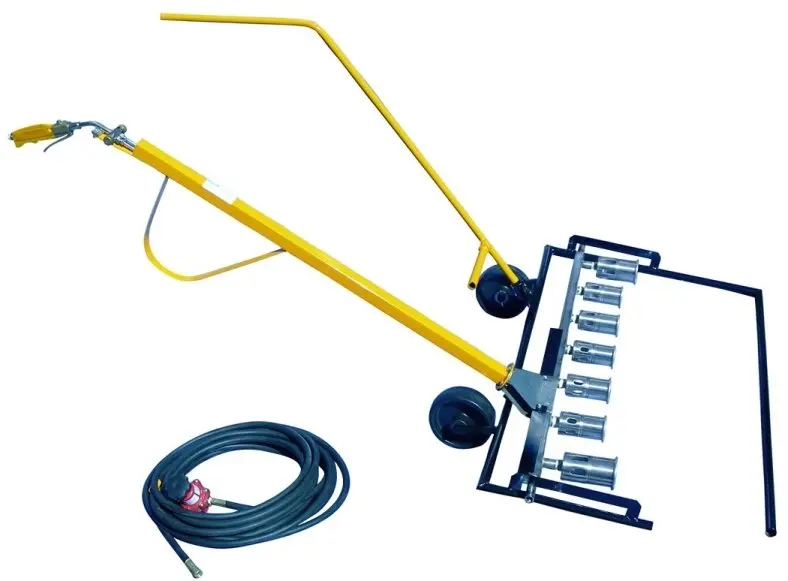
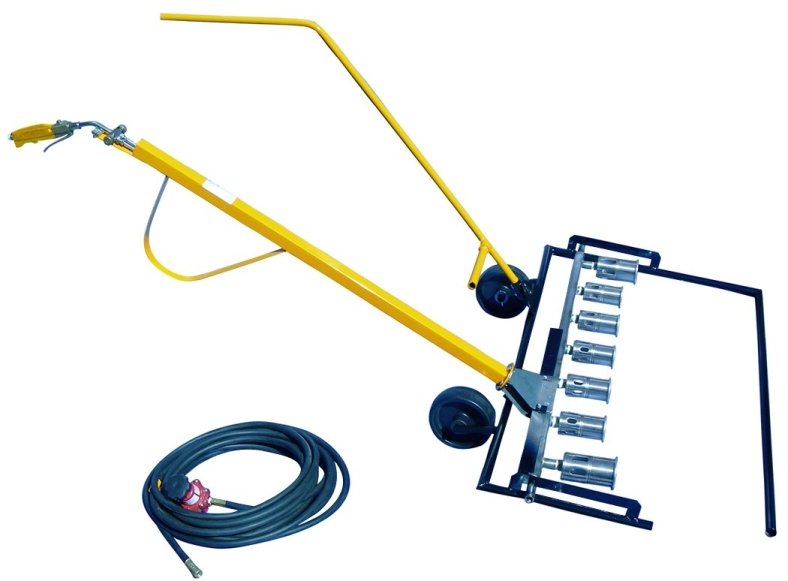
As contractors scale up their torch-down operations, high-efficiency equipment has seen a corresponding spike in demand. Foremost among these is the Roofmaster Dragin Wagon, a specialized seven-burner pull-behind torching machine designed to apply uniform heat across a modified bitumen roll.
While highly effective at accelerating installation speeds, the rapid reintroduction of such equipment has prompted safety warnings from manufacturers. Specifically, field reports indicate that some crews have misused these heavy-duty burner carriages as makeshift roll dollies—a dangerous practice that compromises the structural integrity of the burner assembly and poses a severe safety hazard on the roof deck.
Chronology: From Single-Ply Dominance to the Return of the Torch
To understand how the industry arrived at this point, it is necessary to trace the timeline of the supply chain crisis and its cascading effects on commercial roofing specifications.
   [Pre-2020: Single-Ply Dominance]
                  │
                  ▼
   [2020-2021: Pandemic & Gulf Coast Freeze]
   (MDI shortages halt TPO/adhesives production)
                  │
                  ▼
   [Late 2021: The Lead-Time Crisis]
   (Single-ply lead times stretch to 12-18 months)
                  │
                  ▼
   [2022-Present: The Torch-Down Resurgence]
   (Contractors pivot to Mod-Bit; safety retraining begins)
1. The Pre-2020 Landscape: Single-Ply Dominance
Before 2020, TPO and EPDM systems accounted for the vast majority of the commercial low-slope roofing market. Their popularity was driven by low labor costs, clean installation processes, and favorable insurance rates for contractors who did not have to carry hot-work general liability policies. Modified bitumen and built-up roofing were increasingly relegated to specialized regional markets or heavy-industrial applications.
2. 2020–2021: The Catalyst of Disruption
The onset of the COVID-19 pandemic disrupted global manufacturing, but the fatal blow to single-ply dominance came in February 2021. Extreme winter storms in Texas and the Gulf Coast crippled the region’s petrochemical plants. These facilities produced the vast majority of the precursor chemicals—such as MDI (methylene diphenyl diisocyanate)—required to manufacture polyisocyanurate insulation and the specialized adhesives used to secure single-ply membranes.
3. Late 2021: The Lead-Time Crisis
By the second half of 2021, lead times for TPO membranes and polyiso insulation stretched from weeks to 12 or 18 months. Contractors faced severe financial penalties for project delays. Architects and building owners, desperate to dry-in their buildings, began rewriting specifications to allow for alternative roofing systems.
4. 2022 to Present: The Pivot and Resurgence
Modified bitumen, which relies on asphalt—a byproduct of oil refining that remained relatively stable in supply—became the most viable alternative. Because SBS (Styrene-Butadiene-Styrene) and APP (Atactic Polypropylene) modified rolls could be installed using traditional torch-down or hot-mopped methods, contractors immediately began buying up torches and repairing old kettles to keep up with the sudden demand.
This rapid pivot meant that by late 2022 and throughout 2023, torch-down roofing had regained a massive share of the commercial market, a trend that persists as contractors realize the durability benefits of multi-ply asphalt systems.
Supporting Data and Technical Best Practices
The physical mechanics of torch-down roofing are vastly different from those of single-ply systems. To ensure both system longevity and worker safety, contractors must master the technical nuances of heat application, membrane adhesion, and specialized tooling.
The Physics of the Weld: Avoiding Cold Welds and Overheating
In torch-down applications, the installer uses an LP gas torch to melt the bitumen backing on the underside of a modified bitumen sheet as it is unrolled. This melted bitumen acts as its own adhesive, fusing with the substrate or the underlying base sheet.
- The "Bleed-Out" Standard: A perfect torch installation is visually indicated by a consistent flow of melted bitumen—known as "bleed-out"—measuring between 1/4 inch and 3/8 inch along the lap seam.
- The Danger of Overheating: Applying too much heat is highly detrimental. It degrades the polymers within the bitumen, damages the internal reinforcement mat (fiberglass or polyester), and increases the risk of igniting the roof deck.
- The Risk of Cold Welds: Conversely, insufficient heat results in a "cold weld." The bitumen fails to reach its melting point, preventing chemical fusion and leaving the seam highly susceptible to water intrusion and wind uplift.
+------------------------------------------------------------------------+
|                      TORCH-DOWN ADHESION COMPARISON                    |
+------------------------------------------------------------------------+
| Feature             | Cold Weld         | Perfect Weld    | Overheated |
|---------------------+-------------------+-----------------+------------|
| Bitumen Flow        | None              | 1/4" to 3/8"    | Excessive  |
| Polymer Integrity   | Intact (Unmelted) | Optimized       | Destroyed  |
| Seam Strength       | Very Low          | Maximum         | Weakened   |
| Fire Hazard         | Low               | Controlled      | High       |
+------------------------------------------------------------------------+
Essential Tooling for Quality Control
To achieve consistent results without relying on guesswork, modern crews must utilize specialized tools:
- Infrared Thermometers: Installers must use hand-held infrared (IR) thermometers to monitor the surface temperature of the substrate and the molten bitumen. This is particularly critical when detailing around wood cant strips, flashings, and parapet walls, where trapped heat can ignite hidden combustible materials.
- Granule Embedder Tools: When overlapping granular-surfaced cap sheets, the granules at the end laps must be embedded into the hot asphalt to ensure a watertight seal. A heavy, heated granule embedder tool is highly recommended to press these granules flat before the overlapping sheet is applied.
- Roll Pullers vs. Manual Kicking: Rather than manually kicking the heavy rolls during application—which can lead to uneven tension and misaligned seams—crews should use mechanical roll pullers. These tools allow for a steady, controlled pull, ensuring uniform contact with the melted bitumen.
Official Responses and Regulatory Compliance
The sudden reintroduction of open flames to commercial jobsites has drawn intense scrutiny from regulatory bodies, insurance underwriters, and trade associations. Operating an open-flame torch on a roof deck introduces a high level of liability, making strict adherence to safety protocols non-negotiable.
The NRCA and the CERTA Program
The National Roofing Contractors Association (NRCA), in partnership with the Midwest Roofing Contractors Association (MRCA), has long championed the Certified Roofing Torch Applicator (CERTA) program.
With the resurgence of torch-down roofing, industry leaders are calling for mandatory CERTA training for all field personnel. The CERTA curriculum provides authorized training on safe torch design, operation, and jobsite properties, focusing heavily on eliminating the common causes of torch-related fires.
       [OSHA 29 CFR 1926.150: Fire Protection Standards]
                             │
                             ├─► Dedicated Fire Watch (Min. 2 hours post-work)
                             ├─► Rated Fire Extinguishers within 50 feet
                             └─► Daily written safety plan signed by crew
OSHA Regulations and Fire Watch Standards
The Occupational Safety and Health Administration (OSHA) strictly regulates hot work under its Construction Industry Standards (29 CFR 1926.150 – Fire Protection, and 29 CFR 1926.153 – Liquefied Petroleum Gas). Key compliance mandates include:
- The Mandatory Fire Watch: A designated worker, equipped with a fully charged fire extinguisher, must remain on the roof for a minimum of two hours (and up to four hours depending on local jurisdictions and insurance policies) after the last torch has been extinguished. This worker’s sole responsibility is to scan the roof, flashings, and underside of the deck with an infrared thermal imager to detect smoldering embers.
- Extinguisher Placement: At least one portable fire extinguisher with a rating of not less than 2A:20B:C must be located within 50 feet of any point where a torch is being operated.
- LPG Cylinder Safety: Liquefied Petroleum Gas (LPG) cylinders must be secured in an upright position at all times to prevent liquid propane from entering the vapor-only lines, which can cause massive, uncontrollable flare-ups. All cylinders must have current inspection stamps and be stored away from direct heat sources.
Personal Protective Equipment (PPE) Upgrades
Working with molten asphalt and open flames requires a significant upgrade in PPE compared to single-ply installations:
- Kevlar® Sleeves and Leather Forearms: Splattering hot asphalt can cause catastrophic third-degree burns. Crew members must wear cut- and heat-resistant Kevlar sleeves paired with heavy leather welding-style gloves.
- Flame-Resistant Clothing: Workers must wear long-sleeved shirts and pants made of 100% cotton or heavy denim. Synthetic fibers such as polyester or nylon must be strictly prohibited, as they will melt directly onto the skin if exposed to flame or hot bitumen.
- Face Protection: Safety glasses are insufficient; full-face shields must be worn by kettle operators and torch applicators when working in close proximity to splashing asphalt or high-output burners.
Implications for the Modern Roofing Industry
The revival of torch-down roofing has sent shockwaves through the economics, labor market, and operational realities of the commercial roofing sector.
1. The Insurance and Liability Hurdle
The most immediate operational implication of this trend is the cost of general liability insurance. Many contractors who transitioned exclusively to single-ply systems dropped their "hot-work" coverage to save on premiums.
Re-entering the torch-down market requires reinstating these expensive policies. Insurance underwriters are demanding proof of CERTA certification and written, job-specific safety plans before issuing coverage, effectively raising the barrier to entry for smaller, less disciplined contractors.
2. The Labor and Training Gap
The roofing industry has been plagued by a chronic skilled labor shortage for over a decade. The sudden demand for torch-applied installations has exposed a massive knowledge gap.
A significant portion of the current roofing workforce has never operated a torch or maintained an asphalt kettle. Contractors must invest heavily in training and certification programs to prevent costly property losses, structural fires, and severe workplace injuries.
3. A Rediscovery of System Durability
While the return to modified bitumen was born of necessity, many architects and building owners are rediscovering the inherent benefits of multi-ply asphalt systems. Modified bitumen roofs offer exceptional puncture resistance, high redundant waterproofing layers, and excellent resistance to heavy foot traffic compared to thin single-ply membranes.
Even as TPO and EPDM supply chains begin to stabilize, a portion of the market is expected to remain loyal to modified bitumen, ensuring that torch-down skills and equipment will remain highly relevant for the foreseeable future.
Conclusion
The supply chain disruptions of the post-pandemic era did not just delay projects; they reshaped the technological landscape of commercial roofing. By forcing a return to traditional torch-down applications, the industry has been reminded that older, battle-tested methods remain invaluable.
However, this return to the flame demands a renewed commitment to safety, training, and precision. Contractors who successfully combine the rugged durability of traditional modified bitumen with modern safety protocols and technical training will lead the market in this resilient, multi-ply era.
