

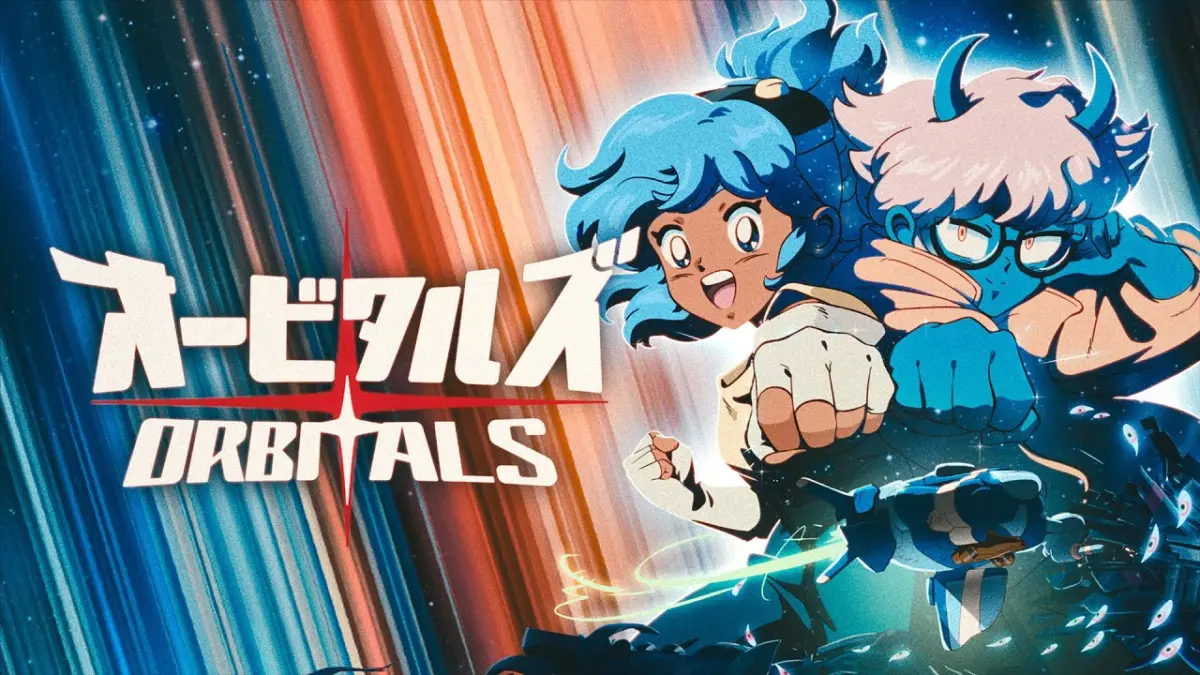
Main Facts
Developer Shapefarm’s debut release, Orbitals, is a high-concept couch co-op sci-fi platformer available exclusively on the Nintendo Switch 2 for $40. Helmed in part by veterans from Hazelight Studios—the powerhouse behind genre-defining hits like It Takes Two and Split Fiction—Orbitals attempts to blend kinetic, fast-paced cooperative puzzle-solving with a heavy dose of 1980s and ’90s anime nostalgia.
The title casts two players as Maki and Omura, young space colonists who have spent their entire lives stranded on a decaying station ravaged by a mysterious radiation storm. Equipped only with high-tech respawn mechanisms known as IMs, the pair must journey into the deepest, most perilous reaches of deep space to scavenge resources and save their found family.
Featuring hand-drawn animated cutscenes by Studio Massket, the game pays overt homage to legendary anime touchstones such as Cowboy Bebop, Neon Genesis Evangelion, and Sailor Moon. Spanning a bite-sized campaign that takes roughly three play sessions to complete, Orbitals offers a distinct alternative to lengthier cooperative adventures, though its elevated mechanical difficulty and familiar narrative beats have sparked mixed reactions among critics.

Chronology of Development and Release
The trajectory of Orbitals is tied closely to the pedigree of its core creative team at Shapefarm. Game Director Jakob Lundgren, a former Hazelight Studios developer, set out to inject the studio’s renowned cooperative DNA into a new, independent intellectual property.
- Pre-Release Hype (Early 2026): Orbitals first captured the gaming industry’s attention during major showcase events, such as Summer Game Fest 2026, where its striking anime-inspired split-fiction aesthetic and dynamic trailers immediately drew comparisons to classic retro-futuristic science fiction. Preview impressions highlighted Shapefarm’s ambition to craft an action-focused co-op experience that minimized downtime for either player.
- Launch (Mid-2026): The game officially launched as an exclusive launch-window title for the Nintendo Switch 2, retailing at a competitive price point of $40. Reviewers and early adopters quickly put the title through its paces, evaluating how well its short-form campaign and precision platforming stood up against heavyweights in the cooperative genre.
Supporting Data and Technical Overview
Evaluating Orbitals requires looking at its performance metrics, pricing model, structural design, and supplementary content offerings:
- Platform Availability: Exclusive to the Nintendo Switch 2.
- Pricing: $40 digital and physical storefront retail.
- Campaign Length: Designed for a concise runtime, easily cleared within approximately three distinct play sessions.
- Art and Animation Production: Cutscenes and character animations were outsourced to Studio Massket, leaning heavily into authentic 1980s/90s cel-shaded and hand-drawn aesthetics.
- Co-Op Mechanics: Features continuous simultaneous player engagement. Unlike older co-op titles where one player acts as a stationary anchor (e.g., holding a button or turning a crank for extended periods), Orbitals utilizes active gadgets—including lasers, water guns, and jetpacks—to keep both participants moving in tandem.
- Bonus Content: Includes an assortment of side activities, such as interacting with a lovable purple space cat, discovering Studio Ghibli-inspired alien creatures, and unlocking competitive mini-games like a blaster-recoil-heavy variant of classic Space War.
Official Responses and Creative Vision
Shapefarm’s leadership has been transparent about the artistic inspirations and mechanical goals driving Orbitals. In interviews leading up to the release—most notably speaking with outlets like Polygon—Game Director Jakob Lundgren confirmed that the title was explicitly designed to incorporate the structural lessons learned during his time at Hazelight Studios.

Lundgren emphasized that while the core cooperative formula would feel instantly familiar to fans of modern puzzle-platformers, Shapefarm wanted to accelerate the tempo. The development team aimed to eliminate the "waiting room" phenomenon common in co-op games, where one partner is relegated to passive support tasks. By engineering levels that demand synchronized movement and continuous map traversal, Shapefarm sought to foster active communication between partners.
On the narrative and aesthetic front, Studio Massket and Shapefarm’s design teams leaned entirely into intentional pastiche. Rather than masking their inspirations, the developers openly embraced tropes from existential mecha anime and gritty space westerns, transforming the project into a love letter to vintage Japanese animation.
Implications for the Couch Co-Op Genre
The release of Orbitals on the Nintendo Switch 2 carries notable implications for the future of couch co-op gaming and independent development:

1. The Shadow of Hazelight Studios
For the past decade, Hazelight Studios has single-handedly defined the parameters of modern couch co-op. Every new entrant to the genre is inevitably measured against titles like It Takes Two. While Orbitals cannot match the sprawling, constantly morphing world-design variety of Hazelight’s multi-themed epics—often keeping players within various flavors of industrial spaceship corridors—it proves that smaller studios can successfully iterate on pacing. By cutting down on downtime and forcing constant active participation, Orbitals establishes a blueprint for snappier, more kinetic cooperative design.
2. Accessibility vs. Mechanical Challenge
A critical takeaway from Orbitals is the delicate balance between casual approachability and mechanical friction. On one hand, the vibrant, hand-drawn anime art style, charming character emotes, and cute side-characters make the game look universally inviting. On the other hand, the actual platforming demands a high level of precision and synchronized timing. For casual duos or players accustomed to more forgiving checkpoints, the game’s toughest challenges risk becoming a point of frustration, potentially limiting its appeal outside of dedicated co-op enthusiasts.
3. The Value of Bite-Sized Premium Indies
At a $40 price point and a lean three-session runtime, Orbitals demonstrates a viable market niche for "mid-budget, high-polish" cooperative experiences. As AAA games increasingly demand massive time investments and higher price tags, bite-sized adventures that respect the player’s time—while still delivering high-end artistic production values like Studio Massket’s cutscenes—offer a refreshing palate cleanser for couples and friends looking for a finite, memorable weekend game night.
