

Main Facts: Transforming Modern Sheet Metal Fabrication
Walk into a modern sheet metal fabrication shop today, and you might witness a minor miracle of efficiency: a complete heating, ventilation, and air conditioning (HVAC) damper snapping together in under 90 seconds. To industry veterans, this speed seems almost futuristic. For decades, assembling dampers was a grueling, labor-intensive chore. It was fraught with safety hazards, jagged blades cut from scrap metal, and unreliable hardware that notoriously rattled loose long after installation teams left the job site.
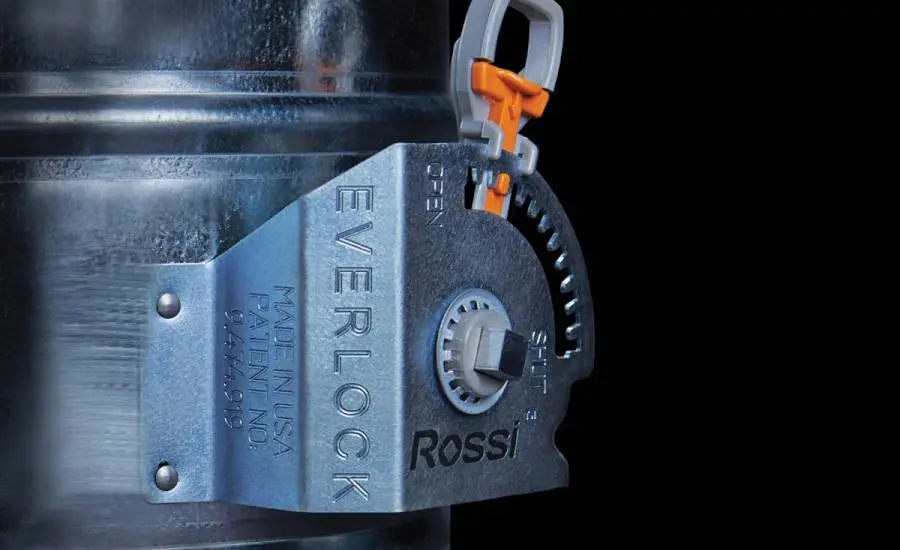
Today, that narrative is changing rapidly, thanks to Rossi HVAC Hardware. Founded on the principles of speed, durability, and practical design, the company has grown from a tinkerer’s project into a nationally recognized industry standard. Its patented, positive-locking regulators and innovative push-and-snap components are designed to hold their settings permanently without vibrating loose.
Furthermore, every single component produced by Rossi is proudly manufactured in the United States, making them fully Buy American and Build America (BABA) and American Iron & Steel compliant. This domestic supply chain ensures that mechanical contractors working on federal, medical, and high-security institutional projects remain entirely bid-ready. To back up its engineering claims, the company offers a robust 10-year warranty—double the industry standard. For sheet metal professionals, the message resonating across shop floors nationwide is clear: "No more wingnuts!"
Chronology: Three Generations of Sheet Metal Innovation
The story of Rossi HVAC Hardware is deeply rooted in family legacy, spanning three generations of dedication to the sheet metal and duct fabrication industry.
The foundation was laid in Sun Valley, California, by Vigen Danielian, who founded Haimetal, Inc. It was on the shop floor of Haimetal that Danielian’s son-in-law, Vahik Petrossian—a trained mechanical engineer and relentless tinkerer—first entered the trade. Vahik learned the ins and outs of duct fabrication firsthand, eventually taking over the family business operations.
Though his official title often cast him as the businessman "in the suit," Vahik’s heart remained on the shop floor. Long after regular working hours, he could routinely be found at his workbench, sketching ideas and attempting to solve persistent design flaws that drove him and his crew crazy. The primary catalyst for change arrived in the 1980s, when the sheer inefficiency of traditional wingnut-driven damper hardware became intolerable.

"The process was full of extra holes, clumsy bushings, and a lot of wasted time," recalls Tony Petrossian, Vahik’s son. "I can still see him, frustrated, showing me how long it took to attach a blade to a driving rod. He started inventing solutions right there at the workbench."
Vahik’s tireless tinkering eventually bore fruit. He engineered the round blade featuring a continuous bar, followed by a revolutionary polymer bushing designed to snap securely into place without requiring oversized holes or complicated bolting.
When the time came to commercialize these innovations, Tony Petrossian and his sister joined their father, officially launching Rossi as an independent enterprise. Their collective goal was simple yet ambitious: to introduce a transformative value proposition to the entire sheet metal duct fabrication sector by packaging Vahik’s decades of shop-floor solutions for widespread commercial use.
Supporting Data and Field Performance: Putting Claims to the Test
While sleek marketing and patented designs sound impressive on paper, the true test of any industrial hardware happens in the dusty, fast-paced environment of a working sheet metal shop. Contractors across the United States have put Rossi hardware through rigorous, real-world trials, and the performance data speaks for itself.
Tyler Mitchell, shop manager at Apollo Mechanical in Washington, vividly remembers the skepticism he felt when a box of Rossi hardware first arrived at his facility.
"It claimed you could install a damper with one screw," Mitchell recalls. "We thought, ‘No way does that stay in place.’ But we tried it, and it worked. We’ve never had one rattle loose, not once."
Beyond reliability, the labor savings have transformed Apollo Mechanical’s daily operations. Mitchell reports that using Rossi hardware is at least one-and-a-half times faster than traditional methods. The components arrive pre-cut, lighter, and easier to handle, meaning the shop no longer needs to store massive yards of raw steel stock.
Similar praise echoes from Stamped Fittings, one of Rossi’s earliest adopters. Mike Graham, owner of Stamped Fittings LLC, highlights the meticulous quality control and packaging that sets the brand apart.
"Their products are consistently well packaged, with components pre-boxed by size and actuator bars pre-cut for each round blade," Graham notes. "This attention to detail contributes to an efficient installation process and reliable performance. We’ve been very satisfied with the quality of their products and the professionalism of their service throughout our long-standing relationship."
Chad Briggs, superintendent at Stamped Fittings, emphasizes that the hardware’s ergonomic and structural benefits extend directly to workforce training.
"Rossi fittings are engineered for strength, durability, and speed. New employees can quickly learn the installation process, reducing training time and increasing productivity," Briggs explains. "With no nuts or bolts required, assembly is as simple as Push and Snap! Components can be installed in seconds."
Official Responses and Client Partnerships: A Culture of Listening
A defining characteristic of Rossi HVAC Hardware’s corporate ethos is its active engagement with the end-user. Rather than designing products in an isolated corporate vacuum, the Petrossian family has institutionalized a culture of continuous feedback, ensuring that shop managers, engineers, and installers directly influence product iterations.

This dynamic is illustrated by an anecdote shared by Apollo Mechanical’s Tyler Mitchell. Years ago, Mitchell offered feedback regarding the precise placement of a screw on a Rossi component. Not only did Tony Petrossian listen, but he implemented the design change and still references the collaboration to this day.
"They really do listen," Mitchell affirms.
Tony Petrossian credits this collaborative spirit to the lessons learned from his father’s early days at Haimetal. Watching Vahik solve complex engineering challenges in real-time instilled a permanent corporate question: What can we make better?
This philosophy has allowed Rossi to build a powerful brand anchored by a distinct identity and a trusted voice within the mechanical contracting community. To prove their confidence in these innovations, Rossi invites prospective clients to experience the hardware firsthand by ordering a complimentary box of damper hardware samples directly through RossiHardware.com.
Implications: Reshaping the Future of HVAC and Sheet Metal Work
The widespread adoption of innovative hardware like Rossi’s points to broader, much-needed shifts within the construction and HVAC sectors. In an era marked by skilled labor shortages, supply chain vulnerabilities, and tight construction deadlines, efficiency is no longer just a luxury—it is a survival mechanism.
By drastically reducing assembly times, simplifying training regimens for new hires, and eliminating the need for tedious post-installation callbacks due to rattling hardware, manufacturers like Rossi are fundamentally altering the economics of duct fabrication.

Even among contractors who must occasionally utilize legacy hardware to satisfy specific project specifications, the preference for modern efficiency is unmistakable. Mitchell notes that when his shop receives components from alternative suppliers featuring traditional wingnuts, workers proactively swap them out for lock nuts before shipping the products to the job site. Although this extra step adds labor time, it is deemed a necessary precaution to prevent dampers from failing under operational stress.
For Tony Petrossian, the most rewarding aspect of carrying on the family business is witnessing a new generation of shop managers embrace these innovations and challenge the status quo.
"It’s only getting started," Petrossian concludes. "There’s always something left to fix."
Ultimately, the journey from Vahik Petrossian’s late-night workbench sessions in Sun Valley to nationwide distribution highlights a timeless industrial truth: when you solve the genuine, everyday frustrations of the people building America’s infrastructure, you do more than sell a product—you redefine an entire industry.
