

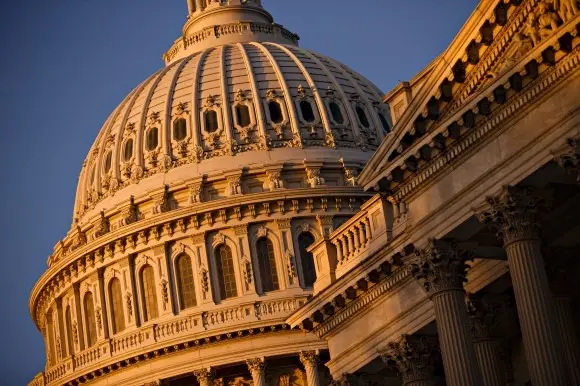
WASHINGTON — Federal legislation aimed at extending the critical Terrorism Risk Insurance Act (TRIA) is officially heading to the full Senate floor. This legislative milestone follows a unanimous, bipartisan 24-0 vote by the Senate Banking Committee on September 17 to advance S. 4395, officially titled the Terrorism Risk Insurance Program Reauthorization Act of 2026.
The decisive committee vote marks a major step forward in securing the long-term future of the vital public-private backstop. Originally established in the wake of the tragic September 11 terrorist attacks—when private commercial insurance markets temporarily collapsed under the weight of unprecedented catastrophic risk—TRIA has served as the foundational bedrock of economic security for commercial real estate, infrastructure, and large-scale enterprise operations across the United States for more than two decades.
With the current iteration of the program scheduled to expire on December 31, 2027, lawmakers, insurance industry leaders, and corporate risk managers have intensified their push to finalize a long-term extension. If S. 4395 successfully passes both chambers of Congress and is signed into law, it will extend the federal terrorism risk insurance backstop through the end of 2037, providing an additional decade of market stability and economic predictability.
Main Facts
The legislative push surrounding S. 4395 centers on preserving a federal program designed to absorb catastrophic financial losses resulting from certified acts of terrorism. Key components of the current legislative effort include:
- Legislative Vehicle: S. 4395 (The Terrorism Risk Insurance Program Reauthorization Act of 2026).
- Committee Action: Unanimously approved 24-0 by the Senate Banking Committee on September 17.
- Proposed Extension: Extends the program through December 31, 2037 (an 10-year extension beyond its current expiration date).
- House Action: The U.S. House of Representatives overwhelmingly passed its own companion legislation to extend the public-private partnership back in June 2026.
- Core Purpose: Provides a transparent financial backstop linking the federal government and private property-casualty insurers, ensuring that terrorism insurance remains commercially available and affordably priced for American businesses.
Without TRIA in place, insurance companies operating in the United States would face immense, unquantifiable exposure to losses stemming from large-scale terror attacks. This reality historically led underwriters to either exclude terrorism coverage entirely or price it at prohibitive rates, which in turn threatened to freeze major commercial construction projects, real estate transactions, and capital investments nationwide.
Chronology of the Terrorism Risk Insurance Act (TRIA)
To fully understand the significance of the Senate Banking Committee’s unanimous vote, it is necessary to examine the historical evolution of TRIA since its inception in the early 2000s.
The Genesis: Post-9/11 Market Collapse (2001–2002)
Prior to September 11, 2001, terrorism coverage was routinely included as a standard, unpriced or nominally priced feature of commercial property insurance policies. The devastating attacks on the World Trade Center and the Pentagon fundamentally altered the global risk landscape, resulting in an estimated $40 billion to $50 billion in insured losses—the largest man-made disaster in insurance history.
In the immediate aftermath, global reinsurers largely withdrew from the terrorism risk market, leaving primary insurers unable to secure reinsurance coverage for these exposures. Fearing massive insolvency risks, insurance companies rapidly moved to exclude terrorism from commercial policies. By late 2001 and early 2002, commercial borrowers found themselves unable to obtain terrorism insurance—a mandatory requirement for securing commercial mortgages and financing major infrastructure developments.
Recognizing that a lack of insurance threatened to freeze the U.S. economy, Congress intervened, passing the original Terrorism Risk Insurance Act of 2002, which was signed into law by President George W. Bush in November 2002.
Prior Reauthorizations and Adjustments
Since its creation, TRIA has not been a permanent statute; rather, it has required periodic legislative reauthorization and fine-tuning to reflect changing economic conditions, reduced immediate threat levels, and adjustments to taxpayer exposure thresholds. Congress has successfully reauthorized the program four times:
- 2005 Reauthorization: Extended the program while gradually increasing insurer deductibles and introducing mandatory coverage for nuclear, biological, chemical, and radiological (NBCR) events.
- 2007 Reauthorization: Extended TRIA through 2014, expanding the definition of acts of terrorism to include domestic terrorism alongside foreign acts.
- 2015 Reauthorization: Extended the program through 2020 while systematically reducing the federal government’s exposure by lowering the program’s aggregate retention threshold and raising the insurer co-share percentage.
- 2019 Reauthorization: Extended TRIA through December 31, 2027, maintaining the structural framework while setting the stage for the current legislative debate.
With the statutory expiration clock ticking down to December 31, 2027, the legislative push in 2026 aims to prevent market panic, policy cancellations, and coverage disruptions well in advance.
Supporting Data and Economic Impact
The urgency behind the 2026 reauthorization effort is rooted in the unique economic characteristics of terrorism risk. Unlike natural catastrophes—such as hurricanes, earthquakes, and wildfires—which are governed by centuries of meteorological data, geographical predictability, and scientific modeling, terrorism is driven by human agency, geopolitical friction, and intentional adaptation.
According to data compiled by insurance trade organizations, the commercial property and casualty market relies heavily on TRIA’s federal backstop to maintain healthy capacity levels. Under the program:
- The federal government shares risk with private insurers only after aggregate industry losses cross a statutory "trigger" threshold.
- Individual insurance companies must meet specific deductible limits based on their direct earned premiums before federal co-funding kicks in.
- A mandatory recoupment mechanism ensures that the federal government recovers outlays made under the program through policyholder surcharges, mitigating the ultimate burden on federal taxpayers.
The economic certainty provided by this structure underpins trillions of dollars in commercial real estate assets, public-private infrastructure projects, aviation networks, and energy grids. Without a federal backstop, lenders would likely halt financing for high-profile skyscrapers, stadiums, transit systems, and corporate headquarters located in major metropolitan areas deemed primary terrorist targets.
Official Responses and Stakeholder Perspectives
The unanimous 24-0 vote in the Senate Banking Committee was met with widespread praise from insurance industry trade associations, commercial risk management executives, and policy advocates.
Industry Trade Associations Urge Swift Action
In late July 2026, a coalition of major insurance organizations—including the National Association of Mutual Insurance Companies (NAMIC), the American Property Casualty Insurance Association (APCIA), the Independent Insurance Agents & Brokers of America (IIABA), the Reinsurance Association of America (RAA), the Wholesale & Specialty Insurance Association (WSIA), the Council of Insurance Agents & Brokers (CIAB), and the Vermont Captive Insurance Association (VCIA)—jointly dispatched an urgent letter to Senate leadership.
The letter implored congressional leaders to prioritize the reauthorization bill “to avoid market disruptions and continue the economic certainty provided by the program.”
Jimi Grande, Senior Vice President of Federal and Political Affairs for NAMIC, emphasized the distinct challenges posed by malicious human actors compared to acts of nature:
"Extending TRIA is critical because terrorism poses uniquely unpredictable risk. We don’t know where or when terrorists will strike, and unlike natural disasters, terrorists can and will adapt to counter any efforts to protect ourselves."
Grande’s comments underscore the persistent threat environment that corporations and insurers must navigate in the mid-2020s. While natural catastrophe models have grown increasingly sophisticated through artificial intelligence and advanced meteorology, human adversaries actively seek out vulnerabilities, necessitating a resilient, government-backed financial safety net.
Corporate Risk Management and Geopolitical Realities
The push for a long-term reauthorization also coincides with a broader, macro-level reassessment of enterprise risk management. As global conflicts proliferate, supply chains face heightened vulnerabilities, and state-sponsored cyberattacks blur the line between traditional warfare and commercial disruption, corporate leaders are taking a fresh look at catastrophic exposures.
Joe Peiser, CEO of Risk Capital for Aon, noted that the timing of the congressional action aligns with a profound shift in corporate risk awareness:
"Completion of congressional action on a long-term reauthorization of TRIA comes at a time when organizations are taking a fresh look at geopolitical risk. Recent events have prompted many businesses to reassess how they approach terrorism, political violence, critical infrastructure disruption and other complex exposures that can have far-reaching operational and financial consequences."
Peiser highlighted that modern commercial exposures extend far beyond physical bombings. In an era marked by critical infrastructure vulnerabilities, grid disruptions, and sophisticated state-backed threats, corporate boardrooms are increasingly demanding comprehensive risk transfer solutions that account for interwoven geopolitical instabilities.
Implications of the 2026 Reauthorization
As S. 4395 advances toward a full Senate vote following its unanimous committee approval, the broader implications for the U.S. economy and the insurance sector are profound.
1. Market Stability and Long-Term Planning
The primary and most immediate implication of extending TRIA through 2037 is the elimination of regulatory and market uncertainty. Insurance policies in commercial lines are frequently structured on multi-year agreements, and major capital investments require long-term financial modeling. Knowing that the federal backstop will remain secure for another decade prevents premature market hardening, rate spikes, and coverage withdrawal.
2. Safeguarding Real Estate and Infrastructure Financing
Commercial real estate developers, property owners, and institutional lenders depend on the continuous availability of terrorism insurance to satisfy mortgage covenants. Had Congress allowed TRIA to approach its 2027 expiration date without definitive action, lenders would have begun tightening credit standards and requiring expensive alternative risk-mitigation measures years in advance. The early advancement of S. 4395 provides a stabilizing anchor for commercial lending markets.
3. Evolution of Terrorism and Political Violence Insurance
Beyond traditional certified acts of terrorism defined by TRIA, the debate over the program has consistently prompted deeper conversations regarding adjacent risks, such as civil unrest, political violence, and mass casualty events that may not meet the strict statutory thresholds of the federal program. By securing TRIA’s foundation through 2037, insurers and reinsurers gain the breathing room necessary to innovate private-market solutions for complex, evolving perils without destabilizing the broader property-casualty ecosystem.
Next Steps in Congress
With the House having already passed its version of the extension earlier this summer and the Senate Banking Committee advancing S. 4395 with a commanding, bipartisan 24-0 vote, the legislation is well-positioned for consideration by the full Senate. Industry advocates remain optimistic that the bill will maintain its strong bipartisan momentum, clearing the path for presidential signature well in advance of the current program’s December 31, 2027 expiration date.
