

By Global Energy & Geopolitics Desk
Published: September 2026
Introduction: The Crucible of the Strait of Hormuz
Fighting between the United States and Iran over control of the vital Strait of Hormuz has intensified sharply after a period of relative calm, triggering an immediate and severe jump in global energy prices. As hopes for a diplomatic breakthrough fade, fears are growing among international policymakers and economists of an open-ended, multi-front war with profound ramifications for the global economy.
The resumption of hostilities has brought an abrupt, violent end to a fragile month of subdued military activity. During that brief respite, oil shipments through the critical global chokepoint had managed to recover to roughly half of pre-war levels. Now, those nascent improvements risk being entirely curtailed, threatening supplies of crude oil, liquefied natural gas, and other essential commodities just as the Northern Hemisphere prepares for the high-demand winter season.
Main Facts: The Anatomy of a Renewed Escalation
The latest cycle of violence underscores the precarious nature of maritime security in the Persian Gulf and the broader Middle East. The core elements of the current crisis encompass intense kinetic exchanges, severe humanitarian allegations, and direct impacts on international trade and energy corridors.
- Renewed Military Strikes: The US military executed a second round of intensive airstrikes in three days, specifically targeting radar installations, communication infrastructure, and mine-laying capabilities along Iran’s southern coast.
- Iranian Retaliation: Tehran responded with coordinated drone and missile volleys targeting US military installations and bases across the Middle East, adhering to a well-established tactical pattern observed throughout the six-month-old conflict.
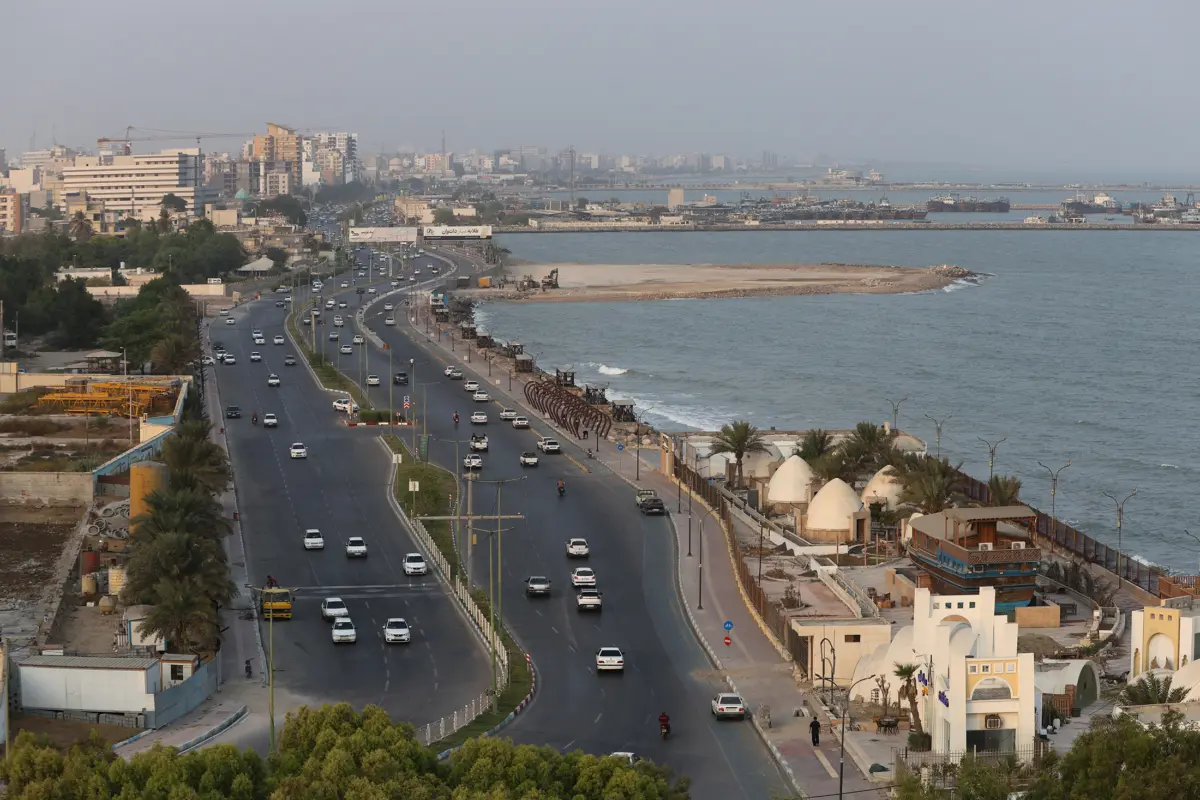
- Casualty Claims and Civilian Impact: Iranian authorities accused the US military of striking a civilian wedding ceremony in the southern coastal city of Sirik. The Iranian Red Crescent Society reported at least four fatalities and roughly 67 injuries, warning that the death toll could climb.
- The "Tanker-for-Tanker" Policy: In a significant escalation of maritime warfare, the US military attacked two Iranian tankers under a newly instituted "tanker-for-tanker" policy authorized by President Donald Trump. This followed reports from maritime security consultants regarding fresh projectile strikes on oil supertankers navigating the Strait of Hormuz.
- Macroeconomic Shockwaves: Brent crude futures climbed toward a five-week high, hovering just above $95 per barrel, while US diesel pump prices surged to levels not seen since the initial weeks of the war in April.
Chronology of Events: From Lull to Lethal Retaliation
The sudden breakdown of the month-long quiet phase highlights the volatility governing US-Iranian relations since the total collapse of the Islamabad interim peace accord in June.
The Spark: Maritime Interdictions
According to statements released by US Central Command (Centcom), the latest American airstrikes were initiated in direct response to attempted attacks by the Islamic Revolutionary Guard Corps (IRGC). The IRGC had reportedly targeted commercial shipping vessels navigating the Strait of Hormuz, as well as positions housing American service members.
Maritime security firm Marisks reported that two oil supertankers attempting to exit the strait were struck in quick succession by unidentified projectiles. Within 24 hours of these maritime incidents, Washington authorized a strategic shift under its new "tanker-for-tanker" doctrine, moving beyond mere enforcement of the existing naval blockade to directly targeting Iranian-flagged tankers.
The Overnight Air Campaign
Under the cover of darkness, US forces launched precision airstrikes against strategic assets along Iran’s southern littoral. The targets included advanced radar systems designed to track coalition aircraft and naval movements, as well as specialized infrastructure intended for laying naval mines—a persistent threat to commercial shipping lanes. Simultaneously, telecommunication nodes within the Islamic Republic were struck to disrupt military command and control networks.
The Iranian Counter-Strike
Within hours of the American bombardment, Iranian state media—including the semi-official Tasnim news agency—announced the launch of a "decisive operation" against US military infrastructure in the region. Tehran claimed direct missile and drone strikes on facilities located in Kuwait, Bahrain, Qatar, Iraq, Jordan, and the United Arab Emirates. While authorities in Kuwait, Bahrain, Iraq, and Jordan confirmed that their air defense systems had successfully intercepted incoming fire, officials in the UAE declined to issue an immediate public comment.
Supporting Data: Energy Markets and Economic Fallout
The return to active hostilities has translated instantly into financial volatility, rattling commodity traders and stoking fears of renewed global inflation.
Oil and Gas Markets Surge
International benchmark Brent crude rose close to its highest closing level in five weeks, trading firmly at just over $95 per barrel. With this latest surge, the contract has recorded an increase of roughly 58% over the course of the year. Natural gas prices have followed a similar upward trajectory, while domestic US diesel costs hit their highest point since April, placing immense financial strain on freight, logistics, and manufacturing sectors.
+-------------------------------------------------------------+
|               KEY COMMODITY PRICE MOVEMENTS                 |
+------------------------------+------------------------------+
| Commodity / Benchmark        | Current Market Status        |
+------------------------------+------------------------------+
| Brent Crude                  | ~$95/barrel (58% YTD rise)   |
| US Diesel Pump Prices        | Highest since April peak     |
| Strait of Hormuz Oil Flows   | Dropping back from 50% recovery|
+------------------------------+------------------------------+
Economists’ Assessments
In a detailed note published on Wednesday, Bloomberg economists led by Dina Esfandiary delivered a sobering assessment of the situation:
"Fighting drags on with no end — and no winner — in sight. The wider Middle East is now an arena for war. And surging oil prices are taxing the global economy."
Despite aggressive rhetoric from US Treasury Secretary Scott Bessent—who vowed an "economic onslaught" against Iran and its international trading partners at the G20 finance ministers’ summit in Asheville—analysts have largely characterized the direct economic pressure on Tehran’s broader network as underwhelming thus far. Nevertheless, the ongoing naval blockade successfully continues to stifle the vast majority of official energy exports from the Islamic Republic.
Official Responses and Diplomatic Standstill
The diplomatic landscape remains entirely frozen, with neither Washington nor Tehran exhibiting any inclination toward compromise following the June collapse of the Islamabad peace framework.
Washington’s Stance
United States officials have adopted an uncompromising posture. Secretary of State Marco Rubio warned that the US military will continue to relentlessly target Iranian assets in response to ongoing disruptions of international shipping lanes.
President Donald Trump downplayed the likelihood of reviving diplomatic negotiations. In a post shared on Truth Social, Trump stated unequivocally that he is "not trying to force Iran to the bargaining table."
Meanwhile, Centcom spokesperson US Navy Captain Tim Hawkins forcefully rejected allegations regarding civilian casualties, stating categorically:
"The US military never targets civilians."
Tehran’s Defiant Retaliation
Iranian leadership has countered with severe condemnation of American operations, drawing direct parallels between the strike in Sirik and previous historic tragedies during the conflict.
Iranian Foreign Ministry Spokesman Esmail Baghaei linked the Sirik incident to an early-war strike on an elementary school in the city of Minab—an attack that reportedly killed approximately 120 children and remains under active investigation by the US military. Writing on the social media platform X, Baghaei stated:
"This cruelty cannot be separated from the chain of atrocities that preceded it in Minab. Iran will respond to these savage crimes with firmness."
Furthermore, Iran’s foreign ministry issued a formal regional appeal, urging neighboring states to immediately cease permitting the United States to utilize their sovereign territories and military facilities for conducting operations against Iranian targets.
Adding an optimistic counterpoint from the Western perspective, Treasury Secretary Bessent asserted during the G20 summit that Iran’s leadership is experiencing a "panic" over mounting internal economic crises, predicting that Tehran will ultimately be compelled to sue for peace. However, independent observers note that domestic political survival in Tehran has historically overridden economic distress during periods of direct military confrontation.
Regional Implications: A Widening Theater of War
The friction between Washington and Tehran is not occurring in a vacuum; it is actively supercharging pre-existing conflicts across the wider Middle East.
The Northern Front: Lebanon and Israel
Concurrently with the escalation in the Persian Gulf, Israel has intensified its military campaign in southern Lebanon. Israeli defense forces have conducted regular airstrikes against Hezbollah positions throughout the week, holding the Iran-backed militant organization responsible for persistent drone incursions into Israeli airspace.
The Gaza Ceasefire on the Brink
To the south, the fragile ceasefire agreement in the Gaza Strip faces imminent collapse. Palestinian militant group Hamas announced that the truce is severely endangered following a deep-penetration raid conducted by Israeli forces inside the territory on Tuesday. The stated objective of the raid was the capture of a senior Hamas figure, an operation that has inflamed tensions and threatens to ignite a fresh cycle of urban warfare.
Conclusion: A Precarious Future
As autumn transitions toward winter, the convergence of maritime conflict in the Strait of Hormuz, stubborn energy price inflation, frozen diplomacy, and expanding regional flashpoints creates a volatile geopolitical cocktail. With neither the United States nor Iran showing a willingness to step back, the shadow of open-ended war looms larger than ever over global energy markets and international security.
