

By Ty Pendlebury
Senior Editor, Home Entertainment
Main Facts: The Sonos Beam Ultra at a Glance
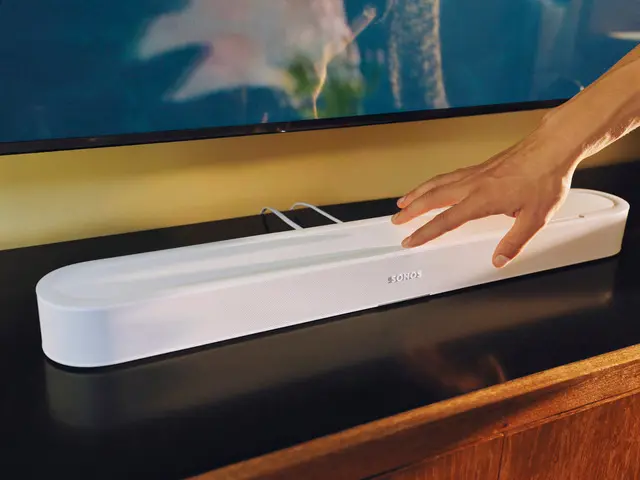
Sonos has officially expanded its popular streaming-centric soundbar ecosystem with the introduction of the Beam Ultra. Designed to bridge the notoriously wide gap between the compact, entry-level Beam series and the premium, flagship Arc Ultra, the new Beam Ultra brings dedicated spatial audio hardware to a highly competitive mid-range price point.
Priced at $699, the Beam Ultra is available for pre-order starting today, with general retail availability slated for September 29, 2026.
Unlike its predecessors—which relied heavily on psychoacoustic software emulation to simulate overhead spatial audio—the Beam Ultra features physical, upfiring drivers. This hardware upgrade transforms the soundbar into a true 7.1.2-channel Dolby Atmos system. Furthermore, Sonos is keeping the existing Beam Gen 2 in its active lineup, giving consumers a more tiered selection of soundbars that balance spatial audio capabilities, living room footprints, and budget constraints.
Key hardware and software highlights of the Sonos Beam Ultra include:
- True 7.1.2 Dolby Atmos Audio: Outfitted with physical upward-firing drivers for accurate overhead and directional sound placement.
- Enhanced Dialogue Architecture: A completely redesigned center channel built to maximize vocal clarity during complex movie mixes.
- AI-Powered Enhancements: Features four distinct levels of AI Speech Enhancement alongside a specialized Night Sound mode.
- Trueplay Room Tuning: Automatically calibrates the soundbar’s acoustic output to the unique dimensions and furnishings of any room.
- Comprehensive Connectivity: Supports Wi-Fi, Bluetooth, and HDMI eARC.
- Next-Generation Software Integration: Powered by the newly updated Sonos app, which introduces "Sonos 27voice" (the company’s proprietary music assistant) and "Sonos 27mcp" for external AI assistant integration.
Chronology: Filling the Void in Sonos’s Soundbar Hierarchy
To understand the strategic importance of the Beam Ultra, it helps to examine the evolution of Sonos’s home theater portfolio over the past several years.
The Origins of the Beam Family
When Sonos originally introduced the compact Beam soundbar, it was engineered primarily for smaller living spaces, bedrooms, and secondary entertainment setups. It relied on HDMI ARC and digital optical connections to deliver robust stereo and simulated surround sound.
The turning point for the lineup arrived with the Beam Gen 2, which introduced Dolby Atmos support. However, because of its compact size and acoustic limitations, the Gen 2 relied entirely on software processing and angled side-firing tweeters to create the illusion of height. While impressive for its size, it lacked the physical, dedicated upward-firing transducers required to bounce sound off ceilings for true spatial audio immersion.
The Arc Ultra Precedent
Meanwhile, Sonos positioned its flagship Arc—and later, the Arc Ultra—at the top of the market. Retailing well above the $900 mark, the Arc series is designed for large home theaters and sprawling living rooms. Reviewers and consumers frequently noted a distinct product tier gap: users who wanted true, hardware-based Dolby Atmos performance were forced to make a significant financial leap from the $450–$500 Beam range straight up to flagship territory.
The Arrival of the Beam Ultra (2026)
Recognizing this structural divide in its pricing architecture, Sonos developed the Beam Ultra to occupy the $500-to-$1,000 sweet spot. By taking the form factor of the classic Beam and packing it with physical upfiring drivers, richer low-end reproduction, and advanced AI dialogue controls, Sonos has effectively rewritten its mid-tier home theater playbook.
Supporting Data & Technical Specifications
A closer examination of the Beam Ultra’s specifications reveals a meticulously engineered audio device that punches well above its weight class.
Acoustic Architecture
The inclusion of physical upfiring drivers elevates the Beam Ultra from a virtualized spatial audio device to a true multi-channel powerhouse. Operating as a 7.1.2-channel system, the soundbar splits its acoustic duties across custom-designed woofers and tweeters:

- Center Channel Redesign: Sonos engineers completely rebuilt the center acoustic path. Dialogue intelligibility has historically been a point of friction for movie watchers dealing with aggressively mixed cinematic soundtracks. The Beam Ultra addresses this by isolating vocal frequencies and routing them through a dedicated, crystal-clear center array.
- Warmer Bass Response: The acoustic chamber has been enlarged slightly and optimized to deliver what Sonos describes as "warmer bass." While it may not replace a dedicated wireless subwoofer like the Sonos Sub, it provides enough low-end depth to handle explosions, cinematic scores, and bass-heavy music tracks without distorting.
- Trueplay Calibration: Whether placed in a cavernous, open-concept living room or a tightly enclosed apartment den, the Beam Ultra supports Sonos’s proprietary Trueplay tuning technology. Using iOS or compatible Android devices, Trueplay analyzes how sound reflects off walls, floors, and furniture, adjusting EQ parameters in real time.
Smart Features and AI-Driven Audio Controls
The software layer accompanying the Beam Ultra represents a massive leap forward for accessibility and personalization:
- Four-Level AI Speech Enhancement: Users are no longer stuck with a binary "on/off" toggle for dialogue clarity. The Beam Ultra offers four graduated settings, allowing viewers to dial in precise vocal boost levels depending on their hearing preferences or the specific mixing style of the movie or television show.
- Night Sound Mode: Dynamically compresses high-volume spikes (like sudden action sequences or musical crescendos) while boosting quiet dialogue, ensuring late-night viewing won’t disturb other members of the household.
- Voice Assistants: The revamped Sonos app debuts Sonos 27voice, an internal music assistant optimized for lightning-fast playback commands. Additionally, Sonos 27mcp bridges the gap for users who prefer to route third-party AI assistants through their home ecosystem.
Connectivity and Ecosystem Integration
Flexibility is a cornerstone of the Sonos philosophy, and the Beam Ultra embraces modern connectivity standards:
- Physical Ports: HDMI eARC ensures uncompressed, high-bitrate audio formats (including Dolby Atmos and multi-channel LPCM) pass seamlessly from modern 4K and 8K televisions.
- Wireless Protocols: Dual-band Wi-Fi and Bluetooth ensure that the soundbar doubles as a high-end music streaming speaker when movie night is over.
- Ecosystem Expansion: Like all Sonos hardware, the Beam Ultra integrates effortlessly with dozens of music streaming services (Spotify, Apple Music, Tidal, Amazon Music, etc.). Users can also wirelessly pair rear surround speakers (such as Sonos Era 100s) and a Sonos Sub to build out a fully fledged, immersive home theater network.
Official Responses and Industry Context
The announcement of the Beam Ultra has drawn swift commentary from industry analysts, consumer electronics reviewers, and audio enthusiasts alike.
Bridging the Consumer Value Gap
For years, CNET’s home entertainment reviewers have lauded the original Beam line for its exceptional balance of form factor, sound quality, and ecosystem versatility. However, tech journalists have consistently pointed out that software-emulated Dolby Atmos—while clever—cannot fully replicate the physical immersion of sound dropping from above.
Industry analysts note that by pricing the Beam Ultra at $699, Sonos has executed a masterclass in pricing psychology. It successfully captures consumers who find the flagship Arc Ultra too expensive, yet feel underserved by the virtualized spatial audio of the Beam Gen 2.
The Evolution of Sonos Software
Following a rocky period for Sonos app updates over the past couple of years, the company has doubled down on software stability and localized intelligence. The introduction of Sonos 27voice and Sonos 27mcp signals a strategic pivot toward localized, privacy-conscious AI assistance and seamless smart-home integration. Company representatives emphasize that the updated application framework was built from the ground up to guarantee responsive cross-device streaming, lower latency, and robust multiroom grouping.
Implications for the Home Theater Market
The launch of the Sonos Beam Ultra carries profound implications for both the company and the broader consumer audio market.
1. Increased Consumer Flexibility in Home Theater Building
Building a custom surround sound system has historically required an intimidating matrix of receivers, wired speakers, and complex calibration tools. Sonos built its empire on simplifying this process. By adding a true Dolby Atmos hardware option in the $500–$1,000 price band, Sonos gives consumers unprecedented modular flexibility:
- Budget-conscious buyers can opt for the classic Beam Gen 2.
- Mid-tier audio enthusiasts seeking genuine overhead immersion can select the new Beam Ultra.
- Audiophile purists and owners of massive home theaters can still invest in the premium Arc Ultra.
2. Heightened Competition in the Mid-Range Soundbar Segment
The $600–$800 soundbar category is fiercely contested by major tech and audio giants, including Bose, Sony, Samsung, and JBL. Many competitors have offered physical upfiring Atmos drivers at lower price points, putting pressure on Sonos to match hardware specs without sacrificing its legendary design language and software ecosystem. With the Beam Ultra, Sonos is directly answering that challenge, leveraging its unmatched multiroom ecosystem and user-friendly app to retain market share.
3. The Centrality of AI in Everyday Audio
The inclusion of granular AI speech enhancement and native voice assistants highlights a broader trend in consumer electronics: hardware is increasingly defined by its software adaptability. As streaming services push out complex spatial audio mixes with notoriously unpredictable dialogue volumes, features like the Beam Ultra’s four-tier AI dialogue enhancement are shifting from "nice-to-have" novelties to essential consumer expectations.
Conclusion
The Sonos Beam Ultra represents a mature, thoughtful evolution of one of the market’s most celebrated home audio products. By addressing the primary technical limitation of its predecessor—replacing software emulation with physical upfiring drivers—and backing it up with advanced AI dialogue controls, a redesigned center channel, and robust ecosystem connectivity, Sonos has delivered a compelling mid-tier masterpiece.
As pre-orders open today ahead of its September 29, 2026 retail launch, the Beam Ultra is poised to become the default recommendation for home theater enthusiasts looking to elevate their living room audio without breaking the four-figure barrier.
