

SPARKS, Nevada — Tesla has officially announced that it will host a grand inauguration event for its dedicated Semi manufacturing facility in Nevada on September 24, 2026. The milestone ceremony, revealed via the official Tesla Semi social media account alongside a "Semi Rollout" promotional graphic, arrives roughly five months after the sprawling facility quietly initiated high-volume production of the Class 8 electric truck.
While the ribbon-cutting ceremony is strictly ceremonial—given that production vehicles have already been rolling off the high-volume assembly lines and entering customer hands since April—the upcoming event serves as a crucial staging ground for Tesla. It offers the company an invaluable public platform to showcase its long-awaited scaling strategy, demonstrate manufacturing maturity, and address lingering questions regarding delivery volumes as the vehicle prepares for a broader commercial push.
Main Facts
The Nevada Semi manufacturing plant represents a massive capital investment and a physical realization of Tesla’s ambitions to electrify the heavy-duty freight sector. Key structural and operational parameters of the facility and the vehicle program include:
- Facility Scale and Location: The dedicated Semi plant spans an impressive 1.7 million square feet. It was constructed directly adjacent to the existing Gigafactory Nevada in Sparks, forming a core component of a $3.6 billion expansion plan initially announced by Tesla in early 2023.
- Nameplate Capacity: The facility has been engineered to reach a maximum theoretical output of 50,000 electric trucks annually once fully ramped. Hiring for the ambitious manufacturing scale-up began in early 2025.
- Vertical Integration: By building the Semi facility next to Gigafactory Nevada, Tesla aims to maximize supply chain efficiencies, particularly concerning localized battery cell production and drivetrain assembly.
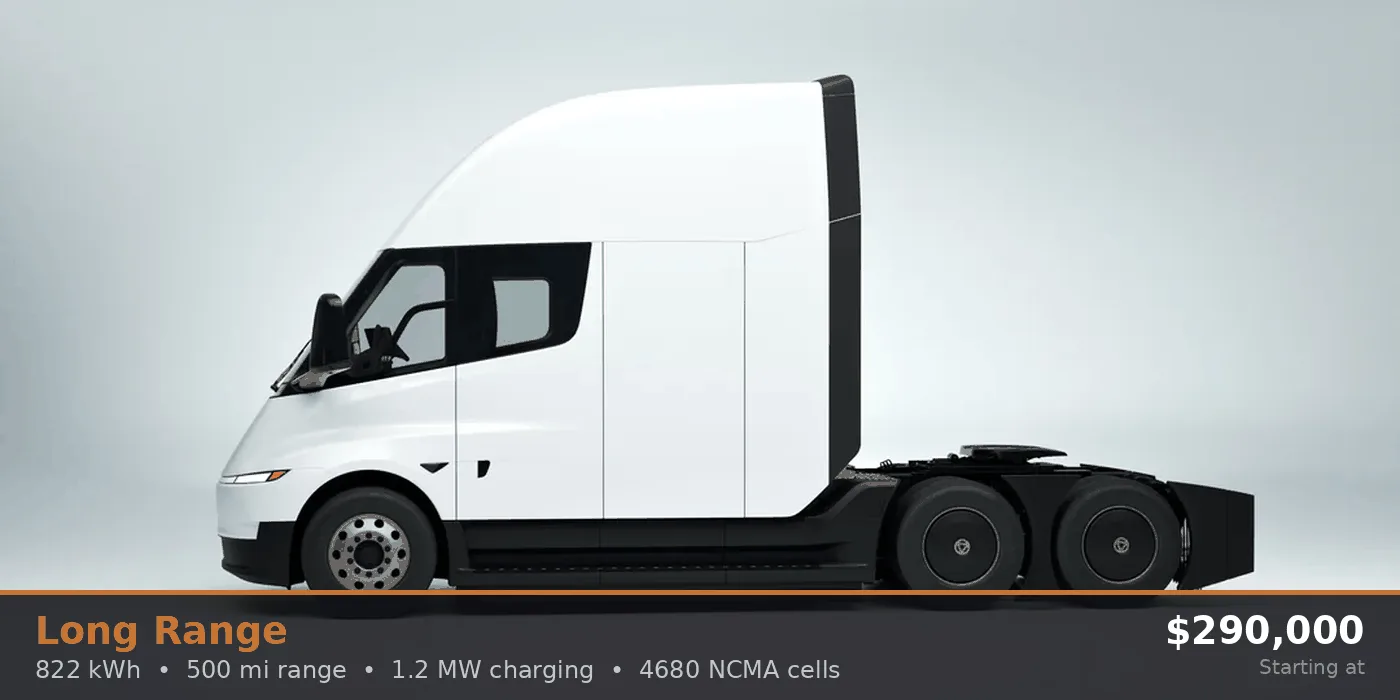
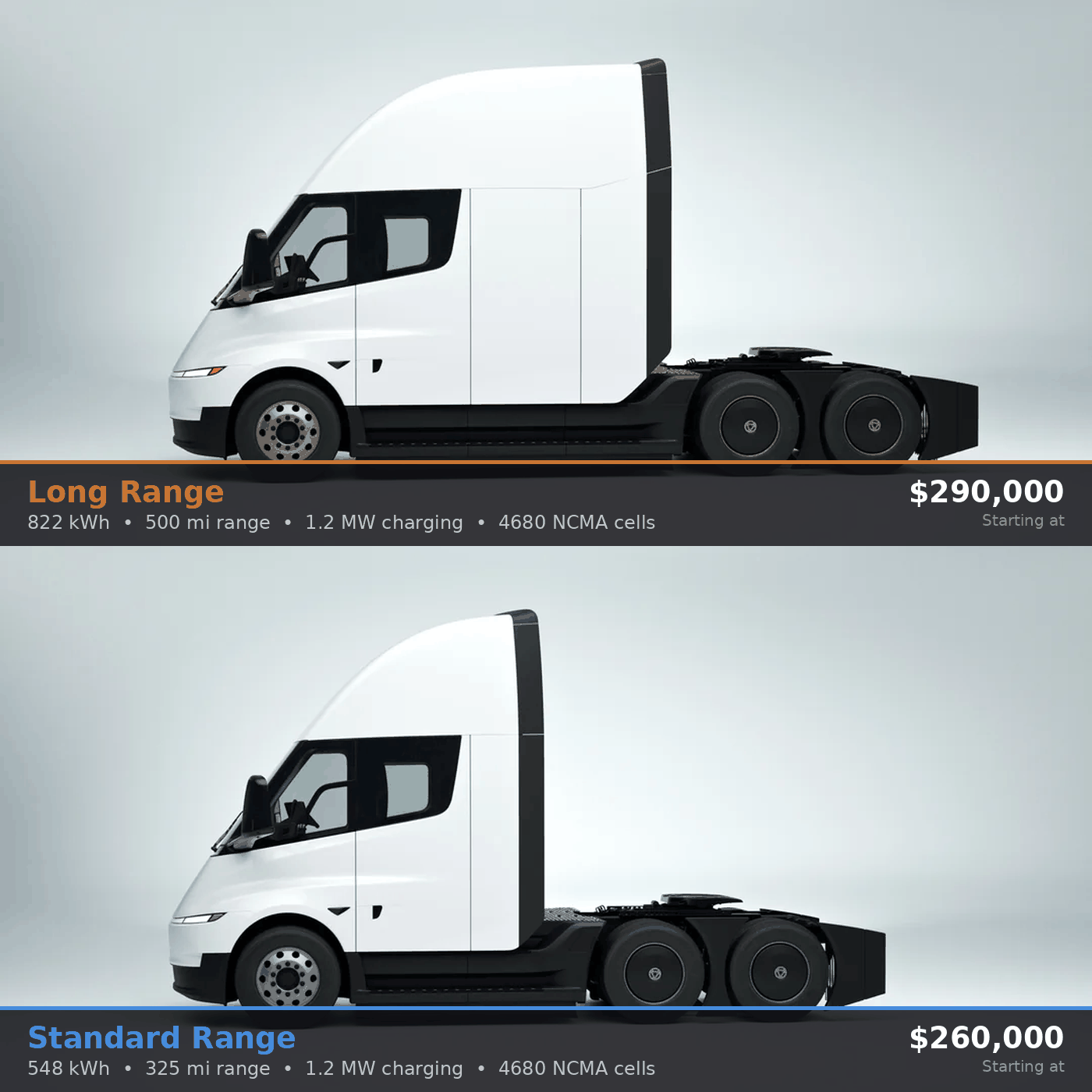
- Vehicle Specifications: Tesla has locked in production configurations for two primary variants. The Standard Range model offers an estimated 325-mile per-charge capability, while the Long Range variant is rated at 500 miles.
- Powertrain and Charging: Both variants utilize an identical 800-kilowatt, three-motor powertrain delivering in excess of 1,000 horsepower. Furthermore, both versions are fully compatible with Tesla’s proprietary Megacharger network, which the company states can replenish roughly 70% of the truck’s battery capacity in approximately 30 minutes.
Chronology of the Tesla Semi Program
The journey from initial concept to a dedicated high-volume production facility has been one of the most protracted and closely watched product rollouts in the modern automotive and commercial vehicle sectors.
1. The Concept Reveal (2017)
Tesla first pulled the wraps off the Tesla Semi prototype during a high-profile evening event in November 2017. CEO Elon Musk promised staggering performance metrics, including a 500-mile range, a sub-five-second 0–60 mph time without a trailer, and an operational cost per mile significantly lower than equivalent diesel trucks. At the time, production was aggressively slated to begin by 2019.
2. Repeated Delays and Pilot Testing (2019–2022)
Due to a combination of corporate battery supply constraints, global supply chain shocks brought on by the COVID-19 pandemic, and engineering refinements, the initial 2019 production window slipped significantly. Despite the delays, Tesla constructed a small batch of hand-built pilot vehicles. In December 2022, Tesla officially handed over the first operational units of the Semi to launch customer PepsiCo during a delivery event at its Nevada facility. These trucks were deployed into real-world fleet operations to gather performance data, stress-test the Megacharger infrastructure, and validate efficiency claims under heavy commercial loads.
3. Capital Commitment and Facility Construction (2023–2024)
Recognizing that hand-built pilot programs could not satisfy commercial demand, Tesla announced a sweeping $3.6 billion expansion in January 2023, earmarking substantial capital for a dedicated Semi factory in Sparks, Nevada, alongside expansion of 4680 battery cell manufacturing. Construction proceeded through 2023 and 2024, transforming the open land adjacent to Gigafactory Nevada into a massive 1.7-million-square-foot production powerhouse.
4. High-Volume Line Launch and Current State (2025–2026)
Tesla initiated targeted hiring for the plant’s production workforce throughout early 2025. By late April 2026, the first production-intent Semi successfully rolled off the newly minted high-volume assembly line. Tesla program director Dan Priestley confirmed soon after that manufacturing operations were actively ramping up. Now, with an official inauguration scheduled for September 24, 2026, the program is transitioning from its prolonged pilot phase into genuine commercial scaling.
Supporting Data and Production Realities
While a nameplate capacity of 50,000 trucks per year establishes an impressive ceiling for the Nevada facility, industry analysts emphasize a stark divide between theoretical factory output and near-term delivery realities.
Financial analysts tracking the EV sector currently project that Tesla will deliver between 5,000 and 15,000 Semi units throughout calendar year 2026. This projection places actual deliveries well short of the plant’s maximum nameplate capacity as the assembly lines gradually optimize cycle times, iron out supply chain bottlenecks, and stabilize localized component manufacturing.

Nevertheless, the physical infrastructure is fully established. The 1.7-million-square-foot footprint provides ample floorspace for sub-assembly, chassis mating, cab outfitting, and rigorous end-of-line quality control testing. By leveraging the existing infrastructure of Gigafactory Nevada—particularly regarding powertrain components and energy storage expertise—Tesla has positioned the plant to scale its output exponentially compared to the tentative, low-volume builds of previous years.
Official Responses and Strategic Implications
Tesla’s corporate leadership has framed the upcoming September inauguration not merely as a celebration of bricks and mortar, but as a formal declaration that heavy commercial electrification has cleared its experimental hurdles.
The Strategic Value of a Delayed Grand Opening
Hosting an inauguration event five months after the first commercial trucks leave the assembly line might seem unconventional. However, it aligns with Tesla’s history of utilizing major public milestones to shift market narratives. By opening the factory doors to media, investors, and prospective fleet clients, Tesla aims to project stability and manufacturing confidence.
Furthermore, the timing of the Nevada event is strategically synchronized with the commercial push into international markets. Specifically, the inauguration precedes Tesla’s prominent appearance at the IAA Transportation exhibition in Europe, where the Semi is slated to make a major splash. Together, these back-to-back events signal that the Semi is transitioning from a North American pilot project into a globally recognized commercial asset.
The Total Cost of Ownership (TCO) Proposition
Beyond manufacturing metrics, industry observers anticipate that the September event will offer a deeper look into the operational economics of the Tesla Semi. After years of real-world fleet testing with major logistics partners like PepsiCo, fleets have accumulated millions of operational miles.

The core disruptive potential of the Tesla Semi rests heavily on its Total Cost of Ownership (TCO). Fleet operators are acutely sensitive to energy expenses, unscheduled maintenance downtime, brake wear, and driver retention. Because electric heavy-duty trucks feature significantly fewer moving parts than internal combustion diesel engines—coupled with regenerative braking and the high efficiency of the 800-kW powertrain—Tesla has long argued that the higher upfront capital cost of the vehicle is rapidly offset by operational savings.
If Tesla utilizes the September 24 event to present comprehensive, transparent data regarding the real-world TCO of units operated by early adopters, it could accelerate fleet conversion timelines across the logistics and freight industries.
Looking Ahead
As September 24 approaches, all eyes will be on Sparks, Nevada. The inauguration will provide critical insight into whether Tesla can successfully bridge the gap between pilot-scale manufacturing and high-volume mass production for the heavy-duty sector.
If the company can demonstrate a reliable, accelerating production ramp and validate the long-term economic durability of the Semi in demanding commercial applications, the event could mark a permanent turning point for zero-emission freight transportation worldwide.
