

By Automotive Technology Desk
Published: October 2026
Main Facts: The Battle of Sensors in Autonomous Driving
Tesla has marginally extended the operational hours of its Austin-based Robotaxi fleet, moving the nightly shutdown from 10:00 PM to 11:00 PM. While an extra hour of service might typically pass without notice, the explanation provided by CEO Elon Musk has reignited a fierce, long-standing debate within the automotive industry regarding the hardware architecture required for true Level 4 autonomy.
According to Musk, the primary hurdle preventing Tesla’s autonomous fleet from operating deep into the night is not software routing, regulatory hurdles, or mapping data, but rather a fundamental physics limitation: the vehicles struggle to detect small, low-contrast animals in the dark.
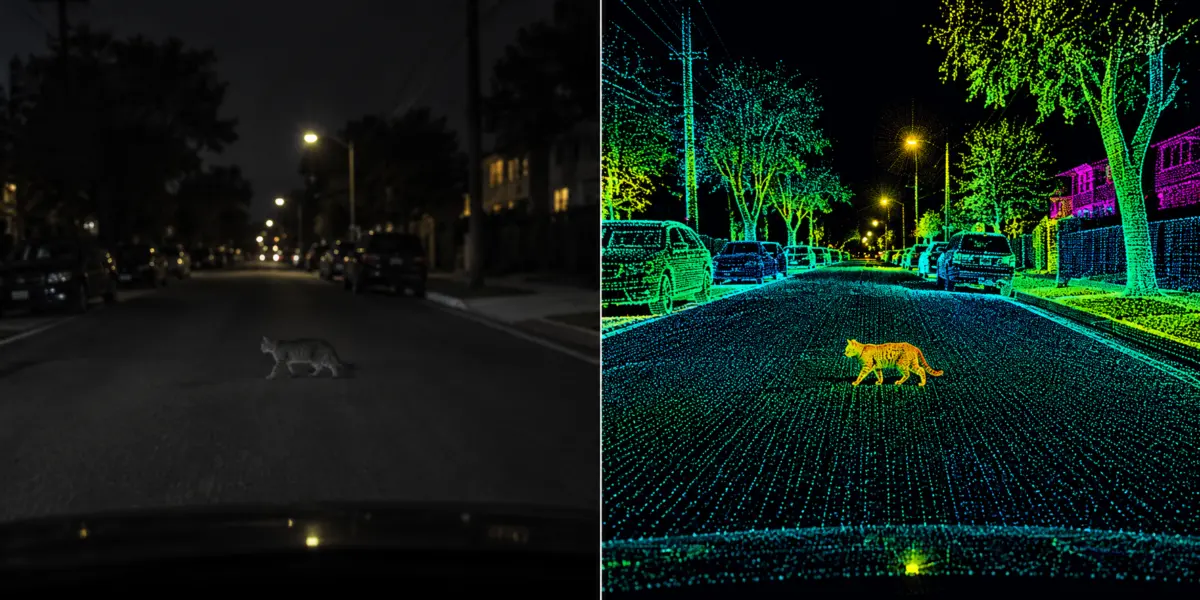
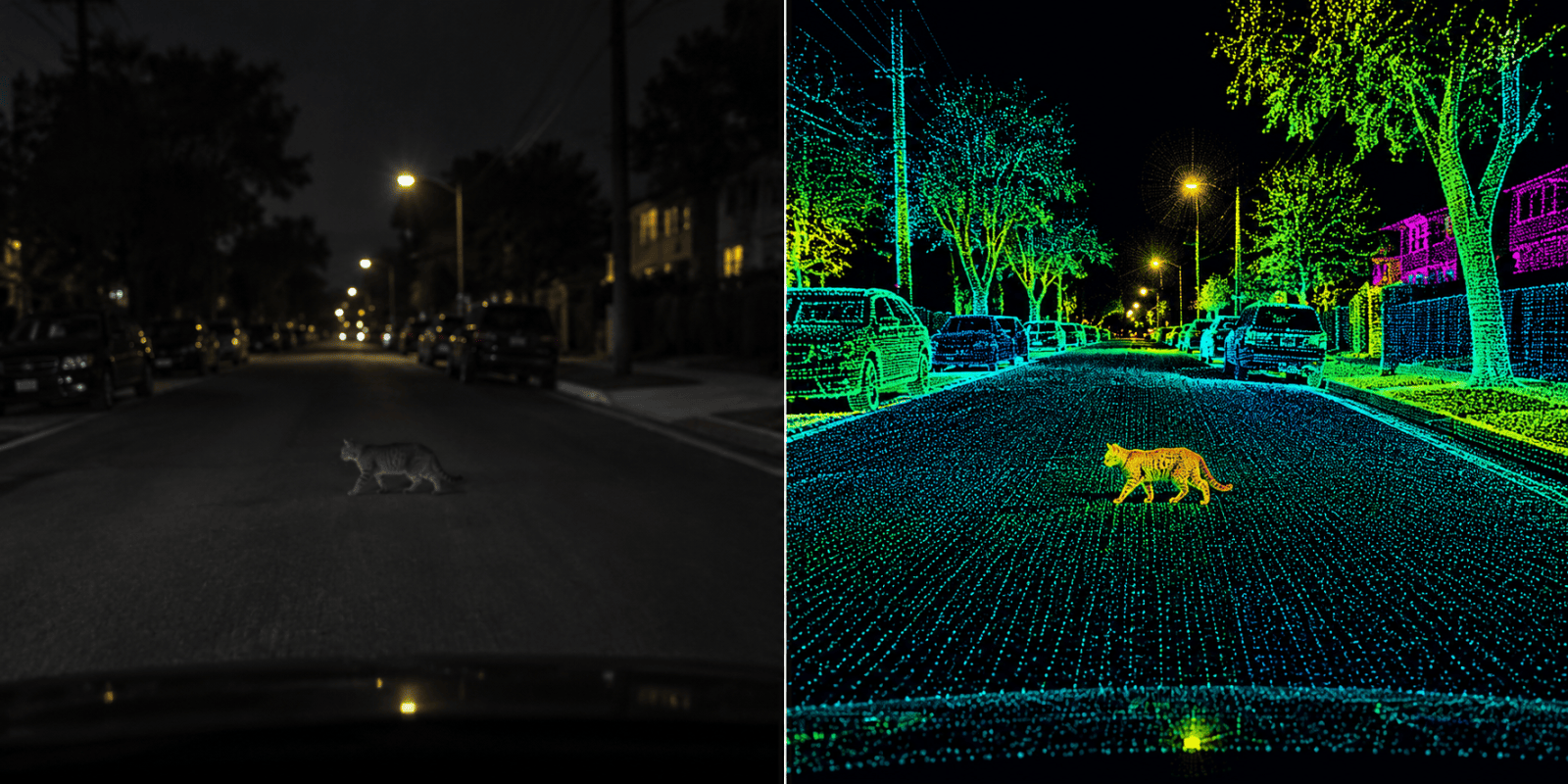
"The main thing we’re trying to solve is making sure that we don’t run over pets when they’re hard to see at night," Musk posted on X (formerly Twitter). "Literally trying to avoid grey kittens on grey tarmac in the dark."
This admission highlights a textbook vulnerability for passive optical systems—cameras—which rely entirely on ambient light and visual contrast. While Musk has spent the better part of a decade dismissing active sensors like lidar and radar as "crutches" and a "fool’s errand," his latest statements inadvertently validate the very hardware suite he has fiercely rejected.
Competitors in the autonomous vehicle (AV) space, such as Alphabet-backed Waymo, utilize sensor fusion combining cameras, radar, and lidar to achieve round-the-clock commercial operations. Waymo’s fleet of roughly 4,000 driverless vehicles operates 24 hours a day, 365 days a year, largely unhindered by the lighting conditions that continue to restrict Tesla’s geofenced, tightly monitored Robotaxi deployment.
Chronology: From Launch-Day Ambitions to Curfew Realities
To understand the current state of Tesla’s Robotaxi program, one must examine its timeline since the initial rollout in Austin in June 2025.
- June 2025: Tesla officially launches its Robotaxi service in Austin, Texas. At launch, the application accepts ride requests from 6:00 AM to midnight, providing an 18-hour daily operational window. Safety monitors are present in the front seats.
- May 2021: Tesla formally announces the removal of radar from its production vehicles, transitioning entirely to "Tesla Vision," a camera-only suite. Subsequent updates phase out ultrasonic sensors.
- August 2025: Waymo co-CEO Dmitri Dolgov demonstrates the efficacy of sensor fusion by showcasing footage of children chasing dogs across a pitch-black street, where camera feeds fail entirely while lidar builds a crisp, accurate 3D environment. Musk responds by doubling down on his anti-lidar rhetoric, claiming active sensors "reduce safety due to sensor contention."
- September 2026: Tesla introduces Cybercabs into the Austin Robotaxi rotation, yet overall fleet scaling remains stagnant.
- September 2026: Rivian announces that the cost of integrating enterprise-grade lidar into its upcoming R2 platform has dropped to "a few hundred dollars" per vehicle, neutralizing the industry narrative that lidar is cost-prohibitive.
- July 2026: The National Highway Traffic Safety Administration (NHTSA) steps up an active investigation into 3.2 million Teslas over Full Self-Driving (FSD) crashes in low-visibility environments. Investigators demand internal corporate documents, including a telling pre-2021 memorandum titled "Radar Saves Us."
- Late October 2026: Fifteen months after its initial launch, the Austin Robotaxi service operates on a shortened schedule, closing at 11:00 PM. Musk drops his comment regarding "grey kittens on grey tarmac," acknowledging the severe limitations of pure-vision systems in low-light, low-contrast scenarios.
Supporting Data: Cameras vs. Lidar and Radar Physics
The debate between Tesla’s pure-vision approach and the sensor-fusion methodology used by the rest of the autonomous vehicle industry boils down to fundamental physics.
The Limitations of Cameras (Passive Sensors)
Cameras are passive optical instruments. They capture photons reflecting off objects in the environment. For an algorithm to identify an obstacle, there must be sufficient illumination and a distinct contrast in color, luminance, or pattern between the object and its background.
When a grey kitten sits on grey asphalt at midnight, the photon count differential approaches zero. Without artificial illumination or high-contrast patterns, a passive camera system struggles to segment the object from the road surface. While advanced neural networks can attempt to infer depth and shape through machine learning, they are fundamentally handicapped when the underlying sensor data lacks distinct visual features.
The Advantages of Lidar and Radar (Active Sensors)
- Lidar (Light Detection and Ranging): Lidar is an active sensor that emits millions of infrared laser pulses per second and measures the time it takes for them to bounce back. This creates a high-resolution, three-dimensional point cloud of the environment. Lidar does not care about color, paint, or ambient light. Whether a kitten is neon pink or asphalt-grey, it represents a physical elevation change—a 3D volume protruding from the flat plane of the road. Lidar reads this geometry instantly, day or night.
- Radar (Radio Detection and Ranging): Radar utilizes radio waves to determine the distance, angle, and velocity of objects. While traditional automotive radar has lower resolution than lidar, it excels at penetrating atmospheric obstructions like heavy fog, dust, and glare. It also provides direct measurements of relative speed, giving the vehicle an immediate vector for moving hazards.
Industry standard implementations reflect this technological necessity. Waymo’s sixth-generation autonomous platform, for example, relies on a heavy-duty sensor suite comprising 13 cameras, 4 lidars, and 6 radars. This redundancy ensures that if one modality fails—such as cameras blinded by glare or darkness—the others maintain absolute environmental awareness.
Official Responses and Corporate Posturing
Elon Musk’s stance on active sensors has been famously absolute, shifting from outright dismissal to technical justification over the years:
- April 2019: "Lidar is a fool’s errand. Anyone relying on lidar is doomed."
- February 2022: Calling lidar "a seductive local maximum," Musk asserted that achieving generalized autonomous driving "necessarily will require silicon neural nets & cameras."
- May 2026: Sharing a photon count reconstruction image generated by Tesla’s neural network, Musk tweeted, "This is why Tesla FSD can see so well at night or through extreme glare."
However, private communications and regulatory inquiries paint a more complex internal picture. Direct messaging records reveal that during the initial push to strip radar from production vehicles in 2021, Musk privately acknowledged to industry analysts that "vision with high-res radar would be better than pure vision."
Meanwhile, federal regulators are increasingly skeptical of the pure-vision narrative. NHTSA’s ongoing probe into millions of Tesla vehicles involved in low-visibility collisions has placed intense scrutiny on the company’s safety claims. The subpoenaed internal document, “Radar Saves Us,” suggests that Tesla’s engineering teams were well aware of the safety margins sacrificed when active sensors were stripped from the bill of materials in the name of cost reduction and architectural purity.

Implications: The Road Ahead for Autonomous Fleets
The restriction of Tesla’s Robotaxi fleet to an 11:00 PM curfew carries profound implications for the company’s valuation, commercial viability, and safety narrative.
1. The Commercial Disadvantage
True robotaxi operations require 24/7 availability to maximize asset utilization and generate sustainable revenue. By shutting down operations before midnight—and failing to expand past a single, highly geofenced market in Austin despite hardware iterations—Tesla lags far behind competitors operating unrestricted commercial robotaxi networks in major metropolitan areas across the United States.
2. The Consumer Safety Discrepancy
A glaring paradox exists within Tesla’s current deployment strategy. While commercial Robotaxis are governed by a strict curfew to mitigate nighttime detection risks, consumer-owned Tesla vehicles running "Full Self-Driving (Supervised)" are operated by everyday drivers at all hours of the night with no such restrictions. If the company’s vision-based neural networks are genuinely incapable of reliably detecting low-contrast hazards like "grey kittens on grey tarmac," millions of consumer vehicles sharing public roads are subjected to the exact same limitations without a safety driver present.
3. The Collapse of the Cost Excuse
For years, Tesla defenders argued that omitting lidar and radar was essential for achieving consumer price parity, claiming active sensors added thousands of dollars to the vehicle’s manufacturing cost. However, recent supply chain disclosures—such as Rivian’s announcement that automotive-grade lidar integration now amounts to "a few hundred dollars" per unit—shatter that economic justification.
As the autonomous vehicle market matures, the industry consensus has hardened: relying exclusively on biological-mimicry (eyes and visible-light cameras) in a machine designed to operate in all physical conditions is an unnecessary constraint.
Until Tesla bridges the gap between its software ambitions and the hard physical limitations of passive optics—whether by swallowing its pride and adopting modern active sensors or by developing a technological breakthrough that defies optical physics—its Robotaxi ambitions will remain tethered to the rising and setting of the sun.
