

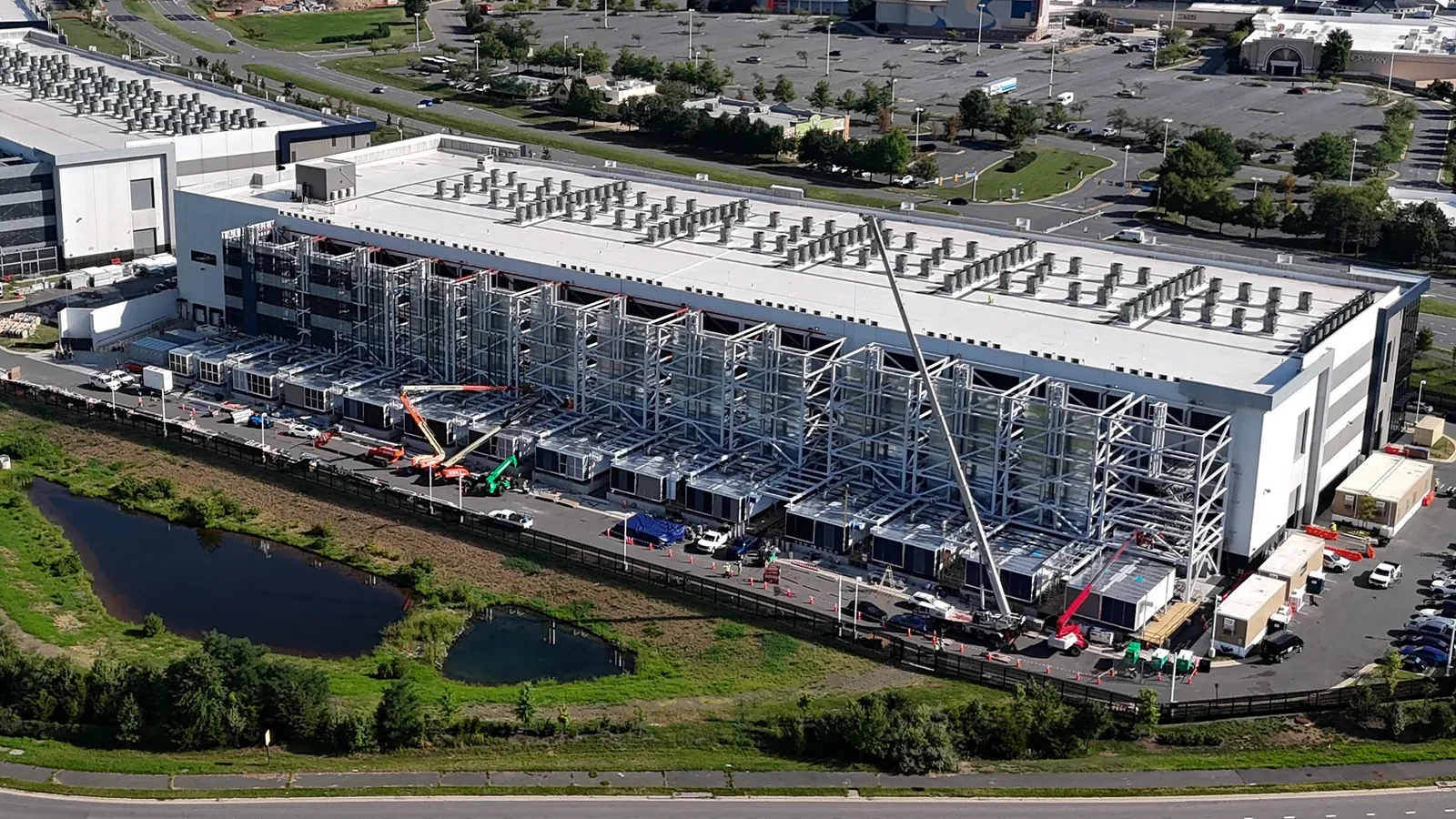
WASHINGTON — Even as data centers entered the crosshairs of state-level moratoriums, stricter zoning regulations, and vocal public pushback throughout 2026, the sector has refused to slow down. According to a comprehensive analysis of market intelligence data from Cleanview, the number of planned and operating data center projects across the United States nearly tripled between March and August 2026.
Fueled primarily by the relentless national expansion of artificial intelligence, cloud computing, and digital infrastructure, data centers have effectively propped up the broader nonresidential construction sector for the majority of the year. Yet, this explosive momentum is colliding with stark physical and regulatory limits. Contractors, developers, and industry analysts warn that securing adequate electrical power, navigating a patchwork of state restrictions, and overcoming crippling supply chain lead times are threatening to cap the industry’s soaring trajectory.
Main Facts
The modern digital economy runs on silicon and electricity, and the appetite for both has reached astronomical proportions in 2026.
- Explosive Pipeline Growth: Between March 16 and August 24, 2026, the volume of live data center projects in the U.S. experienced unprecedented acceleration. Planned projects surged by an astonishing 203%, while operating facilities jumped by 124%, according to Cleanview data.
- Massive Capital Inflow: The buildout is being financed by historic capital expenditures from major tech companies. According to estimates from J.P. Morgan, large cloud "hyperscalers" are projected to invest a combined $697 billion in data center capital expenditures over the course of 2026 alone.
- Industry Giants at the Helm: While pioneers like Meta, Amazon, Google, and Microsoft initially spearheaded the AI-driven infrastructure boom, colocation developers like Stack Infrastructure and Hut 8 have rapidly expanded their footprints to meet surging enterprise demand.
- Geographic Epicenters: Virginia remains the undisputed capital of data center development, anchored by Northern Virginia’s "Data Center Alley." However, significant construction activity has diversified into Southern markets like Texas and Georgia, as well as Midwestern hubs including Ohio and Indiana.
- Scaling Up the Benchmark: Power capacity requirements have scaled exponentially. While a 100-megawatt facility was once considered a monumental undertaking just a few years ago, the new industry benchmark routinely clears 1,000 megawatts per campus.
Chronology of the 2026 Surge
The trajectory of the data center construction market in 2026 has been marked by sudden policy shifts, rapid capital deployment, and mounting logistical bottlenecks:
- Early March 2026: Market data from Cleanview indicates a healthy, albeit heavily concentrated, pipeline of planned data center projects. Hyperscalers like Microsoft and Amazon lead the pack in early-stage site selection and proposed developments, laying the groundwork for a massive infrastructure wave. Industry analysts note early signs of friction, with localized power grid strains beginning to surface in traditional markets.
- April 2026: Commercial real estate and construction experts highlight a radical shift in project scales. Green Street’s global data center research reveals that 1,000-megawatt facilities are replacing smaller footprints as the new standard, forcing developers to seek out entirely new geographies with untapped electrical capacity.
- Mid-2026: State governments begin pushing back against the massive resource draw of modern server farms. Pennsylvania and other jurisdictions implement strict new regulations regarding water usage, noise pollution, and energy consumption. Concurrently, supply chain lead times for core electrical equipment peak at 40 to 60-plus weeks.
- August 24, 2026: Cleanview updates its market intelligence data, revealing that despite regulatory headwinds and supply chain delays, the total pool of planned and operating projects has nearly tripled since March. Contractors report that while the runway remains exceptionally solid, site selection has become an increasingly high-stakes exercise in risk management.
Supporting Data and Regional Hotspots
The sheer scale of the 2026 data center boom is illustrated by shifting capital commitments and geographic distribution. According to Anirban Basu, Chief Economist for Associated Builders and Contractors (ABC), data centers have served as the primary economic engine preventing a broader slowdown in nonresidential construction activity throughout the year.
The Hyperscaler Footprint
Tech giants continue to dominate the development landscape. Microsoft holds the top spot for total planned projects as of early 2026, closely followed by Amazon Web Services (AWS), Google, and specialized colocation firms such as Stack Infrastructure. These entities are deploying hundreds of billions of dollars to secure long-term power purchase agreements and vast tracts of land.
State-by-State Breakdown
Cleanview’s ranking of the top 25 states for planned data center work highlights a distinct geographic migration:
- Virginia: Maintains its firm grip as the global leader in data center concentration, though grid capacity limits in Northern Virginia are pushing developers toward the state’s central and southern regions.
- Texas & Georgia: Emerging as Southern powerhouses, offering vast expanses of land and aggressive economic development incentives, though summer grid reliability remains a localized concern.
- Ohio & Indiana: Leading the Midwestern charge, capitalizing on accessible industrial land, strategic access to major fiber optic backbones, and pro-business regulatory frameworks.
Official Responses and Industry Perspectives
As construction firms grapple with the unprecedented scale of these projects, industry leaders have voiced growing concerns over infrastructure readiness, regulatory hurdles, and supply chain fragility.
Michael Beadle, Senior Vice President of Operations at Minneapolis-based Ryan Cos., emphasized that the old rules of commercial real estate development no longer apply to the data center sector.
"The success of a project is tied to securing a site with access to a significant amount of reliable power, which requires strategic and lengthy relationships with utility partners," Beadle explained. "An ideal site must also have an ample amount of land in case of future expansion, a viable cooling strategy, and a favorable regulatory environment."
Trent Cotney, a partner at law firm Adams & Reese, pointed out that state-level restrictions have added a layer of complexity to project delivery. Following recently implemented regulations in states like Pennsylvania, contractors must navigate a patchwork of legal mandates regarding environmental impact and community zoning. Consequently, meticulous site selection has become a prerequisite for securing financing and trade contractor buy-in.
Meanwhile, supply chain constraints are throttling the speed of construction execution. Brennan Church, Director of Engineering, Procurement, and Construction at Miami-based data center developer Hut 8, detailed the operational bottlenecks facing builders on the ground.
"The biggest bottleneck we are seeing is on long-lead electrical equipment—often at 40 to 60-plus weeks," Church noted. "A shell can be completed and mechanically roughed in, but if the gear isn’t onsite, you’re not energizing."
Implications for the Construction Industry and Economy
The explosive growth of data center construction in 2026 carries profound implications for the broader architecture, engineering, and construction (AEC) ecosystem, as well as the national energy grid.
- Labor and Specialization Demands: General contractors are increasingly required to possess deep technical expertise in mechanical, electrical, and plumbing (MEP) systems. The specialized nature of data center builds—requiring advanced liquid cooling systems, heavy-duty switchgear installation, and rigorous fiber-optic integration—has strained local skilled labor markets.
- Grid Modernization and Energy Policy: The transition from 100-megawatt facilities to gigawatt-scale campuses means that data center developers are no longer just customers of local utilities; they are active participants in regional energy markets. This dynamic is accelerating corporate investments in alternative energy sources, including nuclear, solar, and advanced battery storage, to bypass overburdened public grids.
- Regulatory Realities: The friction between rapid tech sector expansion and local community resistance will likely prompt more states to follow Pennsylvania’s lead. Contractors and developers must factor prolonged zoning battles, environmental reviews, and public hearings into their pre-construction timelines.
- Economic Resilience: Despite these headwinds, the fundamental demand drivers—fueled by generative AI, cloud migration, and enterprise digitization—show no signs of abating. For the construction sector, data centers remain a vital hedge against softness in traditional commercial real estate asset classes like office buildings and retail centers.
Methodology Note
Data utilized in this analysis was compiled by Cleanview through a comprehensive tracking methodology encompassing state environmental permits, developer and hyperscaler websites, investor presentations, Securities and Exchange Commission (SEC) filings, and local news reports. Project statuses and operational timelines are continuously verified using satellite imagery analysis and corporate press releases.
Construction Dive integrated individual project-level data from Cleanview for March 2026 with public datasets from August 24, 2026. The March dataset includes 37 projects originally slated to come online in 2025 whose current operational status remains unverified. Despite evolving regulatory and supply chain pressures, the fundamental indicators confirm that the U.S. data center construction market remains on a historically unprecedented growth trajectory.
