

WASHINGTON — The explosive, unprecedented surge in artificial intelligence infrastructure has thrust the American construction industry into a modern-day gold rush. Driven by the insatiable energy and computing demands of large language models, cloud computing, and machine learning, a massive wave of hyperscale data center construction is sweeping across the country. From rural towns in Ohio and Virginia to sprawling tech hubs in Texas and the Pacific Northwest, contractors are securing multibillion-dollar awards to build the digital backbone of the 21st century.
Yet, this historic windfall has presented builders with a formidable paradox: more work than workers.
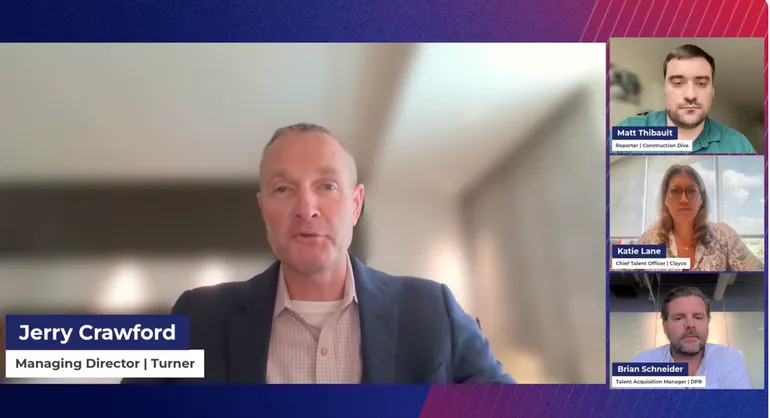
As contractors race to deliver these monumental projects, the industry faces an acute labor shortage compounded by the specialized, high-tech nature of data center infrastructure. To explore how top-tier construction firms are navigating this crisis, industry leaders gathered at Construction Dive’s recent virtual event, "Courting Construction: Recruiting and retaining top talent." Moderated by Construction Dive reporter Matt Thibault, the panel featured prominent executives—including Jerry Crawford, managing director at Turner Construction; Katie Lane, chief talent officer at Clayco; and Brian Schneider, talent acquisition manager at DPR Construction—who offered a masterclass in modern workforce development.
The insights shared during the event painted a vivid picture of an industry in transformation, proving that the data center boom is not merely a staffing challenge, but a generational opportunity to redefine how construction companies recruit, upskill, and retain their most valuable asset: people.
Main Facts: The Scale of the Data Center Labor Crisis
At its core, the data center boom has fundamentally altered the demand curve for construction labor. Unlike traditional commercial real estate or standard industrial builds, hyperscale data centers require an unprecedented convergence of complex mechanical, electrical, and plumbing (MEP) systems, rigorous safety protocols, and hyper-fast delivery schedules.
The sheer scale of these projects has magnified the need for virtually every tier of the workforce. According to Turner Construction’s Jerry Crawford, the industry cannot afford to view this labor demand through a narrow lens.
"When we talk about data center work, there’s an extraordinary amount of work that’s out there right now, and it’s creating extraordinary opportunities for people," Crawford said during the panel. "That’s electricians, that’s pipe fitters, plumbers, welders, safety professionals, foremen, general superintendents, project managers. We need to change the talk to really highlight that."
The primary facts driving the current labor landscape include:
- Unprecedented Demand: The AI buildout is happening simultaneously coast-to-coast and border-to-border, placing massive strain on local labor markets.
- Skill Mismatch: Many workers on the market—and even within existing contractor rosters—have never operated at the hyperscale level required by modern tech giants.
- The Employee Value Proposition Shift: Compensation alone is no longer enough to win the war for talent. Contractors must offer holistic benefits, including student loan assistance, travel incentives, and enhanced onboarding.
- The Dual-Track Workforce Model: While local pipelines are vital for community integration and long-term sustainability, remote or isolated data center sites require aggressive mobile workforce strategies to bridge immediate staffing gaps.
Chronology: How the AI Surge Triggered a Workforce Pivot
The convergence of the post-pandemic construction rebound and the generative AI explosion created a pressure cooker for builders over a remarkably short timespan. Tracing the chronology of this shift reveals how rapidly contractors were forced to adapt.
Late 2022 to Early 2023: The Spark
Following the public debut of advanced generative AI models, major tech conglomerates (including Microsoft, Google, Amazon, and Meta) initiated an immediate, aggressive scramble to secure land and power for massive server farms. Traditional data center construction pipelines, which were already operating at a steady clip, suddenly saw their timelines compressed by half.
Throughout 2023: The Realization of Shortages
By mid-2023, contractors realized that standard talent acquisition models were failing. Projects were regularly delayed not by supply chain bottlenecks for generators or cooling units, but by a severe lack of specialized electrical and mechanical contractors. Firms like DPR Construction began to systematically formalize their mobile workforce strategies, recognizing that local labor markets simply could not supply the thousands of skilled tradespeople needed for a single hyperscale campus.
2024: The AI Boom and Operational Overhaul
The year 2024 marked a turning point of urgency. The generative AI buildout went into hyperdrive. Contractors transitioned from reactive hiring to proactive "re-recruiting" and internal upskilling. Companies like Clayco rolled out extended onboarding programs stretching up to a full year, while Turner Construction doubled down on localized pipeline development to avoid burnout among traveling crews. Events like Construction Dive’s August 2024 virtual seminar served as a sounding board for these industry leaders to share best practices as the crisis entered its peak phase.
Supporting Data and Economic Realities
The economic engine driving data center construction is staggering, yet it runs on the physical endurance and technical capability of human beings. Industry analysts note that data center construction spending in the United States has shattered previous historical records, fueled by billions in private capital expenditure directed toward digital infrastructure.
However, data from workforce surveys underline the gravity of the talent deficit:
- The Aging Workforce: More than 41% of the current construction workforce is projected to retire over the next decade, making aggressive recruitment from non-traditional and younger demographics an existential necessity.
- The Cost of Scale: Hyperscale data centers frequently exceed 500,000 square feet and cost upwards of $1 billion to $3 billion each. A single day of delay due to understaffing can cost millions in lost revenue and liquidated damages.
- Geographic Disconnect: Many of the most strategic locations for data centers—chosen for cheap land, abundant water, and proximity to power grids—are located in rural or semi-suburban areas far away from dense labor pools, forcing contractors to move thousands of workers across state lines.
Official Responses: Strategies from Industry Leaders
During the Construction Dive panel, executive leaders detailed how their respective companies are pivoting to meet these operational and human resource challenges head-on. Their strategies focus on three distinct pillars: local talent development, internal upskilling, and mobile workforce support.
1. Building Local Pipelines (Turner Construction)
While data centers require mobile experts, Turner Construction emphasizes that long-term success relies heavily on cultivating local talent.
"We’re not just looking for travelers that are going to come in and build one project and then leave and go build a project somewhere else around the country," Jerry Crawford explained. "We’re looking for local pipeline, local talent."
By partnering with local vocational schools, unions, and underrepresented communities, Turner aims to leave behind a thriving economic footprint rather than a temporary construction camp. This approach builds community goodwill, reduces turnover, and fosters a sustainable workforce that can transition into facility maintenance and management once construction concludes.
2. "Re-Recruiting" and Upskilling (Clayco)
For Clayco, the challenge is not just finding new bodies, but preparing existing personnel for a completely new scale of work. Chief Talent Officer Katie Lane coined the term "re-recruiting" to describe the firm’s focus on continuously engaging and re-educating its current staff.
"Part of the challenge with some of these large hyperscale projects is we’ve got people working on them who have never done this before at this scale," Lane noted. "And so we are needing to re-educate internally on these different types of projects that we’re working on."
Clayco’s strategy extends far beyond standard technical training. The company recognized that employee retention requires a holistic support system. They have restructured incentive programs for major projects to include travel rotations, student loan repayment assistance, and extended onboarding support that shepherds new hires through their first six to twelve months on the job.
"Nobody is going to win retention on compensation alone," Lane stressed.
3. Engineering the Mobile Workforce (DPR Construction)
When local markets fall short—which is frequently the case in remote or rural data center zones—contractors must rely on a mobile workforce. Brian Schneider, talent acquisition manager at DPR Construction, explained that the firm began aggressively refining its mobile workforce infrastructure to handle the 2024 AI surge.
"We want to make this process as easy as possible on our people because it is challenging work," Schneider said. "Traveling can be difficult."
Because relocating families and disrupting lives is a major friction point for skilled tradespeople, DPR enhanced its compensation and support packages. To sweeten the deal and reduce the burden of travel, the company deploys a robust suite of benefits, including:
- Living allowances and generous per diems
- Special project completion incentives
- Substantial mobilization and travel bonuses
- Regular travel stipends to allow workers to visit their families
- Base salary increases tailored to high-demand regions
Implications: The Future of Construction Recruitment and Culture
The structural shifts forced upon the construction industry by the data center boom carry profound implications for the future of work in the built environment.
The Death of Transactional Employment
For decades, construction employment was largely transactional: a worker showed up, performed a specific trade, collected an hourly wage, and moved on to the next job when the project wrapped. The data center crisis has rendered this model obsolete. Because the skills required are scarce and the projects are continuous, top contractors are investing in career mapping, mental health support, family-friendly travel benefits, and continuous professional development.
As Katie Lane aptly summarized: "Historically, it was here’s compensation, here’s benefits, welcome to the club. Now, we’re having to solve for many other aspects that might be sweetening the pot for people."
Redefining the Image of Construction
Furthermore, the association between data center construction and cutting-edge artificial intelligence provides a unique public relations opportunity for an industry long plagued by an outdated image of dirt, hard labor, and limited upward mobility. By branding data center jobs as high-tech careers at the bleeding edge of the digital revolution, recruiters are successfully attracting a younger, tech-savvy demographic that might otherwise have pursued desk jobs in software or finance.
A Lasting Blueprint for Other Sectors
Ultimately, the lessons learned in the data center trenches will likely serve as a blueprint for the entire construction sector. As infrastructure spending continues to surge through federal initiatives like the IIJA and the CHIPS Act, the techniques pioneered today—extended onboarding, robust mobile worker stipends, localized community pipelines, and internal upskilling—will determine which contractors thrive and which falter in an era of unprecedented demand.
The data center boom is undeniably daunting, but as Jerry Crawford aptly framed it: "Yes, there is a workforce shortage that’s out there and a workforce challenge, but it’s also a tremendous workforce opportunity." For the builders wise enough to adapt, the future of construction has never looked brighter.
