

Main Facts
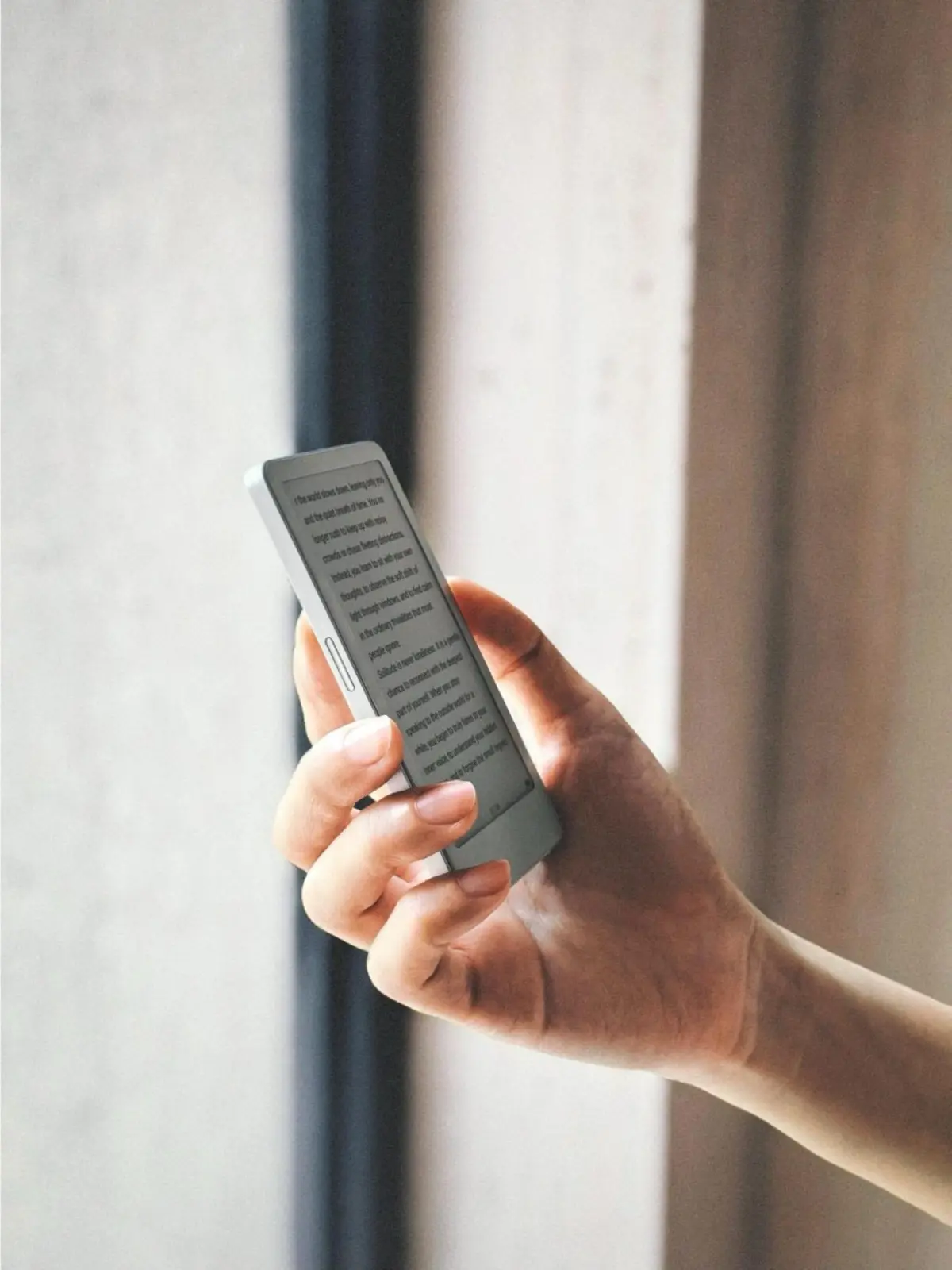
The landscape of ultra-portable e-readers is shifting rapidly. Following initial teasers from Onyx Boox regarding its pocket-sized reading device—the Boox Picco—fresh details have emerged from the IFA tech convention floor. Designed as Boox’s direct answer to the buzzy, minimalist Xteink X4, the Picco aims to capture the hearts of minimalists, commuters, and tech enthusiasts who want a distraction-free digital reading experience that fits comfortably in the palm of a hand or a pocket.
Sporting a compact 3.97-inch e-paper touchscreen display, the Picco distinguishes itself through a blend of physical ergonomics and modernized connectivity. Unlike some of its competitors, it foregoes magnetic phone-mounting solutions on its chassis, leaning instead into standalone usability. Navigation is enhanced by tactile, physical page-turn buttons that support customizable short-press and long-press actions.
Rather than relying on standard internal flash memory, the Picco leans into expandable and direct file management. It lacks onboard storage entirely, requiring users to populate a microSD card with their library. However, unlike certain rivals, it introduces flexible file transfer methods: users can load books via direct USB-C connection or wirelessly over Wi-Fi utilizing a dedicated companion app.
Under the hood, the Picco departs from the heavy, feature-rich Android operating systems that have historically defined Boox’s larger productivity-focused tablets. Instead, it operates on a lightweight, stripped-down Linux-based OS. To add everyday utility, Boox has packed a small suite of micro-applications into the firmware, including a timer, a to-do list, and a reading statistics tracker.
Despite the influx of hands-on reports from IFA, key details—most notably pricing, battery capacity, Bluetooth capabilities, and potential audiobook playback functionality—remain tightly under wraps. Onyx Boox has indicated that a full, formal launch is scheduled for November, at which point the remaining mysteries of the hardware will be resolved.
Chronology of the Pocket E-Reader Trend
The journey toward the Boox Picco and its contemporaries reflects a broader cultural and industrial pivot back toward "dumb" devices, digital minimalism, and specialized hardware.
- Late 2023 to Early 2024: The market sees a sudden surge in interest surrounding ultra-compact, credit-card-sized or pocket-friendly e-readers. Consumers increasingly express digital fatigue, seeking devices that strip away notifications, glowing app grids, and internet browsing while retaining high-contrast, eye-friendly electronic paper displays.
- Spring 2024: Xteink captures the tech community’s imagination with the introduction of the Xteink X4 e-reader. Boasting a tiny form factor, magnetic phone attachment points, and an open firmware structure that appeals to hardware hackers, it establishes a blueprint for a brand-new sub-category of consumer electronics.
- July 2024: Sensing a lucrative new niche, Onyx Boox formally teases its own interpretation of the micro e-reader concept: the Boox Picco. At the time of the announcement, the company shares little more than a silhouette and a name, leaving industry analysts and consumers to speculate on its specifications.
- Subsequent Iterations: Xteink counters by pushing out refined versions, such as the X4 Pro, which introduce long-awaited quality-of-life updates like touchscreens and integrated reading lights, addressing early consumer complaints.
- Late Summer / IFA 2024–2025 Trade Shows: Hands-on reporting finally sheds light on the actual hardware choices made by Boox. Tech journalists examining the device at IFA confirm the presence of a 3.97-inch touchscreen, physical page-turn buttons, and a Linux-based operating system.
- November 2025 (Projected): Onyx Boox is slated to officially launch the Picco, revealing final pricing, regional availability, and comprehensive hardware specifications.
Supporting Data and Technical Overview
To understand where the Boox Picco sits in the current e-reader ecosystem, it helps to examine its hardware configuration relative to industry standards and its primary competitor, the Xteink X4 series.
Display and Ergonomics
- Screen Size: 3.97 inches. While standard e-readers from Kobo and Amazon typically hover between 6 and 7 inches, the Picco’s sub-4-inch panel positions it closer to a smartphone footprint.
- Panel Type: E-paper touchscreen. The incorporation of touch interactivity addresses a major usability bottleneck found in older or budget micro-readers, aligning the Picco with the expectations of modern consumers.
- Physical Controls: Dedicated physical page-turn buttons are built into the hardware. Notably, these buttons support deep customization, allowing users to map distinct functions to short presses versus long presses.
- Chassis Design: Unlike the Xteink line, which includes magnetic backing designed to snap the reader directly onto the back of a smartphone, the Picco maintains a clean, flat rear shell, indicating it is meant to be used as a standalone object rather than a smartphone accessory.
Storage and Connectivity
- Internal Storage: Zero gigabytes. The Picco omits built-in flash memory altogether.
- External Storage: MicroSD card slot. All reading material must reside on a physical memory card inserted into the device.
- Wired Transfer: USB-C port. This represents a significant modernization over older micro-readers, enabling fast wired file management and battery charging.
- Wireless Transfer: Wi-Fi connectivity backed by a companion app, allowing users to beam books directly to the device without manually swapping cards or cables.
Software Architecture
- Operating System: A custom, stripped-down Linux-based OS. This is a stark departure from the full-fat Android OS running on flagship Boox devices like the Palma or Note series.
- Pre-Installed Utilities: Basic productivity and tracking tools, including a timer, a to-do list, and a dedicated reading stats tracker.
- Ecosystem Openness: Unlike Xteink, which has historically fostered an open firmware ecosystem encouraging community modifications and hacking, Boox is expected to maintain a closed, locked-down software environment.
Official Responses and Industry Reactions
The announcement and subsequent hands-on previews of the Boox Picco have generated considerable discourse across the tech community, drawing commentary from industry analysts, hardware reviewers, and corporate representatives.
The Consumer Tech Press
Reviewers and journalists covering the IFA conference have offered a mixed, highly nuanced reception to the Picco’s feature set. Industry publications praised the inclusion of a touchscreen, echoing previous sentiments from The Verge regarding similar upgrades in competing hardware as a "welcome upgrade" that drastically improves navigation through dense menus and large document libraries.

However, reactions to the storage architecture have been polarized. While retro enthusiasts appreciate the purity of a microSD-only device reminiscent of early MP3 players or classic handheld consoles, mainstream reviewers have questioned the omission of internal storage in an era where cloud syncing and direct internal memory are standard.
Onyx Boox’s Strategic Positioning
Representatives for Onyx Boox have framed the Picco not as a replacement for full-featured reading tablets like the Boox Palma, but as an exercise in hyper-minimalism. By stripping away Android, the heavy RAM requirements associated with Google Play services, and complex multi-app multitasking, Boox is targeting a specific psychological profile: the reader who wants zero notifications, maximized battery efficiency, and a device that forces a return to deep, uninterrupted reading.
The Open-Source Community vs. Closed Firmware
A notable point of contention in official forums and enthusiast hubs centers on Boox’s software philosophy. Xteink carved out a loyal following by encouraging third-party modifications, custom launchers, and user-generated firmware patches.
Conversely, Boox’s decision to run a closed, proprietary Linux environment means the Picco will likely be far less hackable. While this ensures a stable, uniform user experience out of the box, it alienates the power-user segment that enjoys transforming budget tech into custom emulation or productivity handhelds.
Implications for the E-Reader Market
The arrival of the Boox Picco signals several broader shifts within the consumer electronics and digital publishing industries.
1. The Rise of the "Micro-Reader" Niche
For over a decade, the e-reader market has trended toward larger screens (ranging from 8 to 13 inches) to accommodate PDF annotation, note-taking, and graphic novels. The success of the Xteink X4 and the subsequent entry of major players like Boox into the sub-4-inch space proves that a counter-movement is underway. Consumers increasingly value portability over screen estate, prioritizing a device that can slip into a pocket over one that requires a bag.
2. The Battle for Digital Detox
As smartphones become increasingly intrusive—laden with algorithmic feeds, short-form video loops, and endless notifications—gadgets like the Picco serve as psychological sanctuaries. By offering a dedicated reading tool that deliberately lacks a web browser, social media apps, and distracting games, companies are capitalizing on the growing digital wellness movement. The implication is that future hardware success may rely less on doing more and more on doing less, perfectly and without friction.
3. Hardware Convergence and Differentiation
With multiple manufacturers now operating in the pocket e-reader space, differentiation is becoming critical. Xteink leans into smartphone integration (magnets) and open-source hacking communities. Boox, on the other hand, leans into hardware polish, established brand trust, sleek industrial design, and native companion app ecosystems. As the Picco approaches its November launch window, the ultimate test will be whether consumers prefer Boox’s refined, closed-ecosystem approach or the rugged, hackable minimalism pioneered by its competitors.
