

By Ajay Kumar
Smart Home & Robotics Editor
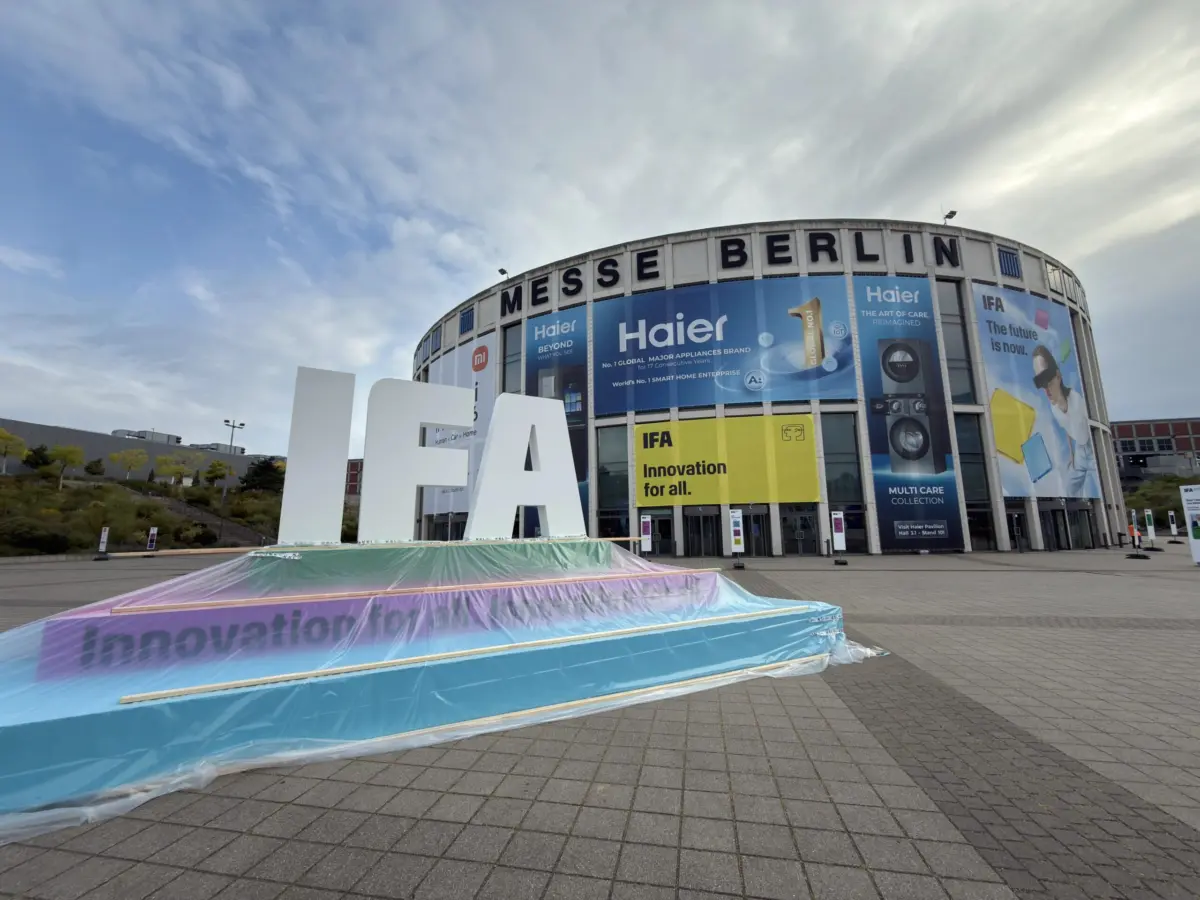
BERLIN — For years, the sprawling halls of IFA Berlin have served as a crystal ball for the consumer electronics industry, showcasing the bleeding edge of global innovation. It is a venue where engineers, visionaries, and manufacturers converge to display conceptual marvels, futuristic prototypes, and jaw-dropping tech. While the 2026 exhibition certainly featured its share of eccentricities—including iRobot’s elaborate Roomba Duo floor-washing mothership, various dexterous humanoid robot demonstrations, and grandiose flying car concepts—the overarching mood of this year’s convention felt markedly more grounded than its predecessor.

Instead of chasing wild, sci-fi headlines, major tech companies appeared determined to drill down on refinement, focusing heavily on perfecting existing product ecosystems and solving pragmatic consumer pain points. Rather than reinventing the wheel, manufacturers are making those wheels smarter, more hygienic, and increasingly tailored to real-world applications.
Here is a comprehensive breakdown of the defining trends that emerged from IFA Berlin 2026, shaping what consumers can expect in the smart home and tech landscape next year.

Main Facts: Refinement Over Revolution at IFA 2026
The consumer tech landscape in late 2026 is defined by a shift toward maturity. The race for novelty has given way to an intense focus on performance, health certifications, and energy independence.
- Health-Centric Robotics: Robot vacuums are officially moving past basic dust collection to target invisible threats like dust mites, allergens, and bacteria. High-profile models are securing strict medical and institutional certifications.
- Tackling Deep Cleaning: Manufacturers are pushing hard to bridge the gap between autonomous dusting and true manual scrubbing, utilizing increased downward pressure, heated steam, and targeted liquid sprays.
- Humanoids Plateau: Despite numerous demonstrations of humanoid robots capable of backflips and basic sorting, the industry faces severe cost and timeline barriers, with practical, affordable home models still a decade away.
- Balcony Solar Momentum: Plug-in solar systems are rapidly expanding across renter markets and suburban homes alike, providing an accessible way to offset rising utility bills despite looming regulatory roadblocks.
- Dyson’s Rapid Diversification: Dyson stunned attendees with an aggressive 11-product launch rollout, moving beyond its traditional cleaning strongholds into entirely new categories, such as AI-driven dental care.
- The Global Product Gap: A massive chasm continues to grow between the staggering volume of innovative home automation products released globally by Asian manufacturers and what is legally or practically accessible to American consumers.
Chronology of the Event: How the Week Unfolded
The trajectory of IFA Berlin 2026 unfolded in distinct phases, shifting from early skepticism over repetitive robotics displays to genuine excitement regarding breakthrough home-energy and personal-care releases.

Pre-Show Hype and Opening Days
As doors opened in Berlin, early media days were dominated by the customary spectacles: robotic dogs, acrobatic androids, and ambitious mobility concepts. Industry analysts initially worried that 2026 might be an incremental year devoid of true category-defining products. However, as press briefings progressed past the initial marketing fluff, specific technological sub-sectors began to reveal profound structural shifts.
Mid-Week Shifts Toward Practicality
By day two and three, the conversation pivoted entirely away from speculative concepts toward market-ready devices. Booth traffic surged around cleaning exhibits where brands demonstrated heavy-duty sterilization capabilities. Simultaneously, energy solutions drew heavy crowds as European and international attendees engaged deeply with balcony solar options amid fluctuating regional power grids.

Late-Week Regulatory Realities
The final days of the convention brought sobering industry discussions concerning global trade, supply chain dependencies, and regulatory bottlenecks. Conversations with executives from major robotics and energy firms highlighted how tightening international restrictions—particularly concerning Federal Communications Commission (FCC) guidelines and cross-border supply chains—are directly impacting launch timelines, casting a shadow of uncertainty over future availability in Western markets.
Supporting Data & Market Analysis
To fully understand the technological direction of 2026, one must examine the specific metrics driving manufacturer decisions. The focus on micro-cleaning and structural power has introduced unprecedented numerical specifications to home appliances.

Robot Vacuums: The Allergen and Pressure Wars
For years, consumer expectations of robot vacuums centered on suction power measured in pascals (Pa). Today, cleaning performance has evolved into a multi-variable equation involving mechanical pressure and specialized sanitization.
- Ecovacs Deebot X12S Omnicyclone: Independent testing conducted by SGS Testing & Control Services Singapore revealed that the X12S successfully removed an average of 97.44% of dust mite allergens and 95.45% of dust mites from deep carpet fibers.
- Anker Eufy Omni E35: Certified by the Asthma and Allergy Foundation of America (AAFA), the E35 claims a slightly higher removal rate of 99% of dust mites, utilizing advanced filtration and sanitation cycles.
- Mechanical Downward Pressure: To combat stubborn, dried-on messes like ketchup or tomato sauce, companies are dramatically increasing downward mopping force. Newer flagship devices from iRobot and Eufy leverage automated roller mops generating pressures of 14 Newtons (N) to 18 Newtons (N), simulating human elbow grease.
- Suction Reinforcement: iRobot’s Roomba 875 Combo introduces an innovative mechanical "skirt" that drops downward to seal against the floor, dramatically maximizing suction efficiency alongside an already immense baseline of 35,000 pascals of suction power.
The Scale of Global Expansion
The sheer breadth of international manufacturing was on full display at the exhibition booths of dominant global players like Dreame and Mova.

- Dreame’s official product catalog for IFA featured over 40 distinct product releases, spanning robot vacuums, wet-dry stick cleaners, window washers, automated pool skimmers, smart pet feeders, robotic lawn mowers, and beauty appliances.
- Mova displayed a comparable volume of hardware, emphasizing a "jack-of-all-trades" product philosophy that vastly outpaces traditional Western appliance release cycles.
Official Responses and Industry Insights
Behind the polished product demonstrations lie complex strategic realities, as revealed by key industry representatives during the event.
The Regulatory Cloud Over US Markets
While international tech brands continue to innovate at a blistering pace, regulatory hurdles remain a primary concern for executive leadership. Representatives from both Bluetti and Dreame confirmed to press that certain highly anticipated hardware rollouts have faced strategic pauses or potential delays when targeting the United States.

The primary culprit is ongoing uncertainty surrounding regulatory frameworks—specifically FCC rulings and potential restrictions on imported smart components originating from complex global supply chains. As one Bluetti spokesperson noted at the company’s exhibition booth, while consumer demand for scalable home energy storage is higher than ever, domestic supply pipelines for home batteries and solar hardware remain vulnerable to shifting trade policies.
The Reality Check on Humanoid Robotics
Addressing the underwhelming reception of humanoid robots at IFA 2026, industry experts and company engineers pointed to the stark economic and technical chasm that still separates current prototypes from commercial viability.

Current bipedal units—such as the PrimeBot T1, PrimeBot Q1, and SwitchBot Onero H1—remain largely iterative, performing the same basic dances, backflips, and slow laundry-loading routines seen in previous years. Industry consensus highlights that bringing a fully functional home assistant robot to market faces a realistic timeline of five to 10 years, with projected consumer price points hovering closer to $100,000 than the accessible $10,000 mark. Consequently, experts anticipate many more years of exhibition-floor demonstrations before consumers can purchase a truly autonomous humanoid assistant for domestic use.
Implications: What This Means for Consumers Next Year
The developments witnessed at IFA Berlin 2026 carry profound implications for everyday consumers, smart home enthusiasts, and global markets.

1. The Medicalization of Home Cleaning
The aggressive pursuit of AAFA certifications and rigorous mite-removal testing signifies that smart home cleaning tools are no longer viewed merely as convenience gadgets. For asthma sufferers, pet owners, and households with newborns, robot vacuums are transforming into active health-management devices. As technologies like UV sterilization, thermal steam deployment, and high-efficiency particulate air (HEPA) filtration become standard across mid-to-high-tier lineups, maintaining an allergen-free home will require significantly less manual intervention.
2. The Rise of Decentralized Home Energy
The legal momentum behind balcony solar—exemplified by New Jersey becoming the 10th US state to legalize plug-in solar arrays for renters—suggests that clean energy access is finally breaking free from the traditional single-family rooftop model. Scalable modular battery systems from brands like Bluetti, Jackery, and EcoFlow mean apartment dwellers can actively offset peak electricity pricing. However, consumers must carefully navigate local homeowners association (HOA) bylaws and regional electrical codes before installing these systems.

3. The Growing Tech Divide Between Regions
Perhaps the most sobering takeaway from Berlin is the widening gap between what global technology companies can engineer and what Western consumers are permitted to buy. With complex regulatory climates, shifting tariff structures, and stringent telecommunications compliance laws, American consumers risk missing out on an entire ecosystem of highly integrated, multi-category smart home appliances.
If domestic supply chains for robotics and green energy hardware cannot be rapidly scaled to bridge the gap left by international restrictions, progress in Western smart home adoption may experience a prolonged plateau while global markets race ahead.

Editor’s Note: Travel and accommodation expenses for Ajay Kumar’s coverage of the IFA conference were partially offset by Roborock. However, all editorial judgments, product evaluations, and critical analyses remain entirely independent and reflect CNET’s rigorous journalistic standards.
