

By ACHR NEWS Staff Reports | Special Centennial Anniversary Feature
Main Facts
The landscape of the heating, ventilation, air conditioning, and refrigeration (HVACR) industry underwent a seismic shift in the final decade of the 20th century. At the heart of this transformation was the implementation of the Clean Air Act Amendments (CAA) of 1990, a landmark piece of environmental legislation that fundamentally altered how technicians handled ozone-depleting substances.
Beginning November 14, 1994, federal regulations mandated that any technician servicing, maintaining, repairing, or disposing of air conditioning and refrigeration equipment containing chlorofluorocarbons (CFCs) or hydrochlorofluorocarbons (HCFCs) must be officially certified. To purchase these regulated refrigerants legally, professionals were required to pass a rigorous, EPA-approved examination drawn from an official federal test bank. Earning certification was no longer a matter of voluntary professional development; it was a strict legal prerequisite for practicing the trade.
The mandate drew questions directly from comprehensive test banks, requiring candidates to achieve a minimum score of 70% to pass. This regulatory milestone separated the industry into a "before and after" era, introducing strict accountability, mandatory recovery and recycling protocols, and a formalized educational pathway for the modern HVACR workforce.
Chronology: The Path to Mandatory Certification
To understand the weight of the 1994 mandate, one must trace the timeline of environmental awareness and regulatory action that led up to it. The realization that synthetic refrigerants were altering the Earth’s atmosphere did not happen overnight; it was a decades-long accumulation of scientific discovery, international diplomacy, and legislative pressure.
The Scientific Awakening (1970s–1980s)
- 1974: Chemists Mario Molina and F. Sherwood Rowland publish their groundbreaking research in Nature, theorizing that CFCs—widely used in aerosols and refrigeration—rise into the stratosphere, where solar radiation breaks them down and releases chlorine atoms that actively destroy ozone molecules.
- 1978: The United States officially bans the use of CFCs as propellants in most aerosol cans, marking the first major domestic restriction on the chemical class.
- 1985: British Antarctic Survey scientists announce the discovery of the Antarctic ozone hole, providing undeniable empirical evidence of severe ozone depletion over the South Pole and alarming the global scientific community.
International Consensus and Domestic Law (1987–1990)
- September 1987: The international community unites to sign the Montreal Protocol on Substances that Deplete the Ozone Layer, establishing an aggressive international timetable for phasing out the production and consumption of CFCs and other ozone-depleting chemicals.
- November 1990: President George H.W. Bush signs the Clean Air Act Amendments of 1990 into law. Title VI of the amendments specifically addresses stratospheric ozone protection, granting the U.S. Environmental Protection Agency (EPA) sweeping authority to regulate refrigerants, establish recycling requirements, and penalize venting.
The Compliance Era Unfolds (1991–1994)
- 1991–1993: The EPA drafts Section 608 of the Clean Air Act, outlining the rules for refrigerant recovery, recycling, and technician certification. Industry associations, training providers, and publishing houses—such as BNP Media, publisher of The ACHR NEWS—begin developing educational materials, including the bestselling Technician’s Guide to Certification, to help the workforce prepare.
- November 14, 1994: The compliance deadline arrives. From this day forward, technicians must carry EPA certification credentials to purchase regulated refrigerants, and intentional venting of CFCs and HCFCs becomes strictly illegal under federal law.
Supporting Data: The Mechanics of the Exam and Industry Impact
The introduction of the EPA Section 608 certification exam created an immediate and unprecedented educational demand across the United States. Overnight, thousands of seasoned mechanics, trade school students, and contractors had to transition from "rule-of-thumb" field practices to strict compliance with federal environmental law.
Structure of the EPA Section 608 Certification
The certification program was divided into four distinct categories, ensuring that technicians were tested specifically on the types of equipment they serviced:
- Type I: For servicing small appliances (refrigerators, window air conditioners, freezers containing 5 pounds or less of refrigerant).
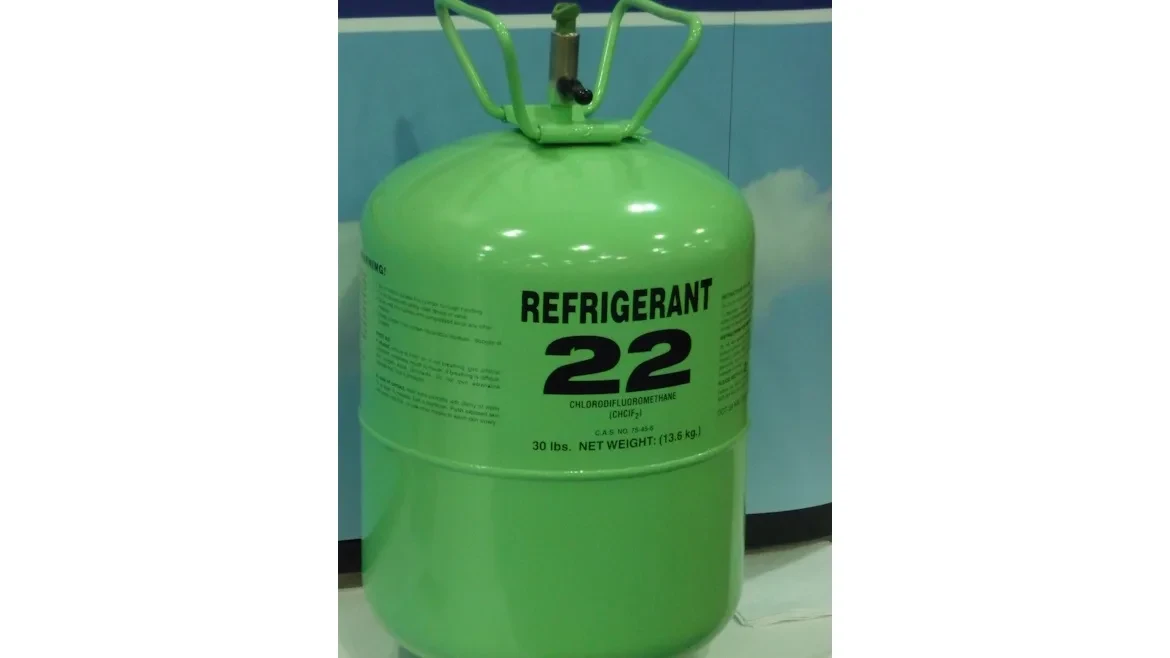
- Type II: For servicing or disposing of high-pressure appliances (residential split systems, commercial comfort cooling systems, and chillers using R-22, for example).
- Type III: For servicing or disposing of low-pressure appliances (large commercial chillers using R-123 or R-11).
- Universal: For technicians who pass all three specific specialty exams, granting them comprehensive certification across all equipment types.
Sample Knowledge Benchmarks
To pass the exam and achieve a minimum score of 70%, technicians had to master complex thermodynamic properties, containment laws, and recovery techniques. Classic questions from the original EPA test banks—frequently featured in training texts like Technician’s Guide to Certification—tested deep technical literacy.
For instance, technicians were routinely tested on thermodynamic properties, such as recalling the vapor pressure of standard refrigerants like R-22 at specific temperatures (e.g., 70°F), understanding saturation curves, calculating subcooling and superheat, and identifying safe recovery evacuation levels measured in inches of mercury (vacuum). Furthermore, candidates had to memorize specific phase-out dates, cylinder color-coding standards, and the legal hierarchies of leak repair thresholds for commercial systems carrying more than 50 pounds of refrigerant.

Official Responses and Industry Stakeholder Perspectives
When the Clean Air Act Amendments of 1990 were first proposed and subsequently implemented in 1994, the reaction from the HVACR industry was a mixture of apprehension and reluctant acceptance.
Contractor and Technician Concerns
Initially, many veteran contractors viewed the federal mandate as unnecessary red tape. For decades, field technicians had vented CFC-12 and HCFC-22 freely into the atmosphere during service calls, considering it a routine, harmless part of clearing a line or repairing a leak. The sudden requirement to invest in expensive refrigerant recovery machinery, portable storage cylinders, and certification study guides placed a significant financial burden on small, independent contracting businesses.
The EPA and Environmental Advocacy Stance
From the regulatory and environmental perspective, the rules were non-negotiable. The EPA argued that without mandatory certification and recovery protocols, the stratospheric ozone layer would continue to deteriorate, leading to catastrophic increases in ultraviolet radiation, skin cancers, and agricultural disruptions. Environmental agencies emphasized that holding technicians legally accountable for their handling practices was the only way to ensure compliance on a national scale.
Educational and Media Response
Trade media, particularly The ACHR NEWS, played a vital role in bridging the gap between federal regulators and the field workforce. Recognizing that thousands of technicians were anxious about failing the exam, publishers ramped up training resources. Books, seminars, and practice exams flooded the market, transforming the anxiety of the "Compliance Era" into an opportunity for professional elevation. Training programs standardized technical knowledge across the country, ensuring that a technician in rural Texas and one in downtown Chicago shared the same baseline understanding of environmental stewardship.
Implications: The Long-Term Transformation of HVACR
Looking back from the vantage point of the industry’s centennial celebrations, the 1990 Clean Air Act Amendments and the 1994 certification mandate stand out as the defining moments that modernized the HVACR trade.
Elevation of the Profession
Before 1994, HVACR was frequently perceived purely as a blue-collar trade driven solely by mechanical aptitude. The introduction of EPA certification requirements elevated the intellectual rigor of the profession. Technicians had to think like environmental scientists and chemists, understanding global warming potentials (GWP), ozone depletion potentials (ODP), and thermodynamic recovery efficiencies. This shift helped professionalize the workforce, paving the way for modern certifications covering complex variable refrigerant flow (VRF) systems, building automation, and next-generation low-GWP refrigerants (such as A2L flammables).
Technological Innovation
The phase-out of CFCs (like R-12) and HCFCs (like R-22) forced equipment manufacturers to innovate rapidly. The industry transitioned first to hydrofluorocarbons (HFCs) like R-410A, and is currently navigating the transition toward environmentally sustainable natural refrigerants and hydrofluoroolefins (HFOs). The rigorous testing and recovery mindset instilled by the 1994 rules ensured that the workforce could safely adapt to each successive generational shift in chemical technology.
A Lasting Culture of Compliance
Today, the idea of purchasing refrigerant without certification or intentionally venting chemicals into the atmosphere is unthinkable to a licensed HVACR professional. The 1990 Clean Air Act successfully embedded a culture of environmental stewardship into the DNA of the trade. As the industry faces new regulatory horizons—such as the AIM Act and the phasedown of HFCs—the framework established in 1994 serves as the proven blueprint for how the HVACR community handles environmental transformation while continuing to keep the modern world cool, safe, and comfortable.
