

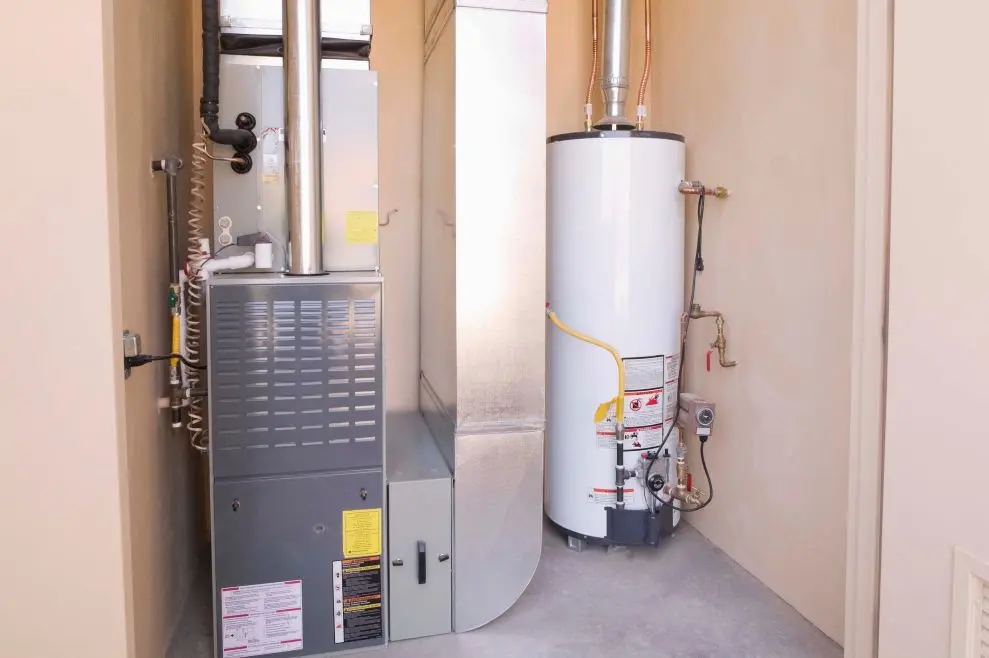
WASHINGTON — In a major legislative push aimed at reshaping the regulatory landscape for American households and commercial enterprises, Senate Committee on Energy and Natural Resources Chairman Mike Lee, R-Utah, introduced the Energy Efficiency Reform Act of 2026 this month. The sweeping bill seeks to fundamentally overhaul the U.S. Department of Energy’s (DOE) Appliance Standards Program, a regulatory apparatus that has governed the energy efficiency of roughly 60 household and commercial product categories for decades.
Proponents of the legislation argue it will restore common-sense limits to federal overreach, protect consumer choice, and shield manufacturers from escalating compliance costs. Meanwhile, critics and environmental advocates are bracing for a high-stakes legislative battle over the future of energy conservation, technological innovation, and federal climate policy.
To understand the weight of the Energy Efficiency Reform Act of 2026, one must examine the intersection of federal authority, industrial manufacturing constraints, shifting political administrations, and the everyday appliances found in millions of American homes—from water heaters and furnaces to refrigerators, air conditioners, and laundry units.
Main Facts: What the Energy Efficiency Reform Act Proposes
At its core, the Energy Efficiency Reform Act of 2026 targets the mechanisms by which the federal government sets, updates, and enforces energy conservation standards. Under the existing framework of the Energy Policy and Conservation Act (EPCA), the DOE is empowered to establish rigorous energy efficiency criteria for covered products. However, the foundational statute governing these regulations has not seen a comprehensive update from Congress since 2007, when lawmakers significantly expanded efficiency mandates. In the absence of congressional action, regulatory agencies have filled the vacuum, often adjusting the stringency of these standards with each change in the White House.
The newly introduced bill attempts to rein in executive discretion and establish permanent structural guardrails through four primary pillars:
- Codification of the Process Rule: The legislation mandates the codification of the Process Rule, which governs how the DOE conducts its technical analyses to determine whether proposed efficiency standards are technologically feasible and economically justified.
- Elimination of the Six-Year Review Cycle: The bill removes the statutory requirement that the DOE review existing product standards every six years to evaluate potential updates.
- Stricter Oversight for New Product Classes: It introduces heightened requirements and mandatory criteria the DOE must evaluate before establishing a new product class, a mechanism historically used to segment appliances based on features or performance capabilities.
- Strengthened Federal Preemption: The legislation fortifies EPCA’s preemption clauses, explicitly barring individual states from enacting bans on covered products based on their fuel source or emissions profile, and preventing states from implementing their own independent standards when federal standards are absent or repealed.
According to statements from Sen. Lee’s committee, manufacturers have grown increasingly vocal in recent years regarding the trajectory of federal energy standards. Industry stakeholders contend that aggressive efficiency targets mandated by regulators have driven up the retail cost of essential appliances while delivering negligible utility bill savings for consumers.
"Climate alarmism turned ordinary appliances into political targets," Sen. Lee said following the bill’s introduction. "Under the Biden administration, regulators repeatedly pursued standards that narrowed consumer choice without adequately accounting for performance or cost. The Energy Efficiency Reform Act changes that approach by requiring the government to prove that a new standard is achievable and economically justified before American families are required to live with the consequences."
Chronology: A Timeline of Regulatory Shifts and Legislative Action
To fully grasp the motivations behind the 2026 reform bill, it is necessary to trace the timeline of the federal appliance standards program over the past two decades:
- December 2007: Congress passes the Energy Independence and Security Act (EISA) of 2007, which amends the Energy Policy and Conservation Act (EPCA) of 1975. This legislation expands efficiency requirements across a broad array of consumer and commercial products and accelerates federal rulemaking schedules.
- January 2020: Following years of industry complaints regarding regulatory unpredictability, the DOE under the Trump administration finalizes an updated "Process Rule." This rule introduces greater transparency, predictability, and stability into how the agency formulates, evaluates, and updates energy conservation standards, offering manufacturers clearer operational guidelines.
- 2021–2024: Following the transition of power in Washington, the Biden administration initiates regulatory reviews that effectively roll back many of the provisions established in the 2020 Process Rule. Regulators prioritize aggressive climate-mitigation benchmarks, pursuing stricter energy and water efficiency standards across dozens of product categories, including gas stoves, furnaces, residential water heaters, and commercial refrigeration units.
- July 7, 2026: The DOE releases a proposed new Process Rule, attempting to navigate ongoing legal and industrial pressures regarding procedural transparency.
- Early 2026: Sen. Mike Lee, stepping into his role as chairman of the Senate Committee on Energy and Natural Resources, introduces the Energy Efficiency Reform Act of 2026. The legislation directly counters the administrative policy oscillations of recent years by setting strict statutory deadlines and permanent rule structures.
Under the text of the 2026 bill, the DOE would be legally required to finalize its proposed Process Rule—originally released on July 7, 2026—within 270 days of enactment. Should the energy secretary fail to meet this stringent deadline, the regulatory framework would automatically revert to the more industry-stable 2020 Process Rule, stripping the agency of unilateral rulemaking flexibility.
Supporting Data: The Friction Between Efficiency and Economics
The debate over appliance standards is fundamentally rooted in a clash between macro-level energy conservation goals and micro-level consumer economics. Proponents of federal efficiency standards have long argued that higher initial appliance purchase prices are swiftly offset by lower monthly utility bills, resulting in a net economic benefit over the lifespan of the equipment.
However, manufacturers, trade associations, and free-market policy institutes have increasingly challenged the economic modeling utilized by federal agencies. According to industry analyses, the cumulative burden of overlapping efficiency mandates has created several unintended consequences:
- Compressed Consumer Choice: As efficiency thresholds push toward theoretical maximums, certain design features—such as shorter cycle times in dishwashers and washing machines, higher heat outputs in natural gas heaters, or compact footprints in residential appliances—are frequently compromised or phased out entirely to meet strict energy use caps.
- Diminishing Marginal Returns: Manufacturers note that as appliances have already achieved massive efficiency gains since the 1970s and 1980s, each subsequent percentage point of efficiency becomes exponentially more expensive to engineer and manufacture, passing steep costs directly onto consumers.
- The Six-Year Review Bottleneck: Under current law, the DOE is mandated to review product standards every six years. In practice, however, the agency’s rulemaking backlog is so severe that it frequently misses statutory deadlines. This results in endless cycles of litigation from environmental groups on one side and industry associations on the other. By the time a new standard is officially issued and implemented, the agency is legally required to begin the next six-year review cycle, creating an environment of perpetual regulatory uncertainty for manufacturing lines.
The Energy Efficiency Reform Act seeks to untangle this administrative gridlock. By eliminating the mandatory six-year review cycle, the legislation relieves the agency of an unrealistic legal burden that frequently invites lawsuits. At the same time, the bill preserves the right of the public and industry stakeholders to petition the DOE for new or amended standards. To prevent frivolous or purely politically motivated petitions, the bill raises the evidentiary standard required for such requests, ensuring that any future regulatory changes are backed by robust, verifiable data demonstrating a genuine need for adjustment.
Official Responses: Industry Praise and Approaching Political Opposition
The introduction of the Energy Efficiency Reform Act of 2026 has drawn swift and enthusiastic applause from major industrial and energy trade organizations, while signaling the opening salvo of a contentious legislative debate in Congress.
Karen Harbert, president and CEO of the American Gas Association (AGA), issued a strong endorsement of Chairman Lee’s legislation, framing the bill as a necessary correction to regulatory overreach.
"AGA applauds Chairman Lee’s introduction of the Energy Efficiency Reform Act of 2026, critical legislation to return the Energy Policy and Conservation Act back to its original intent of ensuring fuel-neutral energy efficiency standards that improve energy efficiency without placing an undue cost burden on American families and small businesses," Harbert said in an official statement.
Harbert pointed directly to how federal regulatory processes have impacted everyday consumer goods, adding: "For too long, EPCA has been manipulated to force changes that raise costs and eliminate options for cooking, clothes drying, and heating. This bill rolls back harmful standards that would eliminate access to natural gas furnaces and water heaters while ensuring future efficiency standards focus on saving energy and money rather than playing politics and eliminating consumer choice."
Beyond the debate over national appliance standards, the bill addresses a rapidly growing friction point between federal authority and state-level policymaking: the preemption of state laws.
In recent years, several state legislatures and municipal governments—particularly in states pursuing aggressive net-zero climate goals—have enacted or proposed laws banning specific fuel sources in new residential and commercial construction, effectively outlawing natural gas hookups, gas-fired stoves, and fossil-fueled heating systems. Other states have attempted to step into the regulatory void by imposing independent efficiency standards for appliances where federal rules have lapsed or been repealed.
The Energy Efficiency Reform Act of 2026 seeks to decisively close these state-level workarounds. The bill strengthens EPCA’s preemption clauses by clarifying two critical points:
- States are explicitly prohibited from banning covered products based on their fuel source or their direct emissions profile.
- States are barred from imposing their own independent efficiency standards in the absence of a current federal standard. In such scenarios, the legislation dictates that the previously issued federal standard remains the exclusive governing law.
Supporters argue this preemption clarity is vital for maintaining a unified national market. Without it, manufacturers would face a fractured patchwork of fifty different state regulatory regimes, driving up production costs and confusing consumers. Conversely, environmental organizations and state-level regulators are expected to fiercely contest this provision, arguing that it strips states of their traditional police powers to protect public health, safety, and local environmental quality.
Implications: What the Future Holds for Manufacturers, Consumers, and Energy Policy
As the Energy Efficiency Reform Act of 2026 makes its way through the legislative process in the Senate Committee on Energy and Natural Resources, its broader implications extend across multiple sectors of the American economy.
1. Relief and Stability for Manufacturing Supply Chains
For appliance manufacturers, the codification of a stable Process Rule and the removal of the perpetual six-year review treadmill would offer unprecedented planning certainty. Engineering teams would no longer need to simultaneously manage overlapping redesign cycles for product lines under the threat of sudden, politically motivated shifts in regulatory baselines. This stability could free up capital for research and development focused on core product reliability, cost-reduction, and genuinely innovative features.
2. Safeguarding Consumer Choice and Affordability
For American households—particularly working-class and fixed-income families—the legislation promises to ease the financial pressure of purchasing essential home appliances. By ensuring that new efficiency standards must clear a rigorous economic justification test before implementation, the bill aims to prevent mandated price spikes on water heaters, furnaces, and laundry appliances that yield minimal tangible savings for the end user. Furthermore, by protecting multi-fuel access, the bill ensures that consumers retain the freedom to choose appliances that best suit their regional climate, lifestyle, and economic preferences.
3. A Redefinition of Federal Climate and Energy Policy
At a macro level, the bill represents a philosophical turning point in federal energy policy. For over a decade, federal appliance standards have increasingly been utilized as a secondary policy instrument to advance carbon-reduction and climate-mitigation goals, sometimes at the expense of upfront consumer costs and industrial practicality. The Energy Efficiency Reform Act seeks to pivot the DOE back to its statutory origins under EPCA: focusing strictly on sensible, cost-effective energy conservation without crossing into social engineering or fuel-source prohibition.
Outlook for Passage
While industry groups like the AGA are actively rallying support behind Chairman Lee’s bill, the legislative path forward will not be without hurdles. The bill faces an uphill battle in a divided Congress, where environmental caucus members and progressive lawmakers view federal efficiency standards as an indispensable tool in the nation’s climate action toolkit.
Nevertheless, by placing the debate squarely on the principles of economic justification, regulatory transparency, consumer freedom, and federal preemption, the Energy Efficiency Reform Act of 2026 has established the terms of engagement for one of the most significant domestic regulatory showdowns of the decade. As lawmakers debate the future of the nation’s appliance standards, millions of American consumers and industrial manufacturers wait in the balance, looking for a regulatory environment that balances energy stewardship with economic reality.
