

By Industry Insights & Analysis
Based on reporting originally featured in Metal Construction News
Main Facts
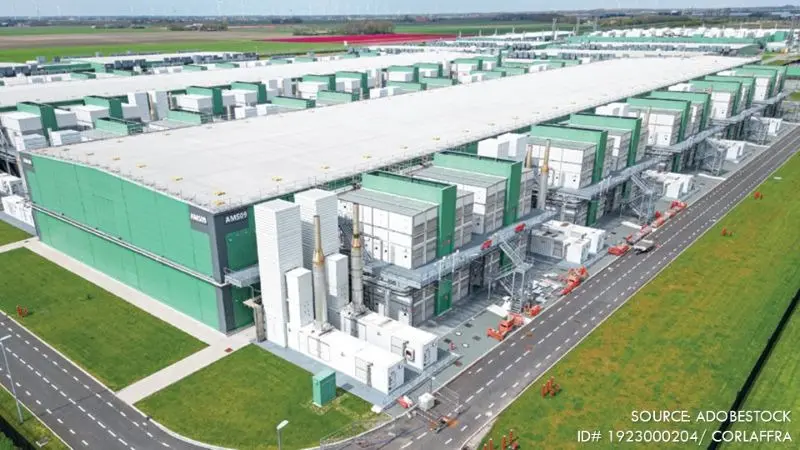
The explosive global expansion of artificial intelligence, cloud computing, and digital infrastructure has triggered the fastest construction ramp in modern industrial history. Yet, behind the gleaming multi-billion-dollar announcements lies a severe, structural bottleneck: a critical shortage of qualified metal building erectors capable of meeting the hyper-demanding specifications of hyperscale data centers.
Data center (DC) construction starts reached an unprecedented $77.7 billion in 2025, marking a staggering 190% increase from 2024. The momentum has only accelerated into 2026, with the industry logging $49.5 billion in ground-up investments through April alone. Concurrently, the average project cost has skyrocketed to $475 million, up from $178 million just twelve months prior.
Despite this vertical and financial explosion, the specialized labor market for Pre-Engineered Metal Building (PEMB) and Insulated Metal Panel (IMP) erection has failed to scale in tandem. This is not a generalized blue-collar labor shortage; rather, it represents a profound deficit in a hyper-specific trade. Modern hyperscale data centers demand an ultra-precise blend of manufacturer familiarity, architectural tightness, and safety compliance that traditional warehouse or distribution center erectors simply do not possess. With long-lead equipment delays already squeezing developers, a flawed building envelope can—and often does—derail a multi-million-dollar commissioning schedule.
Chronology of the Crisis
2024: The Spark of the Hyperscale Surge
As generative AI models and massive cloud storage requirements exploded, tech giants and colocation providers scrambled to secure land and power. Construction starts began a steep upward trajectory, catching traditional industrial supply chains and labor pools off guard. Projects that were once budgeted at standard industrial scales quickly doubled and tripled in scope.
2025: The Acceleration and Financial Stakes
Data center construction starts hit a monumental $77.7 billion. The financial exposure of delayed projects became glaringly apparent. With main power transformers facing order backlogs averaging 128 weeks—a statistic highlighted by Wood Mackenzie’s 2025 survey—the timeline for every subsequent phase grew razor-thin. The building envelope emerged as a make-or-break milestone, as downstream mechanical and electrical fit-outs could not safely proceed until the structure was completely closed and airtight.
2026: The Breaking Point and Current Reality
Through the first four months of 2026, the industry poured $49.5 billion into the ground. Average project sizes climbed to $475 million. The Associated General Contractors’ (AGC) 2026 Hiring Outlook revealed that 82% of construction firms were struggling to fill craft positions, with more than half citing worker quality—not sheer headcount—as their primary operational barrier. Meanwhile, the specialized pool of PEMB and IMP erectors capable of clearing rigorous hyperscale gates remained essentially static, stretched thin across critical data hubs in Northern Virginia, Phoenix, Columbus, Dallas, Reno, Atlanta, and Chicago.
Supporting Data & Metrics
- 190% Growth: The surge in DC construction starts from 2024 to the close of 2025, culminating in $77.7 billion.
- $49.5 Billion: The capital deployed into ground-up data center construction through just the first four months of 2026.
- $475 Million: The average cost of a modern data center project, marking a massive leap from $178 million a year prior.
- 128 Weeks: The average lead time for main power transformers, establishing a rigid, unyielding upstream clock that leaves zero room for structural delays.
- $14.2 Million Per Month: The estimated deferred lease revenue lost for a 60-MW facility for every month a project slips past its go-live date.
- < 0.1 cfm/sf at 75 Pascals: The stringent air-leakage performance threshold targeted by modern data center envelopes, requiring millimeter-precise panel installation.
- 82% and 50%+: According to the AGC 2026 Hiring Outlook, the percentage of construction firms struggling to hire craft workers, and the majority pointing to skill quality over labor quantity as the core issue.
Official Responses and Industry Perspectives
Industry leaders and workforce specialists have increasingly spoken out about the widening chasm between digital infrastructure ambitions and physical execution capabilities.
Matt Johnston, founder of Alpha Labor Co., a national PEMB and IMP workforce provider operating across all 50 states, emphasizes the misunderstood nature of the crisis. "This isn’t a general construction labor problem; it’s a shortage of a specific trade with a specific skill set that takes years to develop," Johnston explains. Highlighting the extreme stakes of the work, he notes that his firm maintains strict safety metrics—such as a 0.71 Experience Modification Rate (EMR)—because hyperscale developers view safety and quality as intrinsically linked, non-negotiable prerequisites.
General contractors and structural engineers echo these sentiments. While corporate workforce pledges have crossed $365 million and federal Pell Grants have begun funding short-term trade programs, industry executives warn that policy measures cannot manufacture a seasoned metal building erector overnight. Ironworker apprenticeships traditionally run five years, and the PEMB industry’s first formal national apprenticeship program is not slated to launch until 2027. Consequently, the industry is caught in a multi-year gap where demand far outpaces institutional training pipelines.
Implications: Quality, Safety, and Financial Fallout
The mismatch between hyperscale demand and erector supply carries profound implications for developers, contractors, and the broader tech economy.
The Technical Demands of the Envelope
Erecting a data center is entirely distinct from putting up a commercial warehouse. Insulated Metal Panels (IMPs) utilized in hyperscale builds routinely measure 40 to 50 feet in length and weigh between 300 and 600 pounds. Installing these panels requires vacuum-lifter rigs, telehandlers, and cranes, but more importantly, it demands absolute precision.
Seams must close tightly, sealant application must be continuous, and unauthorized field cuts are strictly prohibited. A mere 1/8-inch gap at a trim seam or an improperly sealed penetration destroys thermal and air barrier continuity. Because these flaws often remain hidden until the post-construction commissioning pressure test—long after the erection crew has demobilized—remediating them requires costly remobilization, cutting deeply into tight project margins.
The Rigorous Gatekeeping of Safety and Compliance
On hyperscale sites, safety is not merely a box-checking exercise for regulatory compliance; it is a hard financial filter. Owners frequently enforce Owner-Controlled Insurance Programs (OCIPs) that require an EMR below 1.00—and often between 0.85 and 0.90 for steel erectors working at heights. Because EMR is calculated on a three-year rolling average, a single safety incident can disqualify a contractor from bidding on lucrative campus projects for years.
Furthermore, compliance requirements extend deeply into administrative documentation. Federal verification systems like EVerify are mandatory down to the sub-tier labor level. Manufacturer-specific training records do not easily transfer between building systems (such as Butler, Nucor, Metallic Building Company, or Robertson-Ceco), and local prevailing wage structures shift rapidly across county lines. A technically proficient crew that fails to produce auditable compliance documents within 24 hours is effectively locked out of the site.
The Macroeconomic Ripple Effect
Ultimately, the bottleneck in metal building erection threatens to slow the broader digital transformation. When an envelope fails a commissioning test, or when an inexperienced crew slows down due to unfamiliar trim conventions and torque requirements, the entire domino effect stalls. Mechanical and electrical trades hold their positions; server rack installations are delayed; and the highly anticipated go-live date pushed to investors slips into the next quarter.
As long as the digital infrastructure boom continues unabated, the industry’s most valuable and scarce commodity will not be silicon chips or electrical transformers, but the skilled hands capable of enclosing them on time, on spec, and under budget.
