


By Global Real Estate News Desk
Even as corporate boardrooms publicly step back from aggressive Environmental, Social, and Governance (ESG) mandates and political headwinds challenge sustainability reporting, a quiet, multi-billion-dollar revolution is unfolding beneath the surface of commercial real estate (CRE).
Developers, institutional investors, and private equity giants are no longer treating climate resilience as a secondary, feel-good corporate initiative. Instead, predictive, physics-based climate risk analytics have rapidly evolved into a core underwriting input. Driven by surging insurance premiums, compounding natural disaster losses, and a glaring vacuum in federal data collection, climate intelligence has transformed from a niche product into the foundational infrastructure of modern real estate development.
Main Facts: The Shift From ESG Politics to Hard Financial Reality
The commercial real estate sector is facing an unprecedented convergence of financial and environmental pressures. For years, sustainability was marketed as a branding tool or a compliance checkbox tied to broader ESG goals. Today, it is a matter of strict asset survival and bottom-line profitability.
According to projections by Boston Consulting Group, the specialized climate risk assessment industry—comprising several hundred independent firms—is on track to double in value, ballooning to roughly $13 billion by 2030. Rather than retreating alongside traditional ESG budgets, institutional heavyweights are aggressively acquiring and deploying advanced predictive models.
- Major Market Consolidation: Financial data giant MSCI recently acquired First Street, a prominent nonprofit climate risk modeling firm, in a deal valued at approximately $120 million. The acquisition underscores a broader industry push to integrate physical climate data directly into supply chain intelligence and portfolio risk assessments.
- Industry Giants Mobilize: Real estate behemoths CBRE and JLL have formalized multi-year partnerships with climate science firms to embed predictive intelligence into brokerage and property management services. Meanwhile, private equity leaders like BlackRock have integrated advanced climate scenario modeling into their overarching asset management strategies.
- The "Pricing Gap": Industry experts point out that two properties with identical power grids, transit connectivity, and tenant demand fundamentals can experience radically different financial trajectories once climate hazards are priced into the equation. Most current underwriting models have yet to catch up to this divergence, creating a massive financial blind spot—and a lucrative commercial opportunity for data-driven investors.
Chronology: How Climate Intelligence Became Core CRE Infrastructure
The integration of climate data into real estate finance has accelerated dramatically over the past half-decade, driven by mounting economic losses and shifting regulatory frameworks.
- 2021 (The Turning Point): Following catastrophic weather events like Hurricane Ida—which shut down major thoroughfares like the Long Island Expressway in New York City with historic flash flooding—investors began recognizing that historical weather patterns were no longer reliable predictors of future risk. That same year, BlackRock acquired climate scenario models from Baringa Partners to better evaluate physical exposures.
- 2022–2023 (The Analytical Awakening): Real estate firms began realizing that traditional property-level due diligence was fundamentally inadequate. Major institutional players started spinning up in-house data analytics teams or forming strategic alliances with climate tech firms like Jupiter Intelligence and First Street.
- 2024–2026 (Regulatory Contraction and Private Data Consolidation): The regulatory landscape shifted significantly in the United States. The federal government enacted measures to restrict, pause, or remove public climate science databases, cutting off vital open-source environmental tracking. Simultaneously, the Securities and Exchange Commission (SEC) moved to rescind broad-based climate-related corporate disclosure rules, with public comment periods concluding in August 2026.
Rather than abandoning climate tracking due to the rollback of federal mandates, the private sector doubled down. Recognizing that government-backed data sources were shrinking, investors turned aggressively to private analytics vendors, culminating in high-profile market consolidations like MSCI’s acquisition of First Street.
Supporting Data: The Hidden Exposure in Global Portfolios
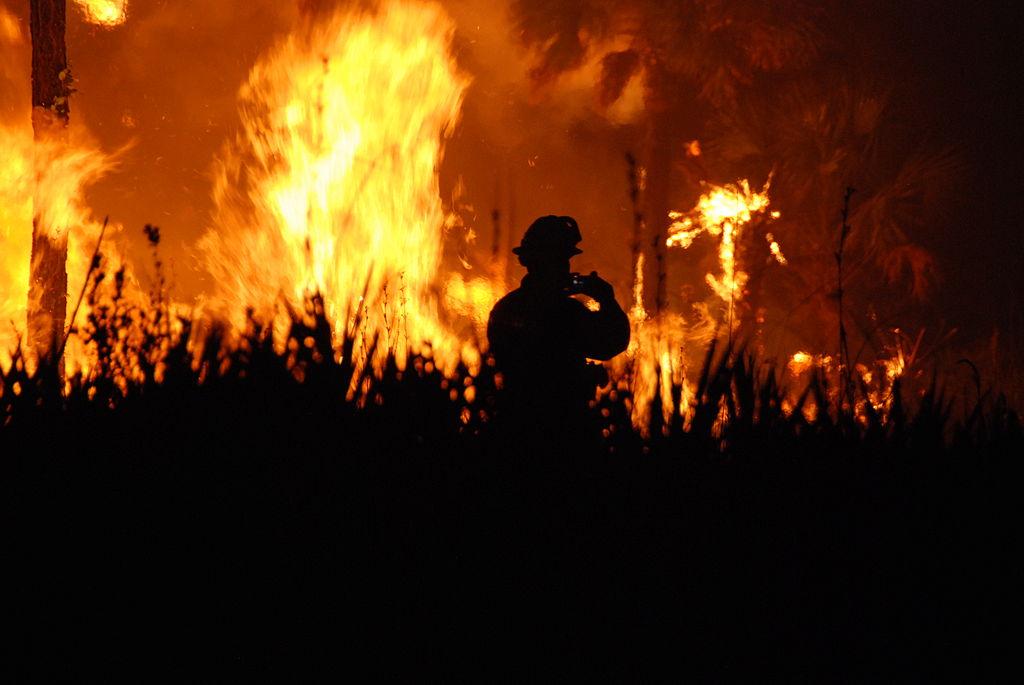
The financial stakes of ignoring physical climate risks are staggering. Recent research published by MSCI—which evaluated half a million physical assets owned by 11,000 companies—revealed alarming vulnerabilities across global portfolios:
- High Exposure: Approximately 55% of companies maintain severe direct exposure to physical climate hazards.
- Overlapping Vulnerabilities: An overwhelming 89% of assets face multiple, overlapping environmental hazards (e.g., simultaneous flood, extreme heat, and severe storm risks).
- The Interruption Multiplier: MSCI’s data highlights that business interruption risk is 14 times larger than direct asset damage risk. While physical repairs to a building can be costly, the prolonged loss of operational capacity and tenant revenue presents an existential threat to asset cash flows.
Furthermore, the insurance market is reacting aggressively. As carriers hike premiums or pull back entirely from high-risk coastal and wildfire-prone zones, property valuations are being directly compressed by escalating operational costs.
Official Responses and Industry Perspectives
The transition toward proprietary climate modeling has generated significant commentary from corporate leaders, shareholder advocates, and technical practitioners alike.
-
On the Shift in Underwriting Priorities:
"Climate risk is moving from a secondary ESG consideration to a core underwriting input," said Jeremy Porter, chief economist at First Street. "Once that shift happens, every investor, lender, and insurer needs the analytics, and the market compounds from there." -
On the Realization of Inadequate Historical Data:
"Real estate investors are now mostly including it in their process, which is a big deal," noted Joseph Sumberg, head of real estate at Galvanize, a firm managing a rapidly expanding industrial portfolio. "That never used to be the case. But I think in the last three years, people have come to the realization that the information the industry has been relying upon is inadequate." -
On the Fallout from Federal Data Rollbacks:
"We are no longer going to collect climate data, and it’s sort of asinine, because it isn’t as if it stops the harm," argued Danielle Fugere, president and chief counsel of shareholder advocacy group As You Sow. "We just know less about it. And that’s why people are now starting to say, ‘OK, we’ve got to go buy the data.’" -
On Corporate Pushback vs. Financial Reality:
"Sure, there is obviously some pushback on sustainability and ESG," acknowledged Steve Bullock, MSCI’s managing director and head of geospatial intelligence. "But the financial implications of these hazards and the cost of the protection gap from an insurance perspective are very large."
-
On the Challenges of Data Interpretation:
"The challenge with the forecasting or risk assessment market is the variability in the data and the analysis," explained Janika McFeely, JLL vice president and climate and decarbonization practice co-lead. "The biggest challenge we find with clients is interpreting the data into actionable insights and actions. The market is really at the place of trying to figure out how to use the information effectively." -
On Actuarial Validation Hurdles:
Dan Preston, co-founder and CEO of climate modeling firm Stand, emphasized the friction between modern predictive tech and traditional insurance underwriting: "You need to convince an insurance company that your model is right. The only way to test that model is to wait until events happen, right? It’s really hard to get that proof because you need to wait like five or 10 years to get enough evidence."
Implications: Turning Risk Data Into Commercial Opportunity
For commercial real estate practitioners, the ultimate utility of advanced climate analytics lies not just in risk mitigation, but in uncovering hidden investment advantages.
Forward-thinking firms are already utilizing granular, physics-based forecasting to turn potential liabilities into profitable opportunities. For example, during a recent industrial property acquisition, Galvanize’s internal data science team identified a severe stormwater drainage issue caused by local precipitation trends that would have directed water straight into the building’s mechanical systems. Rather than killing the deal, the firm modeled the precise capital expenditure required to elevate and re-engineer the mechanical infrastructure, determining that the adjusted project margins still heavily favored the acquisition.
By systematically analyzing regional climate pressures—identifying markets facing extreme insurance spikes and population outflows versus those positioned for long-term climate resilience—investors can optimize capital allocation across entire portfolios.
However, realizing this potential requires a sophisticated workforce capable of translating complex satellite feeds, artificial intelligence simulations, and probabilistic weather models into granular, everyday real estate decisions. As climate change continues to upend historical weather norms, the commercial real estate sector has drawn a definitive conclusion: the future belongs not to those who ignore the shifting climate, but to those who accurately price it.
