

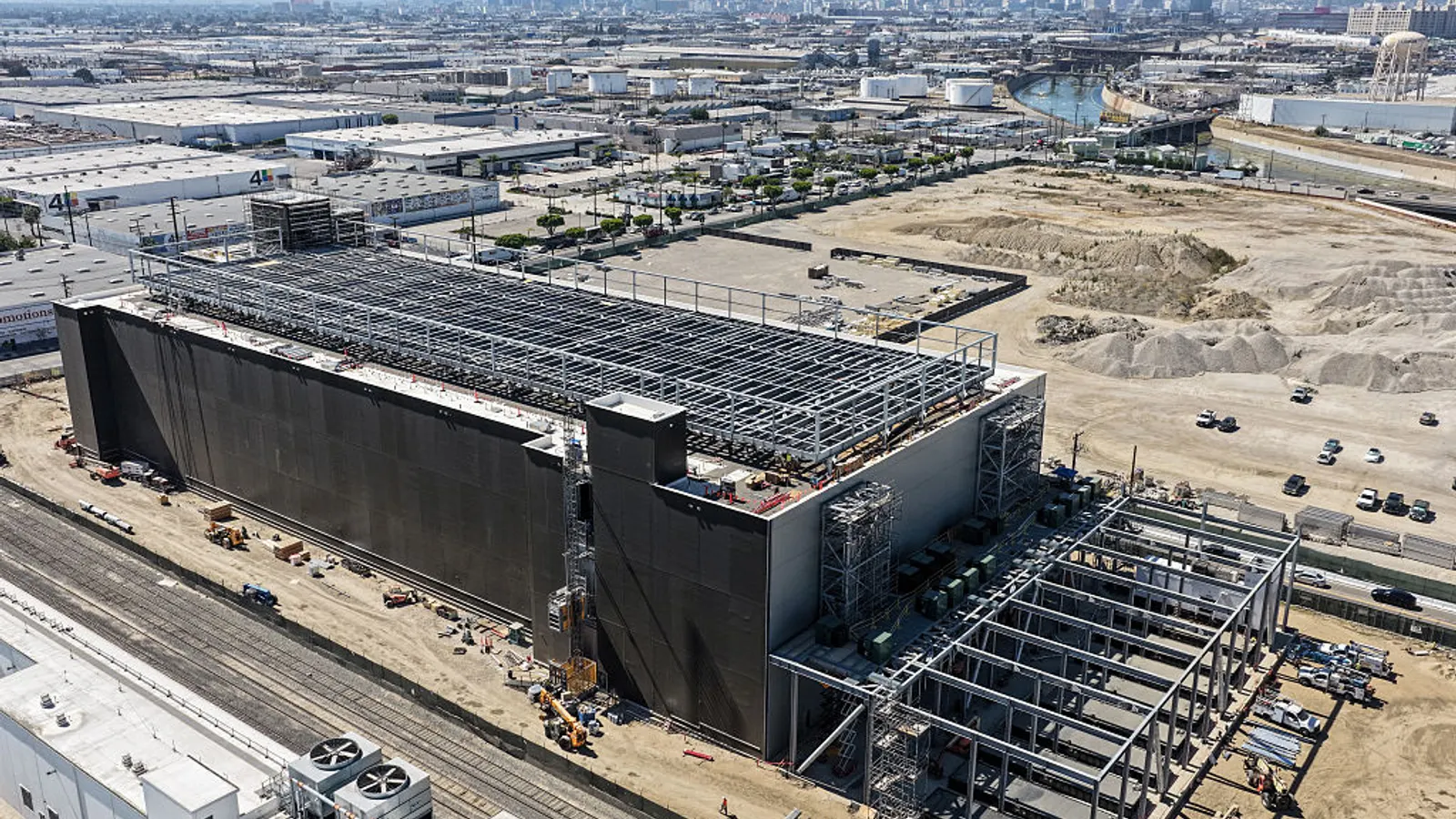
VERNON, CALIFORNIA — The relentless surge of artificial intelligence is running headlong into a hard physical ceiling: electricity. According to a landmark midyear market report released by commercial real estate services giant CBRE, the power capacity available for lease across North America plummeted to an astonishingly low 1.4% during the first half of 2026.
This severe supply crunch is occurring despite a massive, nationwide construction blitz. Under-construction data center capacity surged by 25% over the same period as developers race to construct facilities capable of housing the dense computing hardware required for modern AI workloads. Major landlords, including industry heavyweights Equinix and Digital Realty, are leasing space faster than they can physically secure the necessary power infrastructure from local utility grids.
The mismatch between soaring demand and constrained grid capacity is fundamentally reshaping the commercial real estate landscape, pushing tech giants and smaller enterprises alike into alternative regional markets, driving up rental rates, and fueling a complex debate over community impact and grid reliability.
Main Facts: The 2026 Data Center Landscape
The latest CBRE findings underscore a hyper-competitive real estate market driven almost entirely by the generative AI revolution. As tech firms pour hundreds of billions of dollars into large language models and machine learning infrastructure, the physical footprint required to power these operations has expanded exponentially.
- Shrinking Vacancy: Available power capacity for lease tightened to an unprecedented 1.4% in H1 2026.
- Surging Development: Under-construction capacity leaped by 25% compared to previous cycles, highlighting frantic development efforts.
- Accelerating Absorption: Net absorption—the net change in occupied versus vacant leased space—climbed by nearly 12% in the first half of the year.
- Price Pressures: Rental rates continue a steady upward trajectory, directly correlated with dwindling power availability.
- Geographic Shifts: Traditional powerhouses like Northern Virginia are seeing their dominance challenged by emerging secondary and tertiary markets such as Atlanta, Columbus, and Reno.
Chronology of a Crisis: How the Power Crunch Unfolded
To understand how North America reached a 1.4% vacancy rate for data center power, it is necessary to examine the rapid acceleration of compute demands over the past half-decade.
2020–2022: The Post-Pandemic Cloud Acceleration
The digital transformation accelerated by the COVID-19 pandemic triggered an initial wave of data center expansion. Cloud providers—Amazon Web Services, Microsoft Azure, and Google Cloud—scraped up land and power allocations to meet remote work, streaming, and enterprise migration needs.
2023–2024: The Generative AI Awakening
With the public debut of advanced generative AI models in late 2022, the nature of data center demand shifted overnight. Traditional cloud computing required incremental server additions, but AI training and inference required dense clusters of specialized GPUs. Power requirements per rack skyrocketed from standard densities of 5 to 10 kilowatts up to 40, 60, or even 100+ kilowatts per rack. Grid operators began receiving connection requests that rivaled the electricity consumption of small cities.
2025: Bottlenecks and Grid Interconnection Queues
By 2025, regional power grids across North America began to show severe strain. Utilities faced multi-year backlogs for high-voltage transformers, substations, and transmission line upgrades. Developers who had secured land found themselves stranded without power purchase agreements (PPAs), creating a widening gap between permitted projects and energized capacity.
H1 2026: The Current Reality
The first half of 2026 has brought these pressures to a boiling point. With available power down to 1.4%, the market has effectively entered a state of absolute scarcity. While developers have increased under-construction capacity by 25%, the timeline for utility interconnection—often stretching three to five years—means that new supply cannot keep pace with tech sector demand.
Supporting Data and Market Metrics
The CBRE report provides granular insight into the financial and operational mechanics driving the data center sector today.
According to Gordon Dolven, head of Americas data center research at CBRE, pricing trends are inextricably linked to available supply. “Rental pricing and vacancy rates have been perfectly inversely correlated in our report for the last few years,” Dolven noted. As blocks of available power vanish, landlords possess immense pricing power, pushing lease rates to historic highs.
The geographic distribution of this growth is equally telling. Northern Virginia’s legendary "Data Center Alley"—long the undisputed capital of the global internet—remains the largest market by total inventory. However, structural power constraints in Loudoun County and surrounding areas have forced developers to look outward.
Atlanta, Georgia, has emerged as the premier market for total active construction in North America. Data center development in the region surged by more than 50% year-over-year in the first half of 2026, temporarily eclipsing Northern Virginia for new construction volume.
This decentralization trend is visible nationwide:

- Silicon Valley vs. Reno, Nevada: High land costs and strict energy caps in California have catalyzed massive builds across the state line in Reno.
- Columbus, Ohio: Benefiting from robust utility partnerships and central geographic positioning, Columbus has established itself as a premier Midwestern hub for hyperscale computing.
- Secondary Markets: Cities that previously sat on the sidelines of tech infrastructure development are suddenly finding themselves aggressively courted by enterprise tenants seeking megawatts.
Official Responses and Industry Perspectives
Industry leaders and analysts offer a nuanced view of the current bottlenecks, balancing the immense optimism surrounding artificial intelligence with practical warnings about infrastructure limits.
The Real Estate Strategist’s Advice
For corporate clients navigating this hyper-constrained environment, Gordon Dolven offers stark guidance: abandon traditional planning timelines.
"For our clients looking to acquire data center space, I recommend looking at leasing options three years ahead of schedule and being flexible about location," Dolven advised. While tenants may desire space in prime, established clusters, the reality of the market dictates compromise. "Data center space in Northern Virginia’s Data Center Alley may be unavailable, but Atlanta and Columbus, Ohio could have openings."
Dolven emphasizes that this is not merely a localized phenomenon. "You’re seeing Reno, Nevada compete with Silicon Valley," he said. "You’re seeing Atlanta, Georgia compete with Northern Virginia. You’re seeing so many new markets pop up because they’re trying to seek out that available power capacity."
The Long-Term Technologist View
Despite growing pains, industry advocates remain overwhelmingly bullish on the long-term societal value of artificial intelligence. Addressing public anxieties, industry figures draw parallels to past technological revolutions.
Comparing current AI infrastructure builds to historical anxieties, commentators note that every major technological paradigm shift—from the invention of the automobile to the rollout of telecommunications—was initially met with skepticism, fear of disruption, and widespread societal resistance.
Furthermore, veterans of past market cycles suggest that current power limitations may actually serve as a stabilizing economic force. Reflecting on the catastrophic telecom bubble of the early 2000s—when billions of dollars were squandered on overbuilt fiber-optic networks that had no immediate utility—analysts argue that grid constraints could protect the modern market from itself.
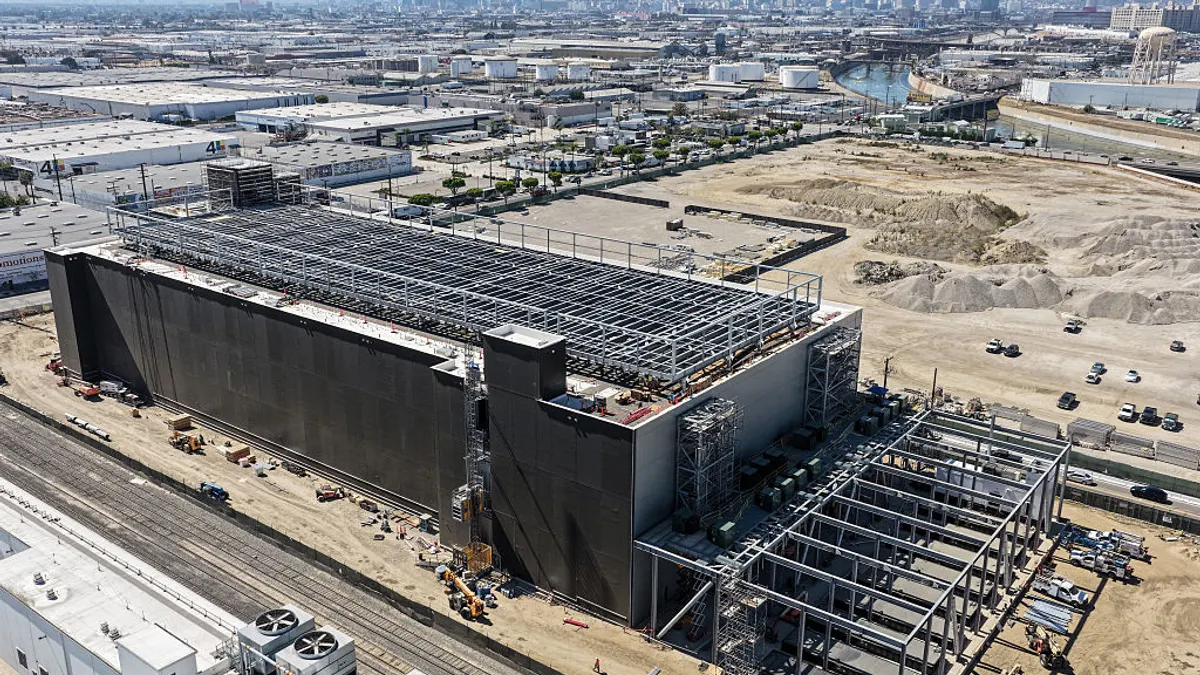
"I could make the argument that limited power, which has been a bit of a throttle to the data center market, could potentially limit an overbuild situation," industry observers note, suggesting that physical utility caps will naturally prevent runaway speculative development.
Implications: Communities, Grid Reliability, and the Future of AI
The 1.4% vacancy rate for data center power carries profound implications that extend far beyond corporate balance sheets, touching local communities, environmental policy, and the trajectory of technological innovation.
1. Community Backlash and Land Use Disputes
The hyper-accelerated data center buildout has not occurred without friction. Across North America, municipal governments, local residents, and environmental activists have pushed back against proposed facilities. Concerns regarding water consumption (used for evaporative cooling systems), the aesthetic impact of massive concrete industrial buildings, and the potential for rising residential electricity rates have sparked intense local opposition.
In several states, this has manifested as "anti-data center sentiment," leading to zoning restrictions, moratoriums, and protracted legal battles over land use. Developers are increasingly being forced to invest in closed-loop liquid cooling systems, noise-mitigation engineering, and community benefit agreements to secure local approval.
2. The Energy Transition Dilemma
Data centers are voracious consumers of baseload electricity. As tech companies commit to ambitious net-zero carbon goals, the influx of massive new data center loads complicates local grid decarbonization efforts. To bypass standard utility queues and secure clean energy, major hyperscalers are increasingly exploring direct investments in alternative power sources—including dedicated solar and wind farms, battery storage systems, and even long-term power purchase agreements with nuclear energy providers.
3. Economic Re-centering
Regions that successfully attract and power data center infrastructure stand to reap substantial economic windfalls. Beyond construction-phase employment, modern data centers generate millions of dollars in local tax revenues, fund municipal infrastructure improvements, and anchor regional technology ecosystems. Conversely, regions that fail to modernize their electrical grids risk losing out on the primary economic engine of the mid-2020s.
Conclusion
As the industry moves through the second half of 2026, the message from the commercial real estate sector is clear: power is the new gold. With available capacity pinned at a historic low of 1.4%, developers, utilities, and enterprise tenants must navigate an increasingly complex maze of geographic relocation, long-term grid planning, and community relations. How these stakeholders resolve the energy squeeze will ultimately determine not only the speed of artificial intelligence deployment, but the stability of the electrical grid for years to come.
