

Few pieces of federal legislation have exerted as profound, direct, and lasting an impact on the heating, ventilation, air conditioning, and refrigeration (HVACR) industry as the Clean Air Act (CAA) Amendments of 1990. For decades, The ACHR NEWS chronicled the rollout, implementation, and aftermath of this landmark regulatory shift through extensive print reporting, deep-dive features, and bestselling companion books. These historical accounts paint a vivid picture of an industry forced to pivot overnight from decades of standard operational practices to a tightly regulated, environmentally conscious era.
While the original Clean Air Act of 1970 established a foundational federal framework for curbing air pollution from stationary and mobile sources, and subsequent 1977 amendments expanded its reach, the 1990 amendments marked a definitive turning point for HVACR professionals. Propelled by mounting international concern over the depletion of the Earth’s stratospheric ozone layer—most notably the discovery of the Antarctic ozone hole—the amendments aligned U.S. domestic law with the Montreal Protocol. This landmark international treaty mandated the global phaseout of ozone-depleting substances (ODS), primarily chlorofluorocarbons (CFCs) and hydrochlorofluorocarbons (HCFCs). The United States formally ratified the Montreal Protocol in 1988, setting the stage for a dramatic transformation of the cooling and heating landscape.
Chronology of a Crisis: Fast-Tracking the Phaseout
The regulatory timeline accelerated rapidly following the 1990 legislative milestone, sending shockwaves through the contracting community.
- 1970: Congress passes the original Clean Air Act, establishing federal authority to regulate air pollution sources.
- 1977: Amendments to the Clean Air Act are enacted, expanding federal environmental oversight.
- 1988: The United States formally ratifies the international Montreal Protocol, committing to the reduction and eventual elimination of ozone-depleting substances.
- November 1990: President George H.W. Bush signs the Clean Air Act Amendments of 1990 into law, embedding Section 608 and refrigerant management mandates into federal statute.
- 1992: President George H.W. Bush orders an accelerated U.S. phaseout of CFC production by December 31, 1995—four years ahead of the original international schedule. The EPA institutes a total ban on the intentional venting of CFC and HCFC refrigerants.
- November 14, 1994: The EPA’s mandatory technician certification deadline takes effect; only certified technicians are legally permitted to purchase or handle regulated refrigerants.
- May 15, 1995: The final deadline for technicians certified under voluntary programs to grandfather their credentials or pass an EPA-approved certification test. The EPA ultimately recognizes 15 voluntary programs.
- December 31, 1995: U.S. production and importation of virgin CFC refrigerants (such as R-12) officially cease.
- January 1, 2020: The long-term HCFC phaseout culminates with the complete cessation of U.S. production and importation of virgin R-22.
Supporting Data and Financial Realities
The transition away from traditional refrigerants was not merely a matter of changing chemical compounds; it required massive capital investments in new equipment, retraining workforces, and adapting to strict administrative overhead.
When President Bush accelerated the CFC phaseout deadline to the end of 1995, the compressed timeframe triggered immediate economic anxiety. Contractors faced sudden capital outlays for mandatory recovery machines, dedicated recovery cylinders, vacuum pumps, and advanced electronic leak detection tools—expenses that were particularly burdensome for small-to-medium-sized independent businesses.
Furthermore, the enforcement of these new rules carried severe financial penalties. Federal regulators moved quickly to establish deterrence. Within months of the 1992 venting prohibition taking effect, regional EPA offices received roughly 400 reports of suspected venting violations. By the end of 1992, a New England mechanical contractor was slapped with an $18,101 fine for illegally venting HCFC refrigerant—a financial penalty equivalent to approximately $43,000 in today’s dollars, serving as a stark warning to the broader trade.
As production quotas tightened in the lead-up to the 1996 CFC ban and the eventual 2020 R-22 phaseout, market dynamics caused virgin refrigerant prices to skyrocket. This dramatic price inflation reinforced the economic necessity of recovery, recycling, and reclamation, turning what was initially viewed as an administrative nuisance into a critical business practice.
Official Responses and Industry Skepticism
The HVACR workforce did not welcome the 1990 amendments with open arms. Decades of entrenched field habits—such as purging or "venting" lines during routine servicing—were suddenly criminalized overnight. The ACHR NEWS annual contractor surveys from the early 1990s captured an industry grappling with profound skepticism, frustration, and anxiety over customer pushback.
One surveyed contractor bluntly summarized the sentiment of many peers by stating: "The CFC issue is a hoax. Only the customers are getting the shaft." Another respondent warned that the sweeping regulatory mandates would cause "many small businesses to go by the wayside."
Practical, day-to-day operational complaints were equally prevalent. Contractors voiced deep frustration over inflated labor times and client friction. As one technician-turned-business owner noted regarding the new service realities: "The increase in the time to service equipment that needs CFC removal, and the attitude of the customer toward the increase in his costs… it’s not going over very well."
Trade associations heavily lobbied the Environmental Protection Agency (EPA) regarding the implementation details, particularly surrounding technician certification. Fierce debates erupted over whether the EPA should "grandfather" technicians who had already completed various industry training programs. While some associations argued against blanket grandfathering to ensure uniform competency, others insisted that experienced field personnel should not be subjected to redundant testing.
Ultimately, the EPA compromised by establishing distinct certification categories and permitting the grandfathering of 15 approved voluntary programs, provided technicians met the May 1995 deadline.
The Structural Framework: Mandatory Certification and Section 608
Codified primarily under Section 608 of the Clean Air Act Amendments, the EPA’s new regulatory regime fundamentally reorganized how refrigerants were managed across their lifecycle—covering service, maintenance, repair, and eventual equipment disposal.
1. Mandatory Technician Certification
For the first time, technicians who purchased or handled regulated refrigerants were legally required to pass a rigorous, EPA-approved certification examination. The agency established four core certification types:
- Type I: Covers small appliances, such as residential window air conditioners and domestic refrigerators.
- Type II: Applies to high-pressure systems, including standard residential split systems and light commercial HVAC equipment.
- Type III: Addresses low-pressure chillers commonly found in large commercial and industrial facilities.
- Universal: Combines all three designations for technicians working across diverse equipment sectors.
2. The Venting Prohibition and Recovery Mandate
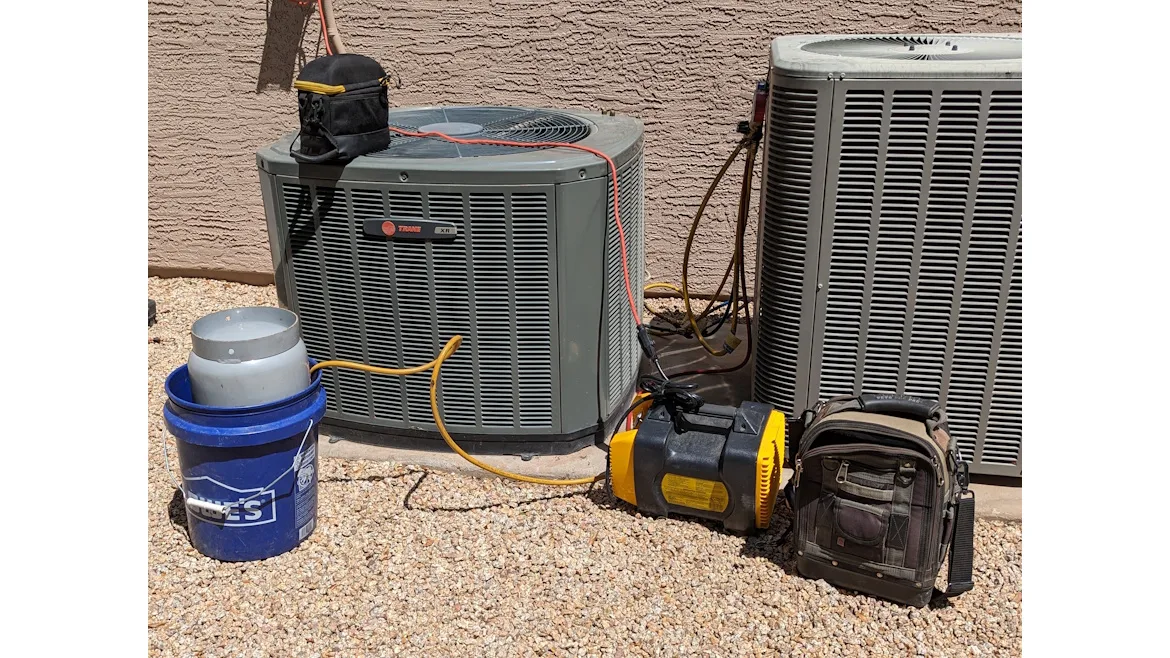
Prior to 1992, releasing refrigerant directly into the atmosphere during equipment servicing or decommissioning was common, standard industry practice. Section 608 made intentional venting illegal. Contractors were legally compelled to invest in certified recovery equipment capable of pulling down systems to mandated vacuum levels before opening refrigerant circuits.
3. Recordkeeping and Leak Repair Provisions
For commercial and industrial systems containing a charge greater than 50 pounds of refrigerant, Section 608 introduced strict leak-rate thresholds. Owners and operators were legally obligated to calculate leak rates upon servicing, maintain detailed service logs, and execute mandatory repairs within specified timeframes if annual leakage exceeded federally mandated percentages.
Implications and Lasting Legacy
In retrospect, the Clean Air Act Amendments of 1990 achieved far more than a temporary reduction in ozone-depleting chemicals. They permanently modernized the HVACR profession, elevating it from a largely unregulated mechanical trade into a highly technical, environmentally accountable discipline.
While the initial rollout was marred by intense friction, skepticism, and financial strain, the framework established in the early 1990s forged a pathway for subsequent environmental transitions. The machinery, recovery protocols, and certification mindsets forged during the CFC and HCFC phaseouts laid the vital groundwork for modern transitions involving hydrofluorocarbons (HFCs) and the ongoing shift toward low-global-warming-potential (GWP) alternatives.
Ultimately, the 1990 amendments did not destroy the HVACR industry; rather, they catalyzed its evolution, proving that environmental stewardship and mechanical innovation could successfully advance hand-in-hand.
