

Main Facts: The Great Material Pivot
A profound shift is underway in the commercial roofing sector. Over the past eighteen months, global supply chain disruptions have forced roofing contractors to pivot away from modern single-ply membrane systems, such as Thermoplastic Polyolefin (TPO) and Ethylene Propylene Diene Monomer (EPDM), and return to traditional multi-ply asphaltic systems. Specifically, the industry is experiencing a massive resurgence in torch-down modified bitumen (mod-bit) applications and hot-applied Built-Up Roofing (BUR).
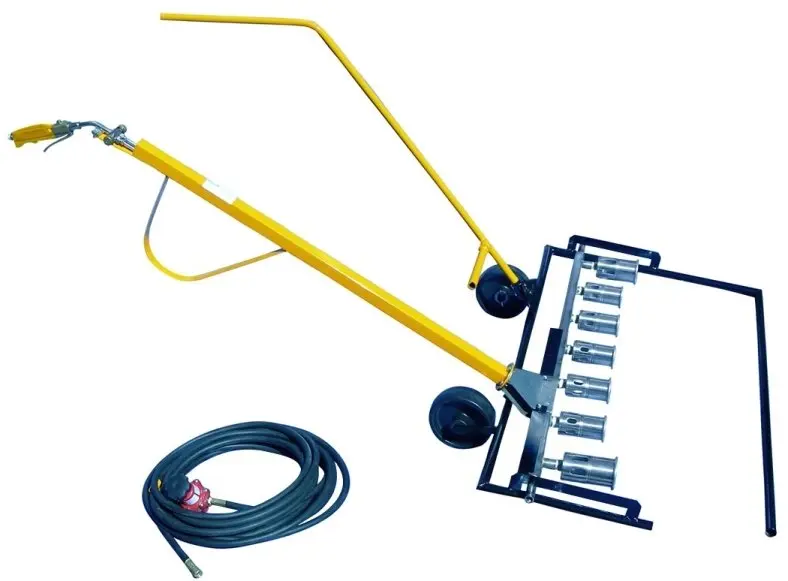
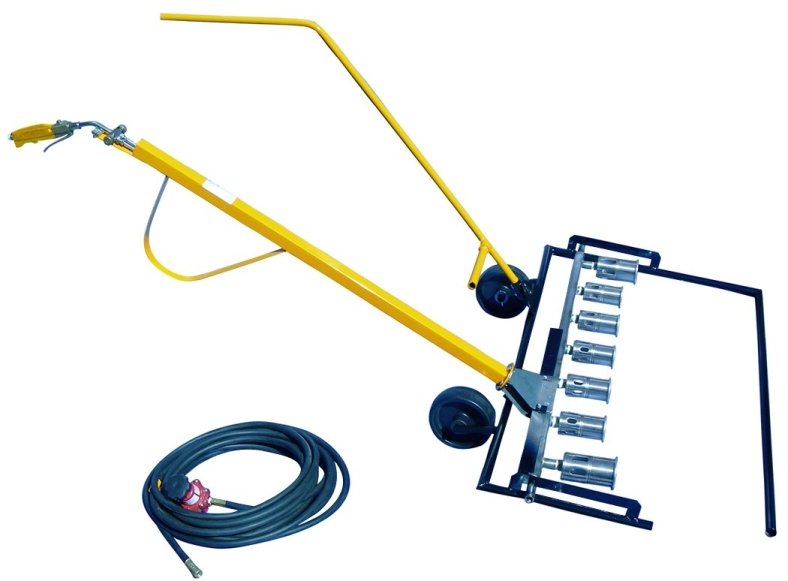
This transition is highly visible in equipment acquisition and maintenance trends across the United States. Manufacturers and distributors report a sharp spike in the sale of liquid petroleum (LP) torches, multi-burner torching carriages—most notably specialized walk-behind systems like the Dragin Wagon—and auxiliary hand tools. Concurrently, contractors are pulling long-idle asphalt kettles out of storage yards, refurbishing them, and sending them back to active job sites.
+------------------------------------------------------------------------+
|                      THE RESURGENCE CYCLE                              |
|                                                                        |
|  [Supply Chain Bottlenecks]  -->  Severe Single-Ply Shortages          |
|                                        |                               |
|  [Equipment Re-mobilization] <--  Pivot to Torch-Down & BUR            |
|         |                                                              |
|  [Workforce Skills Gap]      -->  Critical Need for Safety & Retraining|
+------------------------------------------------------------------------+
While this shift has allowed contractors to bypass the severe lead times plaguing synthetic membranes, it has introduced a critical operational challenge: a workforce skills gap. A significant portion of today’s roofing labor force has been trained exclusively on single-ply systems utilizing cold-applied adhesives, self-adhering tapes, or induction welding. Reintroducing open flames, pressurized liquid propane gas (LPG), and liquid asphalt heated to over 400°F (204°C) to the roof deck requires an immediate, comprehensive retraining effort focused on personal safety, job site fire prevention, and proper application techniques.
Chronology: How Supply Chain Fractures Reshaped the Roof
The path back to hot-applied and torch-down roofing systems is a direct consequence of compounding macroeconomic shocks that began in 2020.
CHRONOLOGY OF THE ROOFING MATERIAL TRANSITION

2010–2019: Single-Ply Dominance
  * TPO, PVC, and EPDM capture majority market share.
  * Torch-down and hot-asphalt systems are relegated to specialized or regional applications.
  * Kettles and multi-burner torches are placed in long-term storage.

2020–2021: The Supply Chain Shock
  * Global pandemic disrupts chemical manufacturing.
  * February 2021: Texas Deep Freeze cripples petrochemical plants producing MDI and polyisocyanurate precursors.
  * Lead times for TPO and polyiso insulation soar from weeks to 12–18 months.

2022–Present: The Hot-Applied Resurgence
  * Contractors face severe project delays and penalties.
  * Industry pivots to readily available asphaltic membranes (SBS and APP).
  * Rapid remobilization of LP torches, Dragin Wagons, and asphalt kettles.
  * Rising demand for rapid safety retraining to combat fire and burn hazards.
The Single-Ply Era (2010–2019)
For more than a decade, single-ply roofing membranes dominated the commercial flat-roof market. Valued for their rapid installation times, lightweight profiles, and highly reflective surfaces, TPO and EPDM became the default choices for specifiers and contractors alike. During this era, torch-down systems and hot-applied BUR fell out of favor in many regions due to rising insurance premiums associated with open-flame applications and a shrinking pool of skilled labor comfortable working with hot asphalt.
The Petrochemical Bottleneck (2020–2021)
The onset of the COVID-19 pandemic disrupted global logistics, but the true crisis for the roofing industry arrived in February 2021. Extreme winter storms in Texas paralyzed the Gulf Coast’s petrochemical infrastructure. This region produces the vast majority of the United States’ supply of Monomeric Methyl Diisocyanate (MDI)—the key precursor chemical required to manufacture polyisocyanurate (polyiso) insulation board—as well as the resins needed for TPO and PVC membranes.
With production lines halted, lead times for single-ply roofing packages skyrocketed. Projects that previously required a four-week lead time suddenly faced delays of 12 to 18 months. Contractors were left with unfinished buildings, ballooning material costs, and severe contractual penalties for project delays.
The Great Pivot (2022–Present)
Desperate to keep projects on schedule, contractors and specifiers began looking for alternative assemblies. They found their answer in modified bitumen and traditional BUR. Because these systems rely heavily on petroleum byproducts (asphalt) and fiberglass or polyester mats—which did not suffer from the same severe chemical shortages as synthetic polymers—their supply chains remained relatively stable.
Throughout late 2022 and into 2024, contractors systematically modified their project specifications. To execute these projects, companies rushed to purchase new torching equipment, buy replacement parts for mothballed asphalt kettles, and re-equip their field crews for hot-work operations.
Supporting Data: Market Dynamics and Technical Mechanics
The transition from single-ply to torch-down roofing is not merely anecdotal; it is supported by equipment manufacturing trends, material science, and the physics of roof application.
Equipment Trends: The Rise of the Multi-Burner Carriage
Manual hand-torching is slow and physically demanding, making it difficult to achieve the production rates required for large commercial projects. To bridge this productivity gap, contractors have turned to multi-burner walk-behind carriages, such as the Dragin Wagon.
These machines typically feature a manifold of five to seven LP gas burners that apply a uniform, controlled flame across the width of a modified bitumen roll as it is unrolled.
- Efficiency Multiplier: A multi-burner carriage can apply a roll of modified bitumen up to four times faster than a single worker using a hand torch.
- Thermal Consistency: By distributing heat evenly across the entire width of the sheet, these machines minimize the risk of "cold spots" (underheating) or burning through the reinforcement mat (overheating).
- Equipment Misuse: Manufacturers have noted a concerning trend of field crews using these precision carriages as heavy-duty roll dollies to transport material across the roof. This practice misaligns the burners, damages the gas manifolds, and creates severe gas leak hazards.
The Physics of the Weld: APP vs. SBS
Understanding the chemistry of modified bitumen is crucial for safe and effective installation. Modified bitumen sheets are categorized into two primary types, each requiring distinct handling:
| Property / Feature | Atactic Polypropylene (APP) | Styrene-Butadiene-Styrene (SBS) |
|---|---|---|
| Modifier Type | Plasticizer (Thermoplastic polymer) | Elastomer (Synthetic rubber) |
| Primary Application Method | Torch-applied (heat welding) | Hot-mopped, cold-applied, or torch-applied |
| Thermal Behavior | Melts fluidly under direct flame, flowing like candle wax | Softens and becomes sticky; highly sensitive to overheating |
| Vulnerability | Underheating leads to cold welds and immediate seam failure | Overheating destroys the rubber polymers, causing premature aging |
| Target Flow Indicator | Consistent 1/4-inch to 3/8-inch compound bleed-out at seams | Precise heat application with immediate roller consolidation |
The Critical Role of Auxiliary Tools
Achieving a watertight torch-down installation requires specialized hand tools that assist in material consolidation:
- The Roll Puller: Rather than kicking the heavy, heated rolls forward—which can cause uneven application, tracking errors, and physical strain—crews use roll pullers to steer and pull the roll smoothly through the molten asphalt.
- The Seam Roller: Used immediately behind the torch to press the heated laps together, ensuring a continuous bond and a uniform 1/4-inch to 3/8-inch bleed-out of modified compound at the seam.
- The Granule Embedder: For end laps on granule-surfaced sheets, the granules must be embedded into the hot compound using a heated granule embedder tool. Failing to embed granules prevents the overlapping sheet from bonding to the asphalt matrix, resulting in systemic seam failures.
Official Responses: Safety Protocols and Regulatory Mandates
The reintroduction of open flames and extreme heat to construction sites has caught the attention of safety directors, insurance carriers, and regulatory bodies. The National Roofing Contractors Association (NRCA), the Occupational Safety and Health Administration (OSHA), and major insurance underwriters have issued clear guidelines to mitigate the inherent risks of hot-work roofing.
                    ┌────────────────────────┐
                    │  CERTA SAFETY PROGRAM  │
                    └───────────┬────────────┘
                                │
         ┌──────────────────────┼──────────────────────┐
         ▼                      ▼                      ▼
┌─────────────────┐    ┌─────────────────┐    ┌─────────────────┐
│  PRE-JOB PREP   │    │  ACTIVE WORK    │    │ POST-JOB WATCH  │
│ • Inspect LPG   │    │ • Keep 3ft/10ft │    │ • Min. 2-Hour   │
│   tanks & hoses │    │   extinguishers │    │   Fire Watch    │
│ • Written,      │    │ • Use infrared  │    │ • IR thermal    │
│   signed plan   │    │   thermometers  │    │   scans of voids│
└─────────────────┘    └─────────────────┘    └─────────────────┘
The CERTA Standard
The Certified Roofing Torch Applicator (CERTA) program, managed by the NRCA in partnership with the Midwest Roofing Contractors Association (MRCA), is the industry standard for torch safety training. CERTA emphasizes that most roof fires do not start on the open deck; instead, they occur when flames penetrate expansion joints, flashing details, or voids in the roof deck, igniting combustible building materials underneath (such as wood fiberboard or plywood decking).
Key CERTA and industry-standard protocols include:
- Pre-Job Inspections: All LPG cylinders must be inspected daily. Cylinders must have current inspection dates, functional pressure relief valves, and be secured in an upright position. Hoses must be checked for cracking, dry rot, or abrasions, and connections must be tested with soapy water to detect leaks.
- Clearance and Extinguishers: A minimum of one fully charged, operating fire extinguisher with a rating of at least 10# ABC must be kept within 10 feet of any torch operator. Additional extinguishers must be placed at regular intervals across the roof.
- The Fire Watch Mandate: This is the most critical defense against catastrophic structural fires. A dedicated fire watch must remain on the roof for a minimum of two hours after the last torch has been extinguished. This individual must be trained in fire detection and have no other duties during this window.
- Infrared Technology: The fire watch should utilize handheld infrared (IR) thermometers or thermal imaging cameras to scan the roof, particularly around walls, curbs, penetrations, and cant strips, to detect hidden hot spots that could be smoldering out of sight.
OSHA Regulations and PPE Requirements
OSHA enforces strict standards regarding personal protective equipment (PPE) and material handling on hot-work job sites:
- Flame-Resistant Clothing: Workers must wear long-sleeved shirts and long pants made of heavy cotton or denim. Synthetic fabrics (such as polyester or nylon) are strictly prohibited, as they melt when exposed to heat or hot asphalt and can fuse to the skin, causing catastrophic third-degree burns.
- Kevlar® Sleeves and Heavy Leather Forearms: When operating torches or working near asphalt kettles, workers should wear specialized protective sleeves made of Kevlar or heavy leather to protect their forearms from accidental contact with hot metal or molten bitumen splashes.
- Gloves and Face Protection: Heavy-duty, insulated leather gloves with gauntlets are mandatory. Face shields, worn in conjunction with safety glasses, must be used by kettle operators and anyone handling liquid asphalt.
Implications: The Future of the Commercial Roofing Market
The sudden return to traditional roofing methodologies has broad implications for the business, labor, and technology of the construction industry.
Insurance and General Liability Repercussions
Perhaps the most immediate commercial impact of this shift is the rising cost of insurance. General liability insurance premiums for roofing contractors who perform "hot work" (torching or hot asphalt) are significantly higher than those for contractors who stick exclusively to cold-applied single-ply membranes. Some insurance carriers refuse to write policies for torch-down operations entirely, while others mandate strict compliance with CERTA guidelines as a condition of coverage. Contractors must carefully calculate these elevated insurance costs when bidding on torch-applied projects, as they can quickly erode the profit margins gained by using more readily available materials.
Labor Dynamics and the Skills Gap
The roofing industry has been battling a chronic labor shortage for years. This problem is compounded by the qualitative skills gap regarding traditional systems.
An entire generation of roofing apprentices and journeymen has entered the workforce since the mid-2000s, during which time single-ply systems reigned supreme. These workers are highly skilled at laying down TPO sheets, running robotic hot-air welders, and applying adhesive primers. However, they often lack the hand-eye coordination, thermal sensitivity, and safety awareness required to safely operate a high-output LP torch or manage a 500-gallon asphalt kettle.
To prevent accidents, roofing companies must invest heavily in training programs. This is not just a matter of safety; it is also a matter of quality control. A poorly welded single-ply seam might be easily spotted and patched; a poorly welded torch-down seam can lead to slow, hidden water intrusion that rots the structural deck long before a leak is detected inside the building.
Hybrid Systems: The Path Forward?
As supply chains slowly stabilize, the commercial roofing industry is unlikely to abandon either technology completely. Instead, the market is moving toward "hybrid" assemblies that combine the strengths of both worlds. For example, specifiers are increasingly designing systems with a multi-ply modified bitumen base sheet (providing excellent puncture resistance and redundant waterproofing) topped with a highly reflective, cold-applied liquid membrane or a single-ply cap sheet.
Ultimately, the supply chain disruptions of recent years have taught the roofing industry a valuable lesson in resilience. Relying too heavily on a single material class leaves the entire sector vulnerable to external shocks. By maintaining a diverse toolkit of materials, equipment, and labor skills—spanning both modern single-ply polymers and time-tested hot-applied asphaltic systems—the roofing industry can ensure it remains ready to protect buildings, no matter which way the economic winds blow.
