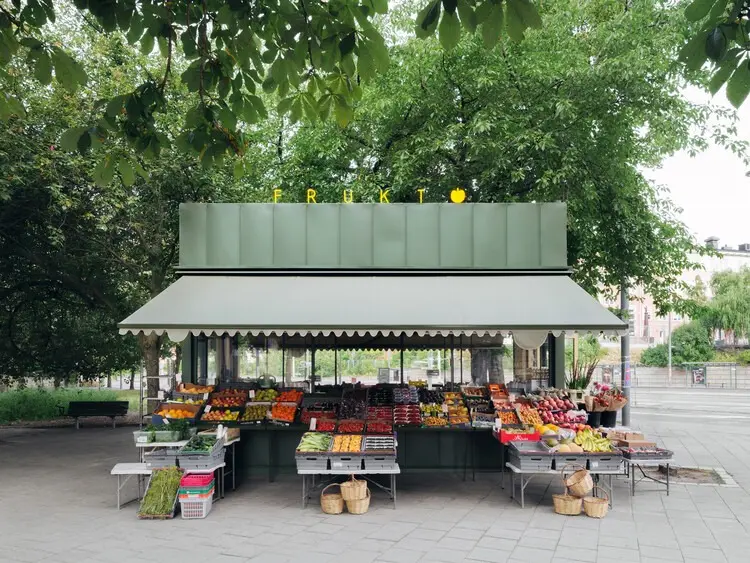
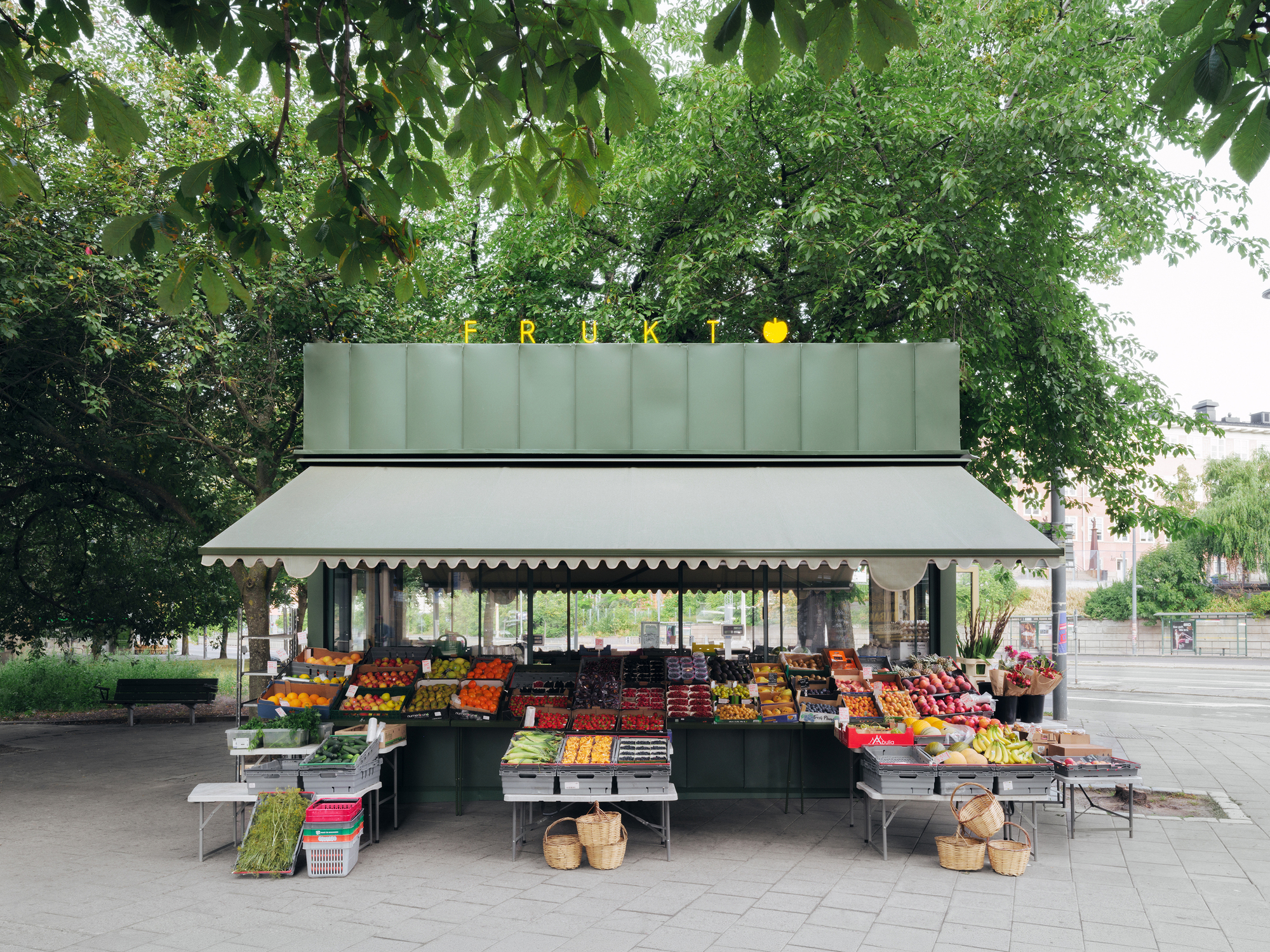
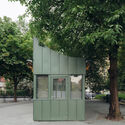
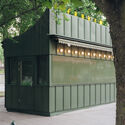
Stockholm, Sweden — In the bustling urban core of Stockholm, where historic architecture meets contemporary Scandinavian design, everyday street furniture often goes unnoticed. Yet, at the vibrant intersection of Fridhemsplan, a newly unveiled architectural intervention has transformed a humble daily routine into an urban landmark. Architectural studio DinellJohansson has recently completed a bespoke fruit kiosk for local vendor Gazmend Likaj, who has faithfully served the community from this exact corner for sixteen years.
Captured through the lens of photographer Victor Johansson, the project bridges the gap between commercial utility and civic dignity, proving that small-scale architecture can profoundly impact the public realm.
Main Facts: The Anatomy of a Modern Urban Kiosk
The newly constructed fruit stand at Fridhemsplan is much more than a simple retail box; it is a meticulously engineered piece of urban design tailored to the rigorous demands of Stockholm’s climate and the high-traffic rhythm of the inner city.
Project Name: Fruit Stand in Fridhemsplan
Architectural Practice: DinellJohansson
Client/Vendor: Gazmend Likaj
Location: Fridhemsplan, Stockholm, Sweden
Photography: Victor Johansson
Significance: Replaces a temporary-style vendor setup with a permanent, architecturally refined kiosk honoring 16 years of local enterprise.
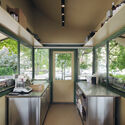
The design philosophy centered on transparency, durability, and integration. Unlike traditional kiosks that often act as visual barriers or opaque blocks within pedestrian flows, DinellJohansson utilized refined glazing, robust structural framing, and ergonomic countertops. This ensures that the colorful bounty of fresh produce remains visually accessible to passersby while offering the vendor a secure, weather-resistant, and functional workspace.
Chronology: Sixteen Years Leading to a Permanent Vision
To truly understand the weight of DinellJohansson’s intervention, one must examine the timeline of the site and the enduring presence of its operator.
Phase One: The Era of the Temporary Setup (Early 2010s)
2010: Gazmend Likaj establishes his fruit-vending presence at Fridhemsplan, quickly embedding himself into the daily fabric of the neighborhood. For commuters rushing to the subway or residents running local errands, the colorful displays of seasonal fruit become an essential visual anchor.
2010–2020: Over a decade, Likaj operates out of standard, semi-permanent market structures. Despite limitations in weatherproofing, spatial efficiency, and aesthetic cohesion with the surrounding urban landscape, his service thrives purely on community loyalty and exceptional produce.
Phase Two: Architectural Conception and Commission (Mid-2020s)
2024: Recognizing the longevity and cultural value of Likaj’s small business to the Fridhemsplan district, discussions begin regarding a permanent, purpose-built architectural solution. Stockholm-based firm DinellJohansson is brought on board to conceptualize a kiosk that honors both the site’s high foot traffic and the vendor’s long-standing tenure.
Late 2025 – Early 2026: Design phases focus on balancing structural robustness with a welcoming, human-centric aesthetic. The engineering must account for Stockholm’s freezing winters, intense summer sunlight, and the strict urban planning regulations governing public spaces in the Swedish capital.
Phase Three: Realization and Unveiling (October 2026)
October 3, 2026: The project officially opens to the public. The finished kiosk is documented by architectural photographer Victor Johansson, showcasing its sleek integration into the Fridhemsplan plaza. The launch marks a triumph for small-scale urban commerce, celebrated by local urbanists and daily commuters alike.
Supporting Data: Urban Density and Micro-Retail in Stockholm
The Fridhemsplan fruit stand project sits at the intersection of several critical urban planning data points regarding modern European cities:
Foot Traffic Impact: Fridhemsplan serves as one of Kungsholmen’s busiest transit hubs, handling tens of thousands of pedestrians daily via metro, bus lines, and intersecting commercial corridors. Micro-retail units in such zones must optimize every square centimeter of space to prevent pedestrian bottlenecks while maximizing display capacity.
Material Longevity: Nordic architectural projects demand materials that withstand extreme seasonal fluctuations—ranging from sub-zero winter snowfalls to extended daylight hours in summer. DinellJohansson integrated weather-resistant framing and treated surfaces designed to minimize maintenance overhead for independent vendors.
The Economics of Public Space: Small independent vendors like Likaj account for a vital percentage of street-level vitality in European metropolitan areas. Studies in urban sociology consistently show that human-scaled, independent retail structures foster lower crime rates, higher perceived safety, and stronger community cohesion compared to heavily corporatized retail strips.
Official Responses and Design Intent
While major infrastructural projects often dominate architectural headlines, the architects at DinellJohansson approached this micro-project with the same rigor usually reserved for public museums or large residential complexes.
"A city is defined not only by its grand monuments, but by the micro-architectures that people encounter every single day," notes the design rationale from the studio. "When someone invests sixteen years into a street corner, that corner deserves an architectural response that respects their labor and elevates the public realm."
For Gazmend Likaj, the transition from a makeshift stand to a master-designed architectural kiosk represents a profound validation of his dedication to the Fridhemsplan community. Rather than displacing a local institution in the name of modern development, the project actively reinforces local heritage, proving that modern design can serve grassroots entrepreneurship.
Implications: The Future of Micro-Architecture in Urban Planning
The successful completion of the Fridhemsplan fruit stand carries several broader implications for urban planners, municipal authorities, and architects across Europe:
1. Humanizing Public Transit Hubs
As cities densify, transit plazas risk becoming sterile environments dominated by concrete and digital advertising. By introducing high-quality, architecturally considered micro-retail units, cities can reintroduce organic textures, color, and human interaction points into commuter-heavy zones.
2. Valuing Long-Term Local Enterprise
Gentrification and commercial homogenization often threaten independent street vendors and mom-and-pop kiosks. The collaboration between DinellJohansson and Likaj sets a powerful precedent: municipal bodies and developers should look toward bespoke architectural upgrades as a way to support, rather than displace, legacy small business owners.
3. Elevating "Invisible" Architecture
Architectural discourse frequently centers on iconic cultural centers or high-end residential towers. Projects like the Fridhemsplan fruit stand refocus attention on the everyday architecture of survival, commerce, and community. By treating a humble fruit stand with the gravitas of a civic building, DinellJohansson challenges the boundaries of where "good design" belongs.
Conclusion
DinellJohansson’s fruit kiosk at Fridhemsplan is a masterclass in contextual architecture. By honoring a vendor’s sixteen-year commitment to a Stockholm street corner, the project transcends its modest footprint. It stands as a vibrant testament to the power of thoughtful design—proving that even the smallest structures can leave an enduring mark on the urban landscape, enriching the daily lives of everyone who passes by.