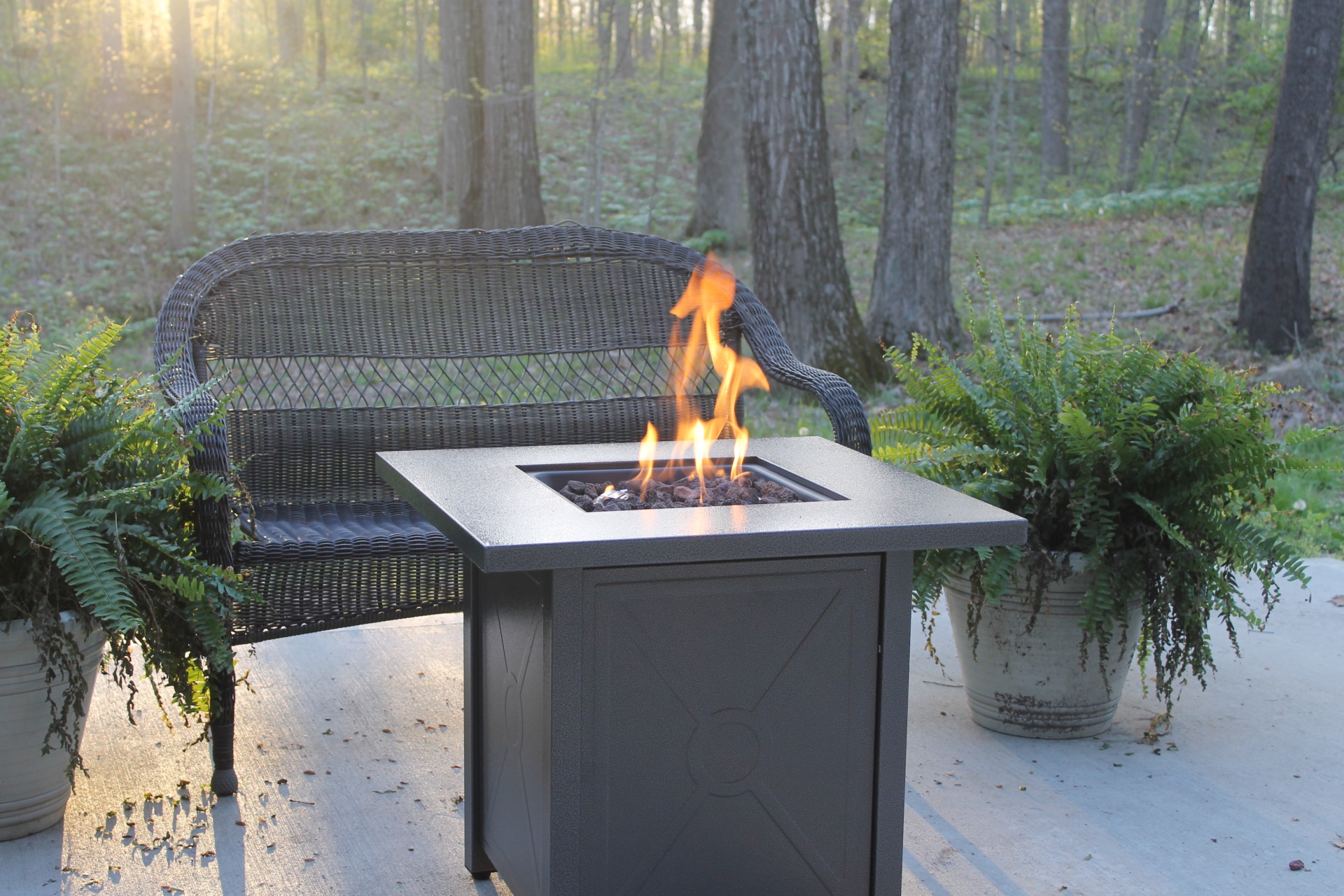
Transforming an outdoor living space from a simple patch of grass into an inviting, year-round oasis often begins with a single, glowing focal point. Enter the fire pit table: a sophisticated hybrid that marries the primitive, hypnotic warmth of a campfire with the architectural convenience of a modern cocktail or dining table.
As homeowners increasingly invest in expanding their usable square footage outdoors, the market has responded with an overwhelming array of shapes, sizes, materials, and fuel inputs. To cut through the marketing noise and identify the absolute best models on the market, our product testing team spent weeks putting popular fire pit tables through rigorous real-world evaluations.
Main Facts: What We Tested and Why It Matters
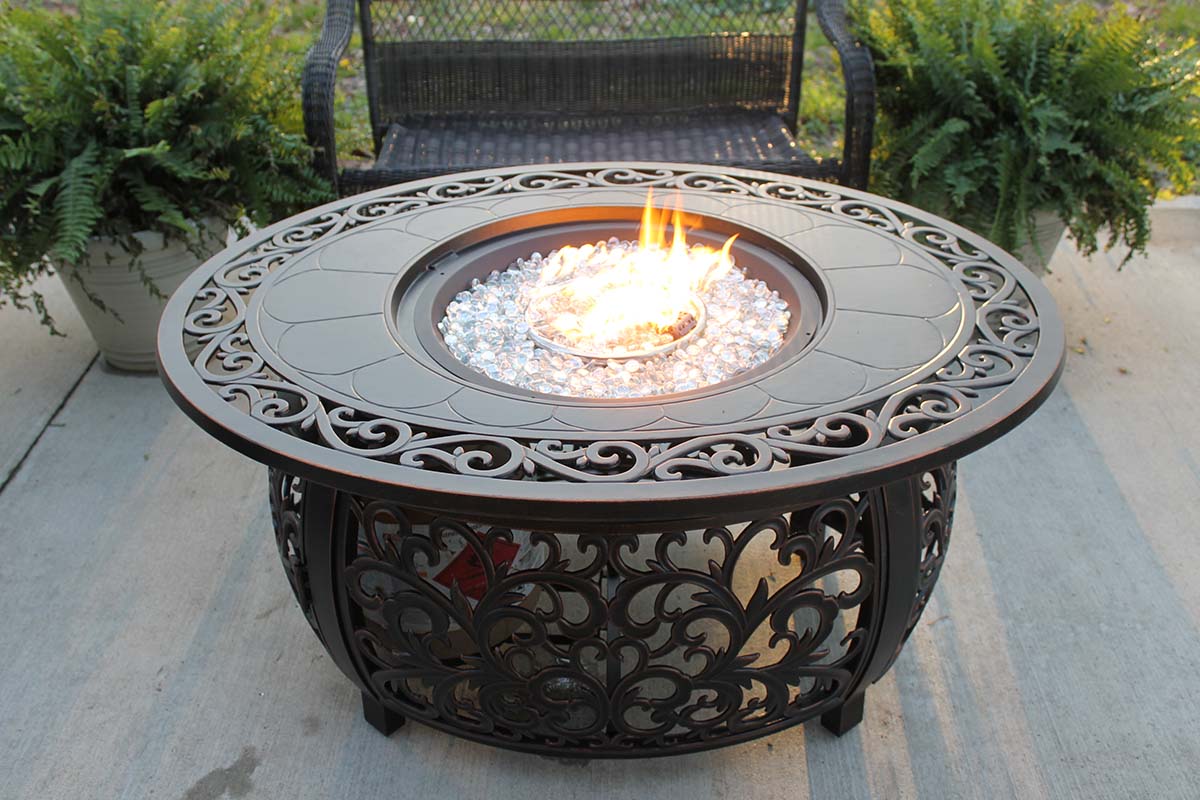
Fire pit tables have rapidly evolved from a niche luxury item into a staple of modern backyard design. Offering the warm, inviting glow of a campfire without the unruly smoke or flying embers of a traditional ground pit, these units serve as prime gathering spots on chilly autumn and spring evenings.
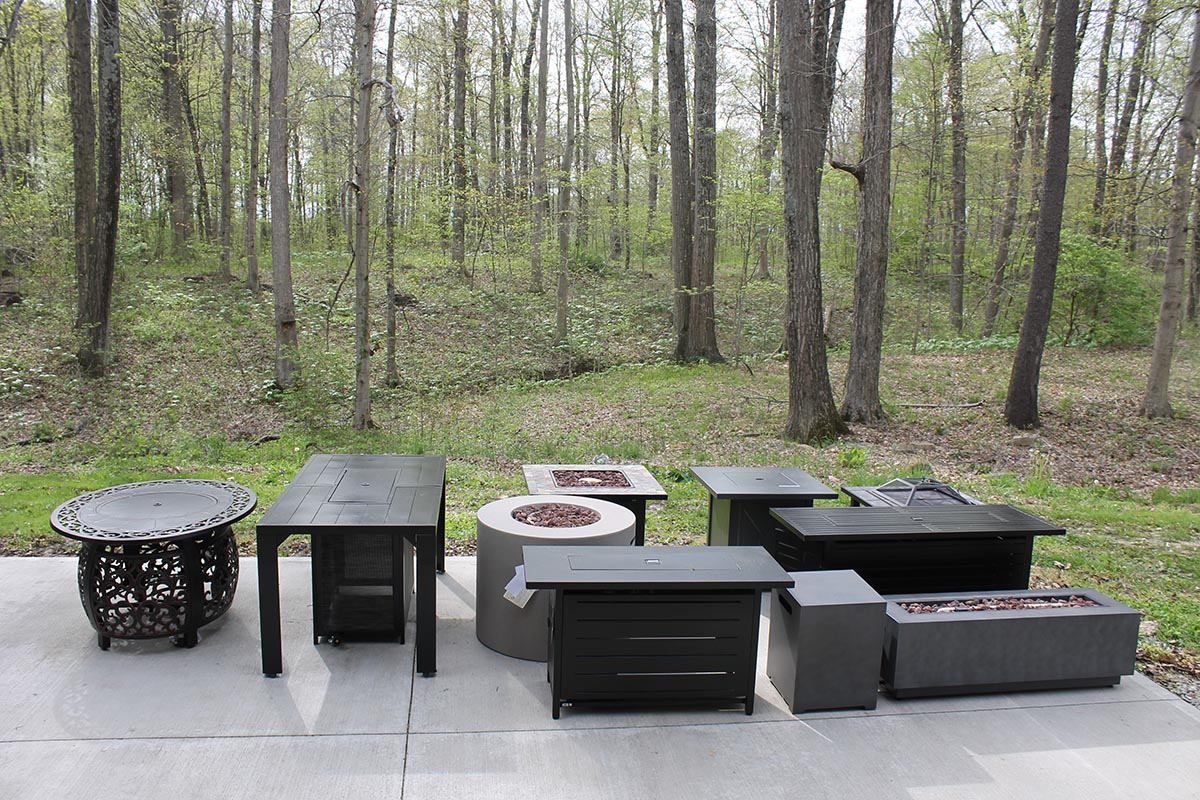
However, not all fire pit tables are created equal. To deliver objective, data-backed recommendations, our lead product tester, Katie Barton, researched more than 20 popular models before narrowing the field down to nine diverse tables for hands-on, long-term testing on a residential back patio.
The tested assortment spanned various configurations:
Fuel Sources: Propane, natural gas, and wood-burning.
Materials: Concrete, steel, iron, and slate tile.
Form Factors: Ranging from sleek low-to-the-ground models to counter-height dining configurations.
Price Range: Spanning from budget-friendly options around $140 up to premium units priced at $700.
Through exhaustive evaluation, industry experts and testers assessed each table based on six core metrics: ease of assembly, warmth generation, design aesthetic, portability, durability, and overall value.
Chronology of the Testing Process: From Unboxing to Long-Term Evaluation
Conducting a comprehensive consumer review requires a strict, repeatable methodology. The testing lifecycle for these nine fire pit tables followed a rigorous, multi-step chronological framework:
Phase 1: Research and Selection
Before a single box was delivered, our team established strict screening criteria. We analyzed historical user feedback, structural integrity reports, safety certifications, and manufacturer reputation. The final lineup represented a cross-section of the market designed to accommodate diverse consumer needs—from urban balconies and narrow patios to sprawling stone pool decks.
Phase 2: Assembly and First Impressions
Upon arrival, assembly began immediately with the assistance of a second builder to simulate standard residential setup.
Timers were tracked to measure exact assembly duration.
Testers documented any structural anomalies, difficult-to-reach hardware angles, or missing components.
Notable Standout: The Latitude Run Caelan arrived entirely preassembled, saving hours of frustrating mechanical labor. Conversely, units like the Endless Summer 30-inch model required navigating awkward internal screw angles during its 30-minute assembly window.
Phase 3: Ignition and Performance Testing
Once assembled, the tables were moved to a concrete patio environment. Propane tanks were weighed meticulously on digital scales prior to testing.
Gas models were evaluated for ignition reliability using electronic push-button starters.
Wood-burning units were tested with seasoned hardwoods to measure smoke management, fire-starter efficacy, and ember containment via mesh spark guards.
Phase 4: Thermal and Fuel Consumption Benchmarking
To measure actual efficiency, gas-fueled tables were run on their maximum heat output settings continuously for 20-minute intervals. Propane tanks were weighed post-burn to calculate precise fuel consumption down to the tenth of a pound. Concurrently, subjective warmth ratings were recorded by gathering testers around the perimeter to gauge comfort levels.
Supporting Data: Top-Rated Fire Pit Tables Compared
Following weeks of grueling stress tests, fuel tracking, and thermal evaluations, a few standout models rose to the top of our scoring rubric.
1. Best Overall: Latitude Run Caelan Round Concrete Fire Pit Table
Performance Summary: Arriving preassembled, this modern round concrete table required nothing more than removing protective gas line plastic, adding lava rocks, and connecting a standard 20-pound propane tank. It consumed 0.6 pounds of propane during a 20-minute high-burn test. While heavy at over 90 pounds—limiting its portability—its combination of robust build quality, reliable electronic ignition, and sleek aesthetic makes it the gold standard for backyard entertaining.
2. Best Bang for the Buck: Pure Garden 30-Inch Square Steel Fire Pit and Table
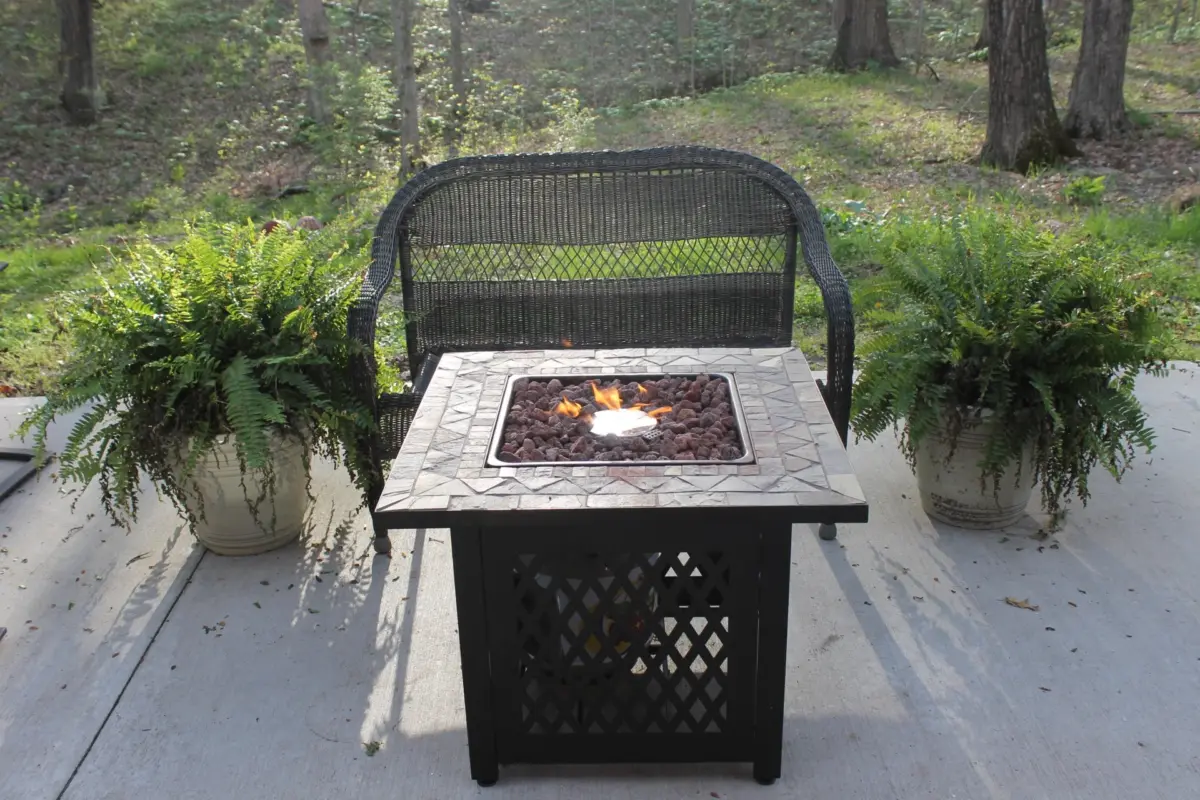
Performance Summary: For purists who crave the nostalgic crackle and aroma of real wood, this budget-friendly steel model excelled. Assembled in under 20 minutes, it provided substantial warmth for families on crisp 50-degree evenings. It features a helpful mesh spark screen and includes a tiled lid that effortlessly converts the fire bowl into a functional coffee table when not in use.
3. Best for Small Spaces: Endless Summer 30-Inch Slate Tile Mantel Fire Pit
Performance Summary: Featuring an attractive slate tile mantel, this unit delivered the most efficient fuel conservation among all tested propane tables, consuming a mere 0.04 pounds of propane during our 20-minute benchmark test. Though the assembly process presented minor structural hurdles, it successfully heated a group of four without overheating its decorative outer tiles.
4. Best for Narrow Spaces: Ciays Outdoor Gas Fire Pit Table
Performance Summary: Measuring a streamlined 42 inches long by 20 inches wide, this narrow rectangular table is tailor-made for tight deck layouts. Pumping out an impressive 50,000 BTUs, it devoured 0.8 pounds of propane in 20 minutes while throwing significant warmth. While its thin metal construction lacks the bulletproof durability of concrete alternatives, its price-to-performance ratio is difficult to beat.
5. Best Low-to-Ground: Wade Logan Jair Iron Propane Fire Pit Table
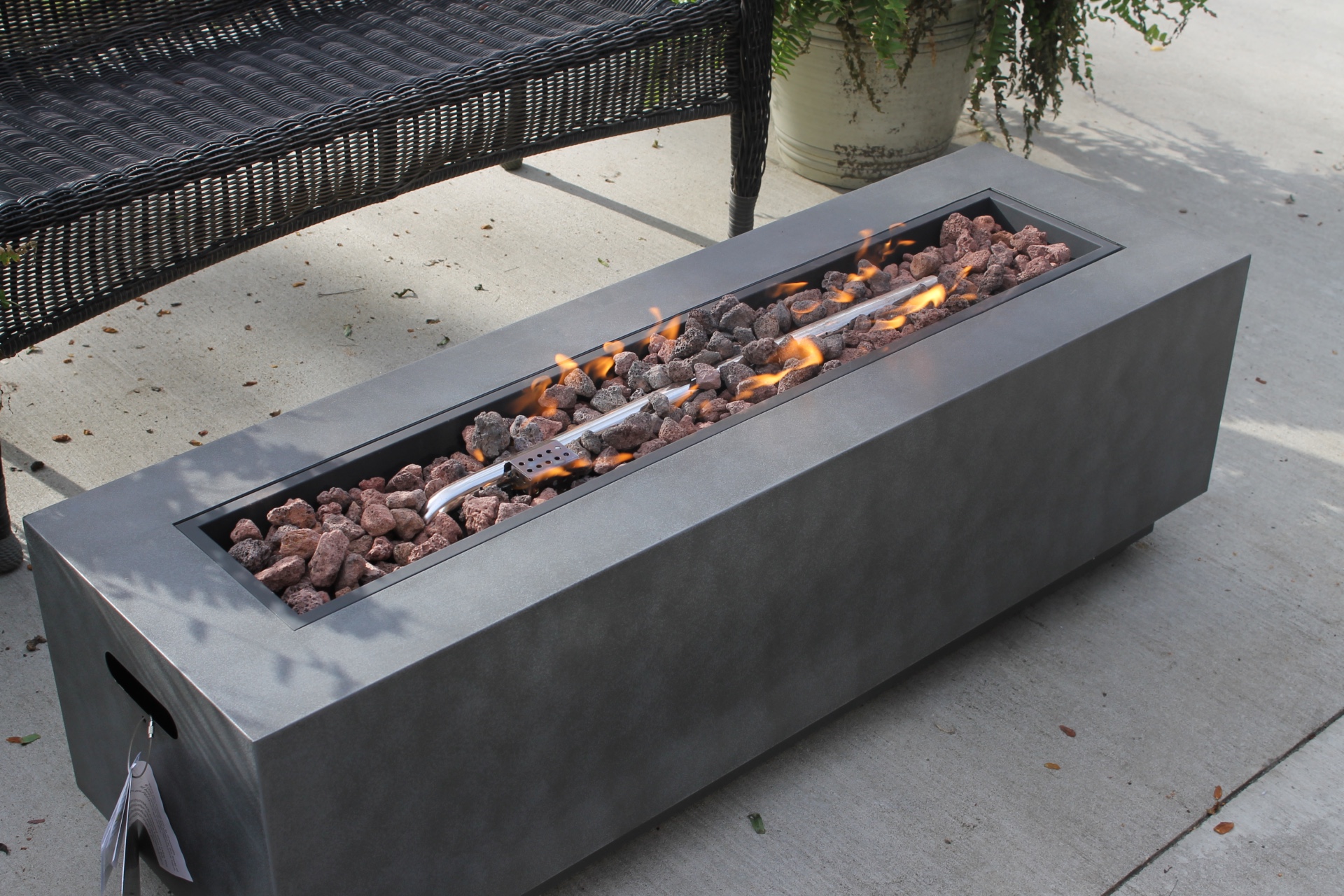
Performance Summary: Offering a contemporary, low-profile silhouette (15 inches high by 48 inches long), this preassembled unit includes a matching standalone propane tank cover. It easily accommodated a seating circle of six chairs. However, it was the most fuel-hungry model tested, consuming 1.2 pounds of propane in 20 minutes, and offers minimal perimeter surface space for resting plates or drinks.
(Note on Failed Tests: The Legacy Heating rectangular gas fire pit table was dropped from our top recommendations after repeated operational failures. Despite strict adherence to troubleshooting protocols, the unit’s safety valve repeatedly extinguished the flame the moment the control knob was released.)
Official Responses and Expert Industry Insights
Navigating safety protocols and structural requirements demands professional guidance. To ensure our testing criteria aligned with industry standards, we consulted Todd Proctor, a 30-year veteran and sales/service manager at Leisure Living.
"Fire pit tables are available in wood-burning, propane, and natural gas options," Proctor explains. "While the look and feel of a real fire is a fun option, many areas have restrictions on wood-burning fire pit tables and will only allow a gas (LP or natural) fire pit."
Proctor also emphasizes material longevity: "Steel or aluminum construction are excellent choices for gas-burning fire tables. This construction type will give your fire pit table a long life with little maintenance."
Beyond hardware selection, municipal authorities and safety advocates stress the importance of compliance. Homeowners are universally advised to check local fire codes before installation. Many urban centers strictly regulate open flames, dictate permissible fuel types based on air quality indexes, and enforce strict boundary clearances between outdoor heating appliances and combustible architectural structures.
Implications: What This Means for Homeowners
Investing in a fire pit table carries significant implications for property layout, safety management, and seasonal entertainment budgets.
Deck and Patio Safety Implications
Not all fire tables are structurally cleared for wooden infrastructure. While concrete, stone, and composite patios rarely pose an issue, low-to-the-ground models and wood-burning units generate intense downward radiant heat that can warp, scorch, or ignite wooden deck boards. Consequently, safety experts mandate that wood-burning fire pits be kept entirely off wooden structures, restricting deck installations strictly to elevated propane or natural gas models.
Furthermore, placement logistics dictate a mandatory safety perimeter. Fire pit tables must be situated a minimum of 10 feet away from any combustible material, including exterior house walls, vinyl siding, overhangs, and low-hanging tree branches.
Financial and Operational Considerations
Buyers must also weigh ongoing operational costs. While wood-burning tables require physical labor—sourcing, chopping, and seasoning firewood—propane units require recurring fuel expenditures. High-BTU units like the Wade Logan Jair consume fuel rapidly, meaning frequent trips to exchange 20-pound propane tanks during heavy peak-season usage. For homeowners seeking a permanent, maintenance-free solution, exploring a professionally installed natural gas conversion line via a licensed plumber may offer long-term financial and operational advantages.
Ultimately, choosing the right fire pit table transforms an underutilized backyard into a cozy, functional extension of the home. By balancing personal aesthetic preferences against strict spatial, safety, and fuel requirements, homeowners can secure an outdoor centerpiece that delivers warmth, safety, and architectural elegance for years to come.