

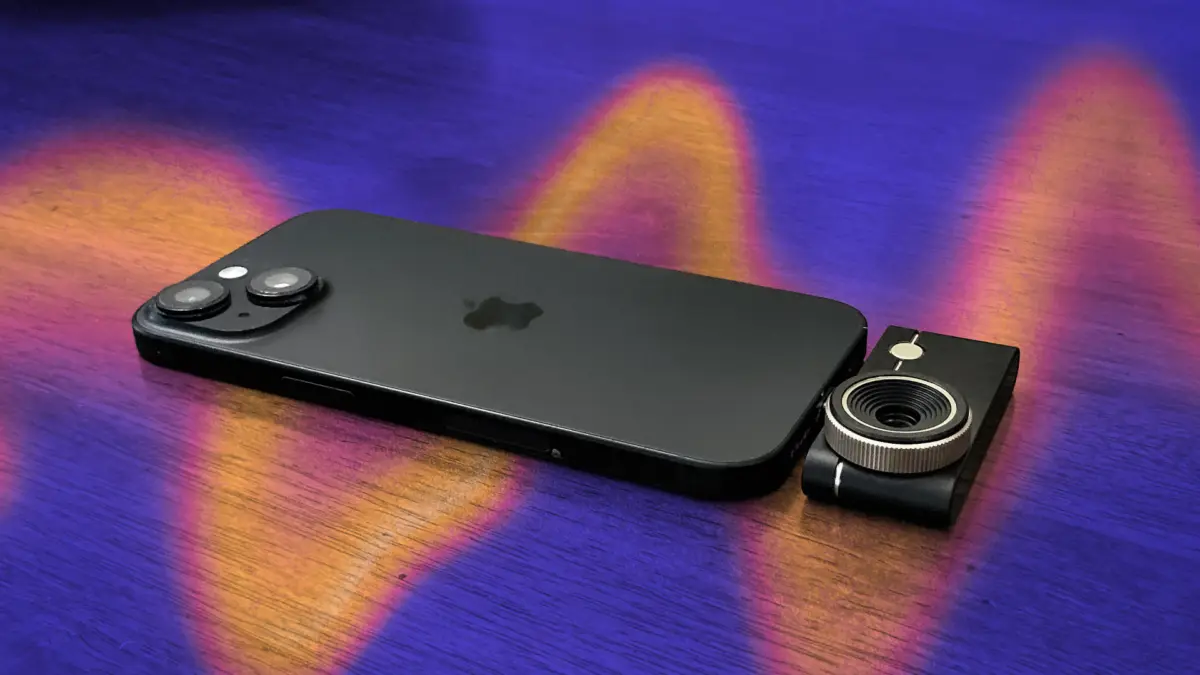
Advanced thermal imaging, once restricted to industrial contractors, high-end HVAC technicians, and costly military-grade gear, has officially entered the consumer tech mainstream. For years, everyday homeowners and travelers had to rely on naked-eye inspections or expensive, single-purpose hardware to diagnose everything from drafty windows to hidden security risks. Today, a new category of smartphone-compatible attachments is democratizing this technology.
Among the latest and most capable contenders in this space is the Thermal Master P3. Retailing for around $279, this pocket-sized camera connects directly to iOS and Android devices, promising diagnostic power that rivals dedicated standalone units. After extensive hands-on testing in residential and travel settings, reviewer Tyler Lacoma discovered that while the device carries a few limitations inherent to thermal technology, its versatility, ease of use, and multi-functional design make it an astonishingly useful tool for the average consumer.

Main Facts
The Thermal Master P3 is a compact, metal-framed thermal imaging camera designed to plug directly into the charging port of a smartphone. Weighing next to nothing and shipping with its own hard-shell carrying case, it bridges the gap between professional-grade diagnostics and consumer accessibility.
- Core Specifications: The P3 features a 25Hz refresh rate for smooth video feeds, a wide temperature detection range from -4 degrees to 1,112 degrees Fahrenheit (-20°C to 600°C), and an accuracy rating of plus or minus 3.6 degrees Fahrenheit (2°C).
- Cross-Platform Compatibility: The device supports both modern iPhones and Android smartphones, shipping with necessary connectors and a 19.7-inch extension cable for tight spaces.
- Pricing & Value: At $279, the add-on represents a significant upfront cost for an accessory, yet it undercuts traditional standalone thermal cameras and costs substantially less than a single professional home inspection.
- Primary Use Cases: Beyond specialized professional diagnostics, the P3 excels at consumer-focused tasks, including detecting hidden security cameras in vacation rentals, tracing insulation failures, spotting active water leaks, and identifying localized thermal anomalies.
Chronology and Setup: From Unboxing to Live Heat Mapping
One of the most striking aspects of the Thermal Master P3 is how friction-free the onboarding process is. For an instrument capable of measuring extreme temperatures down to a fraction of a degree, the barrier to entry is remarkably low.

The Initial Setup Phase
Upon opening the compact carrying case, users are greeted by the precision-machined camera unit, along with a Lightning adapter and an extension cable. The setup process requires just two main steps: downloading the free companion app and plugging the hardware into the smartphone’s USB-C or Lightning port.
Within minutes of downloading the application, switching the units to Fahrenheit, and initializing the lens, the phone’s screen transforms into a real-time thermal monitor. While the app is packed with advanced configurations—including emissivity adjustments, custom color palettes, measurement distance calibrations, and even a niche bird-watching mode—none of these require tweaking for a standard user. Out-of-the-box settings deliver accurate, legible heat maps immediately.

Real-World Deployment Timeline
Once configured, the device can be deployed instantly across various environments:
- Immediate Residential Scan: Scanning living areas, windows, and ceiling corners to isolate thermal leakage.
- Travel and Hospitality Checks: Conducting sweep operations in hotel rooms or short-term rentals to search for unauthorized recording equipment.
- Targeted Troubleshooting: Inspecting suspicious plumbing lines or electrical panels for sudden temperature spikes or drops.
Supporting Data and Technical Performance
To evaluate the true utility of the Thermal Master P3, testing was broken down into three primary categories: security auditing, energy efficiency assessments, and leak detection.

1. Security Auditing: Tracking Down Hidden Cameras
The proliferation of hidden cameras in short-term rental properties has become a major privacy concern for travelers. While traditional countermeasures include visual sweeps and radio-frequency (RF) detectors, thermal imaging offers a unique advantage: it detects the minute heat signatures generated by operational electronic devices.
- Wired Cameras: During testing with a concealed wired camera tucked behind books on a bookshelf, the P3 successfully bypassed visual camouflage. Even though the physical lens was obscured, the micro-heat output of the electronics illuminated a clear thermal signature against the cooler shelf background.
- Wireless Cameras & Hubs: Wireless cameras present a tougher challenge because they often remain in a low-power, cool state until actively streaming. However, scanning a dark closet revealed a distinct temperature delta of just a couple of degrees, flagging the area for closer inspection. Furthermore, because wireless cameras typically rely on nearby network hubs to transmit data, the P3 successfully isolated the warm hub hidden behind a living room sofa.
2. Insulation and HVAC Diagnostics
Heating and cooling efficiency represent some of the highest recurring costs for homeowners. Identifying where conditioned air escapes can yield major long-term savings.

- Windows and Trim: Testing a window on a warm summer day demonstrated how rapidly plastic trim and window frames absorb and transfer heat, emphasizing the critical importance of robust weather-stripping.
- Ceiling and Wall Junctions: Scans of vaulted living room ceilings revealed localized warm spots pooling in the upper corners, pointing directly toward insulation gaps that force air conditioning systems to overwork. In contrast, scans of a well-insulated bedroom ceiling showed uniform thermal distribution.
- Ductwork Evaluation: The camera was also utilized to inspect ceiling return air ducts. Elevated heat signatures surrounding the ductwork hinted at heat transfer from an unconditioned attic space or crawlspace, providing actionable data for a homeowner or contractor.
3. Leak and Moisture Detection
Water damage is one of the most insidious threats to residential integrity. Thermal imaging identifies moisture because evaporating water lowers the local surface temperature compared to dry surrounding materials.
- Cardboard Simulation Test: To test moisture tracking without compromising drywall, water was trickled onto a thick piece of cardboard. The thermal camera instantly rendered the damp region as a pronounced cold spot.
- Methodology: When diagnosing actual building leaks, the manufacturer advises performing slow, deliberate sweeps. The point of lowest temperature typically marks the core of the moisture intrusion or guides the user to the source of the leak, signaling the precise moment to call a plumber.
Official Responses and Industry Context
Manufacturers of consumer-grade thermal add-ons, including Thermal Master, position these devices as first-line diagnostic tools rather than replacements for certified industrial inspections. Industry experts generally agree with this positioning.

While tools like the P3 provide immediate, visual confirmation of anomalies—such as a failing breaker, a wet patch behind a wall, or a drafty door frame—interpreting the root cause requires domain expertise. For instance, a hot spot on an electrical panel clearly indicates a dangerous overdraw of current, but correcting it requires a licensed electrician. Similarly, while a thermal camera can show that a ceiling is absorbing attic heat, remediating the insulation may require professional contracting work.
Furthermore, thermal imaging physics introduce natural constraints that manufacturers readily acknowledge:

- Reflective Surfaces: Highly polished metals and reflective glass act like mirrors for thermal radiation, bouncing ambient heat and yielding false readings unless properly calibrated with specific emissivity settings.
- Distance Limitations: For fine-detail work—such as spotting a tiny micro-camera or a localized pipe pinhole leak—the user must operate within a close range (typically one to two feet) to achieve definitive results.
Implications: The Democratization of Diagnostics
The rise of devices like the Thermal Master P3 carries broad implications for consumers, the hospitality industry, and the home maintenance sector.
Empowering the Everyday Consumer
By packing high-end thermal sensors into a form factor that fits inside a pocket and runs off a smartphone battery, tech manufacturers have shifted diagnostic power into the hands of ordinary people. Renters, homeowners, and frequent travelers no longer need to absorb the high costs of hiring professionals for initial triage. A quick sweep before signing a lease, booking an Airbnb, or calling out an HVAC repair technician can save hundreds of dollars in unnecessary service fees.

Raising Accountability in Hospitality
The proven capability of consumer-grade thermal cameras to spot hidden security devices adds a powerful tool to the traveler’s safety kit. As privacy violations in short-term rentals remain a persistent global issue, the widespread availability of affordable detection gear increases accountability for property managers and offers peace of mind to guests.
Redefining DIY Maintenance
Home maintenance is undergoing a digital transformation. Armed with instant thermal feedback, DIY enthusiasts can target energy inefficiencies, prevent catastrophic water damage by catching leaks early, and monitor the health of household appliances long before they suffer catastrophic failure.

While the Thermal Master P3 requires a modest financial investment at $279, its robust metal construction, cross-platform utility, and surprising versatility prove that professional-grade insight is no longer locked behind corporate paywalls. Whether you are auditing your home’s thermal envelope before winter, securing your next vacation rental, or simply exploring the invisible heat maps of the world around you, the P3 redefines what a smartphone accessory can achieve.
