

By Thomas Ricker
Special Reporting / Gear Review
Main Facts: The Evolution of Urban Mobility and the "BagLev" Innovation
San Francisco-based gear manufacturer Peak Design—historically renowned for its rugged, highly specialized camera bags and modular travel ecosystems—has officially expanded its reach into the casual urban market. With the launch of its new "City Line," the brand aims to capture the everyday commuter, the remote worker on the move, and the casual explorer.

The standout feature of this new collection is not a cutting-edge zipper, an advanced magnetic clasp, or a revolutionary strap adjustment system. Instead, it is a deceptively simple, integrated piece of hardware sewn directly into every bag in the lineup: the BagLev hook.
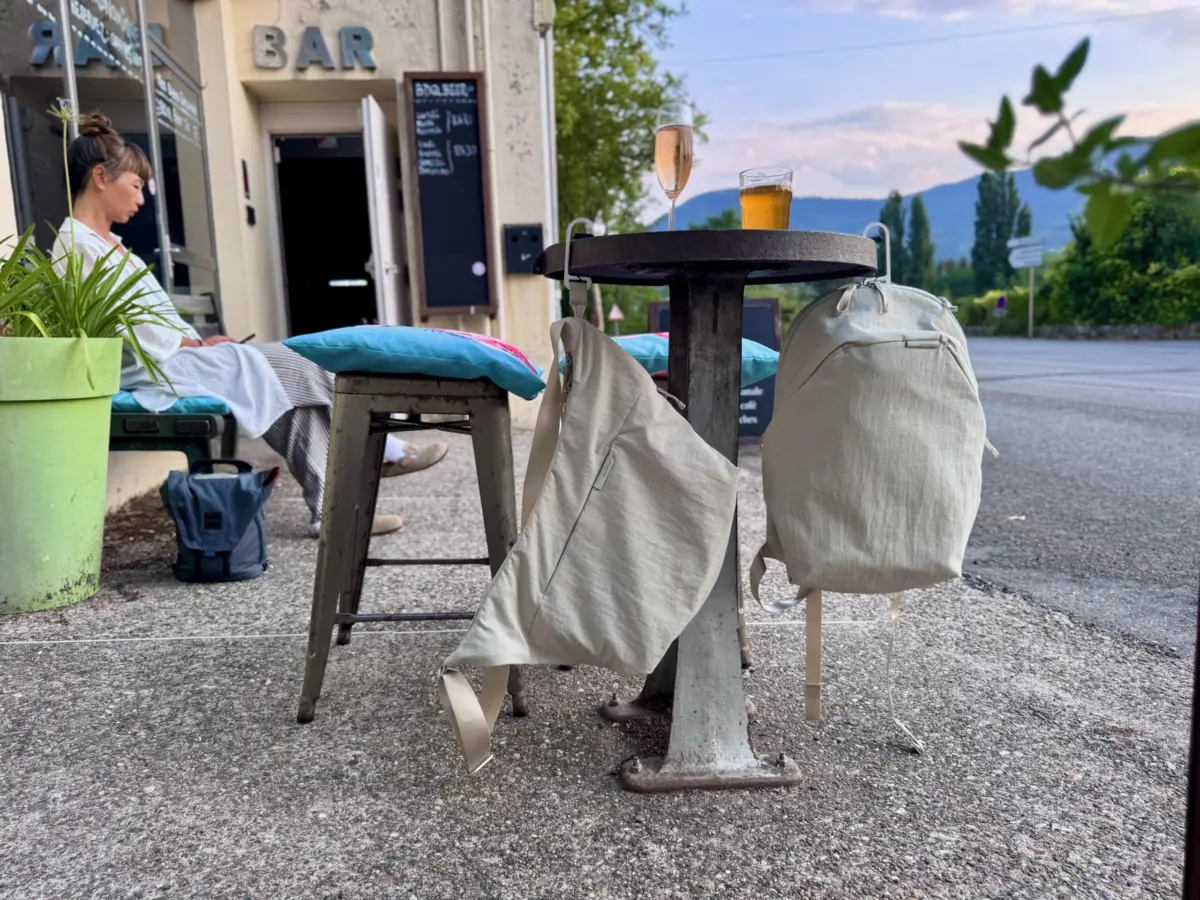
Designed to combat the perennial urban dilemma of where to put a carryall without subjecting it to the unmentionable filth of subway floors, park benches, and dive-bar sticky tiles, the BagLev system allows users to seamlessly levitate their bags off chairs, ledges, tables, and counters.

The new City Line debuts with two core products:
- The 12-liter City Crescent Crossbody Bag, priced at $119.95
- The 15-liter City Backpack, priced at $179.95
Both models are constructed from a lightweight, water-resistant Mono Shell 660D fabric. Available in colorways like the nearly white "Moon," the line bridges the gap between high-utility technical gear and clean, contemporary urban fashion. Yet, despite the thoughtful material choices, ergonomics, and tracker-hiding pockets, industry analysts and field testers agree: the BagLev hook is the narrative-defining anchor of the entire product release.

Chronology: Field-Testing the City Line Across Rural and Urban Landscapes
To properly evaluate how Peak Design’s latest consumer bet holds up outside of a controlled studio environment, the City Line was put through a rigorous, multi-week real-world trial. Testing took place on the road, specifically during an extended vanlife excursion winding through the diverse environments of France—shifting dynamically from cobblestone European cafes and rural forest floors to cramped high-speed rail cars and urban co-working spaces.
Week One: The 12-Liter City Crescent in the Wild
In the opening phase of testing, the 12L City Crescent crossbody bag became the default grab-and-go companion for exploring historic French villages. Worn with the BagLev hook trailing quietly in its designated pocket (or left dangling for instant access alongside the integrated key lanyard), the Crescent quickly proved its worth.

Testers navigated the tension between bike paths and cafes by utilizing the front leading-edge zippered pocket, which easily accommodates a 24-ounce (0.75-liter) water bottle or a compact travel umbrella. Unzipping the main compartment revealed dual access to that same water bottle sleeve, alongside internal organization consisting of a secure zippered wallet pocket and two stretchy device-and-cable pouches.
While the bag easily swallowed a 14-inch MacBook Pro, the lack of dedicated padding meant users preferred to slip the laptop into a secondary protective sleeve first. Weighing in at a mere 530 grams (1.16 pounds), the wide, unpadded, adjustable shoulder strap remained surprisingly comfortable, even when packed with a tablet, water bottle, and assorted everyday essentials.

Week Two: Shifting to the 15-Liter City Backpack
When the itinerary required serious remote work sessions and heavier computing gear, testers transitioned to the 15L City Backpack. Tipping the scales at 750 grams (1.6 pounds), the backpack introduced a more traditional dual-strap configuration featuring supportive padding.
Unlike the crossbody, the City Backpack incorporates a deep, suspended internal laptop sleeve designed specifically to cradle a 14-inch MacBook Pro, keeping the device elevated and shielded by padding on both its front and rear axes. Side pockets on the backpack proved versatile enough not only for 24-ounce water bottles, but also for impromptu European market runs carrying a fresh baguette and a bottle of wine.

However, field tests also exposed minor operational friction points. Unlike the flexible, rotating mount found on the City Crescent, the backpack’s BagLev hook is housed in a top-access pocket with restricted fabric clearance. This limited range of motion occasionally complicated attempts to hang the backpack off tabletops featuring exceptionally short lips or awkward overhangs.
Supporting Data & Technical Specifications
| Feature / Metric | Peak Design City Crescent (12L) | Peak Design City Backpack (15L) |
|---|---|---|
| Price | $119.95 | $179.95 |
| Weight | 530g (1.16 lbs) | 750g (1.60 lbs) |
| Primary Material | Mono Shell 660D Fabric | Mono Shell 660D Fabric |
| Laptop Compatibility | Up to 14" (Unpadded main compartment) | Up to 14" (Suspended, padded sleeve) |
| Water Bottle Capacity | Up to 24 oz (0.75L) | Up to 24 oz (0.75L) per side |
| Tracker Integration | AirTag / Pixel Tag compatible | AirTag / Pixel Tag compatible |
| BagLev Hook Mobility | High rotation via extended fabric gusset | Restricted movement; top-pocket integration |
Design Pros and Cons Breakdown
The Good:

- The BagLev System: Effectively eliminates the "dirty floor" problem for everyday carry enthusiasts.
- Material Quality: The Mono Shell 660D fabric sheds rain effortlessly and allows light-colored fabrics (like "Moon") to be wiped clean with a damp cloth.
- Thoughtful Accents: Large, glove-friendly zipper pulls, secure key tethers, and dedicated tracking pockets for Apple AirTags or Google Pixel Tags.
- Accessibility: The classic Peak Design single-strap swing maneuver allows users to access side pockets without fully removing the bag.
The Bad:
- Strap Limitations: The backpack’s shoulder straps lack auxiliary attachment loops, pockets, or a stabilizing sternum strap.
- Backpack Hook Mobility: The fixed nature of the backpack’s BagLev implementation limits hanging angles compared to its crossbody sibling.
- Laptop Sizing Limits: The 15L backpack’s padding cuts off sharply around 14 inches, leaving larger mobile workstations vulnerable.
Official Responses and Market Positioning
Peak Design’s leadership has long maintained that its engineering ethos centers on solving micro-frustrations experienced by active individuals. While the company carved out its dominant market share by designing elite carrying solutions for professional photographers—such as the acclaimed Everyday and Travel ecosystems—the City Line represents a calculated pivot toward the general consumer.

In company documentation and promotional materials, Peak Design emphasizes that the City Line occupies a distinct middle ground. It sits comfortably between the ultra-lightweight, adventure-focused Outdoor series and the heavy-duty, multi-day capacity of the Travel and Everyday lines.
Market analysts note that while $119 to $180 places these bags at a premium relative to fast-fashion alternatives, the inclusion of proprietary hardware like the BagLev hook justifies the price point for tech-conscious urban commuters. Furthermore, budget-conscious consumers have already begun exploring alternative solutions—such as third-party under-desk hooks from Walmart ($3.54), Etsy ($4.24), or Japanese stationery brand Lihit Lab—though none offer the seamless, integrated storage footprint engineered by Peak Design.

Implications: Changing Expectations of the Everyday Carry
The introduction of the BagLev mechanism carries broader implications for the design philosophy of urban accessories. For decades, manufacturers treated the base of a bag as an expendable, abuse-tolerant surface designed to absorb the grime of daily transit. Users routinely subjected their carryalls to office floors, restaurant seats, and public transit grime, relying on occasional spot-cleaning to manage the damage.
By designing a built-in mechanical countermeasure, Peak Design has inadvertently shifted consumer psychology. Early adopters of the City Line report a cognitive shift: using hookless legacy bags suddenly feels unhygienic and archaic.

Whether this specific feature triggers a broader industry trend where competing luggage and backpack manufacturers race to integrate fold-out hanging hardware remains to be seen. However, as hybrid work models persist and urban mobility demands smarter, more sanitary solutions, accessories that bridge the gap between outdoor utility and pristine indoor presentation are poised to dominate the market. For now, Peak Design has successfully proven that a simple hook can fundamentally transform how we interact with our gear—and where we leave it hanging.
