

Volkswagen is preparing to make a monumental pivot in its global electrification strategy. As the automotive industry navigates fluctuating consumer demand, stricter emissions regulations, and a hyper-competitive EV market, the German auto giant is abandoning its numerical nomenclature for electric crossovers. Following in the footsteps of the ID. Polo and ID. Cross, the vehicle formerly known as the ID.4 is undergoing a dramatic reinvention.
Set to debut by the end of 2026, the upcoming Volkswagen ID. Tiguan is more than just a mid-cycle refresh. It represents a total structural, aesthetic, and philosophical overhaul of VW’s mainstream electric crossover strategy. Spy shots captured during recent testing reveal a vehicle that blends the zero-emission efficiency of next-generation EV platforms with the rugged, familiar styling cues of the world-conquering, gas-powered Tiguan nameplate.
Main Facts: What We Know About the Volkswagen ID. Tiguan
The transition from the ID.4 to the ID. Tiguan is a calculated move by Volkswagen to recapture mainstream consumer enthusiasm. For years, critics and buyers alike pointed out that Volkswagen’s dedicated EV lineup—the "ID" family—felt disconnected from the brand’s historic design language and ergonomic layouts. The ID. Tiguan aims to correct these missteps head-on.
Exterior Styling and Prototyping
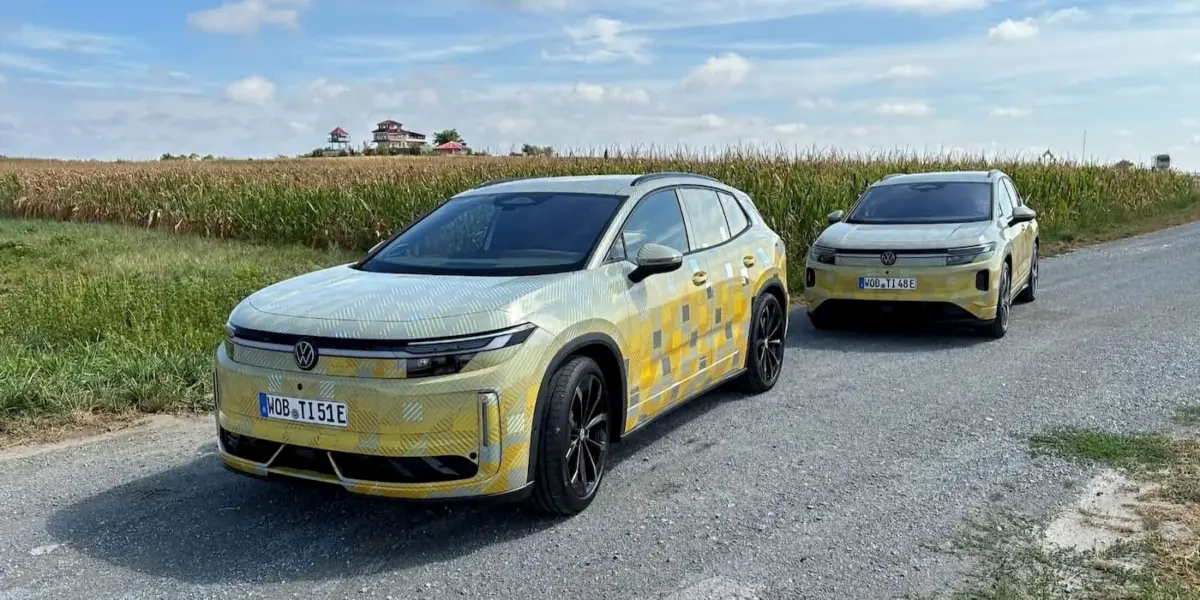
Fresh spy images, notably shared by automotive sleuths at CocheSpias, show a heavily unmasked prototype that confirms the vehicle’s new design direction. Unlike the polarizing, pebble-like aerodynamics of the outgoing ID.4, the ID. Tiguan adopts a much more traditional, squared-off SUV stance.
![Volkswagen’s new electric SUV is not just a rebadged ID.4 [Images]](https://i0.wp.com/electrek.co/wp-content/uploads/sites/3/2026/07/Volkswagen-ID.4-Tiguan.jpeg?resize=1200%2C628&quality=82&strip=all&ssl=1)
- Front Fascia: Features a more vertical, assertive front end, complete with redesigned, sharper headlights and a heavily sculpted hood that mimics its internal combustion engine (ICE) sibling.
- Side Profile: Showcases redesigned doors and practical, flush-fitting pop-out door handles that improve aerodynamics while retaining a classic SUV silhouette.
- Proportions: The vehicle maintains a commanding road presence, shedding the "minivan-esque" sloped roofline of the ID.4 in favor of a utilitarian, boxier rear cabin that maximizes cargo space and rear-seat headroom.
Interior Revamp: The Return of Physical Buttons
Perhaps the most celebrated change coming to the ID. Tiguan is inside the cabin. Volkswagen received widespread criticism for its touch-sensitive slider controls, haptic steering wheel buttons, and minimalist dashboards in early ID models.
Responding directly to driver feedback, the ID. Tiguan will adopt Volkswagen’s newly developed cabin architecture—pioneered by the upcoming ID. Polo. This layout integrates a redesigned, highly responsive infotainment system alongside much-needed physical buttons for climate control and core navigation functions, both on the center console and the redesigned steering wheel.
Underpinnings and Performance
Beneath the sheet metal, the ID. Tiguan transitions to Volkswagen’s advanced MEB+ platform, a heavily upgraded evolution of the modular electric drive matrix currently utilized across the VW Group portfolio. While Volkswagen has yet to release final performance specifications, the MEB+ architecture promises significant improvements:
- Battery & Range: The outgoing ID.4 relies on an 82 kWh battery pack, delivering an EPA-estimated range of up to 291 miles for rear-wheel-drive (RWD) variants and roughly 263 miles for all-wheel-drive (AWD) models (stretching up to 351 miles under WLTP testing). The MEB+ platform is expected to introduce next-generation chemistry that boosts energy density, pushing efficiency benchmarks even higher.
- Charging Speeds: The updated platform natively supports faster charging architectures, addressing one of the primary pain points of the first-generation MEB vehicles.
Chronology: The Evolution from ID.4 to ID. Tiguan
The roadmap leading to the creation of the ID. Tiguan has been marked by strategic recalibrations, production shifts, and spy photography leaks that have kept enthusiasts on high alert.
![Volkswagen’s new electric SUV is not just a rebadged ID.4 [Images]](https://electrek.co/wp-content/uploads/sites/3/2026/07/Volkswagen-ID.4-Tiguan.jpeg?quality=82&strip=all&w=1400)
- Late 2020 – 2021: Volkswagen launches the ID.4 globally to high expectations, pitching it as the "World Car" meant to spearhead the brand’s mass-market EV transition. While sales are steady, consumer complaints mount regarding software glitches and frustrating touch-only interior controls.
- Early 2024: Rumors begin circulating within automotive circles that Volkswagen is reconsidering its EV naming conventions. As sales of numerical ID models face stiff competition from legacy competitors and new market entrants, leadership hints at pivoting back to legendary nameplates like Golf, GTI, and Tiguan.
- March 2026: Photographers capture cold-weather testing mules of a heavily revised Volkswagen crossover, immediately recognized as the spiritual successor to the ID.4. The vehicle sports a drastically altered silhouette, sparking speculation about a name change.
- April 2026: In a surprising strategic pivot, Volkswagen announces the cessation of ID.4 production at its Chattanooga, Tennessee plant. The facility is repurposed to prioritize high-demand, gas-powered three-row SUVs like the Atlas to capitalize on shifting market demands and short-term consumer pricing habits. VW assures customers that existing ID.4 inventory will sustain dealership demand well into 2027.
- August 2026: Fresh spy images surface from European test runs (via CocheSpias and Autospy), showing the vehicle virtually undisguised. Industry analysts confirm the definitive rebranding: the car will officially be called the Volkswagen ID. Tiguan. Reports from Automotive News indicate that production of the new model will be centered at Volkswagen’s Emden plant in Germany.
- Late 2026 (Projected): Volkswagen is scheduled to officially pull the wraps off the ID. Tiguan in a global digital and physical debut, setting the stage for market rollouts heading into 2027.
Supporting Data: Market Context and Specifications
To understand why Volkswagen is overhauling its premier electric crossover, one must look at the shifting landscape of global automotive sales and technical metrics.
Comparing Generations: Outgoing ID.4 vs. Anticipated ID. Tiguan
| Metric | Volkswagen ID.4 (Current) | Volkswagen ID. Tiguan (Projected/MEB+) |
|---|---|---|
| Platform | MEB Architecture | MEB+ Architecture |
| Primary Production Hubs | Zwickau, Emden, Chattanooga | Emden, Germany |
| Battery Capacity | Up to 82 kWh (Gross/Usable variations) | Next-Gen Cells (Improved Density) |
| EPA Range (RWD) | Up to 291 miles | Estimated 300+ miles |
| Charging Architecture | Up to 170 kW DC Fast Charging | Enhanced speeds (Expected 200kW+) |
| Cabin Ergonomics | Haptic touch-sliders, minimal buttons | Physical buttons restored for climate/audio |
| Design Language | Aerodynamic, rounded "blob" shape | Traditional, rugged, squared-off SUV |
The Competitive Landscape
The mid-size electric SUV segment is fiercely contested. Rivals such as the Hyundai IONIQ 5, Kia EV6, Tesla Model Y, and the newly updated Toyota bZ series have established high bars for styling, charging infrastructure, and user experience.
Data shows that car buyers increasingly favor vehicles that blend EV technology with traditional utility. By leveraging the Tiguan moniker—a nameplate that has sold millions of units globally—Volkswagen is betting on brand equity to pull hesitant buyers across the electric threshold. Furthermore, the success of recent EV relaunches across the industry proves that consumers reward brands that quickly listen to feedback and refine their product portfolios.
Official Responses and Strategic Implications
Volkswagen’s decision to sunset the ID.4 production line in North America while simultaneously preparing the global launch of the ID. Tiguan highlights a pragmatic, multi-pronged corporate strategy.
![Volkswagen’s new electric SUV is not just a rebadged ID.4 [Images]](https://electrek.co/wp-content/uploads/sites/3/2026/01/Volkswagen-new-EV-interior-1.jpeg?quality=82&strip=all)
Navigating the Transition Period
When Volkswagen announced the halt of ID.4 production at its Chattanooga factory in April 2026—pivoting capacity toward gas-powered SUVs like the Atlas amid fluctuating fuel prices—critics questioned the brand’s long-term commitment to electrification. However, executives clarified that the move was a logistical bridge. Volkswagen stockpiled sufficient ID.4 inventory to sustain customer demand right up until the commercial launch of its next-generation electric SUVs.
The Emden Hub and Global Rollout
While North American production priorities have temporarily shifted to address regional combustion-engine profitability, the ID. Tiguan will take center stage at Volkswagen’s high-tech Emden facility in Germany. This signals that VW intends to position the ID. Tiguan as a premier global export, weaponizing superior European manufacturing quality and updated MEB+ tech to fight off low-cost rivals.
Restoring Brand Trust
For Volkswagen, the ID. Tiguan is more than just a new product—it is an apology and a course correction. By abandoning the confusing alphanumeric "ID" numbering system in favor of trusted heritage names like Polo and Tiguan, VW is acknowledging that consumer familiarity matters.
Moreover, caving to consumer demand by bringing back physical buttons demonstrates a rare corporate humility. For years, drivers complained that software-locked climate controls were a safety distraction. The interior overhaul featured in the ID. Tiguan proves that Volkswagen’s design teams are finally listening to real-world drivers over Silicon Valley-inspired minimalist trends.
![Volkswagen’s new electric SUV is not just a rebadged ID.4 [Images]](https://electrek.co/wp-content/themes/ninetofive/dist/images/google-preferred-source-badge-dark.png)
Conclusion: Will the ID. Tiguan Win Back Buyers?
The automotive world stands at a fascinating crossroads. As legacy automakers recalibrate their EV timelines to match consumer adoption curves, vehicles that bridge the gap between internal combustion familiarity and zero-emission innovation are winning the market.
The Volkswagen ID. Tiguan arrives at a critical juncture. By ditching the polarizing design of the ID.4, adopting a rugged and practical SUV aesthetic, upgrading to the high-efficiency MEB+ platform, and restoring physical interior controls, Volkswagen has addressed nearly every major grievance leveled against its first-generation electric fleet.
As the official debut approaches later this year, all eyes will be on Volkswagen to see if the ID. Tiguan can live up to its legendary namesake. Will these sweeping evolutions be enough to win back skeptical buyers and dominate the EV sales charts, or should Volkswagen have stuck to the drawing board? Only time—and the consumer market—will tell.
What are your thoughts on Volkswagen’s radical rebrand and redesign? Can the ID. Tiguan dethrone the reigning EV crossovers, or is it too little, too late? Let us know your thoughts in the comments below.
