

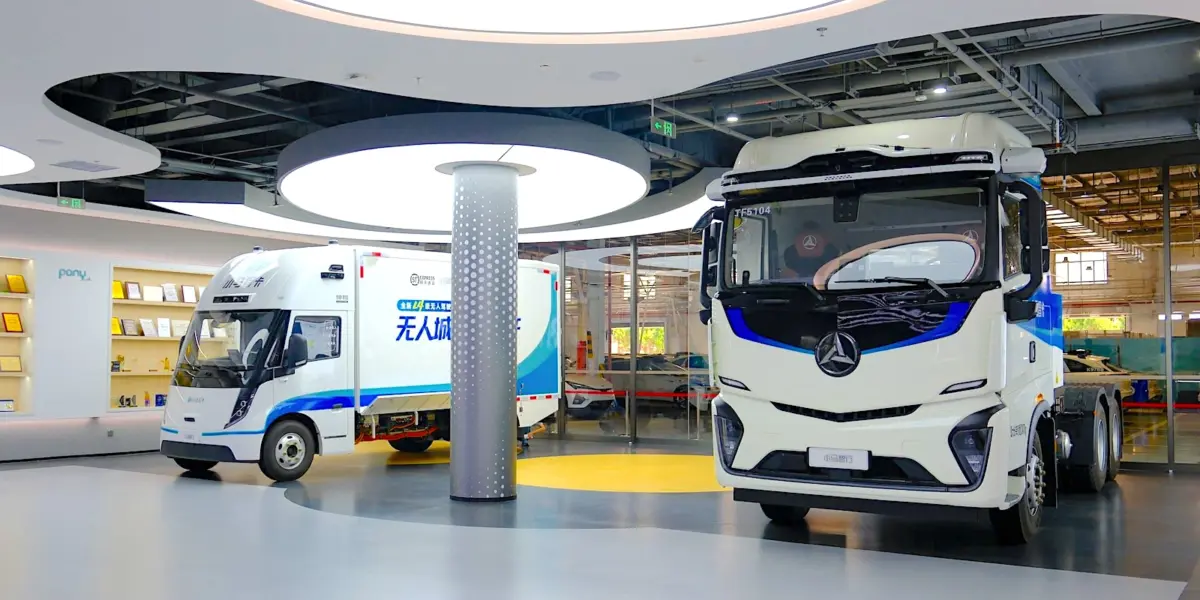
Global Autonomous Freight Market Reaches a Critical Turning Point as Hardware Cost Reductions and Strategic Partnerships Unlock Large-Scale Commercial Production.
Main Facts
Autonomous driving technology is rapidly transitioning from experimental prototypes to mass-market industrial deployment. Chinese autonomy pioneer Pony.ai has announced aggressive expansion targets, aiming to deploy 1,000 autonomous electric commercial trucks by 2027, followed by a massive scaling effort to reach 100,000 self-driving trucks on global roads by 2030.
While the company has flown relatively under the radar in Western markets compared to domestic consumer-facing autonomous vehicle (AV) developers, Pony.ai has steadily built a robust operational foundation. Since 2018, the firm has designed and tested autonomous trucks across diverse, challenging environments in China and the Middle East. Now, backed by strategic manufacturing partnerships with heavy-duty industry giants like SANY, Pony.ai is moving away from hand-built prototypes toward automotive-grade, series-produced autonomous freight vehicles.

The scaling strategy is bifurcated by vehicle class and use case. Over the next two to three years, the company plans to deploy between 500 and 1,000 fourth-generation (Gen-4) heavy-duty trucks tailored for long-haul freight, bulk commodity transport, and port logistics. Concurrently, lighter-duty commercial trucks are expected to scale at a much faster pace, serving as the primary volume driver to help the company achieve its ambitious 100,000-unit L4 autonomous fleet goal by the end of the decade.
Chronology of Development: From Concept to Commercialization
Pony.ai’s journey to commercial readiness spans nearly a decade of iterative engineering, regulatory navigation, and supply chain maturation.
- 2018–2020 (The Prototype Era): Pony.ai initiated its autonomous trucking research and development phase, deploying early hand-built prototypes in select markets across China and the Middle East. These initial vehicles served as rolling laboratories for sensor fusion, mapping, and core artificial intelligence development.
- 2021–2024 (Modular Units and Strategic Alliances): Recognizing that custom prototypes were economically unsustainable for widespread logistics operations, the company shifted toward modular hardware units. Pony.ai forged strategic alliances with established medium- and heavy-duty truck manufacturers to embed autonomous driving kits (ADKs) directly into mainstream vehicle platforms. Significant milestones during this period included securing a $100 million investment in late 2023 to expand autonomous operations into the Middle East, specifically targeting projects like NEOM.
- Late 2025 (Operational Proof): The introduction of the Gen-4 heavy-duty autonomous platform marked a pivotal operational turning point. Pony.ai deployed a pilot fleet of over 200 trucks, using real-world logistics routes to stress-test software reliability and hardware durability.
- 2026 and Beyond (The Mass Production Leap): Having achieved critical cost reductions and robust commercial traction, Pony.ai officially transitioned to serial production in mid-2026. The company began fulfilling customer deliveries in batches, setting the stage for steady volume expansion across international supply chains.
Supporting Data and Financial Performance
Sustaining a long-term vision in the capital-intensive autonomous vehicle sector requires demonstrable unit economics. Pony.ai’s recent financial and operational disclosures indicate that the business model is beginning to bear fruit.
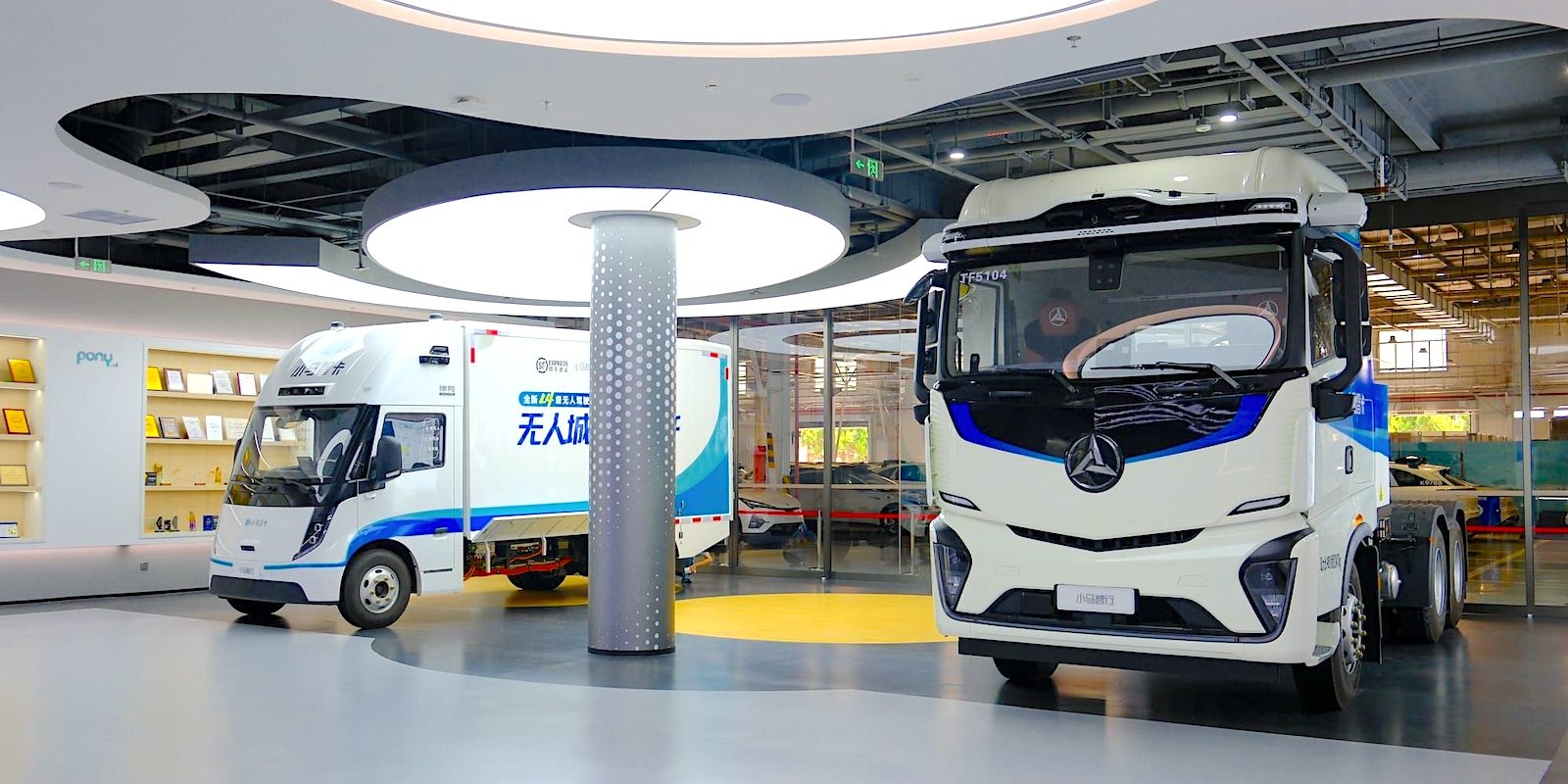
A primary catalyst for the company’s current expansion phase is a dramatic reduction in capital expenditure. Pony.ai reports that its latest Gen-4 heavy-duty system has slashed autonomous driving hardware costs by approximately 70% compared to its third-generation architecture.
This cost deflation has translated directly into commercial performance:
- Freight Volume: Since November 2025, Pony.ai’s self-driving electric semi-truck fleet has successfully handled over one billion tonne-kilometres of freight (roughly 685 million short-ton-miles).
- Revenue Growth: Bolstered by these freight operations, Pony.ai’s Robotruck-driven revenue exceeded $10 million in the first quarter of 2026 alone, representing a year-over-year growth rate in excess of 30%.
Technical Specifications of the Underlying Platform
Industry analysts widely associate Pony.ai’s heavy-duty deployments with SANY’s advanced commercial vehicle lineup, such as the e263 4×2 electric semi-tractor. This platform features robust performance metrics designed to handle heavy industrial workloads:
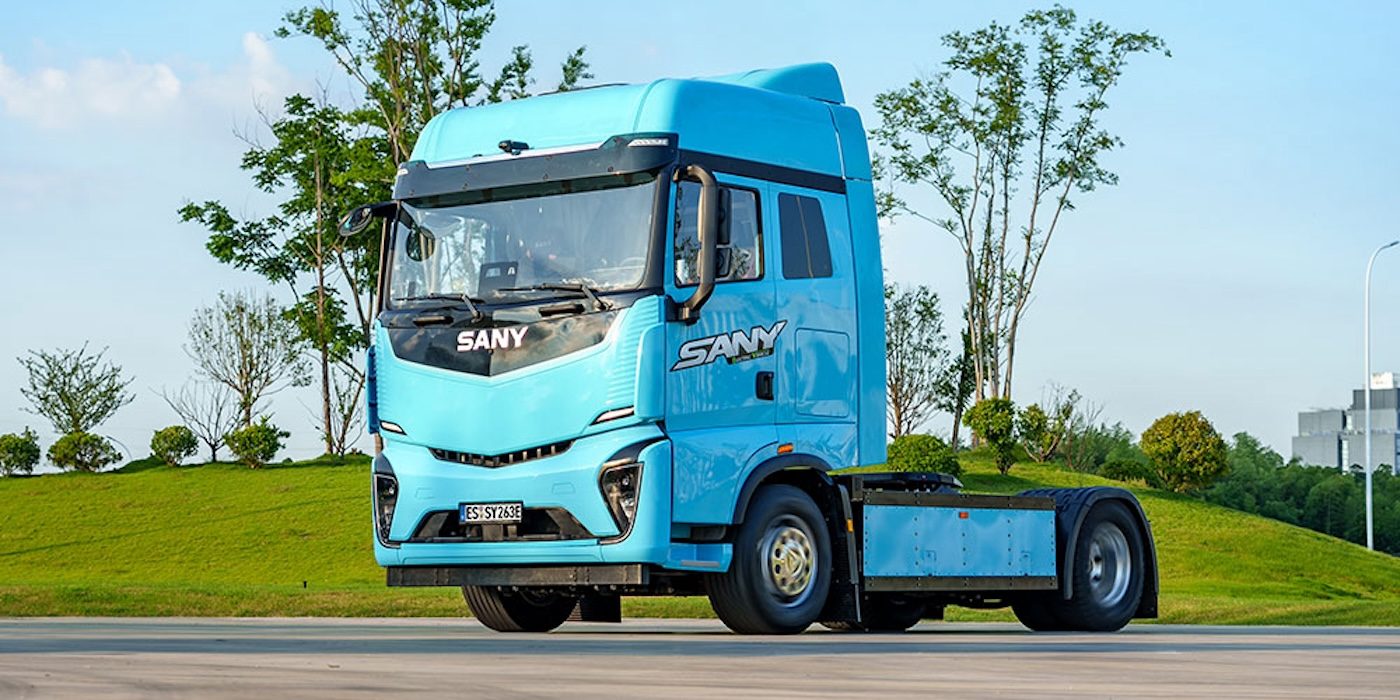
- Powertrain: A dual-motor eAxle delivering a continuous output of 420 kW (~560 horsepower) and a peak output reaching 730 kW (~975 horsepower).
- Energy Storage: A massive 636 kWh Lithium Iron Phosphate (LFP) battery pack operating on a modern 800-volt electrical architecture.
- Charging Infrastructure: Current models utilize standard 400 kW CCS connections, with ultra-fast Megawatt Charging System (MCS) capabilities slated for integration to minimize fleet downtime.
Official Responses and Strategic Rationale
While ambitious roadmap announcements in the autonomous vehicle and electric vehicle sectors are often met with healthy skepticism from industry analysts and shareholders, Pony.ai has deliberately contextualized its targets with measured, forward-looking statements.
Company executives emphasize that the decision to scale is not based on speculative timelines, but on the convergence of several foundational market enablers. According to Pony.ai’s official corporate releases, the 2030 targets reflect "a more mature autonomous driving system, lower hardware costs, automotive-grade redundant vehicle platforms, and deeper collaboration with vehicle manufacturers and logistics operators."
He Xing, Vice President of Pony.ai and Head of the company’s Robotruck business, elaborated on the strategic timing of the launch during a recent briefing:

"We had been waiting for the right moment. Our truck technology had already reached a high level, but the cost of building an L4 Robotruck remained high. The reduction in ADK costs benefited both heavy- and light-duty trucks. That is why we did not rush into large-scale production earlier."
By holding back on premature, high-cost mass manufacturing until both the hardware economics and the underlying safety architectures reached maturity, Pony.ai has positioned itself to scale efficiently without burning through excessive capital reserves.
Global Implications for Freight and Logistics
The commercial rollout of 100,000 autonomous trucks by the end of the decade carries profound implications for the global logistics and transportation landscape.

1. Relief for Driver Shortages
The commercial trucking industry worldwide faces persistent labor shortages, aging driver demographics, and high turnover rates. By introducing Level 4 autonomous trucks capable of handling long-haul and hub-to-hub routes without human intervention, logistics operators can dramatically increase asset utilization rates. Autonomous trucks are not bound by mandatory human rest breaks, allowing freight to move continuously around the clock and substantially reducing delivery transit times.
2. Decarbonization of Heavy Transport
Pony.ai’s dual focus on electric powertrains and autonomous software addresses two of the most significant challenges in modern transport: carbon emissions and operational inefficiency. Integrating heavy-duty L4 automation with high-capacity LFP battery platforms creates a zero-emission freight solution capable of operating economically across bulk commodity transport, port facilities, and interstate corridors.
3. Increased Competitive Pressure on Western AV Developers
As Pony.ai and its manufacturing partners accelerate deployment velocities in Asia and the Middle East, Western autonomous truck developers—many of which have faced regulatory roadblocks, capital constraints, or scaling delays—will face mounting international pressure. The proven ability to manufacture automotive-grade hardware at a 70% reduced cost demonstrates a clear path to profitability that validation-stage competitors must strive to match.

Outlook
Pony.ai’s methodical transition from experimental R&D to serial production marks a mature phase in the evolution of autonomous commercial vehicles. As small-scale batch deliveries continue to roll out throughout the remainder of the year, the industry will closely monitor whether the company can maintain its impressive operational uptime and financial momentum on the path toward its 2030 horizon.
