

By Automotive Industry Desk
Published: August 2026
Main Facts
The debate surrounding the integration of Chinese-manufactured electric vehicles (EVs) into the North American market has evolved from a speculative hypothetical into an urgent geopolitical and economic reality. Following a series of landmark trade agreements—most notably Canada’s recent "canola for cars" pact brokered under political negotiations—Chinese-built electric vehicles are officially securing a foothold just north of the United States border.
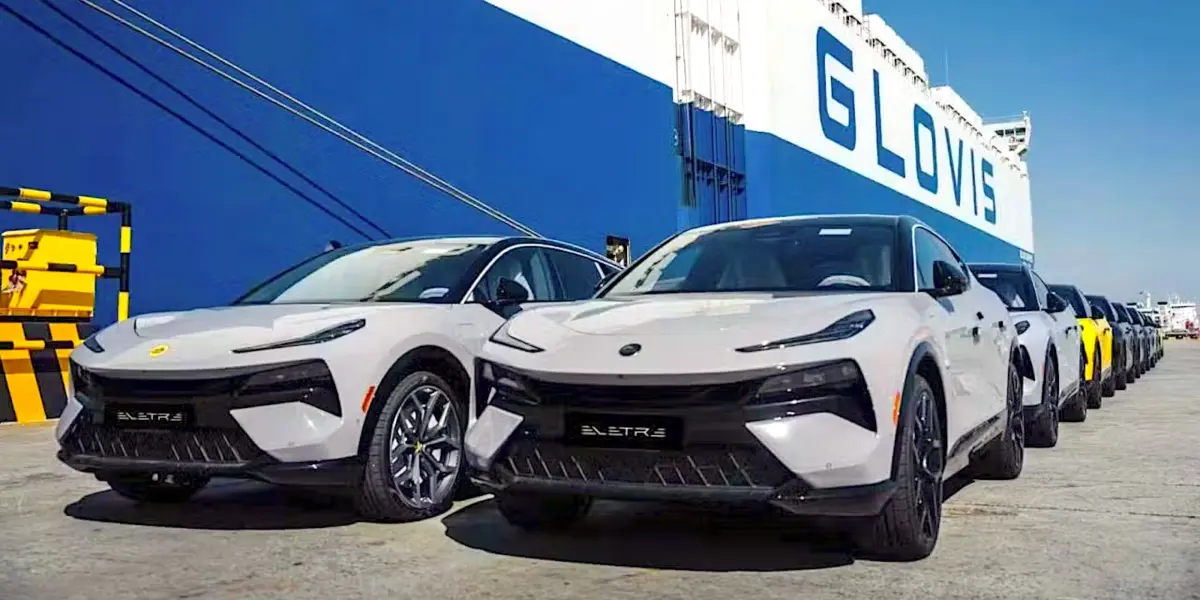
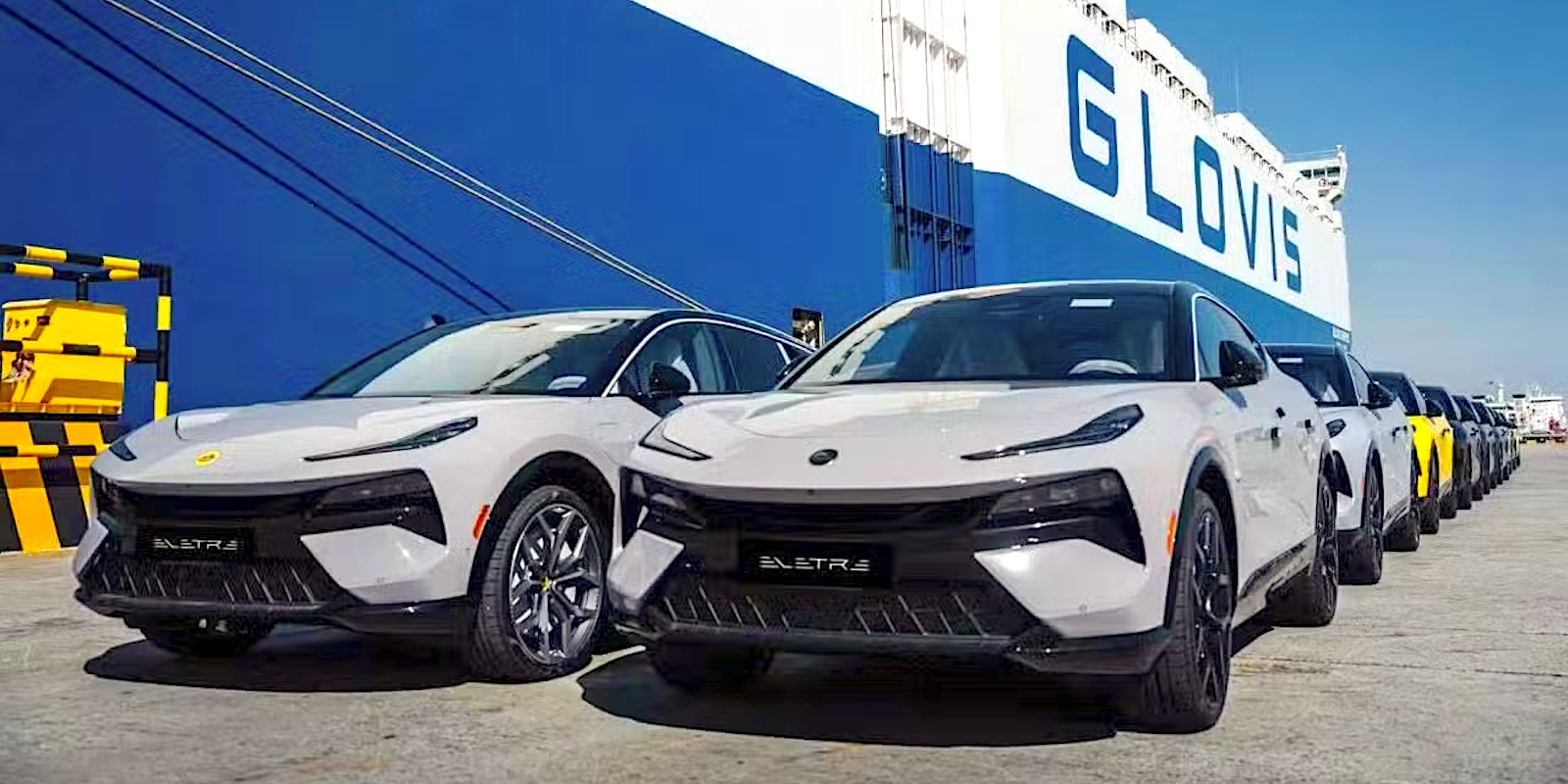
The movement is highlighted by the impending arrival of Geely-backed Lotus EVs in Canada, marking a tangible milestone in the cross-border flow of Asian-manufactured automotive technology. Yet, while Canada embraces these market shifts, the United States remains a fortress guarded by steep tariffs, national security reviews, and strict regulatory barriers.

Despite official U.S. blockades, a recent Electrek reader survey encompassing over 3,000 responses reveals a nuanced public consensus: a significant majority of automotive enthusiasts and consumers believe it is no longer a question of if Chinese EVs will hit U.S. roads, but how.
However, the reality of globalization means that Chinese-made vehicles are already hiding in plain sight. Major legacy American and European automakers—including Ford, Volvo, and others—are actively importing vehicles and components manufactured within Chinese borders, blurring the lines of what constitutes a "domestic" vehicle in the modern era.
Chronology of Events
To understand how the North American EV landscape reached this juncture, it is vital to trace the timeline of international manufacturing, trade negotiations, and legislative roadblocks:
- 2015: Volvo Cars, under the ownership of China’s Geely, begins importing Chinese-manufactured vehicles into Western markets, setting a quiet precedent for cross-border production sharing.
- The Pre-2024 Era: Various legacy brands explore or implement manufacturing hubs in China due to lower production costs and mature supply chains. Notably, Ford establishes production lines in Hangzhou via the Changan Ford joint venture.
- Recent Years (2025–Early 2026): Trade tensions peak as the U.S. implements heavy protectionist tariffs and regulatory hurdles to shield its domestic automotive sector from low-cost Chinese EV imports. Meanwhile, brands like Honda import vehicles such as the Fit into North American markets (Canada) from Chinese assembly plants.
- July 2026: Canada finalizes its "canola for cars" trade framework, opening the floodgates for Chinese EV imports. Concurrently, the ambassador confirms that the first Geely-backed Lotus EVs are scheduled to ship to Canada, creating a dramatic geographic disparity between U.S. and Canadian import policies.
- Mid-2026 (Electrek Survey): Over 3,000 readers participate in a comprehensive sidebar survey analyzing how Chinese EVs will ultimately penetrate the U.S. market, yielding polarized views on federal protectionism versus inevitable corporate joint ventures.
Supporting Data
The transition of manufacturing power toward East Asia is heavily supported by production data, logistical footprints, and public sentiment metrics captured in recent industry surveys.
The Electrek Reader Survey Insights
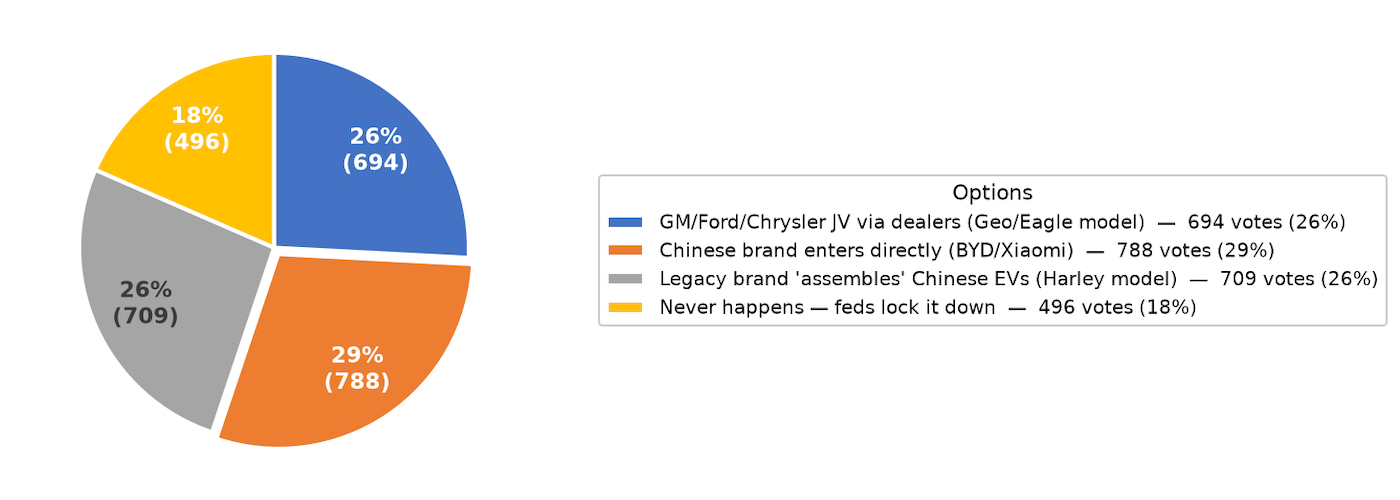
When polled on the premise, "With Canada’s new canola for cars deal bringing Chinese EVs to North America, it’s not a matter of IF but WHEN they’ll arrive in the US — how will the first Chinese EVs be sold in the US?", respondents split into several distinct ideological camps:
- The Protectionist Pessimists (~500 votes): A vocal contingent argued that "It’ll never happen — the feds will lock down the borders if it means protecting the US’s auto industry." These respondents believe that bipartisan political animosity toward China will serve as an impenetrable shield.
- The Joint Venture Realists (~700 votes): The single largest block of respondents agreed that traditional American heavyweights—General Motors, Ford, or Stellantis—will eventually partner with Chinese automakers through joint ventures (JVs), introducing vehicles through traditional dealership networks reminiscent of the import strategies of the 1980s (such as Geo or Eagle).
- The Sub-Brand and Import Precedent Believers: Many cited historical precedents, noting how Japanese and Korean brands entered the North American market through visionary importers (such as Malcolm Subaru’s early import efforts or modern Korean successes like Genesis).
The Hidden Chinese Footprint in the U.S. Market
Public perception often assumes that no Chinese-built cars currently sit on American asphalt. Trade and manufacturing data tell a radically different story:
- Ford Lincoln Nautilus: Built exclusively at Changan Ford’s Hangzhou plant in China. Official NHTSA vehicle identification documentation explicitly lists Hangzhou, China, as the final assembly point. Consequently, American consumers purchasing a premier domestic luxury vehicle are actively driving a car manufactured entirely within China.
- The Volvo & Polestar Paradox: Volvo has relied on Chinese manufacturing facilities for nearly a decade. Meanwhile, models like the Polestar 4 have navigated a labyrinth of regulatory classifications, caught in the crosshairs of geopolitical bans despite complex global supply chains.
Official Responses and Stakeholder Perspectives
The debate over Chinese EVs transcends mere consumer preference; it is a battleground of political rhetoric, trade strategy, and corporate survival.
Political and Diplomatic Stance
U.S. lawmakers across both major political parties have consistently framed China’s advanced, cost-effective EV manufacturing sector as an existential threat to national security and domestic manufacturing jobs. Bipartisan consensus dictates that strict tariffs—often reaching 100% or more—are necessary to prevent market saturation.
As survey respondent David Johnson noted:

"I think both major parties consider China a ‘threat’ and therefore will continue to block any sales with bipartisan enthusiasm. Perhaps the only way this changes is if China decides to really play hardball w rare earth metal sales to US and forces a trade deal."
Conversely, Canadian diplomatic channels have taken a pragmatic economic approach. By trading agricultural exports (like canola) for high-tech automotive access, Ottawa has positioned Canada as a bridge between Asian production capabilities and North American consumer demand.
Industry and Consumer Perspectives
Automotive analysts and veteran market observers point out that protectionism rarely succeeds indefinitely in the face of consumer demand for affordable technology. Industry commentators frequently draw parallels to the 20th-century automotive wave:

"If you look at how the Japanese automakers came to the US, typically an importer takes an interest, creates a ‘brand of America,’ then sells the cars. It happened with motorcycles as well. It’s already happened with Chinese motorcycles," remarked reader MRVC, referencing historic import figures like Malcolm Subaru.
Implications
The convergence of Chinese manufacturing scale, Canadian trade policies, and American protectionism carries profound implications for the global automotive industry:
1. The "Fortress America" Dilemma
By maintaining strict prohibitions on direct Chinese EV imports while simultaneously allowing legacy domestic brands (like Ford) to import Chinese-built luxury vehicles (such as the Nautilus), U.S. policy exhibits a structural contradiction. As global platforms merge, policing the geopolitical origin of every microchip, battery cell, and chassis will become increasingly impossible for customs enforcement.

2. Competitive Pressure on Domestic Automakers
The arrival of Geely-backed Lotus EVs—and potentially broader waves of affordable Chinese EVs—in Canada will serve as a live-fire test case. If Canadian consumers adopt these vehicles en masse due to their superior pricing and technology, pressure will mount on U.S. automakers. American manufacturers struggling to achieve profitability in their EV divisions may find themselves forced to either lobby for loosened trade restrictions or accelerate joint-venture manufacturing partnerships to remain competitive.
3. Supply Chain Realignment
China’s near-monopoly on critical rare earth minerals and refined battery materials means that even vehicles assembled in North America or Europe remain tethered to Chinese supply chains. Trade policies that attempt to isolate the Western automotive market from Chinese influence risk leaving domestic manufacturers technologically isolated and economically uncompetitive.
As the first Lotus EVs roll off transport trucks in Canada this July, the invisible boundary separating the North American markets is turning into a fault line. Whether the United States builds a permanent wall or eventually opens the gates via corporate joint ventures remains the defining automotive question of the decade.
