

Main Facts
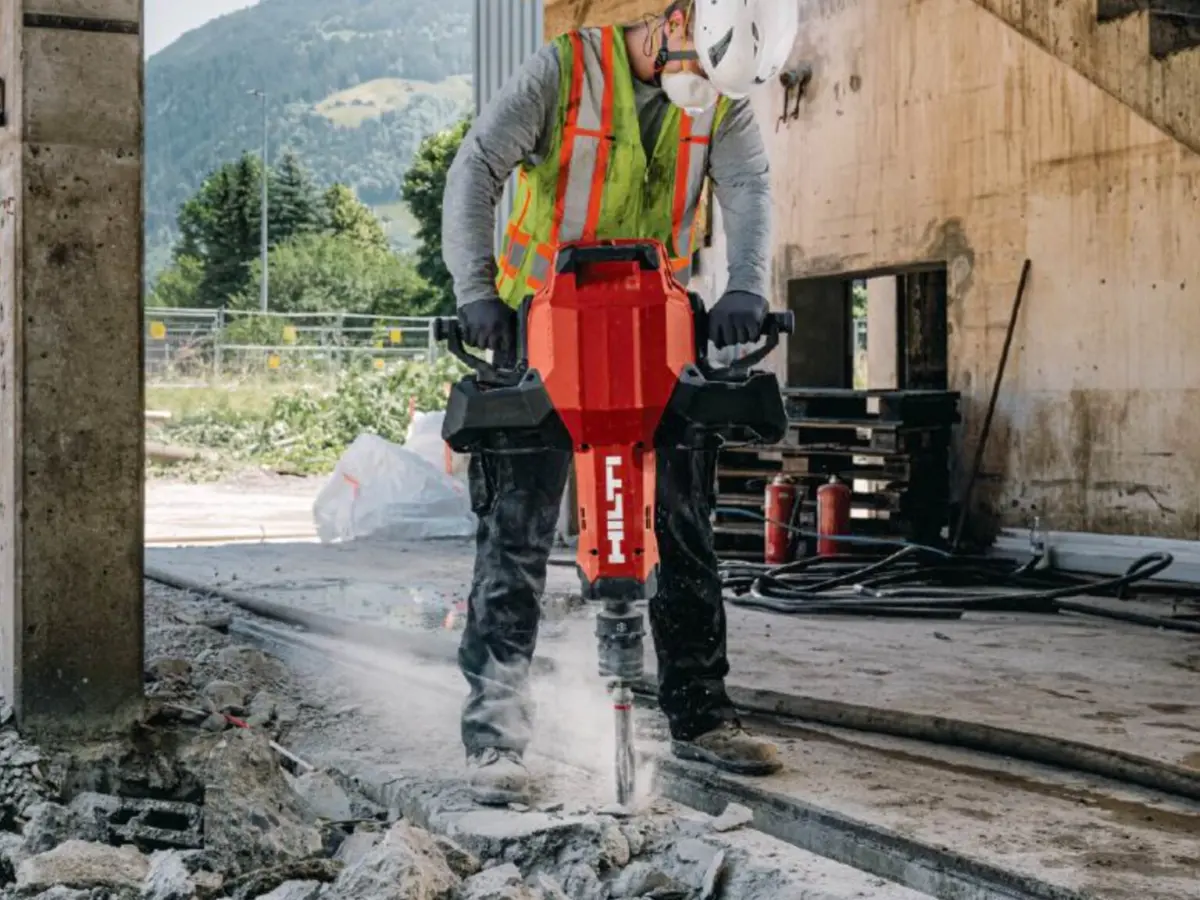
The heavy-duty demolition landscape is undergoing a seismic shift, moving away from gas-powered and corded pneumatic equipment toward high-voltage battery platforms. At the forefront of this industrial evolution is the newly released Hilti TE 3000-22 Heavy-Duty Cordless Jackhammer. Designed to eliminate the operational hazards of tangled cords, noisy generators, and toxic emissions in enclosed spaces, this tool leverages Hilti’s advanced Nuron 22V battery platform to deliver raw power previously thought impossible for a cordless breaker.
Equipped with a high-efficiency brushless motor, the TE 3000-22 delivers an astonishing 62.7 foot-pounds (ft-lbs) of impact energy at a rate of 840 blows per minute (BPM). With a bare weight of 65.7 pounds, it matches the real-world performance of its legendary corded predecessor, the Hilti TE 3000.
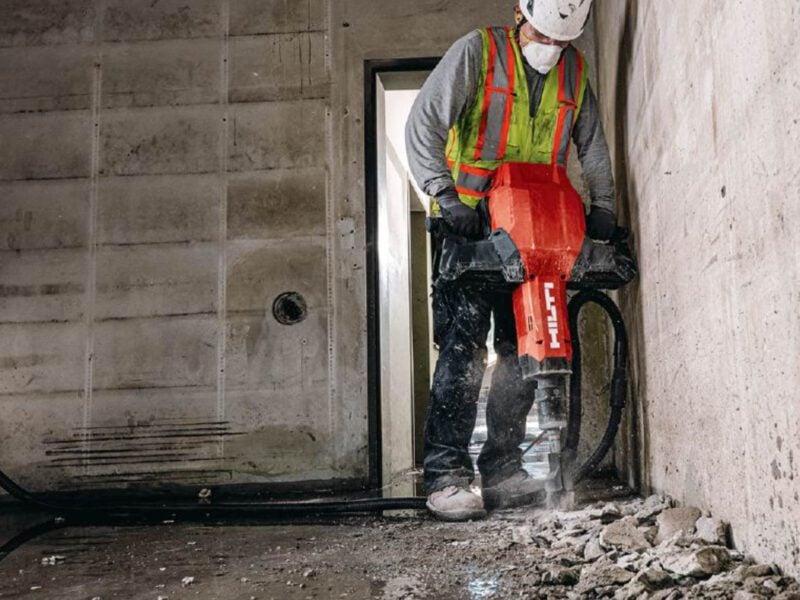
Engineered for rigorous applications—including structural concrete demolition, road repairs, trenching, and asphalt breaking—the tool promises to redefine efficiency on the jobsite. However, pushing boundaries in cordless heavy demolition brings complex challenges regarding runtime management, battery logistics, and upfront investment costs.
Chronology of Cordless Demolition Innovation
To understand the magnitude of the TE 3000-22’s arrival, it helps to examine the timeline of how the heavy demolition sector transitioned into the cordless era:
- The Pneumatic and Corded Era: For decades, heavy breakers relied exclusively on pneumatic hoses linked to diesel compressors or heavy-duty electrical cords running off jobsite generators. While powerful, these setups created trip hazards, restricted mobility, and produced significant jobsite noise.
- The Rise of High-Voltage Platforms: As lithium-ion technology matured, manufacturers began introducing high-capacity battery systems capable of handling medium-duty rotary hammers and small breakers. However, true heavy-duty demolition remained tethered to cords due to power draw limitations.
- Competitors Enter the Ring: Over recent years, major tool brands introduced heavy-duty cordless solutions. DeWalt launched its PowerShift system, Milwaukee debuted its MX Fuel platform, and Makita rolled out its 80V XGT line. While innovative, these tools generally operated at lower impact energy thresholds than top-tier corded units.
- The Hilti Nuron Expansion: Hilti expanded its high-output Nuron battery ecosystem, engineering cells capable of discharging the massive amperage required for continuous, high-impact concrete destruction without thermal overload.
- The Launch of the TE 3000-22: Hilti officially bridged the gap between corded reliability and cordless freedom, releasing a machine that matches the exact impact force of a premier corded demolition hammer while utilizing dual Nuron batteries.
Supporting Data: How the Heavyweights Stack Up
When evaluating heavy-duty cordless jackhammers, raw numbers dictate real-world capability. Hilti’s engineering team designed the TE 3000-22 to outclass competitive flagships in sheer impact force.
| Brand & Model | Impact Energy | Blow Rate (BPM) | Bare Weight |
|---|---|---|---|
| Hilti Nuron TE 3000-22 | 62.7 ft-lbs | 840 BPM | 65.7 lbs |
| Makita 80V XGT GMH04 | 53.7 ft-lbs | 870 BPM | 65.5 lbs |
| Milwaukee MX Fuel MXF368 | 50.0 ft-lbs | 1,250 BPM | 63.9 lbs |
| DeWalt PowerShift DCPS966 | 33.2 ft-lbs | Unspecified | 54.2 lbs |
Analyzing the Metrics
The data reveals a stark contrast in design philosophies among top-tier manufacturers. While competitors like Milwaukee rely on a higher blow rate (1,250 BPM) to compensate for lower per-stroke energy, Hilti takes the heavy-hitting approach. Delivering 62.7 ft-lbs of impact energy, the TE 3000-22 shatters dense aggregate with fewer, more forceful strikes, minimizing operator strain and pulverizing material efficiently.
According to Hilti’s internal performance metrics, a pair of high-capacity B 22-290 batteries can demolish up to 1.8 tons of concrete per charge. For continuous, all-day operations, the tool is rated to chisel up to 9 tons of material per hour, provided crews maintain a disciplined battery rotation strategy using fast chargers.
Official Responses and Engineering Focus
Hilti’s product development team placed heavy emphasis on three critical factors during the design of the TE 3000-22: operator ergonomics, dust safety, and accessory integration.
1. Active Vibration Reduction (AVR) and Ergonomics
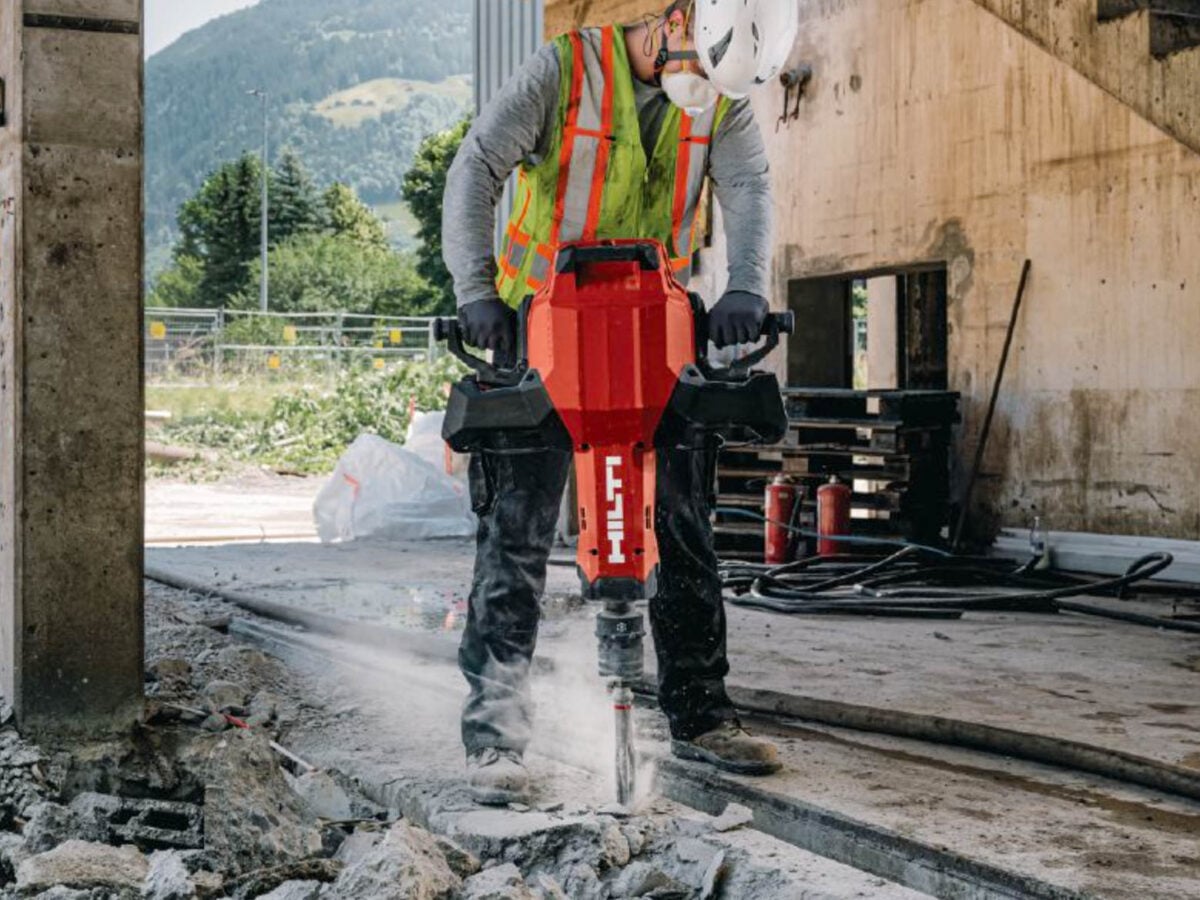
Operating a 65-pound breaker all day exposes workers to severe physical stress. To combat this, Hilti integrated its proprietary Active Vibration Reduction (AVR) system alongside fully isolated handles.
- Soft-Start Function: The tool features a controlled startup mechanism that prevents the jarring initial kick when the chisel first engages the material, improving user control.
- Fatigue Mitigation: By decoupling the main body of the hammer from the grip handles, vibration transferred to the operator’s hands and arms is drastically reduced, meeting strict occupational health and safety guidelines for daily exposure limits.
2. Jobsite Health and Dust Safety
Silica dust compliance remains a massive regulatory hurdle in commercial construction. The TE 3000-22 is fully compatible with Hilti’s TE DRS-H Dust Removal System. This attachment locks directly onto the chisel shaft, capturing airborne crystalline silica and debris at the point of origin and routing it cleanly into a compatible jobsite vacuum extractor.
3. Quick-Change Chuck and Accessories
To minimize downtime on site, the jackhammer features a quick-change chuck system compatible with Hilti’s robust line of TE-H chisels. Operators can swap out worn points, flat chisels, and spade tools rapidly without specialized hand tools.
Implications for the Construction Industry
The commercial introduction of the Hilti TE 3000-22 carries profound implications for contractors, project managers, and tool crib supervisors.
Operational Freedom vs. Power Logistics
The primary advantage of cutting the cord is undeniable mobility. Crews can now tackle remote bridge deck repairs, high-rise structural teardowns, and urban trenching projects without dragging hundreds of feet of heavy power cords or positioning loud, fuel-guzzling diesel generators nearby.
However, runtime management is the definitive hurdle. While 1.8 tons of concrete per charge is an impressive benchmark, heavy demolition is notoriously energy-intensive. Contractors transitioning to the TE 3000-22 must invest heavily in redundant battery banks and multi-port charging stations to prevent workflow bottlenecks.
Financial Considerations and Fleet Management
Retailing as a bare tool for $2,769 (backed by a 20-year limited warranty), the TE 3000-22 commands a premium price tag. For many mid-sized firms, the outright purchase cost requires careful budgeting.
To offset this, Hilti continues to push its comprehensive Fleet Management program. Priced at $91.25 per month, the subscription model includes:
- All-inclusive maintenance and repairs at zero additional cost.
- Comprehensive theft protection and replacement coverage.
- Regular hardware upgrades to ensure crews always run the latest technology.
Furthermore, contractors with established enterprise accounts can leverage company-specific pricing structures through local Hilti representatives to reduce acquisition costs.
Verdict: Should You Buy It?
The Hilti TE 3000-22 stands as an engineering triumph. It proves that cordless demolition tools no longer have to compromise on power to achieve portability.
- Who it is for: If you are already deeply invested in Hilti’s Nuron battery platform, frequently work in spaces where cords and gas generators are banned or impractical, and demand top-tier impact energy, the TE 3000-22 is a must-buy asset that will instantly streamline your workflow.
- Who should stick to cords: If your operations are restricted to heavy, non-stop, multi-shift foundational demolition directly adjacent to reliable temporary power sources, the corded Hilti TE 3000 remains a bulletproof, cost-effective standard.
Ultimately, the TE 3000-22 signals a definitive turning point for the industry: the corded-electric jackhammer’ monopoly on heavy-duty demolition is officially drawing to a close.
