

AUSTIN, TX — For decades, heavy-duty concrete demolition has been shackled by the limitations of the jobsite. Contractors tackling massive structural foundations, road repairs, and industrial trenching have long faced a binary choice: tether themselves to restrictive, high-voltage electrical cords or drag around noisy, cumbersome pneumatic air compressors and gas generators.
Transitioning a heavy-duty breaking tool from a corded or pneumatic setup to a cordless battery platform is an engineering Everest. These high-impact applications demand extreme power, must endure grueling day-long shifts, and require rugged durability to survive the brutal environment of a modern commercial jobsite.
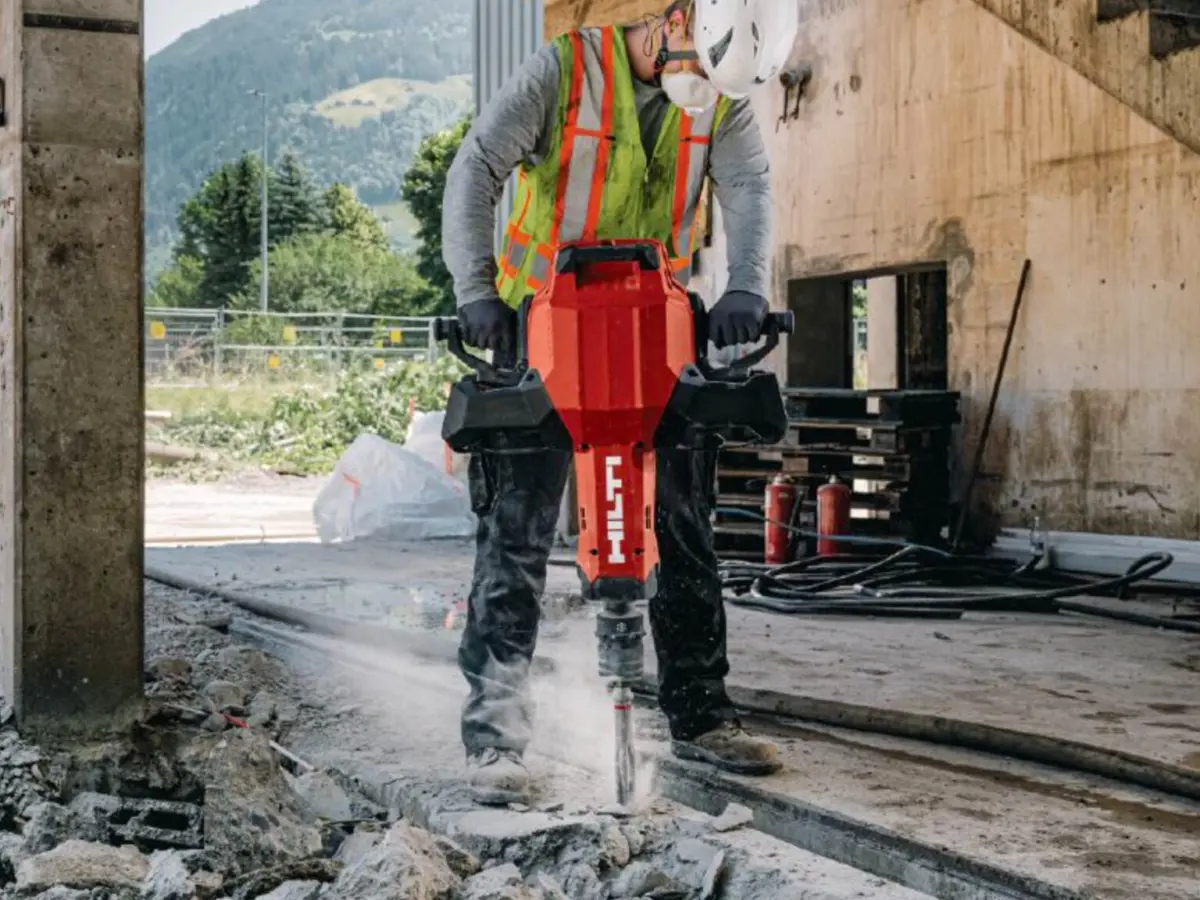
Enter the Hilti TE 3000-22 Heavy-duty Cordless Jackhammer. Built on Hilti’s proprietary Nuron 22V battery platform, this tool aims to shatter the long-held industry belief that cordless breakers cannot match the raw output of their corded predecessors. By pairing high-capacity energy storage with a redesigned brushless motor and advanced vibration control, Hilti is making a definitive play to redefine heavy construction equipment.
Main Facts: Power Without the Tether
At its core, the Hilti TE 3000-22 is engineered to match the real-world performance of its legendary corded counterpart, the TE 3000. Driven by an advanced brushless motor, the cordless variant delivers an impressive 840 blows per minute (BPM) and a staggering 62.7 ft-lbs of impact energy.
Weighing in at 65.7 lbs as a bare tool, the jackhammer is built for heavy-duty structural demolition, asphalt breaking, trenching, and foundation removal. According to Hilti’s performance metrics, a pair of high-capacity B 22-290 Nuron batteries can pulverize up to 1.8 tons of concrete per charge. When pushed to its absolute limits with a steady rotation of fresh batteries, the machine is rated to chisel through up to 9 tons of material per hour.
To help operators manage runtime during lighter chipping or precision tasks, Hilti integrated a selectable power-reduction mode. This feature dials back the impact energy slightly to conserve battery life, extending operational uptime when full power isn’t strictly necessary.
Chronology and Industry Context: The Evolution of Cordless Demolition
The launch of the TE 3000-22 did not happen in a vacuum. Over the past five years, major tool manufacturers have aggressively pursued total jobsite cordless freedom, targeting high-draw categories that were once thought exclusively reserved for gas and corded power.
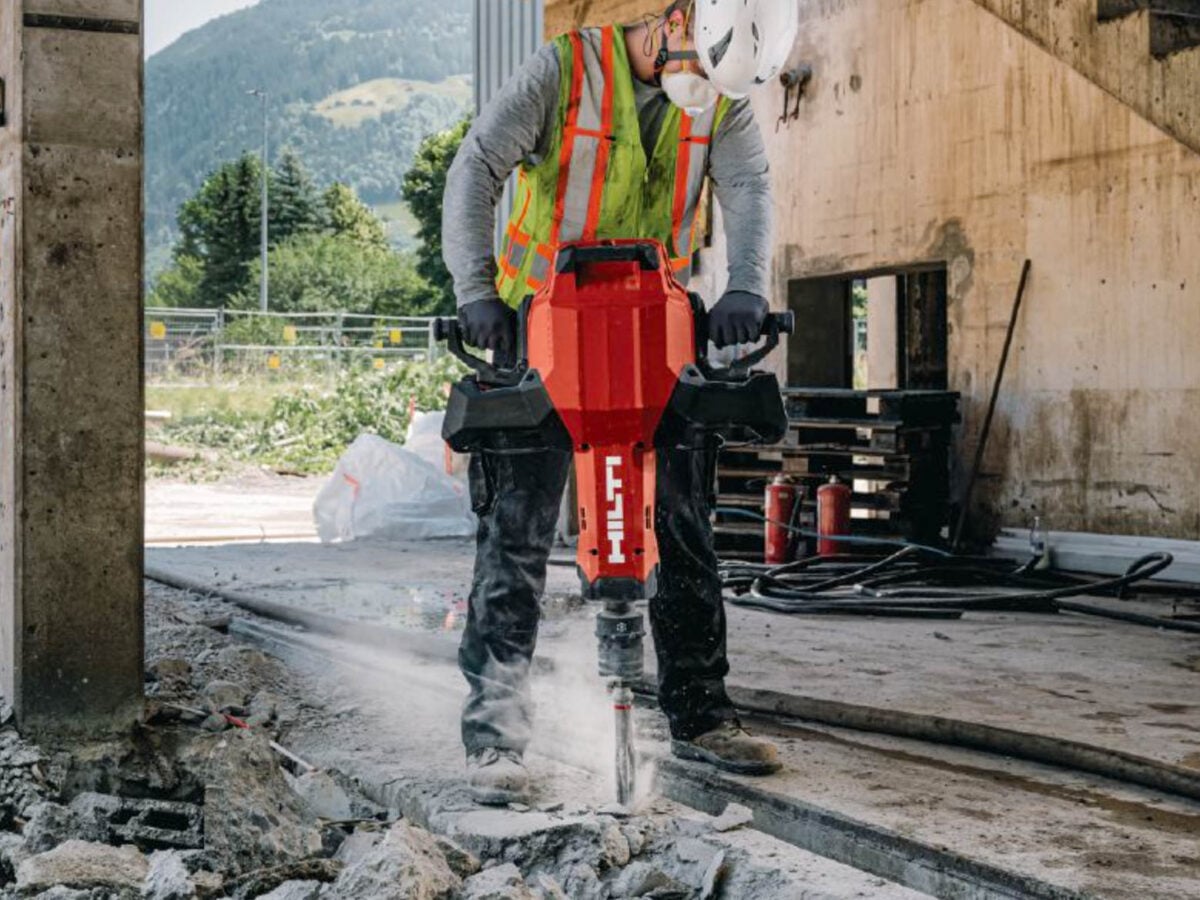
- The Pneumatic Era: For generations, pneumatic breakers dominated heavy infrastructure and road work. While immensely powerful, they required stationary or towed compressors, long hoses, and constant engine maintenance.
- The Corded Domination: Electric corded hammers like Hilti’s original TE 3000 provided a cleaner, more reliable alternative for indoor and close-quarter demolition, but extension cords remained a persistent tripping hazard and limited mobility.
- The High-Voltage Battery Wave: Brands began introducing heavy-duty battery platforms around 2020–2023. DeWalt launched its PowerShift line, Milwaukee expanded its MX Fuel system, and Makita doubled down on its 80V XGT platform.
- The Nuron Breakthrough: Hilti’s introduction of the Nuron 22V/44V battery ecosystem laid the groundwork for high-draw heavy equipment. The TE 3000-22 represents the culmination of this platform evolution, successfully scaling battery chemistry and motor efficiency to match traditional corded powerhouses.
Supporting Data: How the Competition Stacks Up
When evaluating heavy-duty cordless breakers, raw performance numbers tell the true story. A side-by-side spec comparison against top-tier competitors reveals just how aggressively Hilti is pushing the envelope:
| Brand & Model | Impact Energy | Blow Rate (BPM) | Bare Weight |
|---|---|---|---|
| Hilti Nuron TE 3000-22 | 62.7 ft-lbs | 840 BPM | 65.7 lbs |
| Milwaukee MX Fuel MXF368 | 50.0 ft-lbs | 1,250 BPM | 63.9 lbs |
| Makita 80V XGT GMH04 | 53.7 ft-lbs | 870 BPM | 65.5 lbs |
| DeWalt PowerShift DCPS966 | 33.2 ft-lbs | Unspecified | 54.2 lbs |
This data offers an eye-opening perspective on the current landscape of heavy construction tools. Even with their most advanced high-capacity battery systems, competitors like Milwaukee, Makita, and DeWalt fall notably short of the impact energy delivered by Hilti.
While Milwaukee attempts to bridge the performance gap by increasing the blow rate (1,250 BPM), Hilti remains the undisputed heavyweight champion in pure impact force per blow. The TE 3000-22 achieves its class-leading 62.7 ft-lbs while keeping its weight competitive with other heavy-duty units at roughly 65.7 lbs.
Ergonomics and Operator Safety: Active Vibration Reduction (AVR)
Operating a 65-pound jackhammer that delivers nearly 63 ft-lbs of impact energy takes a massive physical toll on the operator. Hand-arm vibration syndrome (HAVS) and chronic fatigue are major occupational hazards in commercial demolition.
To combat this, Hilti integrated several ergonomic and safety innovations into the TE 3000-22:
- Active Vibration Reduction (AVR): Building on proven technology from its large rotary hammers and corded breakers, Hilti’s AVR system decouples the main chassis from the handles, significantly lowering the vibration transmitted to the operator.
- Fully Isolated Handles: The control grips are mechanically separated from the hammering mechanism, creating a buffer zone that dampens high-frequency shock waves.
- Soft-Start Function: When engaging the tool against hard concrete, traditional breakers often deliver an aggressive initial jolt that throws off operator aim. The soft-start feature ramps up the blow rate smoothly, giving the user precise control from the very first strike.
- Dust Management: Indoor demolition and confined spaces require strict air-quality controls. The TE 3000-22 is fully compatible with Hilti’s TE DRS-H Dust Removal System, which clamps directly onto the chisel shaft to funnel hazardous silica dust straight into an attached dust extractor.
- Quick-Change Chuck: Minimizing tool downtime is vital. The jackhammer features a quick-change chuck compatible with Hilti’s proprietary TE-H chisels, allowing operators to swap worn bits in seconds without specialized hand tools.
Official Pricing, Availability, and Fleet Programs
The Hilti TE 3000-22 is positioned as a premium, professional-grade investment.
- Bare Tool Price: Retails at $2,769 for the bare tool alone, backed by Hilti’s comprehensive 20-year limited manufacturer’s warranty covering manufacturing defects.
- Hilti Fleet Management: For commercial contractors looking to manage cash flow and operational risk, the tool is available on Hilti’s Fleet program for $91.25 per month. This subscription-style service includes all repairs, routine maintenance, calibration, and comprehensive theft protection at no additional cost.
- Contractor Accounts: Hilti encourages buyers to connect directly with local company representatives to configure jobsite-specific packages, access volume tiers, and leverage company-specific pricing structures.
Implications for the Construction Industry
The release of the Hilti TE 3000-22 marks a significant turning point for jobsite logistics, but it also prompts critical questions for contractors and tool crib managers.
The Benefits: Unlimited Portability and Safety
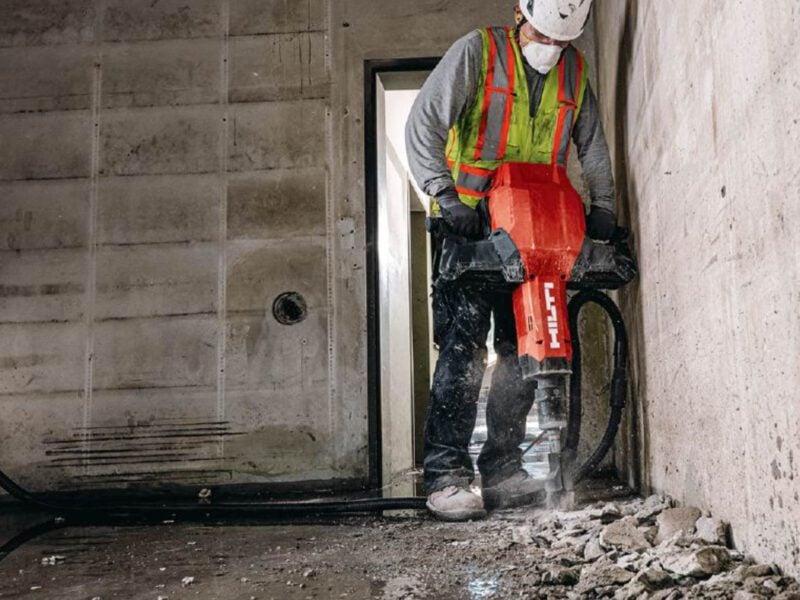
The elimination of cords and generators translates to unprecedented maneuverability. Crews can walk onto remote infrastructure projects, bridge decks, or multi-story buildings without worrying about power drops, long extension cord runs, or trailing fuel lines. Furthermore, the combination of superior AVR technology and dust extraction compatibility aligns with increasingly stringent OSHA regulations regarding worker safety and health on modern jobsites.
The Challenges: Runtime and Upfront Capital
Despite its powerhouse performance, the TE 3000-22 faces one primary operational hurdle: runtime.
While Hilti’s claim of busting 1.8 tons of concrete per pair of B 22-290 batteries is impressive, high-volume demolition projects demand continuous operation. If a crew does not maintain a disciplined charging rotation with a dedicated bank of backup batteries and rapid chargers, downtime can quickly accumulate.
Additionally, the steep upfront bare-tool price tag requires careful capital expenditure planning. However, for contractors already integrated into the Nuron ecosystem—or those utilizing Hilti’s Fleet Management program—the barrier to entry is significantly smoothed out.
The Verdict: Should You Buy It?
If your business is already standardized on Hilti’s Nuron battery platform, or if you regularly work in environments where extension cords, gas generators, and pneumatic hoses are impractical or prohibited, the TE 3000-22 is a revolutionary addition to your fleet.
Conversely, if your operations primarily center around heavy, continuous, all-day slab removal within arm’s reach of a reliable AC power source, the trusted corded TE 3000 remains a premier, cost-effective choice. For everyone else, Hilti has just proven that the future of heavy demolition is undeniably cordless.
