

As rapid urbanization continues to seal natural earth beneath impermeable layers of asphalt and concrete, cities worldwide face a mounting ecological crisis: urban runoff. Traditional stormwater infrastructure—often hidden, heavily engineered, and capacity-strained—struggles to keep pace with extreme weather events, leading to severe flooding, erosion, and the disruption of local hydrological cycles.
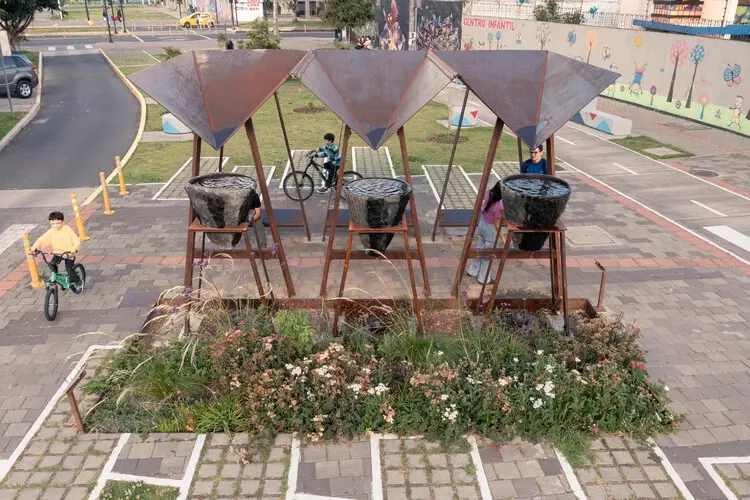
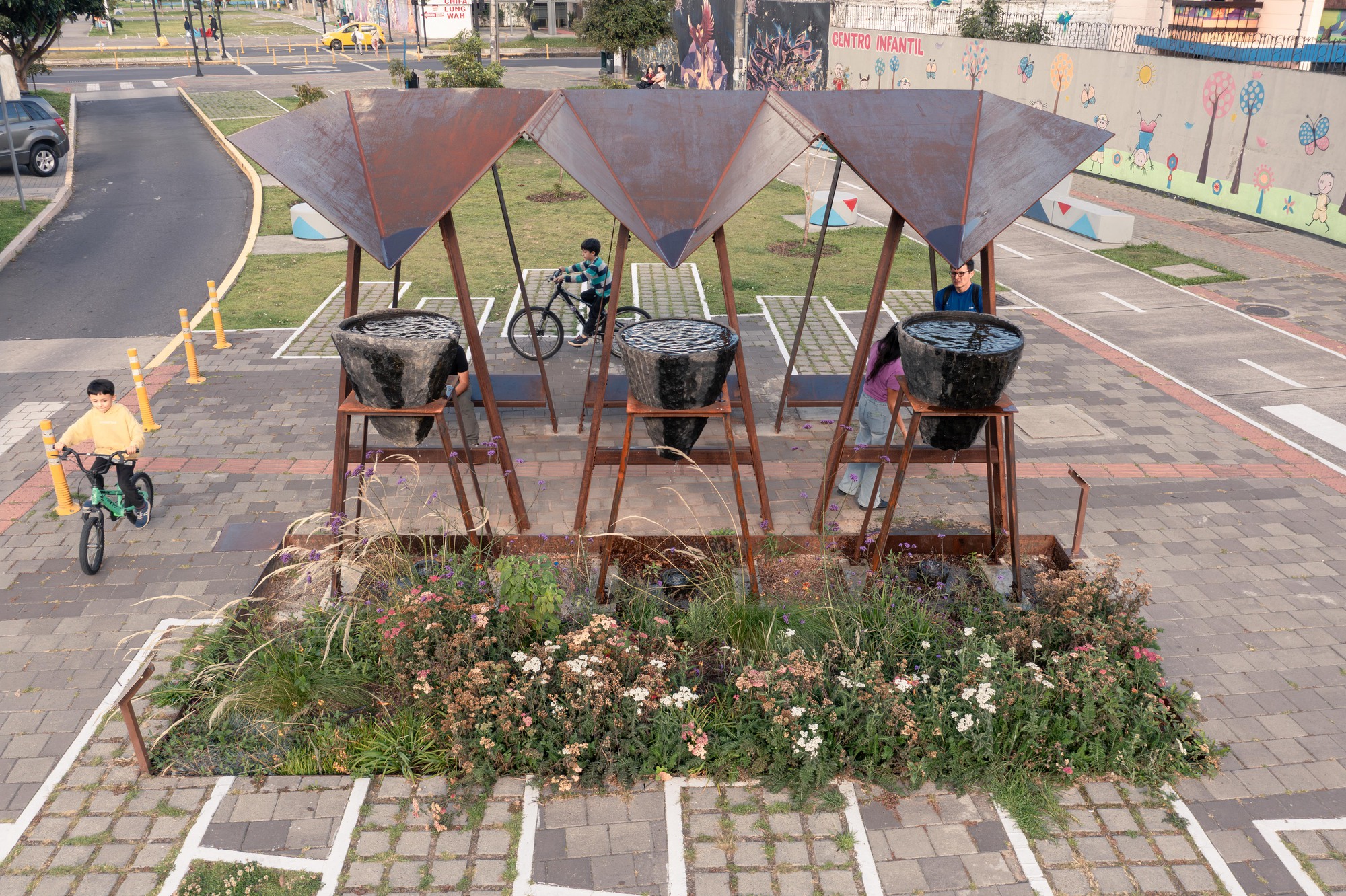
Enter Yaku, a pioneering modular urban furniture project installed in Isla Tortuga Park, located in northern Quito, Ecuador. Designed by the innovative practice El Sindicato Arquitectura and curated by Valentina Díaz, Yaku—derived from the Kichwa word for "water"—seeks to fundamentally redefine how cities handle rainfall. By seamlessly integrating public gathering spaces with sustainable rainwater harvesting, storage, and natural ground infiltration, the project serves as a physical manifestation of climate-resilient architecture. Photographed by Andrés Villota, the prototype offers a blueprint for how civic infrastructure can actively heal urban ecosystems while simultaneously fostering community engagement.
Main Facts: The Architecture of Hydrological Restoration
At its core, Yaku is a decentralized, adaptable urban intervention designed to combat the adverse effects of stormwater runoff in dense city environments.
- Project Name: Yaku – Sustainable Urban Runoff Management Module (Módulo de Gestión Sostenible de Escorrentía Urbana)
- Architectural Firm: El Sindicato Arquitectura
- Location: Isla Tortuga Park, Northern Quito, Ecuador
- Curator: Valentina Díaz
- Photography: Andrés Villota
- Primary Function: Capturing, storing, and infiltrating urban rainwater while functioning as modular public furniture.
- Design Philosophy: Mimicking the natural water cycle through decentralized, surface-installable interventions that engage citizens with ecological processes.
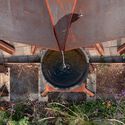
Unlike subterranean drainage systems that rush stormwater away from urban centers—often overloading wastewater plants or polluting local waterways—Yaku treats water as a precious local asset. The module is engineered for versatile deployment, meaning it can be installed on virtually any paved or hardened urban surface without requiring extensive excavation. By intercepting precipitation at the point of impact, Yaku slows down runoff, holds the water temporarily, and safely returns it to the subterranean water table through controlled infiltration.
Chronology: From Concept to Community Integration
The realization of the Yaku prototype represents a deliberate progression in contemporary Latin American landscape architecture, merging ecological science with participatory urban design.
Phase 1: Conceptualization and Watershed Analysis (Pre-2026)
El Sindicato Arquitectura began developing Yaku in response to Quito’s distinct geographical and climatic challenges. Nestled in a high-altitude Andean valley, Quito experiences intense seasonal downpours that rapidly cascade down steep topography. The architects recognized that conventional piping networks were insufficient for mitigating flash floods in public parks. They conceptualized a modular system that could bridge the gap between large-scale civic engineering and human-scaled landscape design.
Phase 2: Site Selection – Isla Tortuga Park
Northern Quito’s Isla Tortuga Park was chosen as the pilot site for the Yaku prototype. The park offered a diverse demographic cross-section of daily visitors, making it an ideal testing ground for both the mechanical efficiency of the water module and its reception as public furniture.
Phase 3: Fabrication and Modular Installation
Rather than relying on disruptive, long-term construction projects, the design team prioritized modularity. The components were prefabricated to minimize on-site disruption, allowing for rapid assembly within Isla Tortuga Park. The structure was engineered to sit on top of existing hardscapes, proving that green infrastructure does not always necessitate tearing up concrete—it can be layered directly onto it.
Phase 4: Public Unveiling and Monitoring (August 2026)
Officially documented and published in late August 2026, Yaku opened to the public. The installation immediately transformed a standard park amenity into an interactive educational landscape. Visitors began utilizing the structure for seating and gathering while simultaneously observing how the built environment responds to rainfall.
Supporting Data: The Science of Urban Runoff and Modular Design
To understand the necessity of interventions like Yaku, one must examine the metrics of urban hydrology and the mechanical benefits of decentralized stormwater management.
The Impermeable Surface Crisis
In modern metropolitan areas, between 70% and 90% of the surface is typically impermeable. During heavy rain events, this prevents natural absorption, multiplying surface runoff volume by up to five times compared to natural terrain. In cities like Quito, situated at roughly 2,850 meters above sea level with dramatic topographical slopes, this surge in velocity creates severe erosion and flash-flooding risks.
Decentralized vs. Centralized Management
Traditional stormwater systems are centralized, relying on gravity-fed pipes that channel water out of sight. However, as cities expand, these networks frequently reach their limits. Decentralized systems like Yaku address the problem at the micro-scale. Key mechanical performance markers of the Yaku module include:
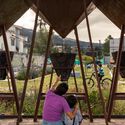
- Attenuation: Slowing down peak discharge rates during cloudbursts, thereby reducing stress on municipal sewer lines.
- Infiltration: Directing captured water through engineered filter media back into local aquifers, helping to counter the artificial drying of urban soils.
- Material Efficiency: Utilizing locally sourced, durable timber and weather-resistant framing that minimizes the carbon footprint of the furniture itself.
Official Responses and Professional Perspectives
The architectural community has embraced Yaku as a timely response to the climate crisis in dense urban landscapes.
According to design statements provided by El Sindicato Arquitectura, the project was born out of a desire to make invisible ecological processes visible to the public. "Yaku invites people to gather in public spaces while raising awareness about the vital relationship between water and the city," the architects note. By transforming a technical utility into a tactile, engaging piece of urban furniture, the firm bridges the gap between environmental education and everyday civic life.
Curator Valentina Díaz emphasizes that projects like Yaku challenge the traditional boundaries of landscape architecture. In an era where municipal authorities often treat green infrastructure and hardscape furniture as entirely separate budgetary line items, Yaku proves they can be unified into a single, high-performing element.
Furthermore, urban planners reviewing the pilot project have noted its scalability. Because Yaku is modular and non-invasive, municipal authorities can theoretically deploy units across various plazas, schoolyards, and transit hubs throughout Quito without undertaking multi-million-dollar civil engineering overhauls.
Implications: The Future of Climate-Resilient Public Spaces
The success of the Yaku prototype in Isla Tortuga Park carries profound implications for urban design across Latin America and the broader global South, where rapid growth frequently outpaces municipal infrastructure budgets.
1. Shift Toward Regenerative Urbanism
Yaku represents a philosophical pivot from defensive urbanism—building higher walls, deeper pipes, and heavier dams to keep nature out—to regenerative urbanism, where the built environment actively collaborates with natural systems. By using architecture to slow, clean, and return rainwater to the earth, cities can begin to heal their fractured water tables.
2. Democratizing Environmental Education
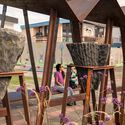
Too often, sustainability is treated as an abstract concept confined to textbooks or distant wind farms. Yaku brings ecology directly into the public realm. When citizens sit on, lean against, or interact with a piece of urban furniture that is actively managing thousands of liters of stormwater, ecological stewardship becomes a visceral, daily experience.
3. Scalability and Policy Integration
As cities face increasingly unpredictable weather patterns driven by climate change, the demand for agile, cost-effective infrastructure will skyrocket. Projects like Yaku demonstrate that municipalities do not always need massive capital investments to make headway against climate vulnerabilities. Modular, tactical urban interventions can be tested, replicated, and scaled neighborhood by neighborhood.
Conclusion
El Sindicato Arquitectura’s Yaku module proves that small interventions can yield outsized systemic impacts. By turning stormwater management into an inviting public amenity, the project reimagines how cities can coexist with the elements. As Quito—and cities like it—look toward an uncertain climatic future, innovations like Yaku light the way forward: showing us that water is not a threat to be piped away, but a vital lifeblood to be welcomed back into the heart of the city.
