

Published: August 23, 2026
Source/Author: Jonathan Yeung / ArchDaily
Focus: Urban Architecture, Civic Infrastructure, and the Evolution of Public Eating Spaces in Asia-Pacific Cities
Main Facts
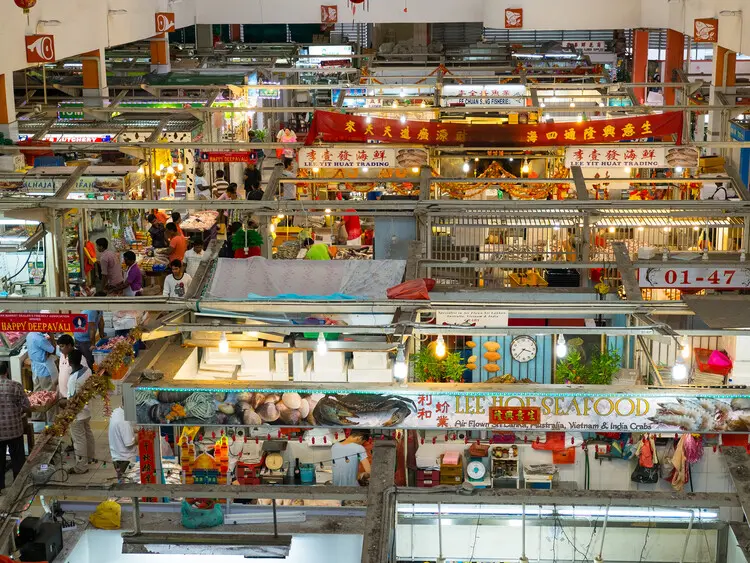
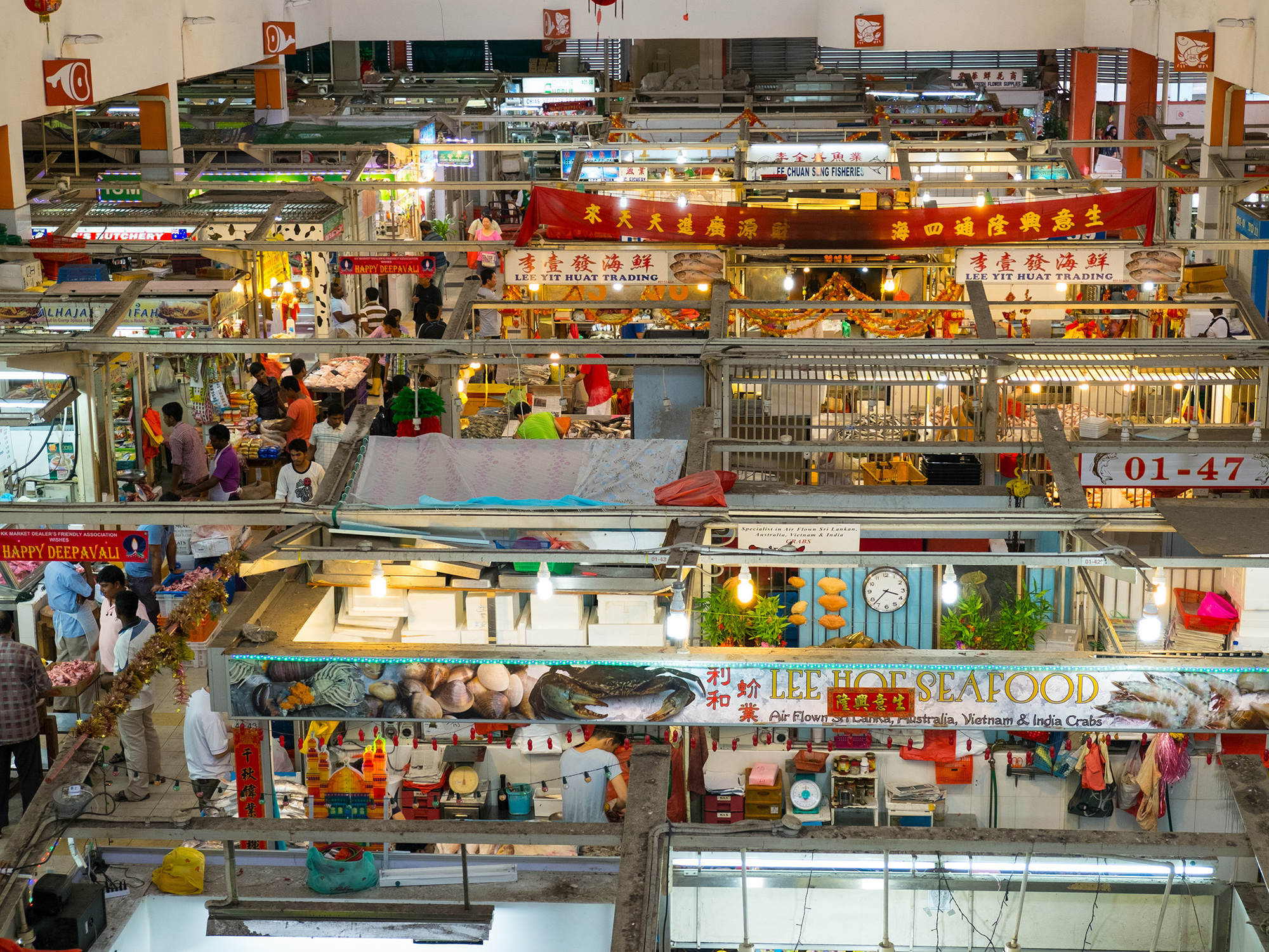
In the dense urban environments of the Asia-Pacific (APAC) region, eating has never been confined solely to the private domestic sphere. Instead, food spills out into vibrant public arteries: bustling wet markets, open-air hawker centers, curbside street stalls, and multi-level municipal service buildings. Far transcending the conventional Western definition of a restaurant or a commercial market, these spaces function as public kitchens—shared urban infrastructures that absorb and externalize the routines of daily domestic life.
Key facets of this urban phenomenon include:
- Civic Integration: In cities like Hong Kong and Singapore, food preparation and consumption are not treated merely as commercial transactions or cultural touchstones, but as fundamental tools of urban organization and community welfare.
- Vertical and Horizontal Zoning: Facilities like Hong Kong’s Municipal Services Buildings neatly stack wet markets, cooked-food centers, public libraries, and sports halls into singular civic "machines."
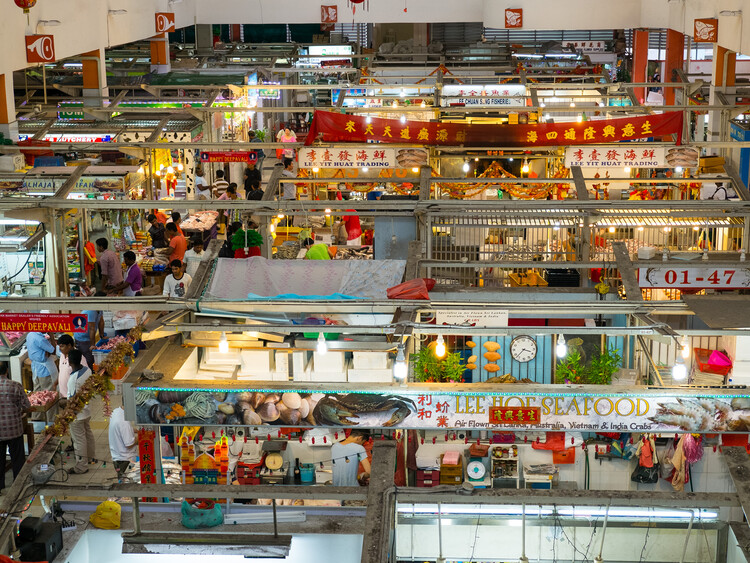
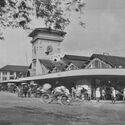
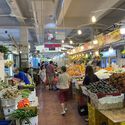
- Spatial Adaptability: Historic hubs like Singapore’s Tekka Centre, Vietnam’s Ben Thanh Market, and Tokyo’s Tsukiji Outer Market demonstrate how architecture can intentionally or organically accommodate the intense heat, mess, and social density of everyday communal dining.
- The Solution to Density: For populations living in compact apartments with limited domestic kitchen space, these public food networks serve as an essential, affordable extension of the home.
Chronology: The Evolution of the Asian Public Kitchen
To understand how modern Asian cities manage public dining, one must trace the historical trajectory of markets from informal street trades to state-planned civic infrastructure.
1. Pre-Modern and Colonial Eras: The Organic Street Economy
Historically, street-side vendors, pushcarts, and open-air wet markets formed the lifeblood of pre-industrial Asian cities.
- The Curb as Dining Room: In locations like colonial Hong Kong and Vietnam (exemplified by early iterations of the Ben Thanh Market established in the early 20th century), food was sold and consumed directly on the street (dai pai dong culture).
- Informal Networks: These spaces grew organically around ports, transit nodes, and temple courtyards. They relied on proximity, social familiarity, and temporary furniture that could be easily packed up at the end of the day.
2. Post-WWII to Late 20th Century: State Sanitation and Resettlement
As rapid urbanization caused populations to skyrocket mid-century, governments faced immense public health challenges regarding food safety, sanitation, and urban congestion.
- The Hawker Resettlement Program (Singapore): Facing unhygienic conditions and traffic bottlenecks caused by itinerant street hawkers in the 1960s and 1970s, the Singaporean government embarked on an ambitious program to construct permanent hawker centers. This effectively roofed the street life, moving vendors off the asphalt and into organized, well-ventilated public complexes like the Tekka Centre.
- The Rise of Municipal Complexes (Hong Kong): Similarly, the Hong Kong government began integrating wet markets and cooked-food centers into multi-story municipal buildings, merging commerce with community services to maximize scarce urban land.
3. The 21st Century: UNESCO Recognition and Global Architectural Re-Evaluation
Entering the 2000s and 2010s, these spaces faced threats from rapid gentrification, mallification, and changing real estate values. However, their cultural and civic value has recently been championed globally.
- UNESCO Heritage Status: In 2020, Singapore’s hawker culture was inscribed on the UNESCO Representative List of the Intangible Cultural Heritage of Humanity, cementing its status as a vital pillar of multicultural identity and community bonding.
- Architectural Reclamation: Contemporary urban planners and architects increasingly view these public kitchens not as relics of the past, but as masterclasses in sustainable, high-density social infrastructure—offering lessons for Western cities grappling with loneliness, housing affordability, and public space deficits.
Supporting Data & Architectural Typologies
The success of the public kitchen relies on specific architectural and spatial mechanics. Urban data from APAC cities highlights several structural typologies:
- Vertical Multi-Functionality: In Hong Kong’s dense districts, a single Municipal Services Building typically houses a basement or ground-floor wet market for raw ingredients, a mid-level community library or indoor sports hall, and a top-floor cooked-food center. This stacking strategy reduces the urban footprint while concentrating civic activity.
- The Economics of Inclusivity: Unlike commercial food halls in Western metropolises that often cater to upscale consumer trends, traditional Asian hawker centers and municipal food hubs are heavily subsidized or tightly regulated by public agencies (such as Singapore’s National Environment Agency). This keeps meal prices accessible to all socioeconomic classes, ensuring genuine social mixing.
- Micro-Climate Engineering: Designing for the "mess and heat" of open-flame cooking requires specialized architectural responses:
- High-pitched, louvered roofs for natural cross-ventilation.
- Robust, easy-to-clean tiled surfaces and integrated drainage trenches for wet-market sanitation.
- Centralized seating layouts surrounded by a dense perimeter of micro-stalls, optimizing visual surveillance and social encounters.
Official Responses and Perspectives
Urban planners, sociologists, and government bodies view the preservation and integration of public food spaces as a critical policy priority.
- Urban Planners and Architects: Design theorists emphasize that contemporary housing trends—marked by shrinking apartment sizes and the rise of remote work—make the public kitchen more relevant than ever. Architects argue that modern urban developments must move away from sterile, privatized food courts and return to porous, community-owned typologies that invite lingering.
- Municipal Governments: Agencies across Singapore, Hong Kong, Japan, and Taiwan increasingly view these markets as psychological anchors for neighborhoods. Policy frameworks focus on upgrading ventilation, installing modern fire-safety systems, and introducing digital payment platforms to help aging hawkers adapt to changing economies without losing the core communal atmosphere.
- Cultural Sociologists: Experts point out that hawker centers and open markets act as great social equalizers. In societies characterized by rapid modernization and ethnic diversity, the shared bench of a public kitchen provides a neutral, democratic ground where citizens from all walks of life share the exact same physical space.
Implications for Future Urban Design
The architectural lesson of the Asian public kitchen extends far beyond the borders of the APAC region. As global cities grapple with post-industrial isolation, the erosion of the public realm, and the rising cost of living, the model offers profound implications for urban policy and spatial design:
- Re-enchanting Public Space: Cities outside Asia are beginning to experiment with municipal food markets not just as tourist attractions, but as essential social infrastructure. Integrating food production, cooking, and eating into public buildings fosters spontaneous human interaction and counters urban alienation.
- Housing and Domestic Architecture: Recognizing that the home kitchen is increasingly shrinking or being bypassed altogether, urban designers must factor shared cooking and dining facilities into neighborhood master plans.
- Sustainable Density: The public kitchen proves that high density does not have to mean social isolation. By bundling essential daily rituals—eating, shopping, exercising, and learning—into cohesive architectural typologies, cities can build resilient communities that thrive amidst congestion.
Ultimately, the public kitchen demonstrates that food is not merely fuel, and eating is not merely consumption. Through thoughtful architectural design and civic stewardship, the act of sharing a meal becomes the very mechanism through which urban life is sustained, celebrated, and shared.
