

1. Main Facts: The Rise of Silicone and the Equipment Dilemma
The commercial roofing industry is undergoing a significant transition, driven by the rapid adoption of silicone roof coatings. Once considered a niche restoration product, silicone has emerged as one of the fastest-growing sectors in commercial building maintenance. This surge is fueled by its superior resistance to ponding water, high ultraviolet (UV) stability, and its ability to extend the life of existing roof substrates without the need for costly and environmentally disruptive tear-offs.
However, the application of silicone is a highly technical process that presents contractors with distinct operational challenges, safety hazards, and capital investment decisions. According to industry experts, equipping a crew to apply silicone can cost anywhere from a modest $1,000 to upwards of $30,000. This stark pricing disparity stems from the two primary application methodologies: roll-applied and spray-applied systems.
+-------------------------------------------------------------------------+
|                      SILICONE APPLICATION METHODS                       |
+-------------------------------------------------------------------------+
|                                                                         |
|  ROLL-APPLIED SYSTEM ($1,000 - $3,000)                                  |
|  [Low CapEx] ---> [Best for Small/Medium Roofs] ---> [Wind Resistant]   |
|                                                                         |
|  SPRAY-APPLIED SYSTEM ($15,000 - $30,000)                               |
|  [High CapEx] ---> [Best for Large Acreage] ---> [High Speed/Labor-Cut] |
|                                                                         |
+-------------------------------------------------------------------------+
Choosing the appropriate setup is not a simple binary decision. Contractors must weigh several variables, including:
- Initial capital expenditure (CapEx) constraints.
- Project scale and daily production requirements.
- Local weather patterns, particularly wind speeds that threaten to cause costly overspray damage.
- Crew technical competency, as high-pressure spray equipment requires specialized training to operate safely and maintain correctly.
2. Chronology: The Evolution of Roof Coating Technologies
To understand the current dominance of silicone and the sophistication of modern application machinery, it is necessary to examine how the roof restoration market has evolved over the past several decades.
   1970s-1980s              1990s                  2000s               2010s-Present
      [BUR]             [Acrylics Debut]     [Early Silicones]      [High-Solids Silicone]
 Asphalt & Coal Tar      Water-based, but     Ponding water fix,     Dominates restoration;
  highly labor-intensive  vulnerable to ponding  high equipment costs   advanced hydraulic pumps
The Era of Bituminous Systems (1970s–1980s)
For decades, commercial roofing relied heavily on multi-ply built-up roofs (BUR) and coal tar pitch. Maintenance was crude, often involving hot asphalt kettles or solvent-based asphalt cutbacks applied with mops or agricultural-grade sprayers. These materials were heavy, hazardous to apply, and highly susceptible to thermal shock and UV degradation.
The Acrylic Transition (1990s)
As environmental regulations tightened and the "cool roof" movement gained traction, water-based acrylic coatings emerged. Acrylics offered a reflective white surface that reduced building cooling costs.
However, acrylics possessed a critical vulnerability: they are water-soluble during application and degrade rapidly under ponding water. Application equipment during this era adapted to low-to-medium pressure airless sprayers, as acrylics have a relatively low viscosity compared to modern polymers.
The Silicone Breakthrough (2000s)
Silicone coatings entered the mainstream as a solution to the ponding water limitations of acrylics. Because silicone is a moisture-cure, hydrophobic polymer, it does not break down under standing water.
Early silicone formulations, however, were high in volatile organic compounds (VOCs) and difficult to pump. Application equipment had to evolve rapidly to handle the high viscosity of these early polymers without shearing the material or clogging the fluid lines.
The Modern Era of High-Solids Silicone (2010s–Present)
Today’s market is dominated by high-solids, solvent-free silicone formulations. These environmentally friendly coatings can be applied in a single, thick pass (often 20 to 30 mils dry film thickness).
This chemistry requires highly specialized, heavy-duty application equipment. The extreme viscosity of modern silicones has forced pump manufacturers to develop high-ratio hydraulic airless sprayers, while roller technology has progressed from simple hand rollers to mechanical, flow-controlled power rolling vats.
3. Technical Analysis and Supporting Data: Roll vs. Spray Systems
Selecting the right application method requires a deep dive into the engineering, fluid dynamics, and financial metrics of each system.
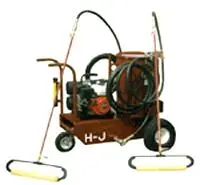
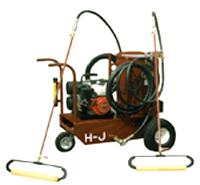
The Roll-Applied Method: Low-Cost, Dependable, and Wind-Resistant
For contractors entering the silicone market or those focusing on smaller, highly congested roof footprints, the roll-applied method is the most practical choice.
+-----------------------------------------------------------------+
|               TYPICAL POWER ROLLER CONFIGURATION                |
+-----------------------------------------------------------------+
|                                                                 |
|   [Flow Control Vat] ---> [Perforated Gravity Feed]             |
|                                  |                              |
|                                  v                              |
|   [Wheel-Assisted Frame] ---> [14" to 40" Wide Roller]          |
|                                                                 |
+-----------------------------------------------------------------+
Rather than using standard paint rollers—which would be prohibitively slow and labor-intensive for commercial projects—contractors utilize commercial-grade power rollers. These systems typically consist of:
- Roller Sizes: Widths ranging from 14 inches to 40 inches, with a standard 6-inch diameter to hold a high volume of material.
- Flow-Control Vats: A wheeled frame holds a material vat positioned directly above the roller. The vat features calibrated drainage holes that gravity-feed the silicone onto the roller cover, ensuring a consistent application rate without constant dipping.
- Target Projects: Ideal for roofs under 10,000 square feet, highly obstructed roofs (with numerous HVAC units, pipes, and skylights), and urban environments where wind drift could carry spray droplets onto nearby buildings or vehicles.
The Spray-Applied Method: High-Speed, High-Investment
Spray application represents the pinnacle of production efficiency, but it requires a sophisticated mechanical setup. Because silicone is highly viscous and moisture-reactive, standard paint sprayers will quickly seize or fail to atomize the material.
+-----------------------------------------------------------------+
|             HIGH-PRESSURE HYDRAULIC SPRAY SYSTEM                |
+-----------------------------------------------------------------+
|                                                                 |
|   [Hydraulic Power Source] ---> [Double-Acting Piston Pump]     |
|                                              |                  |
|                                              v                  |
|   [Moisture-Proof High-Pressure Hose] ---> [Airless Spray Gun]  |
|                                                                 |
+-----------------------------------------------------------------+
An industrial silicone spray package costing between $15,000 and $30,000 consists of several key engineering components:
- High-Ratio Pumps: Systems typically use 45:1 to 83:1 ratio pneumatic or hydraulic pumps. A 70:1 ratio pump, for example, means that 100 PSI of inbound air pressure yields 7,000 PSI of fluid pressure at the gun.
- Hydraulic Lift Auxiliaries: High-end units feature hydraulic rams that lift the entire pump assembly out of empty 55-gallon drums, allowing crews to swap drums quickly without exposing the suction tube to atmospheric moisture, which would trigger premature curing.
- Hose Dynamics: The cost of a spray rig is heavily influenced by the length and construction of the high-pressure hose. Hoses must be moisture-lock (often lined with Teflon or nylon) to prevent humidity from penetrating the hose wall and curing the silicone inside. Hoses typically span 150 to 300 feet to allow the machine to remain on the ground or at a central roof point while the applicator moves freely.
- In-Line Agitators and Mixers: Some systems include hydraulic mixers to keep the silicone homogeneous, preventing the settling of solids and ensuring a uniform cure rate on the roof.
Quantitative Comparison: Roll vs. Spray
To assist contractors in evaluating the return on investment (ROI), the following matrix compares the operational economics of both systems:
| Metric | Roll-Applied System (Power Roller) | Spray-Applied System (Hydraulic Airless) |
|---|---|---|
| Initial Capital Investment | $1,000 – $3,000 | $15,000 – $30,000+ |
| Typical Daily Production | 3,000 – 5,000 sq. ft. per day | 15,000 – 25,000+ sq. ft. per day |
| Optimal Crew Size | 2 – 3 technicians | 4 – 5 technicians (applicator, hose-handler, pump-monitor) |
| Overspray Liability Risk | Extremely Low (Zero wind drift) | High (Requires active monitoring of wind speed) |
| Setup & Cleanup Time | 30 – 45 minutes | 1.5 – 3 hours (requires extensive solvent flushing) |
| Material Waste Factor | 2% – 5% (mainly roller cover retention) | 10% – 15% (overspray and hose volume retention) |
| Minimum Roof Size ROI | Highly profitable on any size | Best realized on projects > 20,000 sq. ft. |
4. Safety, Operations, and Regulatory Standards
The highly technical nature of silicone application demands strict adherence to safety protocols and environmental regulations. Both application methods present unique operational hazards that roofing crews must manage.
High-Pressure Injection Injuries
With spray systems operating at pressures exceeding 4,000 PSI, the risk of skin injection injuries is a critical concern. A leak in a hose or an accidental discharge of the spray gun can force silicone directly through a worker’s skin and gloves.
These injuries are medical emergencies. Because silicone is a fast-curing polymer, immediate surgical intervention is required to remove the material and prevent severe tissue damage or amputation. Crews must be trained never to put their hands near the spray tip and to use gun safety locks during pauses in application.
Toxicity and Respiratory Protection
While modern high-solids silicones have low VOC profiles, atomizing the material during spray application creates aerosolized silicone droplets. Inhaling these droplets can cause acute respiratory distress and long-term lung damage.
According to OSHA regulations and manufacturer safety data sheets (SDS):
- Applicators using spray equipment must wear half-mask or full-face respirators equipped with organic vapor cartridges and particulate pre-filters (typically N95 or P100 ratings).
- In confined spaces or low-wind environments, supplied-air respirators (SAR) may be required.
- For roll-applied systems, respiratory protection is generally not required in open-air environments, though safety glasses and impervious gloves remain mandatory.
Slip Hazards
Silicone is exceptionally slick, even when fully cured, but it is dangerously slippery during the liquid application phase. A single drop of silicone on a metal roof deck or single-ply membrane can create a severe fall hazard.
Crews must plan their application paths to ensure they are always backing away from the wet material toward safe, uncoated roof areas. Tie-off points, warning lines, and personal fall arrest systems (PFAS) must be continuously adjusted as the application progresses.
Overspray Mitigation and Liability
One of the most significant financial risks associated with spray-applying silicone is wind drift. Atomized silicone particles can travel hundreds of feet in moderate winds, settling on nearby passenger vehicles, HVAC intakes, and adjacent building facades.
Because silicone bonds tenaciously to glass and automotive paint, clearing overspray can cost thousands of dollars per vehicle. Contractors must monitor wind speeds using hand-held anemometers, utilize wind screens on the roof, and transition to roll-applied systems when wind speeds exceed 10 to 15 mph.
5. Industry Perspectives: Customized Solutions for a Non-Binary Market
"Fitting your company with the right options is not all black and white," emphasizes Pat Amicucci, an industry expert at Roofmaster. With 70 years of collective institutional knowledge, equipment distributors emphasize that a contractor’s tooling strategy should match their specific business model rather than simply purchasing the most expensive machinery available.
+--------------------------------------------------------------------------+
|                      CONTRACTOR EQUIPMENT MATCHING                       |
+--------------------------------------------------------------------------+
|                                                                          |
|  [Entry-Level / Regional Contractor]                                     |
|   * Focus: Small-to-midsize retail, urban footprints, limited capital.   |
|   * Recommendation: Power Roller Systems + Small Utility Sprayer.        |
|                                                                          |
|  [Enterprise / National Contractor]                                      |
|   * Focus: Large industrial warehouses, distribution centers.            |
|   * Recommendation: Dual Heavy-Duty Hydraulic Spray Rigs.                 |
|                                                                          |
+--------------------------------------------------------------------------+
Industry consultants point out that many successful mid-sized contractors adopt a hybrid fleet strategy. They maintain a high-end hydraulic spray rig for large, open warehouse roofs, but they also equip every service truck with a commercial-grade power roller system. This dual-capability ensures that if a crew encounters high-wind conditions on a major job site, they do not have to pack up and lose a day of labor; instead, they can pivot to roll application and keep the project moving forward.
Furthermore, distributors warn that purchasing a high-end spray rig without investing in comprehensive crew training is a recipe for operational failure. Silicone is highly reactive to moisture. If a crew fails to perform a proper solvent flush (typically using mineral spirits or virgin naphtha) at the end of the day, the moisture-cure silicone will solidify inside the pump’s fluid section, hoses, and gun, turning a $30,000 asset into a useless block of cured rubber overnight.
6. Implications: The Future of Commercial Roofing Maintenance
The ongoing shift toward silicone coatings and the modernization of application equipment have several long-term implications for the commercial roofing sector.
Labor Dynamics and the Skilled Labor Shortage
The roofing industry continues to grapple with a chronic shortage of skilled labor. Because spray application can apply coatings up to five times faster than traditional roofing methods, it acts as a labor multiplier.
A small, highly trained five-man crew operating a high-output spray rig can complete a 100,000-square-foot roof restoration in a fraction of the time it would take a larger crew to install a new single-ply membrane. This efficiency helps contractors maintain profitability despite a smaller labor pool.
Environmental Sustainability and the Circular Economy
Traditional roof replacements generate millions of tons of construction waste that ends up in landfills annually. Silicone restoration systems allow building owners to reuse their existing roof insulation and decking, provided the substrate is dry and structurally sound.
By applying a silicone membrane, the roof’s service life can be extended by 10 to 20 years. When that term expires, the roof can simply be cleaned and recoated again. This approach aligns with ESG (Environmental, Social, and Governance) goals and reduces the carbon footprint of commercial properties.
+-------------------------------------------------------------------------+
|                        ROOFING LIFECYCLE COMPARISON                     |
+-------------------------------------------------------------------------+
|                                                                         |
|  TRADITIONAL REPLACE:                                                   |
|  [Install] ---> [Tear-off & Landfill] ---> [Install New] ---> [Repeat]  |
|                                                                         |
|  SILICONE RESTORATION:                                                  |
|  [Install] ---> [Clean & Recoat] ---> [Clean & Recoat] ---> [Infinite]  |
|                                                                         |
+-------------------------------------------------------------------------+
Market Consolidation and Professionalization
The high cost of entry for advanced spray equipment is widening the competitive gap between small-scale residential contractors and dedicated commercial asset-management firms.
Contractors who can afford to invest in high-output hydraulic rigs, safety training, and moisture-detection equipment (such as infrared thermography scanners) are securing larger, more lucrative corporate accounts. This dynamic is driving a trend toward professionalization across the commercial roofing trade.
