

Introduction
In the high-stakes world of commercial and residential roofing, contractor ingenuity is often celebrated as a survival mechanism. For seven decades, field crews have faced unpredictable weather, tight deadlines, and unexpected equipment failures, frequently relying on quick, on-the-spot improvisations to keep projects moving. This year, as industry pioneer Roofmaster celebrates its 70th anniversary, the company is reflecting on this long history of field-level innovation—while issuing a critical warning about its dark side.
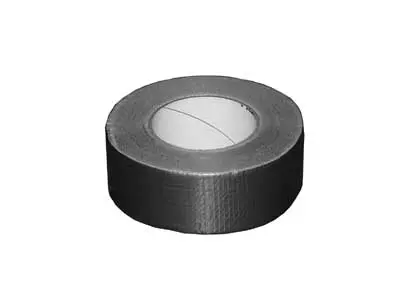
While resourcefulness is vital to the trade, certain temporary fixes have evolved into systemic safety hazards. Chief among these is the ubiquitous reliance on duct tape. Often viewed as a universal remedy for everything from torn personal protective equipment (PPE) to damaged machinery, duct tape has become a silent threat on modern jobsites. When applied to high-risk equipment like liquid petroleum (LP) propane hoses and heavy-duty electrical cords, this common adhesive creates a dangerous illusion of security, masking severe hazards that can lead to catastrophic fires, severe electrical shocks, and costly equipment damage.
Main Facts: The Illusion of the Tape-All Cure
To understand the danger duct tape poses on a roofing site, one must distinguish between benign applications and high-risk interventions. On any given jobsite, it is common to see duct tape applied to a torn knee pad strap or used to patch a minor puncture in a work glove. While these applications may not meet manufacturing standards, they pose minimal systemic risk.
The hazard escalates dramatically when contractors apply the same "quick-fix" mentality to pressurized gas lines and electrical distribution systems.
The Propane Hazard: Masking the Invisible Threat
Liquefied petroleum (LP) torches are standard tools in low-slope roofing for drying decks, heat-welding membranes, and melting asphalt. These systems operate under significant pressure. When a propane hose develops a micro-abrasion or a puncture, wrapping it in duct tape does not seal the leak; instead, it merely redirects and conceals it.
Propane is naturally heavier than air and is treated with ethyl mercaptan to give it a distinct, warning odor. When a hose is wrapped in duct tape, the escaping gas can accumulate under the adhesive layer, building pressure until it finds an exit point or ignites. By masking the physical and olfactory indicators of a gas leak, duct tape prevents workers from recognizing a hazard until an ignition source triggers a flash fire or explosion.
The Electrical Hazard: The Silent Conductor
Unlike a gas leak, which can often be smelled or heard, an electrical current running through a compromised extension cord is completely silent and invisible. When the outer jacket of an extension cord is cut or frayed, the internal copper conductors are exposed to moisture, dirt, and human contact.
[Exposed Copper Wire] ---> [Duct Tape Wrap] ---> [Moisture Penetration] ---> [Ground Fault / Arc Flash]Wrapping a damaged cord in duct tape provides virtually no electrical insulation. Most commercial duct tapes are manufactured with a cloth backing and a conductive adhesive that can degrade rapidly when exposed to ultraviolet (UV) radiation, water, and extreme temperatures. Consequently, a taped cord presents an immediate risk of:
- Arc Flashing: Internal short circuits that can ignite surrounding debris.
- Electrocution: Current passing through the tape to a worker handling the cord.
- Equipment Damage: Voltage fluctuations that ruin sensitive electronic tools.
Chronology: Seven Decades of Roofing Technology and Safety Evolution
The tension between field-expedient repairs and jobsite safety has evolved significantly over the past 70 years. Analyzing this timeline reveals how technological advancement has made legacy "quick fixes" increasingly dangerous.
1950s-1970s                  1980s-1990s                  2000s-Present
=========================================================================================
* Simple mechanical tools    * Introduction of single-ply * Highly sensitive microprocessors
* Low-voltage requirements   * Rise of OSHA enforcement   * Digital hot-air welders (Leister)
* High tolerance for error   * Basic electrical standards * Zero-tolerance safety cultures
The Mid-20th Century (1950s–1970s)
When Roofmaster was founded in 1954, the roofing landscape was dominated by built-up roofing (BUR) systems, asphalt kettles, and basic mechanical hand tools. Electrical requirements on jobsites were minimal, and tools were rugged, heavy, and lacked complex electronic components. During this era, safety regulations were sparse, and field-expedient repairs using tape or wire wire-splicing were common, accepted practices. The margin for error was wider because the tools themselves were highly resilient to voltage fluctuations and minor physical damage.
The Rise of Synthetic Membranes and Electronics (1980s–1990s)
The introduction of single-ply roofing systems (such as EPDM and TPO) in the late 20th century transformed jobsite requirements. Handheld and automatic hot-air welders became standard equipment. This period also saw the establishment of the Occupational Safety and Health Administration (OSHA) in 1971, which began systematically regulating jobsite electrical safety. Despite these rising standards, the cultural habit of using duct tape for tool repair persisted, creating a growing mismatch between delicate new technologies and crude maintenance habits.
The Modern Era of Microprocessor-Controlled Tools (2000s–Present)
Today’s roofing jobsites are highly technical environments. Equipment like Leister hot-air welders rely on sophisticated microprocessors, digital temperature displays, and precise heating elements to ensure consistent welds on thermoplastic membranes. These devices require a stable, uncorrupted flow of electricity.
When a contractor uses a taped, compromised extension cord, the resulting voltage drops and resistance fluctuations can easily destroy the sensitive internal circuitry of a $3,000 welder. What was once a minor, bad habit in 1954 has become a multi-thousand-dollar liability and a severe safety hazard in the modern era.
Supporting Data: The Physics of Electrical Failure and Economic Realities
To understand why duct tape is an unacceptable field repair, it is necessary to examine the physical properties of electricity and the financial consequences of jobsite accidents.
The Physics of Voltage Drop and Resistance
When the copper strands inside an extension cord are damaged or severed, the effective cross-sectional area of the conductor is reduced. Wrapping the exterior jacket in duct tape does nothing to restore the integrity of these internal wires.
According to Ohm’s Law ($V = IR$), reducing the conductor area increases electrical resistance ($R$). When current ($I$) flows through this point of increased resistance, it generates localized heat ($P = I^2R$) and causes a significant voltage drop ($V$) at the end of the cord.
| Cord Status | Internal Resistance | Voltage Delivered (at 120V Source) | Heat Generated at Damaged Site | Impact on Sensitive Equipment (e.g., Leister Welder) |
|---|---|---|---|---|
| Intact (100ft, 12 AWG) | Low (~0.16 Ohms) | ~118V | Negligible | Optimal performance; consistent weld temperatures. |
| Damaged & Taped | High (~1.20 Ohms) | ~105V | High (Risk of melting/fire) | Fluctuating heat output; system errors; control board burnout. |
This data illustrates that even if a taped cord does not immediately shock a worker, it actively damages the high-value equipment plugged into it by starving the tool of proper voltage and forcing its motors and heating elements to work harder, shortening their lifespans.
Jobsite Safety Statistics
The human and financial costs of ignoring these hazards are stark. According to data compiled by the Bureau of Labor Statistics (BLS) and OSHA:
- The "Fatal Four": Electrocution remains one of the leading causes of death in the construction industry, accounting for approximately 8% of all construction fatalities annually.
- Equipment Failure Fires: Compromised electrical cords and gas hoses are responsible for an estimated 15% of non-structural jobsite fires in the commercial construction sector.
- The Cost of Non-Compliance: The average cost of a single serious OSHA violation regarding electrical wiring methods exceeds $15,000, while willful or repeat violations can easily top $160,000 per instance.
Official Responses: OSHA Mandates and Industry Safety Standards
Regulatory bodies and industry associations maintain a zero-tolerance policy regarding improvised electrical and gas line repairs. OSHA standards are highly specific regarding the use and maintenance of extension cords on construction sites.
OSHA Title 29 Code of Federal Regulations (CFR) Key Standards
                ┌──────────────────────────────────────────────┐
                │        OSHA 29 CFR 1926 Compliance           │
                └──────────────────────┬───────────────────────┘
                                       │
         ┌─────────────────────────────┼─────────────────────────────┐
         ▼                             ▼                             ▼
 1926.404(b)(1)(ii)             1926.405(a)(2)(ii)(J)          1926.405(g)(2)(iv)
[Ground Fault Protection] [Physical Damage Protection] [Strain Relief Integrity]- 29 CFR 1926.405(a)(2)(ii)(J): This standard mandates that extension cords must be protected from accidental damage, including traffic, sharp edges, and projections. It explicitly prohibits the use of worn or frayed cords.
- 29 CFR 1926.405(g)(2)(iv): This regulation requires that flexible cords be connected to devices and fittings so that tension will not be transmitted to joints or terminal screws. Wrapping a cut cord in duct tape does not restore the structural integrity or strain relief of the cord’s jacket.
- 29 CFR 1926.404(b)(1)(ii): Covers Ground Fault Circuit Interrupters (GFCIs). A taped cord that allows moisture to enter will constantly trip GFCI breakers, tempting workers to bypass safety devices altogether—a step that frequently leads to fatal electrocutions.
The Inspection Protocol
According to OSHA guidelines, every extension cord must undergo a visual inspection before each shift. The inspection criteria are binary:
- Plug Integrity: Must have a functioning three-pronged plug with an intact grounding pin. Flat-wire cords are strictly prohibited on commercial sites because they lack the double-insulation protection of round-jacketed cords.
- Jacket Continuity: The outer insulation must be continuous, free of deep cuts, and show no signs of internal copper exposure.
- Action Plan: If a cord fails inspection, it must be removed from service immediately. Wrapping the cord in electrical or duct tape does not return it to compliant status; it must be cut in half to prevent future use, tagged out, or sent to a certified repair facility.
Implications: Cultivating a Culture of Safety and Professional Maintenance
The transition away from temporary tape repairs toward professional-grade solutions requires a shift in jobsite culture, clear operational guidelines, and access to certified maintenance resources.
Distinguishing Proper Temporary Solutions
It is important to note that temporary sealants do have a legitimate place in roofing, but only when applied to the building envelope itself—never to the tools operating on it. For instance, when a sudden storm threatens an open roof, self-adhesive flashing tapes and products like U-Seal Band serve as highly effective, temporary weatherproofing barriers. These products are engineered specifically to seal low-pressure water intrusion on membranes and metals.
The danger arises when workers conflate these building envelope sealants with tool maintenance solutions. A product designed to temporarily shed water from a roof deck should never be applied to a high-pressure propane hose or a live electrical wire.
The Financial Equation: Repair vs. Replacement
Roofing company executives and project managers often overlook the true cost of "quick-fix" culture. A standard 100-foot, 12-gauge, heavy-duty extension cord costs between $50 and $150. In contrast, the direct and indirect costs of a single major jobsite incident can be devastating:
[Minor Cord Cut] ──(Duct Tape Repair)──> [Voltage Drop / Short] ──> [Destroyed Welder ($3,000)]
                                                                ──> [OSHA Fine ($15,000)]
                                                                ──> [Project Delay ($10,000/day)]
When viewed through this lens, the practice of saving a $100 cord with a strip of duct tape is a severe financial risk.
The Role of Professional Repair Facilities
To support contractors in maintaining compliance without incurring unnecessary replacement costs, industry leaders like Roofmaster provide specialized repair infrastructure. Across their national network of facilities, Roofmaster employs certified repair technicians who can inspect, test, and safely refurbish compromised equipment.
These professional repair services include:
- Certified Cord Recapping: Removing damaged sections of extension cords and installing industrial-grade, code-compliant replacement plugs with proper strain relief.
- Propane Hose Hydrostatic Testing: Inspecting and pressure-testing LP hoses to ensure they can safely handle operating pressures without leaking.
- Microprocessor Diagnostics: Servicing and calibrating sensitive electronic tools, such as Leister hot-air welders, to ensure they draw steady wattage and operate at peak efficiency.
By partnering with certified repair experts, roofing contractors can protect their workers, extend the lifespan of their high-value tooling, and maintain full compliance with federal safety regulations. As Roofmaster enters its eighth decade of service, the company’s message to the industry is clear: true field ingenuity lies not in how quickly a tool can be taped back together, but in how safely and professionally it is maintained for the long haul.
