

Main Facts: The Intersection of Membrane Dominance and Field Power Reliability
In the modern commercial construction landscape, single-ply roofing membranes—primarily Thermoplastic Polyolefin (TPO) and Polyvinyl Chloride (PVC)—reign supreme. Despite severe supply chain bottlenecks that disrupted the construction sector over the past few years, single-ply applications remain, by a wide margin, the largest segment of the commercial roofing market. The success of these installations relies on a critical, yet frequently overlooked, variable: the reliability of jobsite power.
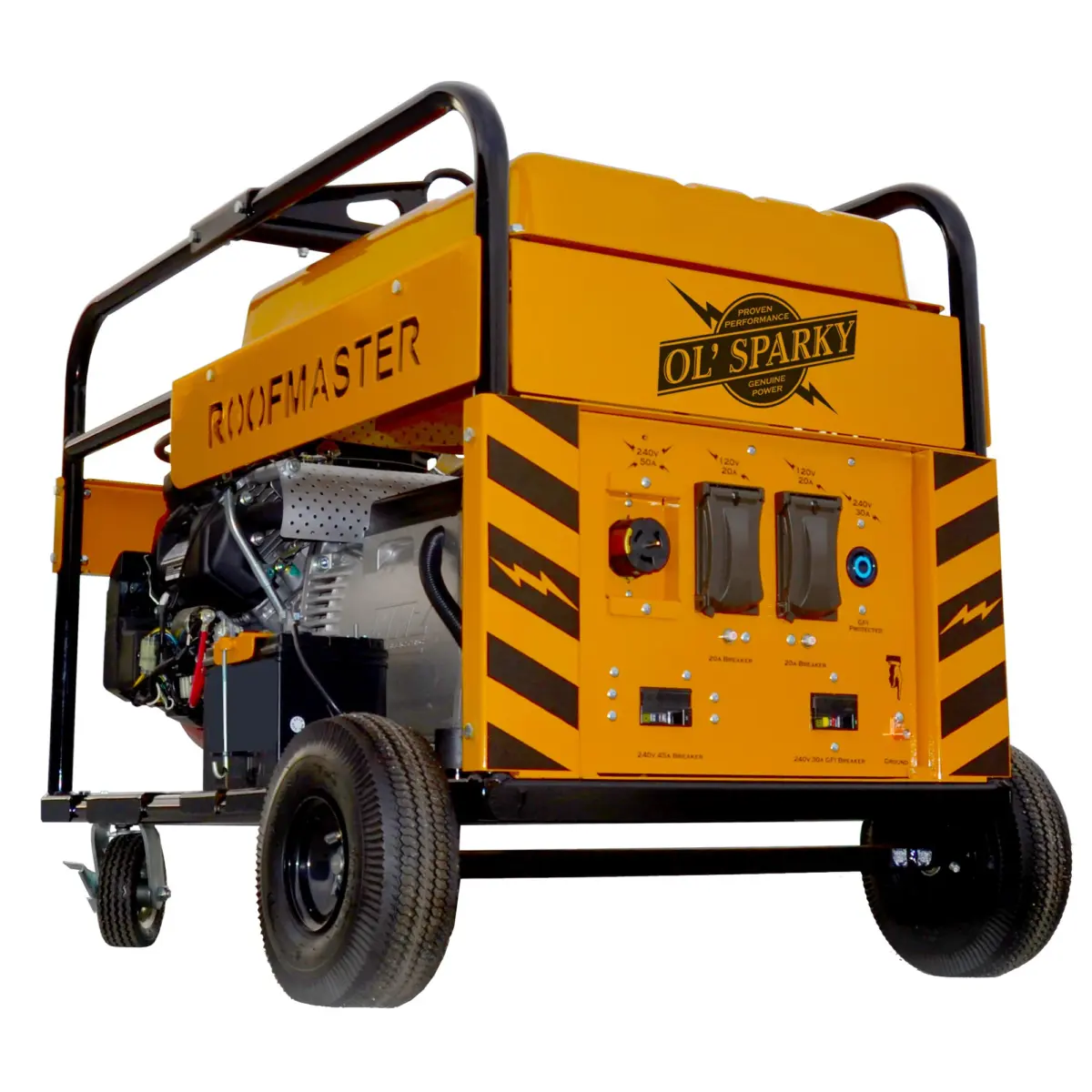
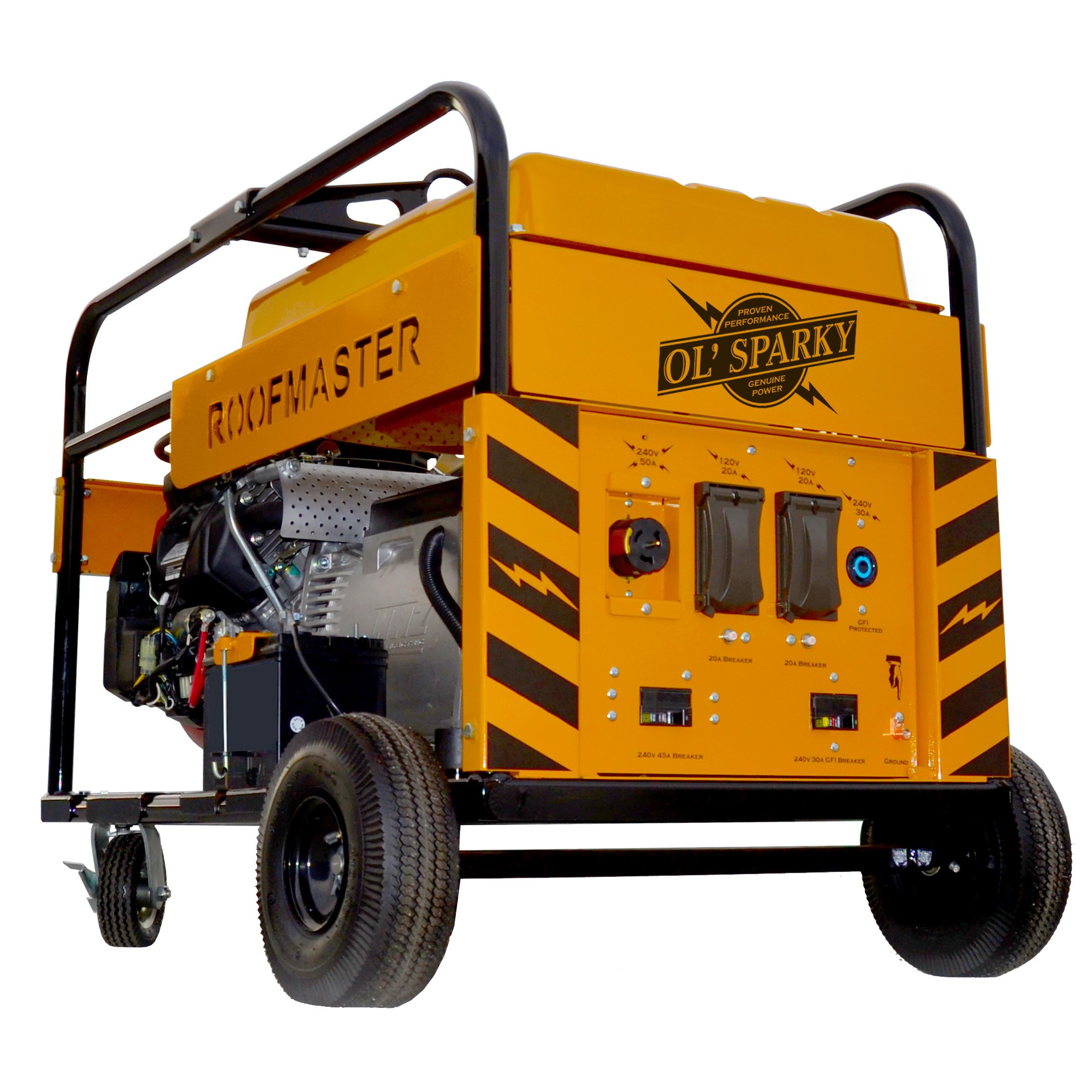
Unlike traditional built-up roofing (BUR) that relies on asphalt kettles and torch-applied systems, single-ply systems require precision hot-air welding to fuse seams and ensure watertight integrity. This process demands specialized, high-draw electrical equipment, such as Leister automatic and hand-held welders. Because commercial jobsites often lack immediate access to stable grid power, contractors rely heavily on portable industrial generators.
According to John Davis, an industry expert at Roofmaster® Products Company, the maintenance of these generators is just as vital as servicing the welders themselves. If a generator fluctuates in voltage or suffers an unexpected breakdown, it does not merely halt progress; it risks permanently damaging sensitive electronic components inside high-end welding units. To mitigate these risks, Roofmaster® has expanded its network of dedicated service centers staffed by certified mechanics across key regional hubs, including Los Angeles, California, and Dallas-Fort Worth, Texas, to support contractors facing equipment failures.
+-----------------------------------------------------------------------+
|                       THE SINGLE-PLY POWER CHAIN                      |
|                                                                       |
|  [ Industrial Generator ] ----(Stable Voltage)----> [ Hot Air Welder ]|
|           |                                                 |         |
|   Requires: Daily Oil Checks                       Requires: 230V     |
|             Clean Air Filters                                Stable Amps|
|             AVR Calibration                                           |
|                                                                       |
|  *Failure at Generator level = Fried Welder Control Boards & Downtime*|
+-----------------------------------------------------------------------+
Chronology: From Materials Evolution to the Modern Supply Chain Crisis
To understand the current reliance on field generators, one must examine the evolution of commercial roofing technologies and the macroeconomic shifts of the last decade.
The Rise of Single-Ply (1980s–2010s)
During the late 20th century, the commercial roofing industry shifted away from multi-ply hot asphalt systems due to environmental regulations, labor intensity, and safety concerns. The introduction of Ethylene Propylene Diene Monomer (EPDM) in the 1970s, followed by PVC and TPO in the 1980s and 1990s, revolutionized the market. By the mid-2010s, TPO had captured the majority of the commercial roofing market share due to its reflective properties, cost-effectiveness, and ease of installation via hot-air welding.
The Pandemic-Era Supply Chain Shock (2020–2022)
The COVID-19 pandemic, coupled with extreme weather events—such as the 2021 Texas petrochemical freeze—severely disrupted the production of resins, adhesives, and polyisocyanurate insulation. While contractors struggled with lead times that stretched from weeks to months, the cost of materials skyrocketed. During this period of scarcity, maximizing field efficiency became paramount. Contractors could not afford downtime; if a membrane shipment arrived, it had to be installed immediately. Equipment failure became an unacceptable bottleneck.
The Post-Pandemic Reality and Technical Integration (2023–Present)
As supply chains began to stabilize, contractors faced a new challenge: a severe shortage of skilled labor and rising operational costs. To maximize productivity, roofing crews increasingly adopted advanced, automated welding machines (such as the Leister Varimat series). These machines utilize sophisticated microprocessors to regulate speed, temperature, and airflow. Consequently, the power supply requirement transitioned from basic electricity to "clean" electricity, placing unprecedented technical demands on portable jobsite generators and highlighting the need for rigorous maintenance protocols.
Supporting Data: Market Share, Technical Specs, and the Cost of Downtime
The critical nature of generator maintenance is supported by both market volume statistics and electrical engineering principles.
Market Share Dominance
According to market reports from the Single-Ply Roofing Industry (SPRI) and the National Roofing Contractors Association (NRCA):
- Single-ply membranes constitute over 65% of all commercial roofing installations in the United States.
- TPO alone accounts for approximately 40% to 45% of the total commercial volume.
- The reliance on hot-air welding tools means that on any given day, tens of thousands of automatic welders are operating simultaneously on roofs across North America, almost exclusively powered by portable generators.
Technical Power Demands
An analysis of the electrical specifications of industry-standard welding equipment reveals why power consistency is vital:
| Welder Model | Voltage Required | Power Consumption | Minimum Generator Capacity (Per Tool) |
|---|---|---|---|
| Leister Triac ST (Hand tool) | 120V / 230V | 1600W | 3,000W |
| Leister Varimat V2 (Automatic) | 230V (Single Phase) | 4600W | 10,000W (with AVR) |
| Leister Uniroof AT (Compact automatic) | 120V / 230V | 3450W | 7,500W |
Standard generators without an Automatic Voltage Regulator (AVR) or digital inverter technology can experience voltage drops (brownouts) or surges when the welder’s heating element cycles on and off. A voltage drop below 200V on a 230V machine can cause the welder’s drive motor to stall or its heating element to underperform, leading to cold welds and compromised seam integrity. Conversely, a voltage surge can instantly destroy the welder’s main circuit board, resulting in repairs costing upwards of $1,500 per unit.
The Financial Impact of Downtime
For a typical commercial roofing crew of six to eight installers, the financial consequences of equipment failure are steep:
- Labor Costs: An idle crew costs an average of $250 to $400 per hour in direct wages and overhead.
- Project Delays: Liquidated damages on commercial contracts can range from $500 to $2,000 per day for late completion.
- Weather Risks: An open roof exposed to sudden rain due to a halted welding operation can result in millions of dollars in interior property damage.
Official Responses and Expert Perspectives: Industry Guidelines on Power Safety
Manufacturers of both roofing membranes and welding equipment emphasize that field power quality directly influences roof performance and warranty coverage.
In its technical bulletins, Leister Technologies frequently highlights that power source fluctuations are the leading cause of premature tool failure. Technical service representatives emphasize that generators must be dedicated solely to the welding equipment. Connecting auxiliary tools, such as heavy-duty rotary hammers, screw guns, or breakroom microwaves, to the same generator powering an automatic welder is a primary cause of voltage fluctuations that damage electronic control boards.
Addressing the issue from the distributor and service perspective, John Davis of Roofmaster® emphasizes the geographic and operational challenges contractors face.
"We see it constantly in our service centers from Los Angeles to Dallas-Fort Worth," says Davis. "Contractors spend thousands of dollars maintaining their hot air welders but treat their generators as an afterthought. A poorly maintained generator is a direct threat to your welders, your schedule, and your bottom line. When a generator hunts, surges, or drops voltage, it sends dirty power straight to the welder’s digital control boards. Preventative maintenance is not optional; it is a core operational requirement."
Implications: The Dos and Don’ts of Generator Maintenance
To prevent catastrophic field failures, protect expensive welding equipment, and ensure high-quality seam installations, commercial roofing contractors must implement a strict maintenance regimen. Below are the essential industry-recommended guidelines for generator operation on single-ply jobsites.
+------------------------------------------------------------------------+
|                      GENERATOR MAINTENANCE CHECKLIST                   |
|                                                                        |
|  [ DAILY ]                                                             |
|  [ ] Check oil levels (synthetic 10W-30 or 15W-40 for high heat).      |
|  [ ] Inspect air filter for carbon soot or roof dust.                  |
|  [ ] Verify ground wire connection.                                    |
|                                                                        |
|  [ WEEKLY / 50 HOURS ]                                                 |
|  [ ] Clean spark arrestor.                                             |
|  [ ] Inspect fuel lines for cracks or UV degradation.                  |
|  [ ] Test voltage output under load using a multimeter.                |
|                                                                        |
|  [ SEASONAL / 100+ HOURS ]                                             |
|  [ ] Replace spark plugs.                                              |
|  [ ] Flush fuel tank to remove water condensation.                     |
|  [ ] Send to Roofmaster® Service Center for governor calibration.       |
+------------------------------------------------------------------------+
The "Dos" of Generator Maintenance
- DO Use a Generator with an Automatic Voltage Regulator (AVR): Ensure the generator features an electronic AVR or is an inverter-type generator. This technology continuously monitors output voltage and dampens spikes or drops, delivering "clean" sine-wave power to delicate welder microprocessors.
- DO Size Your Generator Correctly: Always calculate the total wattage required by your tools and add a 25–30% safety margin. If a Leister Varimat requires 4,600W, run it on a generator rated for at least 6,500 running watts.
- DO Check Oil Levels Daily: Roofing environments are hot, dusty, and demanding. Generators running at high duty cycles consume oil faster than residential backup units. Use high-quality synthetic oils rated for extreme operating temperatures.
- DO Use the Correct Gauge Extension Cords: Heavy-duty welders require thick-gauge copper wiring to prevent voltage drop over distance. For a 230V welder running 100 feet, use at least a 10-gauge (10/3) or 8-gauge (8/3) SOOW cord. Undersized cords act as resistors, overheating the cord and starving the welder of voltage.
- DO Establish a Service Schedule with Certified Mechanics: Regularly send generators and welders to authorized service hubs, such as Roofmaster’s locations in Los Angeles and Dallas-Fort Worth. Certified mechanics can calibrate governors, test load capacities, and replace worn brushes before they fail on a roof.
The "Don’ts" of Generator Maintenance
- DON’T Start or Stop the Generator Under Load: Always unplug your hot-air welders before starting or shutting down the generator. The startup and shutdown phases are when generators experience their wildest voltage fluctuations. Leaving a welder plugged in during these times can instantly fry its control boards.
- DON’T Run the Generator Until It Runs Out of Fuel: When a generator starves for fuel, its engine RPM drops rapidly before shutting off. This sudden drop in engine speed causes a corresponding collapse in electrical frequency and voltage, which can damage the heating elements and motors of connected tools.
- DON’T Ignore Dusty Air Filters: Roofing sites are highly abrasive environments filled with concrete dust, insulation fibers, and carbon soot. A clogged air filter restricts airflow, causing the engine to run rich, lose power, hunt (cycle up and down in RPM), and output unstable electricity.
- DON’T Use Stale Fuel: Gasoline and diesel degrade over time, particularly in hot climates like Texas and Southern California. Stale fuel clogs carburetor jets and fuel injectors, leading to erratic engine performance and voltage fluctuations. Use fresh fuel treated with stabilizers.
- DON’T Neglect Grounding: Portable generators must be properly grounded according to OSHA regulations and manufacturer specifications. Failure to ground the unit poses a severe shock hazard to operators and can disrupt the ground-fault monitoring circuits of advanced welding equipment.
By shifting from reactive repairs to a proactive, preventative maintenance mindset, commercial roofing contractors can secure their equipment investments, protect their labor forces, and ensure that their single-ply installations stand up to the elements for decades to come.
