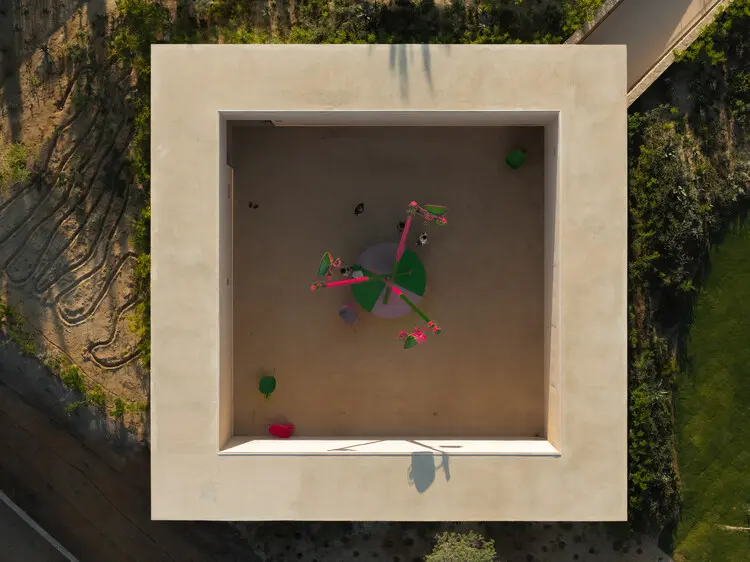
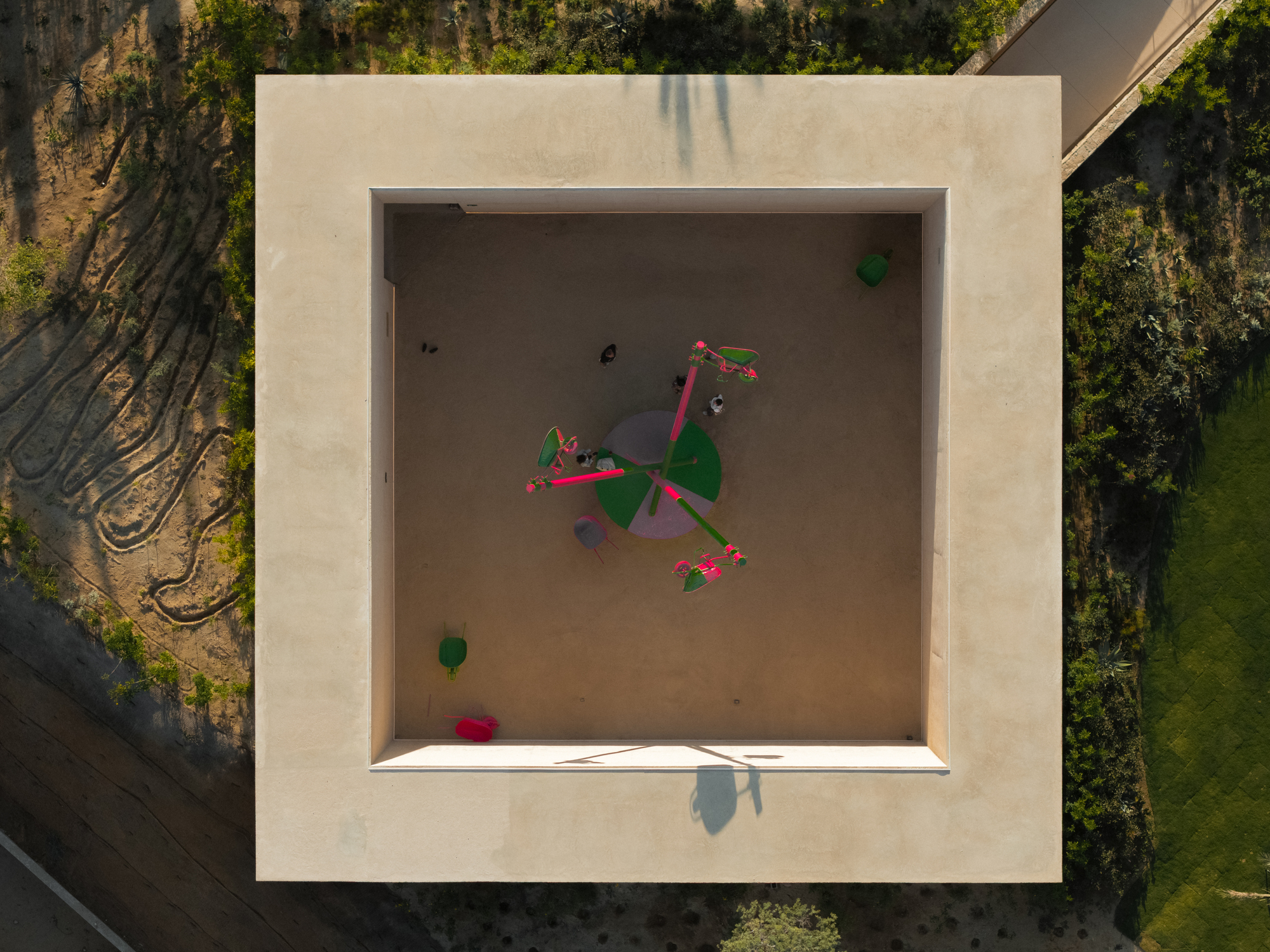
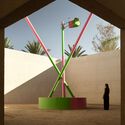
LOS CABOS, MEXICO — The intersection of contemporary fine art and the rugged, dramatic topography of the Baja California peninsula has gained a striking new landmark. Arte Abierto Baja, a cutting-edge open-air art gallery, has officially opened its doors at Ānima Village. Designed by the renowned architecture firm Sordo Madaleno—under the leadership of Javier Sordo Madaleno Bringas—the project represents a bold departure from traditional white-cube gallery spaces. Instead, it offers a porous, site-specific cultural venue where Mexican and international artists can place their works in direct, unmediated dialogue with the desert and coastal landscape of Baja California Sur.
Curated by Valentina Díaz, the project has already drawn significant international attention from critics, architects, and contemporary art collectors alike. By merging sustainable spatial design with open-air cultural programming, Arte Abierto Baja aims to redefine how public art is experienced in resort and tourism-heavy regions, shifting the paradigm from passive consumption to immersive environmental engagement.
Main Facts
Project Name: Arte Abierto Baja
Location: Ānima Village, Los Cabos, Baja California Sur, Mexico
Architectural Firm: Sordo Madaleno Arquitectos (led by Javier Sordo Madaleno Bringas)
Curator: Valentina Díaz
Typology: Open-air public art gallery / Cultural exhibition space
Primary Materials: Exposed concrete, local stone, and native desert landscaping
Photography Credits: Pablo Manjarrez and Ariadna Polo
Publication Date: August 2026
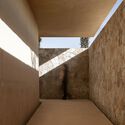
The gallery is conceived as an extension of the natural terrain. Rather than imposing a heavy structure onto the delicate desert ecosystem, Sordo Madaleno utilized raw, tactile materials such as board-formed concrete and local aggregates to anchor the architecture into the topography. The layout relies on shifting sightlines, shaded porticos, and sun-drenched courtyards that mimic the natural canyons and arroyos of the region.
Chronology of Development
The realization of Arte Abierto Baja is the culmination of years of planning, ecological assessments, and cross-disciplinary collaborations between architects, curators, and landscape designers.
Phase 1: Conceptualization and Site Selection (2022–2023)
The project began as an initiative to bring world-class cultural infrastructure to Los Cabos, a region traditionally known for luxury hospitality and natural tourism rather than contemporary visual arts institutions. Sordo Madaleno was approached to design a cultural anchor within the master-planned Ānima Village development. Initial site visits prioritized protecting existing desert flora—such as cardón cacti and endemic shrubs—while identifying natural corridors where ocean breezes and shifting sunlight could animate large-scale sculptural installations.
Phase 2: Design and Materiality Studies (2024–2025)
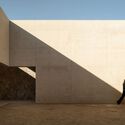
During this phase, the design team focused heavily on climate-responsive architecture. Because Los Cabos experiences extreme thermal variations and intense solar radiation, the architecture had to balance openness with structural protection. The team opted for monolithic concrete planes that cast deep shadows during peak daylight hours, offering visitors microclimates of relief while creating high-contrast framing devices for artworks. Collaborating closely with curator Valentina Díaz, the architects designed exhibition pathways capable of supporting monumental installations without competing with the art itself.
Phase 3: Construction and Landscape Integration (Late 2025–Mid 2026)
Construction adhered to strict sustainability guidelines to minimize soil disruption. Local stone excavated during the foundation-laying process was repurposed for retaining walls and ground paving. Native landscaping was reintroduced to soften the boundaries between built structures and the surrounding desert.
Phase 4: Grand Opening and Inaugural Exhibitions (August 2026)
Arte Abierto Baja officially opened its doors to the public in late August 2026, launching with a flagship exhibition featuring site-specific commissions by prominent Mexican and international contemporary artists.
Supporting Data and Architectural Analysis
To understand the spatial success of Arte Abierto Baja, one must examine how Sordo Madaleno manipulates scale, light, and circulation.
Architectural Element
Design Strategy
Environmental Impact / Benefit
Materiality
Exposed board-formed concrete and local stone
Thermal massing helps stabilize interior/exterior microclimates; blends seamlessly with desert tones.
Ventilation
Completely open-air circulation paths
Eliminates the need for energy-intensive artificial climate control systems in public exhibition zones.
Lighting
Natural daylight framing via overhangs and voids
Reduces artificial lighting demands; creates dynamic, shifting shadows throughout the day.
Site Integration
Low-slung profile respecting existing topography
Preserves natural runoff paths (arroyos) and minimizes visual intrusion on the horizon.
Sordo Madaleno has long been celebrated for its ability to balance monumental architectural gestures with human-scale experiences—a philosophy previously seen in their commercial, residential, and cultural mixed-use projects across Mexico City and beyond. In Arte Abierto Baja, this philosophy translates into a sequence of transitional spaces. Visitors do not simply "enter" a gallery; they drift through a sequence of porous thresholds that dissolve the barrier between interior contemplation and exterior exposure.
Official Responses and Curatorial Vision
The curatorial framework established by Valentina Díaz is central to the identity of Arte Abierto Baja. Speaking on the opening of the venue, Díaz emphasized that the site was built to challenge the neutrality of the traditional white cube.
"In a landscape as overpowering and majestic as Baja California Sur, trying to isolate art inside a white room feels obsolete," Díaz stated during the opening symposium. "Arte Abierto Baja embraces the elements. The wind, the dust, the intense sun, and the deep blue of the horizon are not obstacles to overcome; they are active participants in the artistic experience. The artists invited to exhibit here are asked to converse with the ecosystem rather than merely occupy it."
Javier Sordo Madaleno Bringas echoed these sentiments, highlighting the technical and philosophical challenges of building a cultural venue in an environmentally sensitive desert zone.
"Our goal was to create architecture that listens," Sordo Madaleno explained. "When you build in a place like Los Cabos, the landscape dictates the rules. We used concrete and stone not to dominate the site, but to frame it—creating moments of pause, shadow, and reflection where visitors can encounter contemporary art while remaining intimately connected to the raw beauty of Baja."
Local municipal leaders and cultural figures have also praised the project, noting that it fills a crucial gap in the region’s cultural infrastructure by offering free or accessible public art programming that engages both international tourists and local communities.
Implications for Contemporary Architecture and Regional Culture
The completion of Arte Abierto Baja carries several profound implications for the fields of architecture, urban planning, and cultural tourism:
1. Decentralization of Culture in Mexico
For decades, major contemporary art institutions in Mexico were heavily concentrated in urban centers like Mexico City, Monterrey, and Guadalajara. By establishing a world-class exhibition space in Los Cabos, Sordo Madaleno and the project’s backers demonstrate that high-culture infrastructure can thrive in decentralized, tourism-driven regions. This shifts the cultural footprint of the country outward, encouraging travelers to engage with contemporary creativity outside traditional metropolitan hubs.
2. Redefining Sustainable Desert Architecture
As climate change accelerates, architects working in arid environments are forced to rethink reliance on sealed, air-conditioned mega-structures. Arte Abierto Baja offers a compelling model for sustainable design through passivity. By utilizing open-air circulation, deep overhangs, and high-thermal-mass materials, the project drastically reduces its carbon footprint while offering a more visceral, sensory-rich visitor experience.
3. The Rise of Experiential and Site-Specific Art
As museums globally move toward immersive installations, architectural venues must adapt. Traditional galleries with rigid walls often struggle to accommodate monumental, multimedia, or ecological artworks. Arte Abierto Baja’s flexible, porous floor plan provides artists with an expansive canvas where sculptures, sound art, and performance pieces can interact directly with natural elements.
Conclusion
Arte Abierto Baja stands as a testament to the power of thoughtful, context-driven architecture. By bridging the gap between Sordo Madaleno’s rigorous structural mastery and Valentina Díaz’s visionary curatorial direction, the project has transformed the cultural landscape of Los Cabos. As visitors walk beneath the board-formed concrete overhangs, framed by the stark beauty of the Baja desert and the vast expanse of the Pacific, they are reminded that architecture is at its best when it does not conquer nature, but rather gives it a voice.