

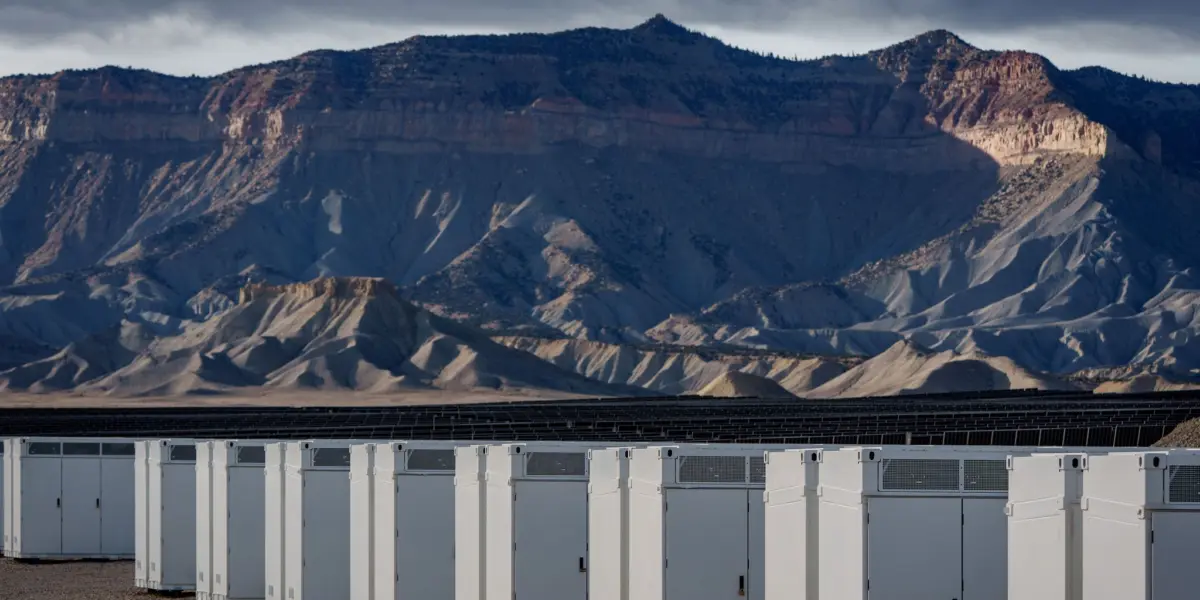
WASHINGTON — The United States energy storage sector has achieved a historic milestone, posting its most lucrative and expansive quarter to date. According to the newly released US Energy Storage Market Outlook report by the Solar Energy Industries Association (SEIA) and Benchmark Mineral Intelligence, the nation added an unprecedented 20.2 gigawatt-hours (GWh) of new battery storage capacity in the second quarter of 2026.
This monumental surge has propelled total battery storage installations for the first half of the year to 30.8 GWh—representing a striking 23% increase compared to the same period in 2025. Fueling this expansion is an overwhelming reliance on utility-scale infrastructure designed to stabilize a power grid increasingly strained by extreme weather events, surging electricity demands, and the rapid integration of renewable energy sources.
Main Facts: The Anatomy of a Record-Breaking Quarter
The Q2 2026 deployment figures are defined by several critical metrics that highlight the sheer scale of the American energy transition:
- Record Quarterly Additions: The US added 20.2 GWh of battery storage capacity in Q2 alone, with more than 10% of all operating US storage capacity coming online during this three-month window.
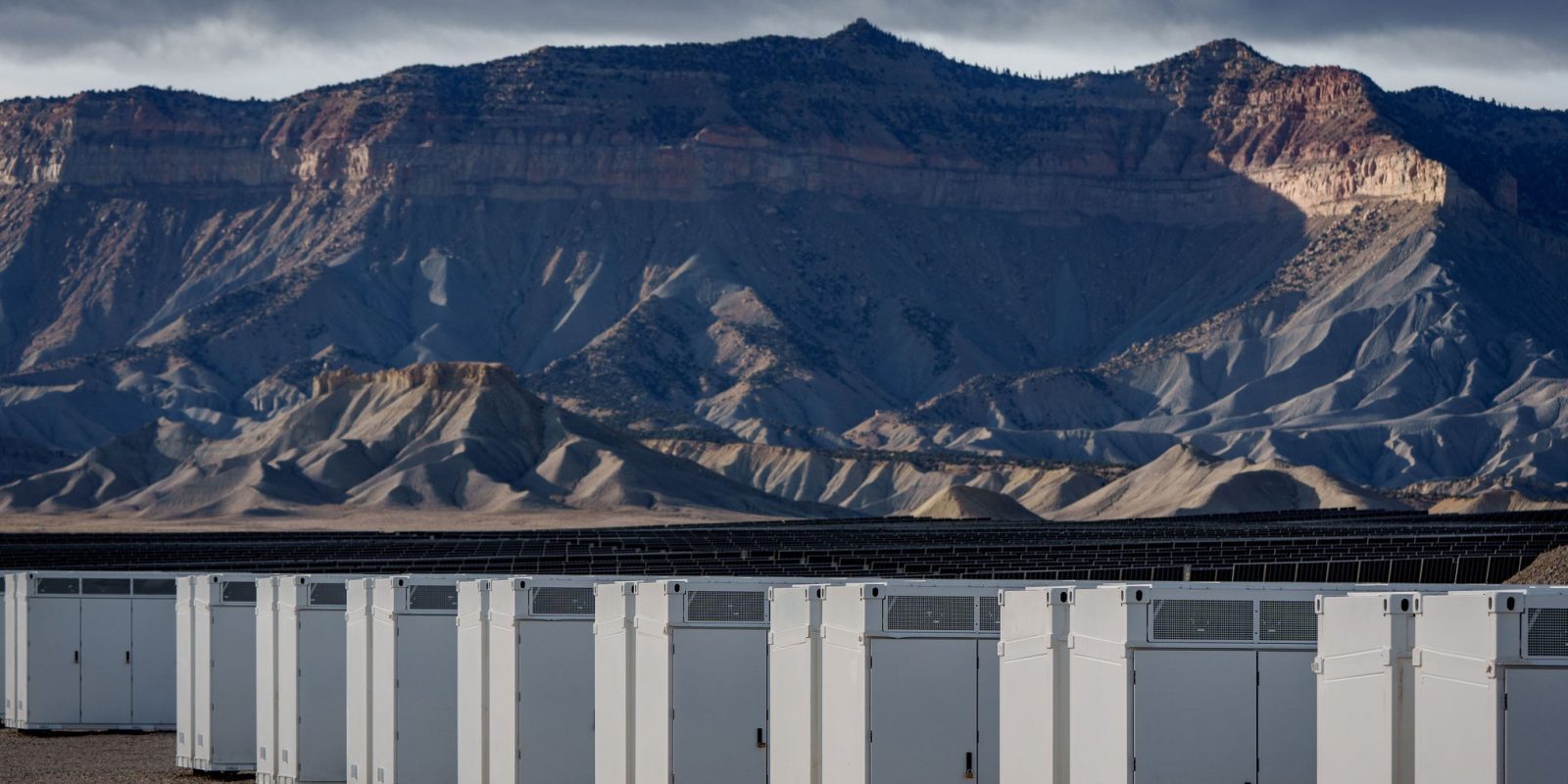
- Utility-Scale Dominance: Large-scale grid batteries accounted for roughly 18 GWh of the quarterly total. This was bolstered by seven massive, gigawatt-hour-scale projects launched across Arizona, California, and Utah.
- Geographic Expansion: Arizona shattered single-state records by deploying 6.2 GWh in Q2. Texas followed with 3.8 GWh, and California added 3.6 GWh. Notably, more than 74% of all Q2 installations took place in states won by Donald Trump in the 2024 presidential election.
- Solar Pairing vs. Standalone: Of the utility-scale projects activated during the quarter, 44% were integrated directly with solar energy installations, while 56% operated as standalone storage facilities.
- Domestic Manufacturing Growth: Tesla officially brought its third Megafactory online in Texas, establishing a domestic production capacity of 50 GWh of Megapacks annually and initiating shipments utilizing domestically manufactured lithium iron phosphate (LFP) cells.
Chronology: How the Storage Boom Unfolded
The trajectory of the American energy storage market has experienced exponential acceleration over the past two years, shifting from a niche supplementary technology to a foundational pillar of the national power grid.
2025: Laying the Groundwork
Throughout 2025, residential and commercial storage sectors experienced a frenzied period of installations, largely driven by homeowners and businesses rushing to complete projects ahead of impending federal tax credit shifts, particularly the phase-down of the 25D residential clean energy tax credit. By the end of 2025, cumulative installations demonstrated steady growth, though utility-scale projects were still navigating complex interconnection queues.
Early 2026: Accelerating Momentum
As 2026 commenced, grid operators nationwide faced mounting pressure from data center expansions, artificial intelligence infrastructure demands, and unpredictable weather patterns. In the first quarter of the year, utility-scale pipelines began converting into active projects at an unprecedented pace.
Q2 2026: The Historic Peak
Between April and June 2026, the convergence of completed mega-projects pushed the market past all historical benchmarks. During the first eight months of 2026 alone, battery storage systems supplied more electricity to the US grid than they did during the entirety of 2025. Recognizing this hyper-growth, Benchmark Mineral Intelligence upwardly revised its cumulative storage forecast through 2030 by 11.5%, setting a new projection of 683 GWh. The market is now on track to install approximately 71 GWh over the course of 2026—a 20% year-over-year jump.
Supporting Data: Regional Shifts and Sector Disparities
While the macro-level statistics tell a story of unmitigated triumph, a closer examination of the data reveals stark divergences between the utility, commercial, and residential sectors.

State-by-State Breakdown
Historically, California and Texas held near-monopolies on large-scale battery developments. However, Q2 2026 data proves that the storage revolution has officially gone nationwide. While Texas (3.8 GWh) and California (3.6 GWh) remain heavyweights, Arizona’s monumental 6.2 GWh quarter redefined regional capabilities. Furthermore, emerging regional pipelines in states such as Nevada, Oregon, Colorado, and Utah point to a decentralized grid defense strategy.
Data compiled by the SEIA indicates that utility-scale battery capacity nationwide expanded from 88 GWh to 165 GWh during the first 18 months of the Trump administration, demonstrating robust, bipartisan economic drivers behind the energy buildout.
Residential Softness and Commercial Resilience
In stark contrast to the utility sector, the residential battery market endured a challenging quarter. US homeowners installed just 657 megawatt-hours (MWh) of storage in Q2, marking a 27% decline year over year. Analysts attribute this slump directly to the elimination of the 25D residential clean energy credit and a pull-forward effect where consumers accelerated purchases into late 2025. Despite the temporary setback, experts project long-term viability for home storage as retail electricity rates climb and virtual power plant (VPP) aggregations expand.
Meanwhile, the commercial and industrial (C&I) sector posted a solid 1.8 GWh of additions in Q2. Industrial demand is increasingly being dictated by massive data center developers who are pairing onsite solar, wind, and occasional natural gas generation with high-capacity batteries to bypass constrained transmission lines.

Official Responses and Industry Perspectives
Industry leaders and market analysts have expressed immense optimism regarding the role of energy storage in safeguarding American infrastructure.
"This record growth highlights that storage is a powerful reliability tool that strengthens our energy security, meets rising demand, and puts downward pressure on electricity bills," stated Tim Pawlenty, president and CEO of the SEIA. Pawlenty emphasized that as electricity consumption scales upward, batteries serve as an indispensable buffer that prevents brownouts and lowers peak-hour wholesale power costs.
Echoing this sentiment, Shan Tomouk, BESS and Energy Lead at Benchmark Mineral Intelligence, highlighted the geographic diversification of the market. "Energy storage is no longer just a California and Texas story anymore," Tomouk noted. "We’re seeing strong pipeline growth in Arizona, Nevada, Oregon, Colorado, and several other states, driven by the sheer economic and operational necessity of grid stabilization."
Implications: What the Storage Surge Means for the Future
The rapid integration of tens of gigawatt-hours of battery storage carries profound implications for the future of American energy, economics, and climate resilience.

Grid Reliability and Peak Shaving
The fundamental mechanics of utility-scale storage solve the classic "duck curve" dilemma associated with solar power. Batteries charge efficiently during daylight hours when solar generation peaks and wholesale electricity prices drop. When the sun sets, air-conditioning loads surge, and grid demand reaches its maximum, these systems discharge stored energy seamlessly. This capability eliminates the need to spin up expensive, carbon-intensive peaking power plants during high-stress weather events.
Economic Relief and Bill Mitigation
By capturing cheap energy and deploying it during expensive peak hours, battery installations introduce downward pressure on retail electricity bills. As more gigawatt-hours come online, utilities can avoid costly transmission upgrades by siting storage at strategic grid bottlenecks, ultimately protecting consumers from runaway rate hikes.
Energy Independence and Industrial Adaptation
The maturation of domestic manufacturing—highlighted by Tesla’s Texas Megafactory scaling up to 50 GWh annually—ensures that the US is securing its supply chain against international disruptions. Furthermore, as energy-hungry data centers continue to proliferate to support advanced computing and artificial intelligence, the marriage of onsite renewables and battery storage will serve as the primary mechanism allowing tech infrastructure to expand without destabilizing regional power grids.
Ultimately, the Q2 2026 data confirms that energy storage has transitioned from an experimental asset class into the absolute bedrock of modern American energy infrastructure.
