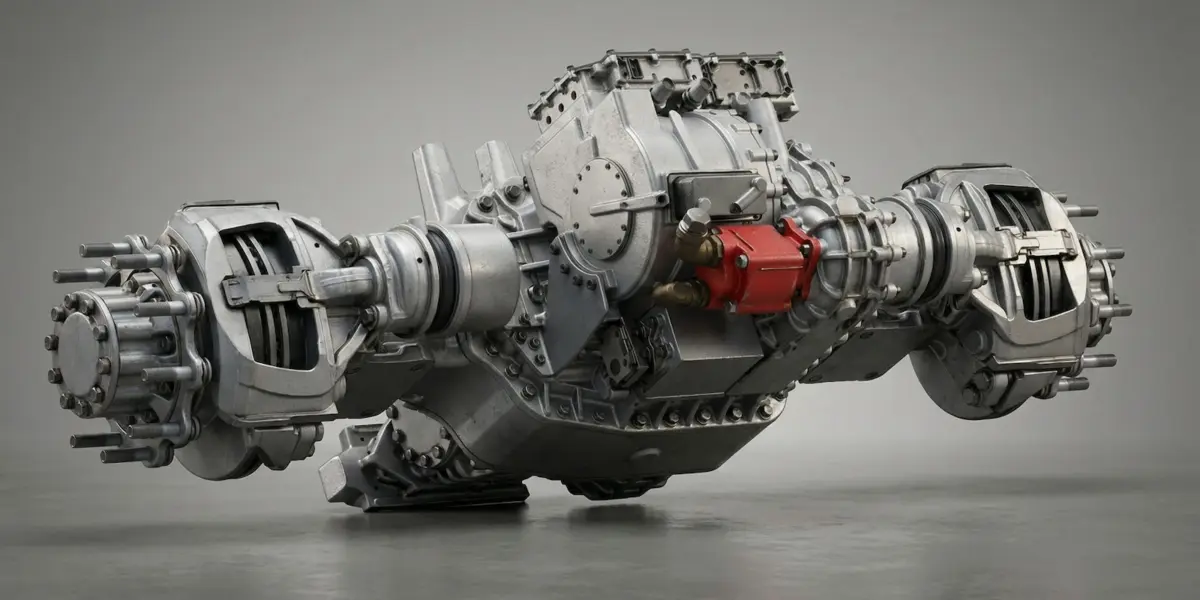
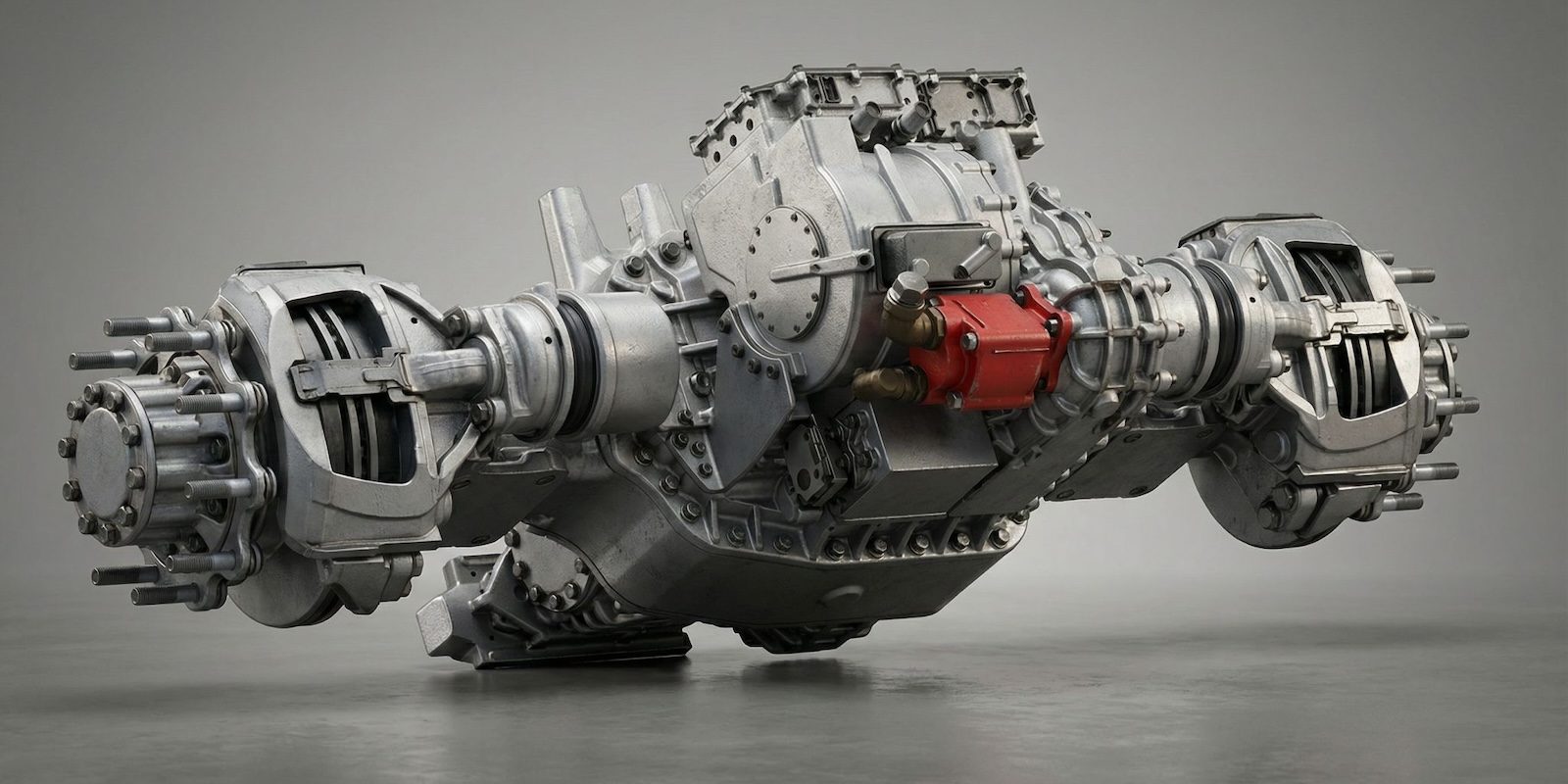
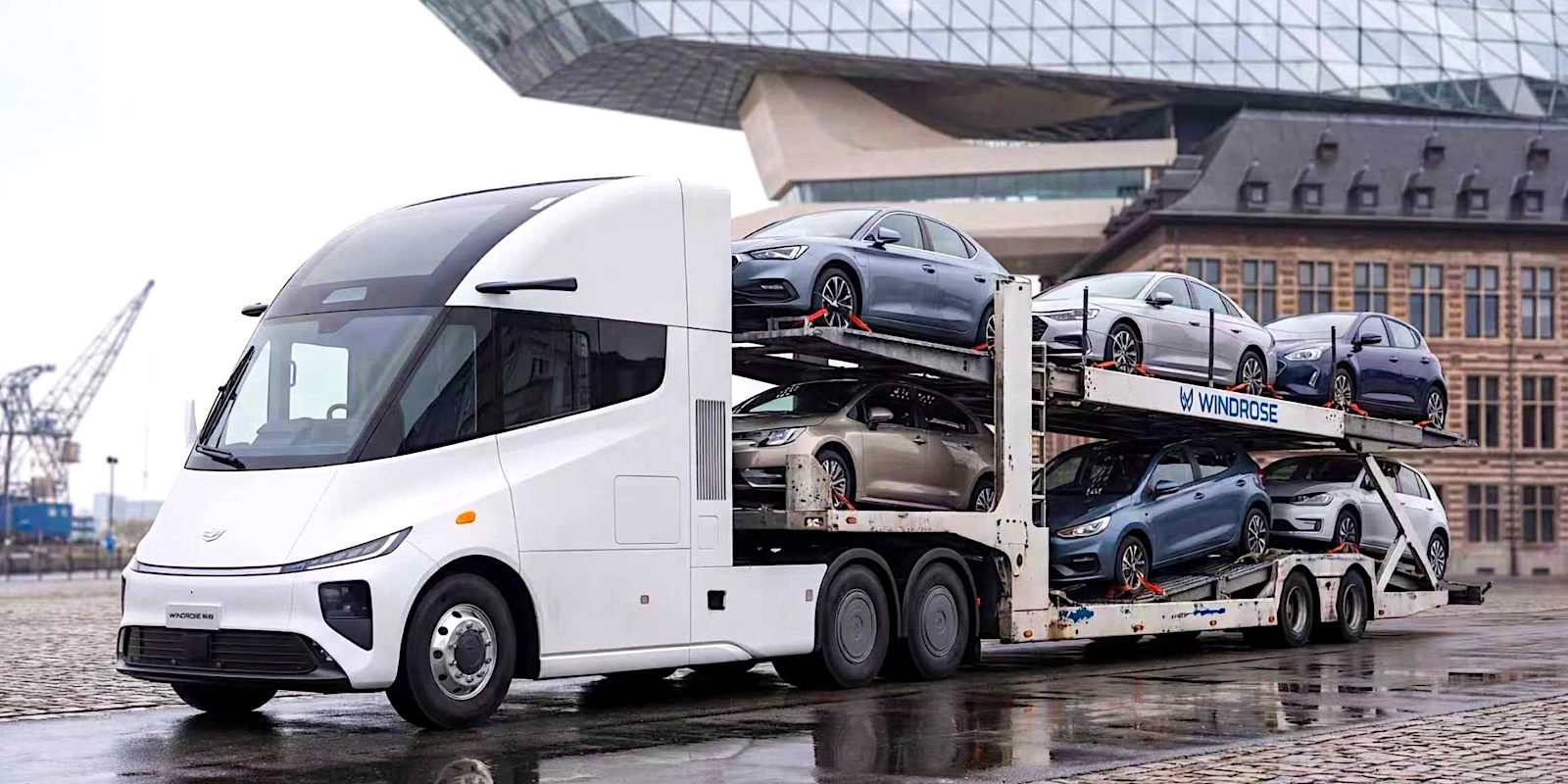
ANTWERP, BELGIUM — Electric semi-truck innovator Windrose Technology has introduced a technological breakthrough that could solve one of the heaviest logistical hurdles facing zero-emission commercial trucking. The Antwerp-based company has developed an all-electric power take-off (EPTO) unit that delivers up to 70 kilowatts (kW) of continuous power while operating entirely free of diesel emissions.
Measuring roughly the size of a standard iPad and seamlessly integrated into the company’s proprietary e-axle architecture, the new EPTO is engineered to power heavy-duty external equipment—such as specialized car-hauling trailers, cranes, and hydraulic ramps. By bridging the gap between high-capacity battery-electric vehicles (BEVs) and traditional accessory ecosystems, Windrose’s innovation aims to give its heavy-duty trucks a major competitive edge in the global freight market.
Main Facts: The Anatomy of Windrose’s New EPTO
The newly announced EPTO unit is a compact engineering feat designed to address a fundamental architectural challenge in modern electric trucking.
Power Output: Delivers up to 70 kW of power, utilizing the truck’s advanced 800V high-voltage electrical platform.
Form Factor: Compact footprint, explicitly described by company leadership as being "the size of an iPad."
Integration: Built directly into Windrose’s proprietary e-axle rather than relying on external aftermarket add-ons.
Primary Application: Initially targeted at vehicle transport fleets requiring massive amounts of auxiliary power to operate heavy hydraulic ramps and multi-tier car-hauler racks.
Broader Implications: Enables zero-emission highway tractors to interface seamlessly with legacy and specialized trailer setups that historically relied on combustion engine idling or transmission-mounted mechanical PTOs.
Chronology: From Concept to Commercialization
To understand the significance of Windrose’s EPTO, it is necessary to examine the company’s trajectory and the broader evolution of the heavy-duty electric trucking sector.
Early Skepticism and Real-World Validation
Since its inception, Windrose Technology—operating out of Antwerp, Belgium—has navigated a polarizing path in the commercial vehicle sphere. Industry observers have alternately labeled the venture a "Tesla Semi knock-off" or a high-profile marketing exercise, with critics frequently pointing to fluctuating financial updates and operational growing pains.
However, skepticism has increasingly given way to pragmatic respect as fleets and independent testers put the company’s flagship R700 electric semi through rigorous real-world trials. A defining moment arrived when an R700 successfully hauled a 75,000-pound combined load over 578 miles between Colton, California, and Buckeye, Arizona, traversing the grueling freight-heavy Interstate 10 corridor.
The Push for Specialized Fleet Capabilities
As long-haul viability was gradually proven, attention shifted toward vocational and specialized transport applications. Vehicle transport fleets, in particular, presented a unique hurdle. Transporting new electric vehicles (and traditional passenger cars alike) requires immense auxiliary power to articulate heavy hydraulic ramps, lifts, and multi-level storage racks.
Failing to find an off-the-shelf electric power take-off solution robust enough to meet these demands, Windrose’s engineering team chose to design their own system from the ground up, culminating in the ultra-compact, 800V-compatible EPTO unit revealed this week.
Supporting Data: Understanding the PTO Dilemma in Electric Semi-Trucks
To appreciate why the Windrose EPTO is turning heads across the logistics industry, one must understand the mechanics of a traditional Power Take-Off (PTO) and why transitioning it to an EV platform is notoriously complex.
What is a PTO?
In commercial transport, a power take-off acts essentially as a mechanical power outlet. It reroutes engine or transmission energy to drive external machinery, equipment, or specialized attachments.
On Diesel Trucks: A conventional PTO taps directly into the engine flywheel or transmission housing. When stationary or operating specialized gear, the diesel engine idles or runs at an elevated RPM to generate continuous mechanical rotation for hydraulic pumps, dump bodies, cranes, utility bucket arms, or snowplows.
On Electric Trucks: Electric semi-trucks lack an internal combustion engine that can idle to drive mechanical accessories. Instead, they must draw raw electrical energy from their high-voltage traction battery packs, convert that current, and drive independent electric motors or pumps to power auxiliary systems.
The Architectural Divide: Geared vs. Direct-Drive EVs
Traditional commercial truck manufacturers—such as Mack Trucks and Volvo—have navigated this transition by retaining automated mechanical transmissions. For example, the Volvo Vnr Electric semi mates its electric drive motor directly to a standard automated manual transmission (like the Volvo I-Shift), allowing traditional mechanical PTO attachments to mount onto the transmission housing much as they would on a diesel rig.
However, advanced long-haul BEVs designed for maximum aerodynamic and mechanical efficiency—such as the Tesla Semi and the Windrose R700—frequently utilize independent multi-motor setups and direct e-axles without heavy, multi-speed mechanical transmissions. While this configuration maximizes range and efficiency, it leaves engineers scrambling for ways to supply high-voltage mechanical or hydraulic power to accessories without disrupting the streamlined drivetrain.
Windrose’s solution—embedding a 70 kW power-delivery module directly into the e-axle housing—bypasses the need for bulky transmission-mounted hardware altogether.
Official Responses and Industry Reactions
The commercial vehicle sector has responded to the Windrose EPTO announcement with a mixture of technological curiosity and strategic optimism.
Wen Han, founder and CEO of Windrose Technology, emphasized the necessity that drove the project:
"We believe that EV (and all other) cars should be moved by an electric truck. However, we couldn’t find the right available EPTO (electric power take-off) solution to power the ramp and rack, so we decided to build our own. It’s the size of an iPad and directly integrated into our own designed e-axle. With zero emissions, it provides 70kW of power, based on our 800V high voltage platform."
Independent freight efficiency experts have also taken note of the broader applications this technology unlocks for North American and international logistics. Ken North, an emerging technologies consultant for the North American Council for Freight Efficiency (NACFE), shared his assessment via professional networks:
"An EPTO has the potential to turn [an electric] highway truck into a Swiss-Army-Knife of application possibilities, especially here in Canada. Nice work on this, Windrose!"
Implications: A "Swiss Army Knife" for Future Freight
The introduction of a high-output, ultra-compact electric power take-off carries profound implications for the future of commercial fleet electrification.
Expanding the Addressable Market for BEVs: By solving the auxiliary power problem for car-haulers, Windrose has unlocked a vital vocational market that was previously hesitant to adopt battery-electric tractors due to high energy demands.
Diversifying Vocational Applications: As Ken North noted, a reliable 70 kW EPTO running on an 800V architecture can theoretically power far more than just car-hauler ramps. It opens the door for electric highway tractors to operate dump trailers, pneumatic bulk blowers, refrigerated transport systems, and municipal equipment.
Overcoming the "Idling Penalty": In cold climates like Canada and the northern United States, diesel trucks frequently idle for hours to run auxiliary equipment or cabin heaters, burning massive amounts of fuel and generating localized emissions. An EPTO powered by a massive traction battery eliminates this environmental and financial drain.
As Windrose continues to transition from developmental trials to commercial deployment, innovations like the iPad-sized EPTO demonstrate that the true frontier of electric trucking lies not just in moving down the highway efficiently, but in transforming the truck into a versatile, multi-purpose mobile powerhouse.