Main Facts: A Paradigm Shift in Public Architecture
On September 1, 2026, the global architectural community turned its attention to the Balearic Islands as the Balearic Social Housing Model was officially announced as the recipient of the prestigious 2026 OBEL Award.
Operating under the thematic umbrella of "Systems’ Hack," the 2026 OBEL Award cycle challenged the discipline of architecture to critically engage with the foundational networks of contemporary society. The mandate called for transformative strategies capable of reconfiguring interconnected systems in the face of accelerating global challenges—ranging from housing shortages to climate change and economic instability.
Developed between 2019 and 2023 through a collaboration between economist and independent consultant Cris Ballester and architect and civil servant Carles Oliver (working alongside IBAVI, the Balearic Housing Institute), the Balearic Model is a comprehensive, six-point public housing framework. It systematically upends traditional affordable housing paradigms by integrating:
Public procurement
Architectural design
Material sourcing
Energy efficiency
Tenure models
Public sector capacity and ongoing education
Rather than viewing social housing as a bare-minimum utility, the model treats it as critical infrastructure that directly impacts community health, environmental resilience, and economic vitality.
Chronology: The Evolution of a Crisis into an Innovation
The genesis of the Balearic Social Housing Model was born out of urgency and deep-seated local frustration. For decades, publicly built housing in the Balearic Islands suffered from a poor public reputation—stigmatized as low-quality, utilitarian, and visually unappealing constructions that effectively ghettoized their residents.
Tasked with fundamentally altering this perception, Ballester and Oliver initiated a comprehensive overhaul starting in 2019. Their initial target was ambitious: to increase the public housing stock by 50%. As the initiative gained momentum and proved its viability, that target was ultimately surpassed, scaling to more than a 70% increase in public housing units across the islands.
However, executing this vision was far from straightforward. The initiative unfolded under immense pressure during a tight three- to three-and-a-half-year implementation window. The creators had to navigate a labyrinth of bureaucratic regulations, weather the unprecedented disruptions of the COVID-19 pandemic, and absorb shockwaves of volatile raw material prices. Crucially, the model did not begin with a finished blueprint; it was forged iteratively through hands-on practice, site development, and continuous adaptation.
By the two-and-a-half to three-year mark, the first keys were handed over to tenants. This milestone marked the moment the model transitioned from a theoretical concept into a tangible, lived reality.
Supporting Data & Framework Mechanics: The Six-Point Strategy
The Balearic Model’s success relies on structural precision, careful resource mapping, and an uncompromising stance on architectural dignity.
1. The Power of Aesthetics and Social Integration
At the heart of the model is a radical philosophy regarding public perception and social equity. As the creators note:
"These buildings eventually create the limits of the public space. So, if you build ugly social housing, in the end, you will create and develop social problems. So, the moment you invest within a budget for social housing, you invest in something that’s better for the people who live in it, but also for the whole neighbourhood."
2. Material Authenticity and Local Resilience
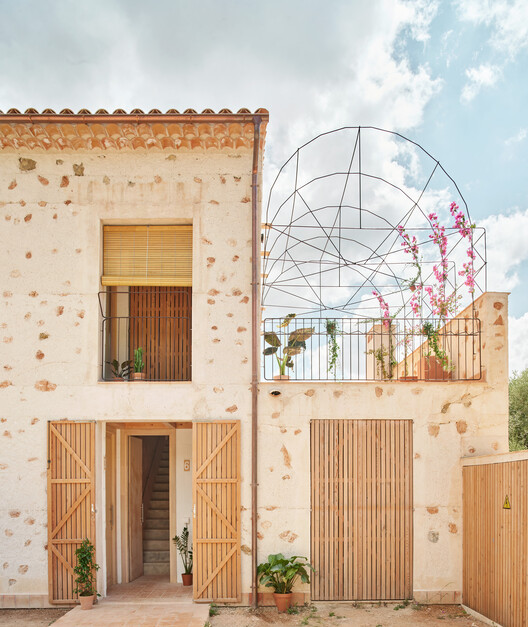
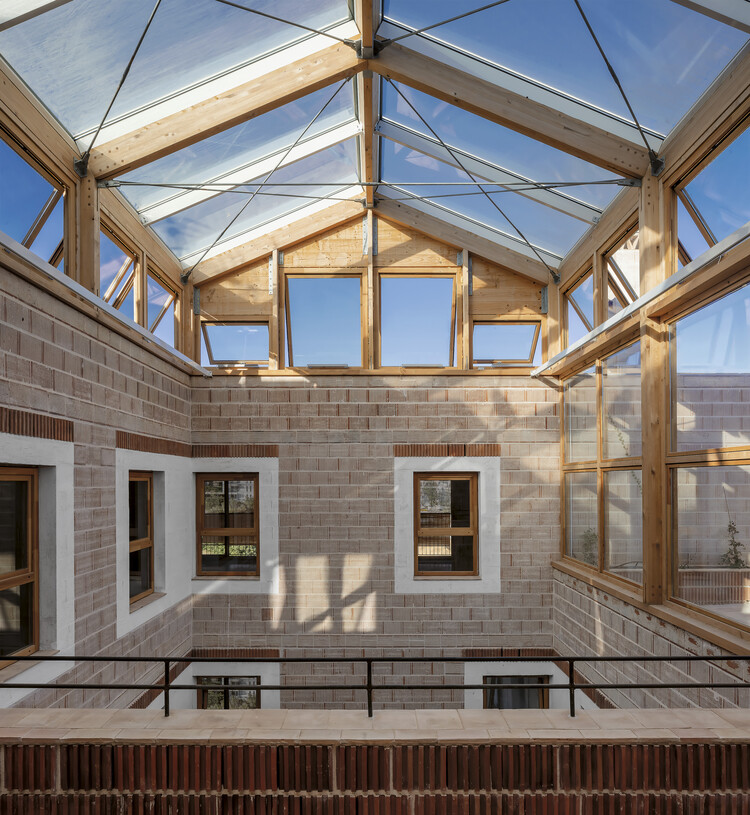
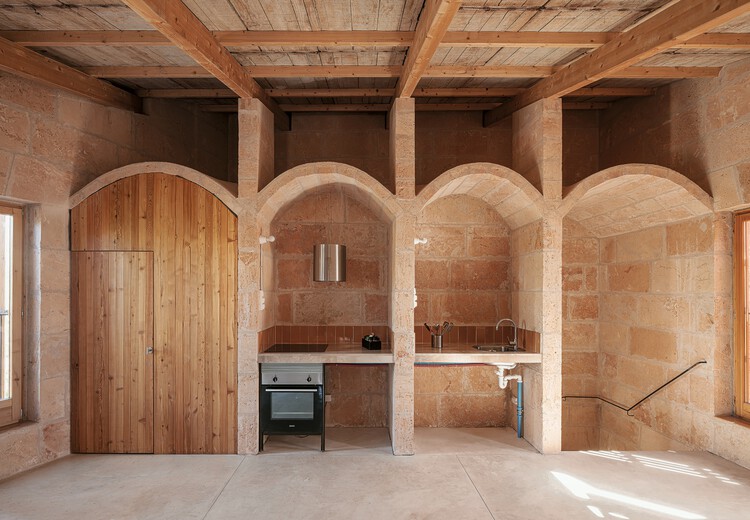
The model relies heavily on local, low-carbon building materials—most notably Marès stone, a honey-colored local sandstone native to the Balearic Islands. By sourcing materials regionally, the initiative transformed architecture into an engine for economic resilience. Rather than relying on global supply chains vulnerable to inflation and carbon-heavy transport, the model revitalized local labor forces, generated new green jobs, and injected capital back into dying regional industries.
3. Navigating Regulatory and Procurement Hurdles
Strict European Union procurement laws traditionally prevent public tenders from explicitly naming specific materials. To bypass this restriction without sacrificing quality, the Balearic team pioneered a method of describing the required performance features, environmental profiles, and micro-climatic qualities of regional materials directly within the legal tender language. This approach was legally reinforced by emerging climate change legislation favoring localized, low-carbon construction.
Official Responses and Expert Insights
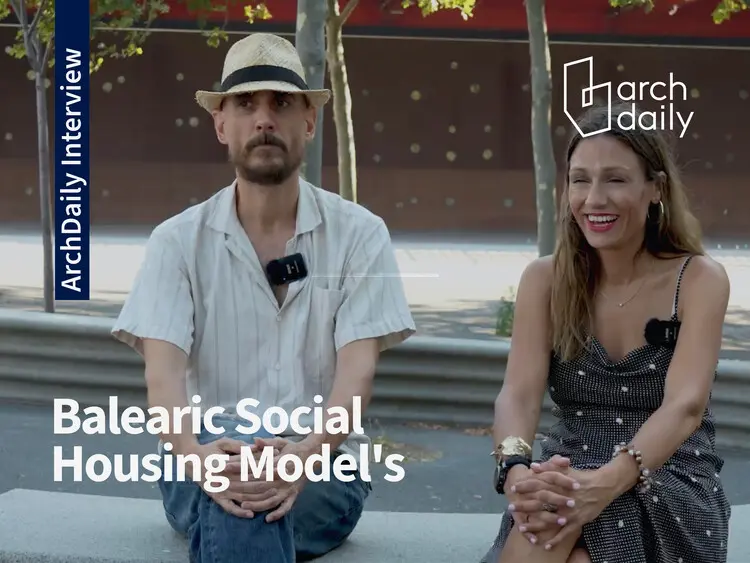
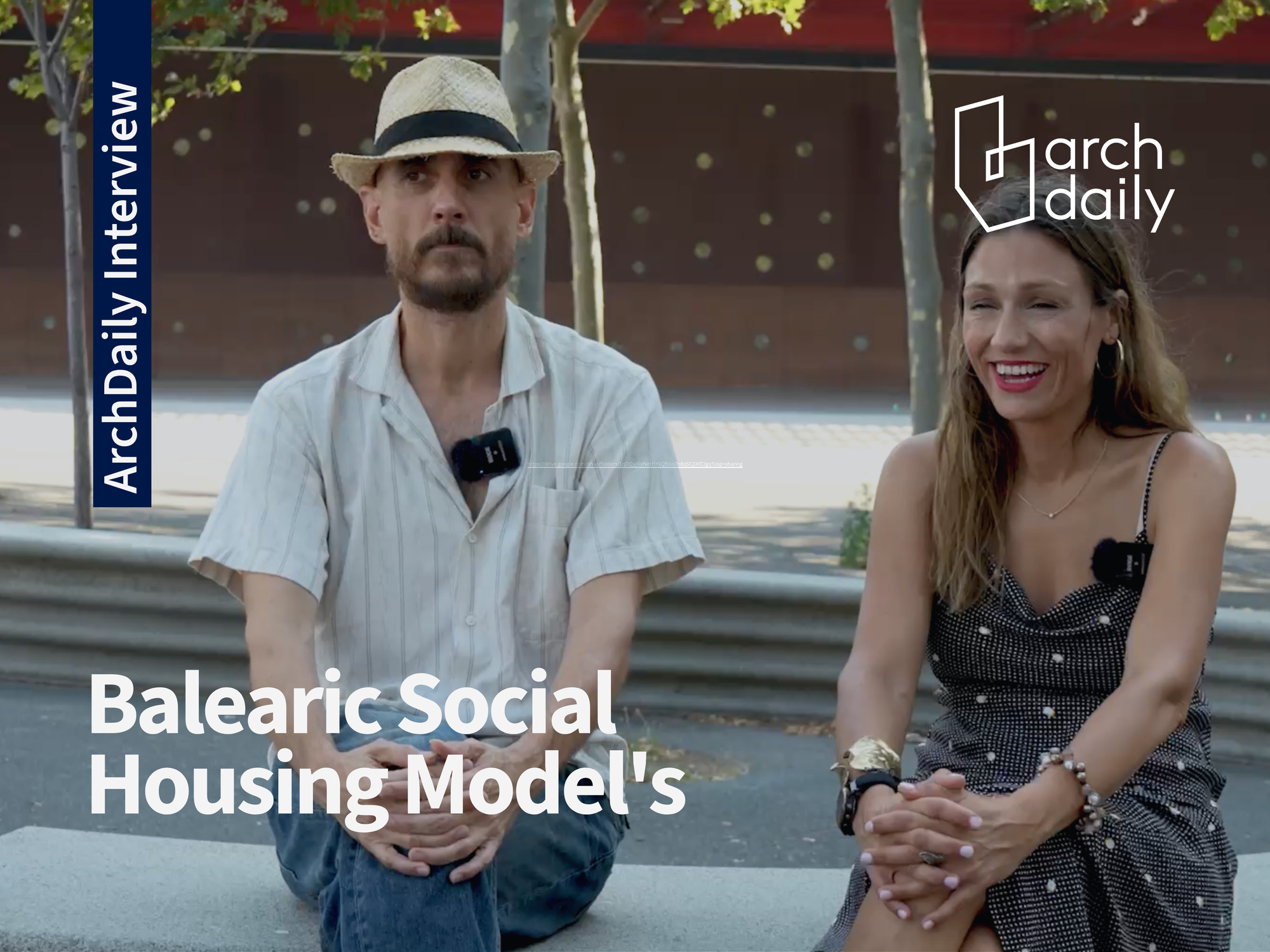
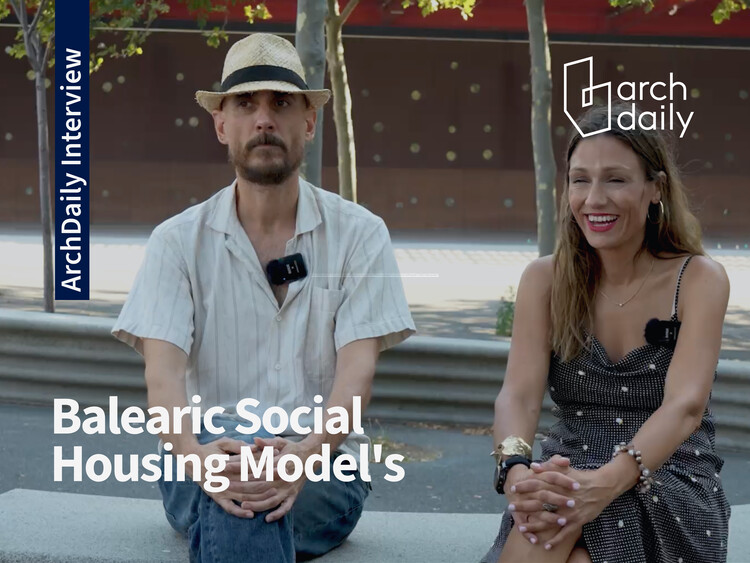
In an exclusive interview with ArchDaily, Ballester and Oliver reflected on the mechanics of scaling their model beyond the Balearic archipelago. They emphasize that replication requires two primary ingredients: courage and multidisciplinary collaboration.
According to the creators, isolating architects, economists, and legal experts into separate silos guarantees failure. True systemic innovation requires these distinct professions to operate in tandem from day one.
"What we found out is that the impact on our territory, or let’s say using local materials, can also be territory resilience and can also be competitive, can also make a competitive territory. Because it’s local labour force, because it’s new jobs, because maybe new industries can come, or industries that were about to disappear could suddenly restart and make money for the same place where we were constructing houses."
Furthermore, the creators stress the importance of understanding the "life cost" of a building—calculating not just the initial construction expenditure, but the long-term economic, social, and environmental impact borne by tenants and the public sector over decades of use.
Implications for Global Urbanism
The recognition of the Balearic Social Housing Model with the 2026 OBEL Award signals a watershed moment for international public housing policy. As cities worldwide grapple with compounding housing affordability crises, climate emergencies, and decaying public infrastructure, the Balearic framework offers a scalable blueprint.
By proving that social housing can be aesthetically stunning, environmentally regenerative, and economically competitive all at once, Ballester, Oliver, and IBAVI have rewritten the rules of civic development. The model demonstrates that public housing should never be treated as an act of charity or a last resort, but rather as an investment in the foundational beauty, stability, and dignity of our shared urban future.