

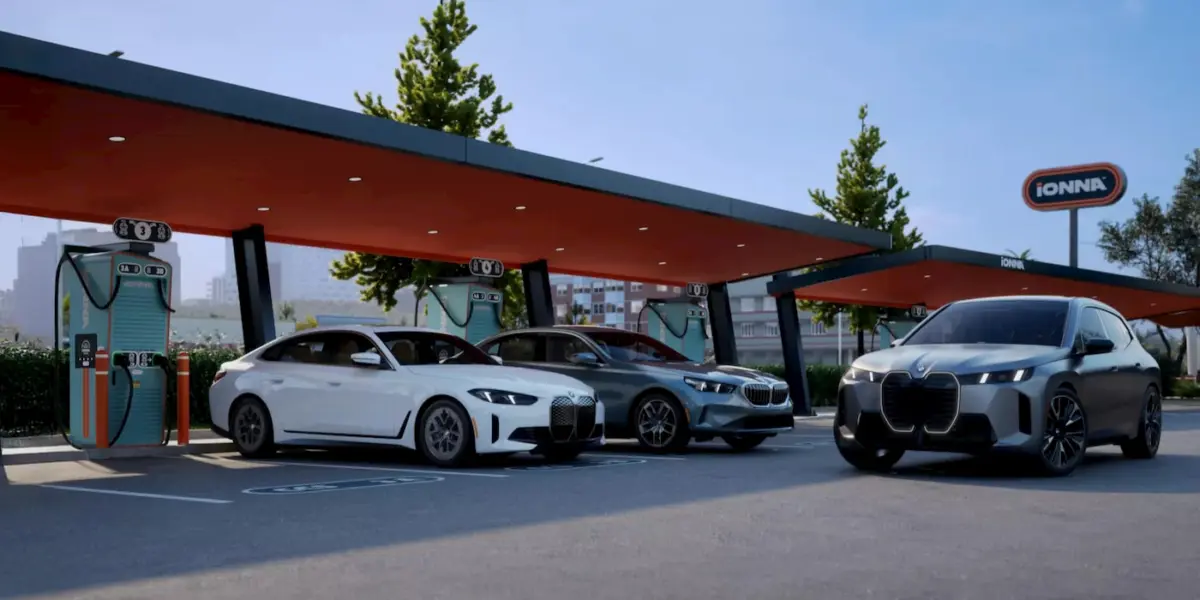
September 2026 — As millions of Americans prepare to hit the open road for the final long weekend of the summer, electric vehicle (EV) drivers are receiving a substantial financial break at the plug. IONNA, the high-speed EV charging network backed by a coalition of major global automakers, has announced a sweeping holiday promotion. From Friday, September 4, through Monday, September 7, charging across the entire IONNA network will be slashed to a flat rate of just $0.20 per kWh (plus applicable taxes).
The promotion applies to any compatible electric vehicle, regardless of make or model, offering a major relief valve for holiday road-trippers facing traditionally high peak-travel energy costs. Even better, owners of EVs from select founding automakers can stack additional brand-specific loyalty discounts on top of the promotion, dropping per-kilowatt-hour prices even lower.
Main Facts
- The Promotional Window: The flat-rate pricing goes live on Friday, September 4, and runs through the end of Monday, September 7, coinciding with the Labor Day travel rush.
- Flat Network-Wide Rate: IONNA is cutting its standard network-wide rate—already capped at a competitive $0.39 per kWh—down to $0.20 per kWh before tax, requiring no paid monthly membership or subscription.
- The Financial Impact: Under normal circumstances, adding 50 kWh of energy to an EV battery costs up to $19.50 before taxes. Over Labor Day weekend, that same 50 kWh charge will plummet to just $10.00, representing an immediate savings of nearly 50%.
- Stackable Automaker Discounts: Four of IONNA’s founding member companies—BMW, Hyundai, Mercedes-Benz, and General Motors (GM)—have introduced supplementary holiday discounts that stack directly on top of the IONNA promotion.
- The Catch for Additional Savings: While any EV can take advantage of the baseline $0.20/kWh rate, drivers of BMW, Hyundai, Mercedes-Benz, and GM vehicles must initiate their charging sessions via their respective automaker apps or utilize Plug & Charge technology to unlock the deepest possible discounts.
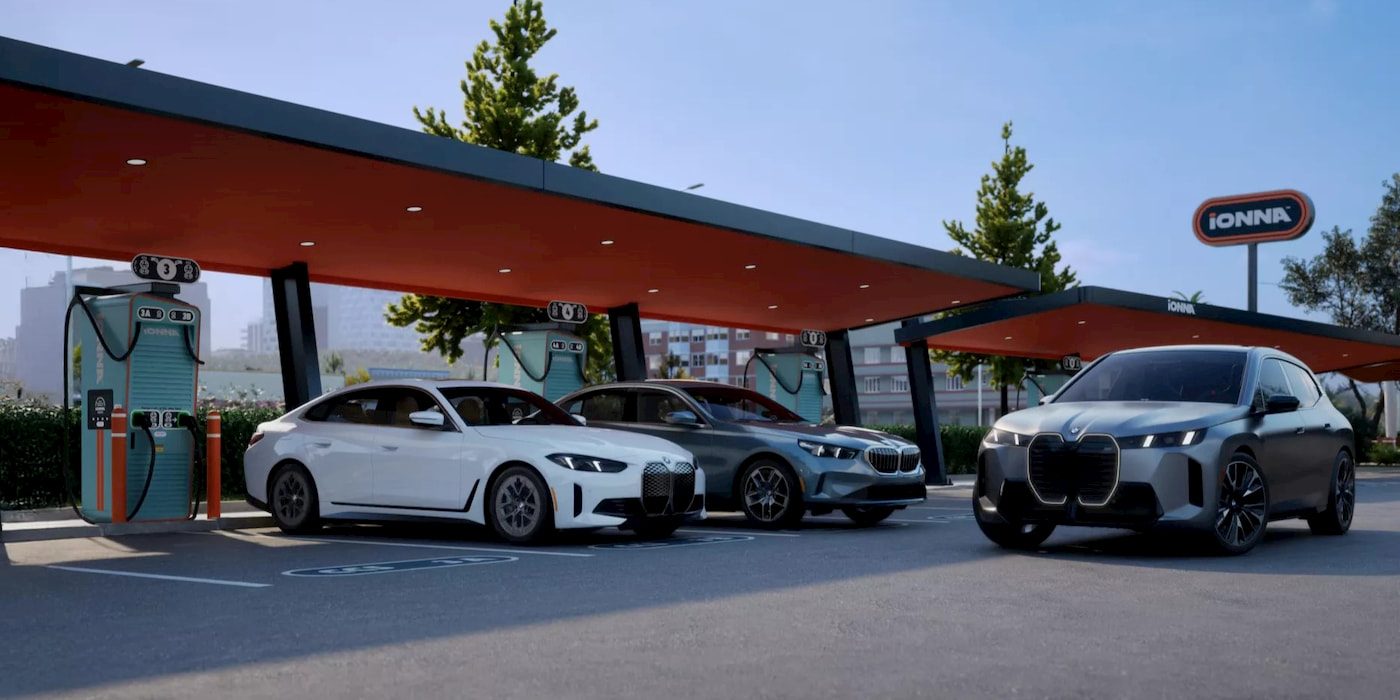
- Infrastructure Ready: IONNA’s state-of-the-art "Rechargeries" feature both NACS (North American Charging Standard) and CCS connectors, delivering ultra-fast charging speeds of up to 400 kW.
Chronology: The Road to the Labor Day Rollout
The genesis of IONNA’s aggressive holiday pricing strategy is rooted in a fast-moving timeline of corporate collaboration, infrastructure deployment, and a rapidly evolving North American EV ecosystem.
Late 2023 to 2024: The Coalition Forms
Realizing that reliable, ultra-fast charging infrastructure was the single greatest bottleneck to mainstream EV adoption, a coalition of major automakers took matters into their own hands. BMW, General Motors, Honda, Hyundai, Kia, Mercedes-Benz, Stellantis, and Toyota joined forces to create IONNA. The goal: build an independent, high-powered charging network designed to rival (and eventually surpass) existing legacy networks in terms of reliability, speed, and driver experience.
March 2026: Hitting the Century Mark
IONNA reached a major operational milestone earlier this spring, officially surpassing 100 live charging sites and closing in on 1,000 individual charging bays across North America. This foundational footprint proved that the joint-venture was no longer just a boardroom concept, but an active, scaling utility capable of handling high-volume traffic.
August 2026: Setting the Standard
Just weeks before the Labor Day announcement, industry analysts noted that IONNA had begun outpacing several legacy fast-charging networks in uptime, pricing transparency, and station amenities. By keeping its baseline public pricing capped at $0.39 per kWh without requiring a monthly subscription fee, IONNA established itself as a consumer-friendly alternative in a market often plagued by confusing pricing tiers.
September 2026: The Labor Day Blitz
Capitalizing on its growing network, IONNA announced its first major holiday promotional blitz. By dropping prices to $0.20 per kWh and partnering with key founding members to offer stackable discounts, the network positioned itself as the premier destination for holiday road-trippers, stress-testing its infrastructure under anticipated high-demand conditions.
Supporting Data and Financial Breakdown
To understand the tangible benefits of IONNA’s Labor Day promotion, it helps to break down the math behind a typical charging stop.
Modern long-range electric vehicles typically feature battery packs ranging from 60 kWh to well over 100 kWh. For a standard road trip top-up—say, replenishing a depleted battery with 50 kWh of energy—the economics under IONNA’s promotion shift dramatically:
- Standard IONNA Rate ($0.39/kWh):
- Cost for 50 kWh: $19.50 (before tax)
- Labor Day Promotional Rate ($0.20/kWh – No Membership Required):
- Cost for 50 kWh: $10.00 (before tax)
- Savings: $9.50
However, for drivers of vehicles manufactured by BMW, Hyundai, and Mercedes-Benz, the stacking discounts push the price down even further to $0.16 per kWh. For those specific drivers, a 50 kWh charging session drops to a remarkably low $8.00.

General Motors drivers also enjoy an enhanced stackable discount, bringing their holiday rate down to $0.18 per kWh, translating to $9.00 for a 50 kWh fill-up.
| Automaker / Category | Standard Rate | Labor Day Promo Rate | Cost for 50 kWh | How to Access |
|---|---|---|---|---|
| General Public / Other EVs | $0.39 / kWh | $0.20 / kWh | $10.00 | Standard payment at charger |
| BMW, Hyundai, Mercedes-Benz | Varies | $0.16 / kWh (Stacked) | $8.00 | Brand App or Plug & Charge |
| General Motors (GM) | Varies | $0.18 / kWh (Stacked) | $9.00 | GM App or Plug & Charge |
Note: To ensure the automaker-specific discounts are properly applied, qualified drivers must bypass standard credit card taps at the terminal and instead initiate the charging session directly through their vehicle’s native mobile application or via automated Plug & Charge protocols.
Official Responses and Strategic Vision
While IONNA has built its reputation on open access—welcoming all EVs regardless of whether they utilize NACS or CCS plugs—the involvement of the founding automakers highlights a coordinated push toward ecosystem loyalty.
Industry observers note that the partnership between IONNA and giants like BMW, GM, Hyundai, and Mercedes-Benz represents a strategic shift in how automotive brands retain customers. By subsidizing charging costs during peak travel holidays, these automakers are actively sweetening the ownership experience, directly addressing consumer anxieties regarding road-trip fueling costs.
Furthermore, IONNA’s leadership remains firmly focused on its long-term infrastructure roadmap. The company’s stated goal is to deploy 30,000 online charging bays across North America by 2030.

Unlike older charging stations that historically suffered from maintenance neglect and software glitches, IONNA’s branded "Rechargeries" are designed with the future in mind. They incorporate high-output architecture capable of delivering up to 400 kW, ensuring that vehicles capable of ultra-fast charging (such as 800V architectures found in many modern Hyundais, Kias, and high-end German EVs) can replenish their batteries from 10% to 80% in roughly 15 to 20 minutes.
Moreover, IONNA’s digital infrastructure—accessible via the official IONNA Rechargery Locator—provides drivers with real-time analytics, live bay availability, connector type identification, and information on nearby site amenities such as restrooms, food, and shopping.
Implications for the EV Market
The timing of IONNA’s Labor Day discount is strategic on multiple fronts, carrying broad implications for the broader electric vehicle market:
- Challenging the Status Quo of Holiday Pricing: Historically, peak travel holidays have occasionally seen dynamic pricing spikes or high congestion at public charging hubs. By aggressively cutting prices during a high-volume weekend, IONNA is signaling that EV travel should be economically competitive with—or superior to—gasoline-powered road trips.
- Driving App Adoption and Plug & Charge: By conditioning the deepest discounts on the use of native automaker apps and Plug & Charge technology, the industry is accelerating the adoption of frictionless payment methods. This reduces reliance on finicky credit card readers, which have historically been a primary point of failure for public charging infrastructure.
- Stress-Testing Network Reliability: Offering a half-price promotion over a major travel holiday serves as a real-world stress test for IONNA’s growing network. How the stations handle high utilization rates over the four-day weekend will serve as a crucial barometer of IONNA’s engineering reliability as it scales toward its 2030 targets.
- Heightening Competitive Pressure: As IONNA continues to expand its footprint and undercuts legacy networks on both pricing and reliability, competing fast-charging providers will likely feel compelled to introduce more aggressive promotional pricing and loyalty incentives during future peak travel periods.
Ultimately, for the thousands of EV owners packing their trunks and mapping out interstate routes for Labor Day weekend, IONNA’s promotion offers a welcome financial reprieve—and a glimpse into a more mature, consumer-centric electric vehicle infrastructure.
