

Introduction
Tesla has quietly begun distributing a "Robotaxi interest form," casting a wide net to collect data from commercial fleet buyers, infrastructure providers, and prospective network operators. This initiative marks a distinct shift in how the company envisions monetizing its Full Self-Driving (FSD) software stack. Rather than delivering on long-standing promises that private vehicle owners would see their cars transform into appreciating, passive-income-generating assets, Tesla is opening its prospective network to non-Tesla entities and dedicated commercial operators.
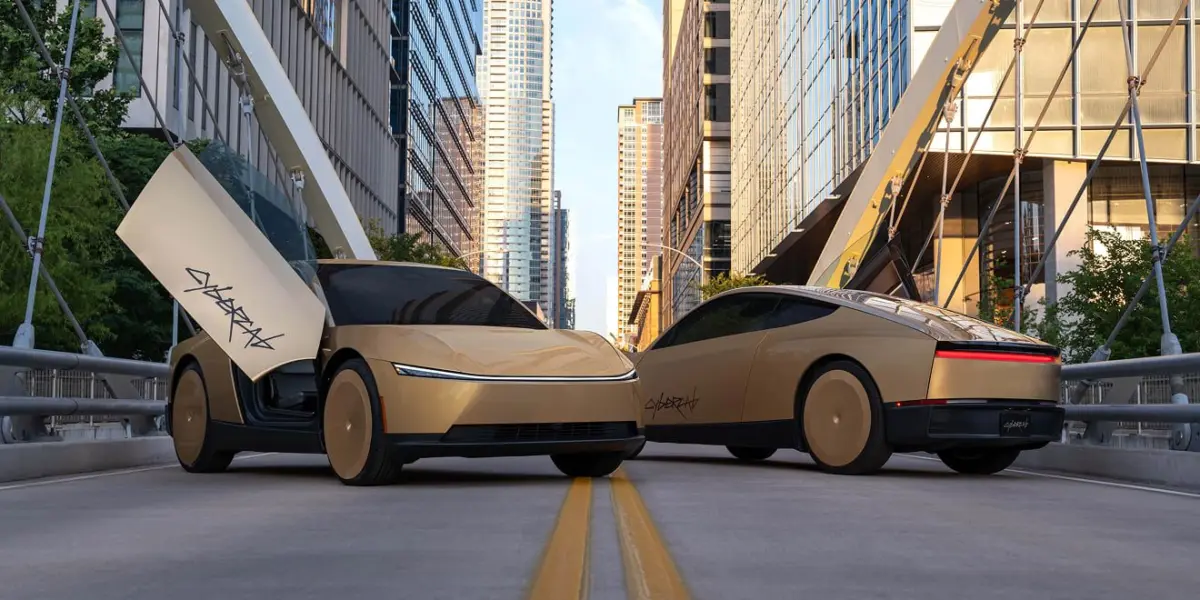
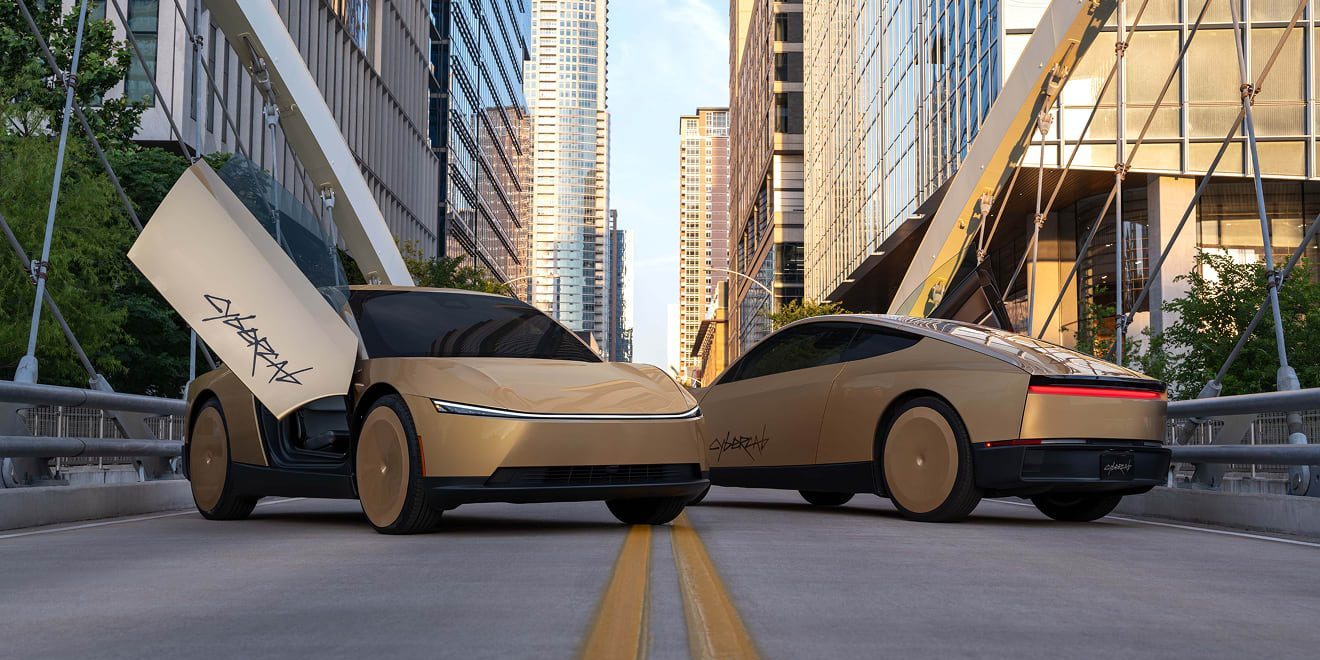
The move coincides with a low-key, heavily restricted corporate rollout event for the long-awaited Cybercab—Tesla’s dedicated, steering-wheel-less autonomous two-seater. Unlike previous grandiose product reveals complete with global livestreams and open media access, this launch has relied heavily on curated posts from hand-picked online advocates. As industry analysts pore over the details of the newly unveiled interest form, questions are mounting regarding the state of Tesla’s autonomous software, the viability of its infrastructure plans, and the implications for early retail investors who financed the dream of personal fleet ownership.
Main Facts
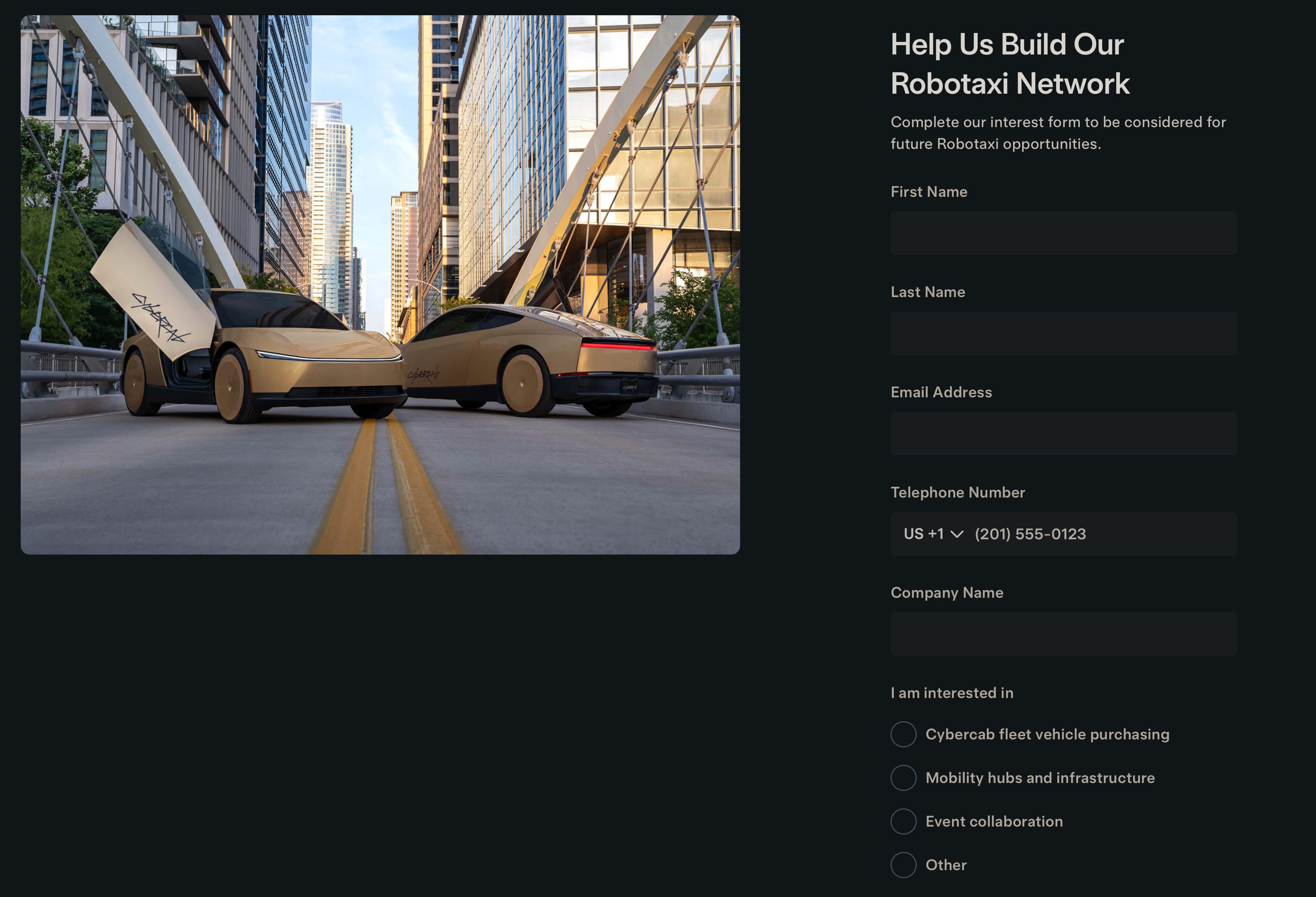
The core development centers on Tesla’s formal outreach to external commercial entities through a dedicated portal labeled the "Robotaxi interest form."
- Target Audience: The form specifically targets fleet buyers, mobility hub developers, and infrastructure partners rather than everyday retail consumers who purchased FSD packages over the last decade.
- Form Structure: Applicants are asked to provide fundamental contact details and select one of four primary categories of interest:
- Cybercab fleet vehicle purchasing
- Mobility hubs and infrastructure
- Event collaboration
- Other
- Geographic Scope: Submissions allow respondents to specify targeted deployment regions, pointing toward localized, strategic rollouts rather than an instantaneous, universal software update.
- The Cybercab Debut: The launch event for the purpose-built, two-seat autonomous vehicle lacked a public livestream and barred traditional media outlets, leaving public insight restricted to fragmented reports on social media.
Chronology
To understand how Tesla arrived at this juncture, it is necessary to examine the timeline of promises, hardware pivots, and operational shifts that have defined the company’s autonomous vehicle strategy over the past decade:
- 2016: Tesla announces that every vehicle rolling off its production lines is equipped with the foundational hardware necessary for Full Self-Driving capability. CEO Elon Musk suggests that these cars will soon be capable of driving themselves cross-country without human intervention.
- 2019: Musk boldly predicts that Tesla will stop selling cars outright once autonomy is solved, planning instead to keep vehicles in-house to operate an exclusive, highly profitable robotic ride-hailing network. Later that year, retail buyers are told their vehicles will soon function as "appreciating assets" capable of earning passive income.
- 2021–2022: Tesla steadily hikes the price of its FSD package, reaching up to $15,000 for consumers eager to secure the software upgrade before promised autonomous capabilities go live.
- 2024: Tesla quietly removes long-standing blog posts and explicit claims stating that all legacy vehicles possess the physical hardware to achieve unassisted full self-driving. Concurrently, the company conducts massive layoffs, famously cutting its entire Supercharger development team.
- Early 2025 – Early 2026: Tesla begins operating localized ride-hailing services using geofenced Model Y vehicles equipped with specialized FSD builds in select urban centers. Meanwhile, plans to develop proprietary robo-charging infrastructure (such as a leased parking garage conversion in downtown San Francisco) are abruptly abandoned.
- Late 2026 (Current Event): Tesla launches the Cybercab with restricted media access and introduces the "Robotaxi interest form," officially pivoting toward third-party fleet operators while leaving early retail FSD purchasers without the promised passive income capabilities.
Supporting Data
An analysis of Tesla’s strategic maneuvers reveals a stark contrast between historical projections and current commercial realities:
- Pricing and Financial Contributions: Early adopters invested upwards of $15,000 upfront for FSD packages, generating crucial capital that helped fund Tesla’s research and development phases over the past ten years.
- Deployment Limitations: Despite assertions that vision-only neural networks would allow universal autonomy via an over-the-air update, current robotaxi operations remain heavily restricted. They rely on tightly geofenced, pre-mapped urban environments with limited fleets of Tesla-owned vehicles.
- Infrastructure Backtracking: Tesla’s retreat from building dedicated urban charging hubs for autonomous fleets stands in contrast to the emergence of third-party alternatives—such as European startup Hubber, founded by former Tesla employees—which have stepped in to fill the physical infrastructure void.
- Global Market Context: The deployment of the interest form arrives as Tesla works to steady its financial footing following consecutive quarters of delivery stagnation and sales declines in an increasingly competitive global electric vehicle (EV) market.
Official Responses and Stakeholder Perspectives
Official commentary surrounding the Cybercab rollout and the new interest form remains largely centralized through corporate leadership statements and executive social media posts, as traditional press channels were excluded from the primary launch proceedings.
- Corporate Stance: Tesla leadership continues to frame autonomous ride-hailing as the cornerstone of the company’s future valuation, emphasizing that purpose-built vehicles like the Cybercab will achieve unprecedented operational efficiency (with energy consumption metrics hovering around 165 Wh/mi).
- Consumer and Investor Frustration: Retail buyers who purchased FSD packages under the explicit guarantee of vehicle appreciation and passive-income generation have grown increasingly vocal about feeling alienated. Critics argue that opening the network to deep-pocketed commercial fleet buyers—while offering no hardware retrofit path or monetization vehicle for legacy owners—amounts to a broken contract.
- Industry Analysts: Independent observers point out that collecting interest from commercial fleets is a standard operational pivot for companies attempting to scale capital-intensive transport networks. However, analysts note that doing so while leaving retail obligations unfulfilled risks significant legal and reputational fallout.
Implications
The introduction of the Robotaxi interest form carries profound implications for the future of urban mobility, corporate accountability, and consumer trust within the electric vehicle ecosystem.
1. Shift Toward Centralized Commercial Fleets
By prioritizing fleet buyers and mobility infrastructure partners, Tesla is effectively signaling that the future of autonomous ride-hailing will be dominated by large-scale commercial operators rather than individual vehicle owners. This mirrors the deployment strategies of competitors like Waymo and Cruise, which utilize centrally managed, heavily monitored fleets rather than decentralized consumer-owned networks.
2. The Fallout for Retail FSD Purchasers
The inability of retail owners to monetize their vehicles leaves a significant ethical and financial scar on Tesla’s customer base. For years, the justification for purchasing expensive, beta-stage driver-assist software was the promise of future return on investment. Directing fleet opportunities exclusively to commercial buyers effectively closes the door on that consumer promise, potentially exposing the automaker to heightened regulatory scrutiny and class-action litigation regarding marketing practices.

3. Infrastructure Deficits and Third-Party Opportunities
Tesla’s sudden cancellation of internal projects like the San Francisco robo-charging hub indicates that the company is reluctant to absorb the real estate and capital expenditures required to build comprehensive autonomous infrastructure from scratch. This opens the door for independent startups, energy providers, and commercial real estate developers to establish the physical backbone required to service autonomous fleets, shifting the ecosystem from a vertically integrated monopoly to a collaborative network of specialized service providers.
4. A Lead Generation Tool in a Challenging Market
Beyond its utility as a deployment survey, the fine print of the interest form explicitly authorizes Tesla to contact respondents regarding general products, services, and regional events. In the context of recent sales contractions and intensified global competition, this mechanism functions effectively as a high-intent lead-generation tool, capturing contact details from enthusiasts and businesses eager to buy into the autonomous narrative. Whether these inquiries will translate into a functioning, scalable robotaxi network—or simply remain another chapter in a long history of ambitious timelines—depends entirely on Tesla’s ability to overcome persistent regulatory and technical hurdles in autonomous software development.
