

By Automotive Technology Desk
Updated: September 2026
Main Facts
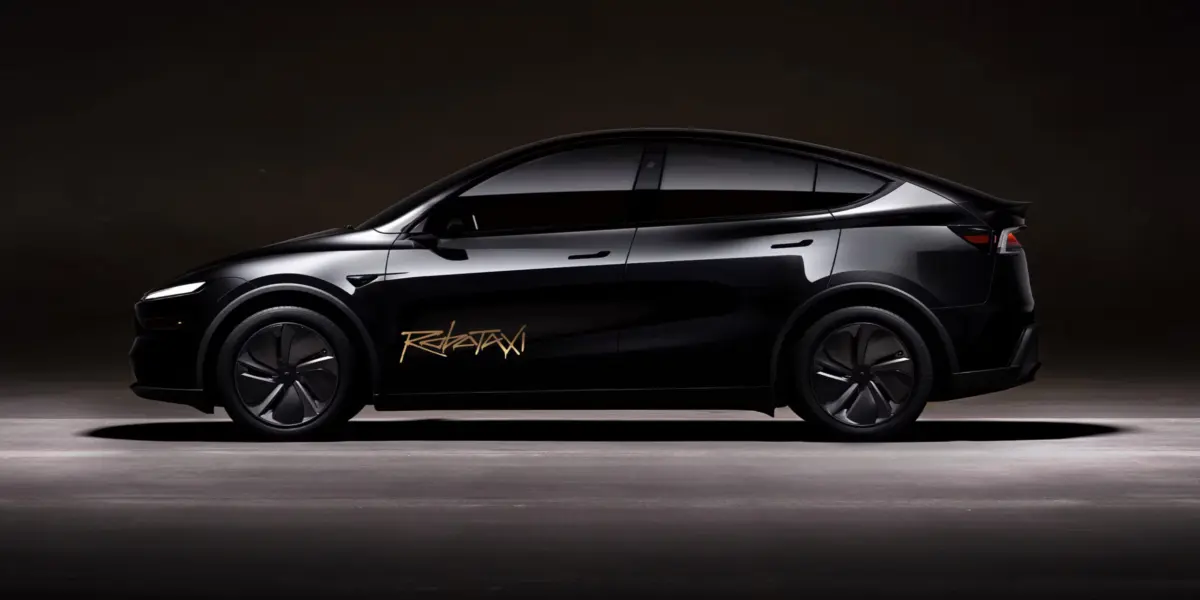
Tesla has officially announced that its autonomous vehicle fleet has surpassed 1 million miles of entirely unsupervised Robotaxi operation. Revealed by Ashok Elluswamy, Tesla’s Vice President of Autopilot and AI, during the company’s high-profile Cybercab event, the milestone represents a dramatic acceleration in Tesla’s driverless testing phase.
The announcement comes just six weeks after Tesla’s Q2 earnings call on July 22, at which point the company reported a modest 380,000 unsupervised miles. This means Tesla has accumulated roughly 620,000 driverless miles in a little over a month and a half.
While the sudden surge highlights a rapid deployment of software updates that remove human safety monitors, the achievement arrives amid intense industry scrutiny. Competitors like Alphabet’s Waymo operate at an entirely different scale—having recently surpassed 200 million driverless miles—and regulatory and safety questions continue to shadow Tesla’s autonomous ambitions. Furthermore, everyday Tesla owners who purchased Full Self-Driving (FSD) packages years ago remain locked out of the lucrative ride-hailing network as Tesla shifts its focus toward corporate fleet sales.
Chronology: The Road to One Million Miles
To understand how Tesla reached this milestone, it is necessary to trace the rocky evolution of its autonomous ride-hailing initiatives from a localized experiment to a scaling fleet.
Early 2025: The Austin Launch and "Safety Drivers"
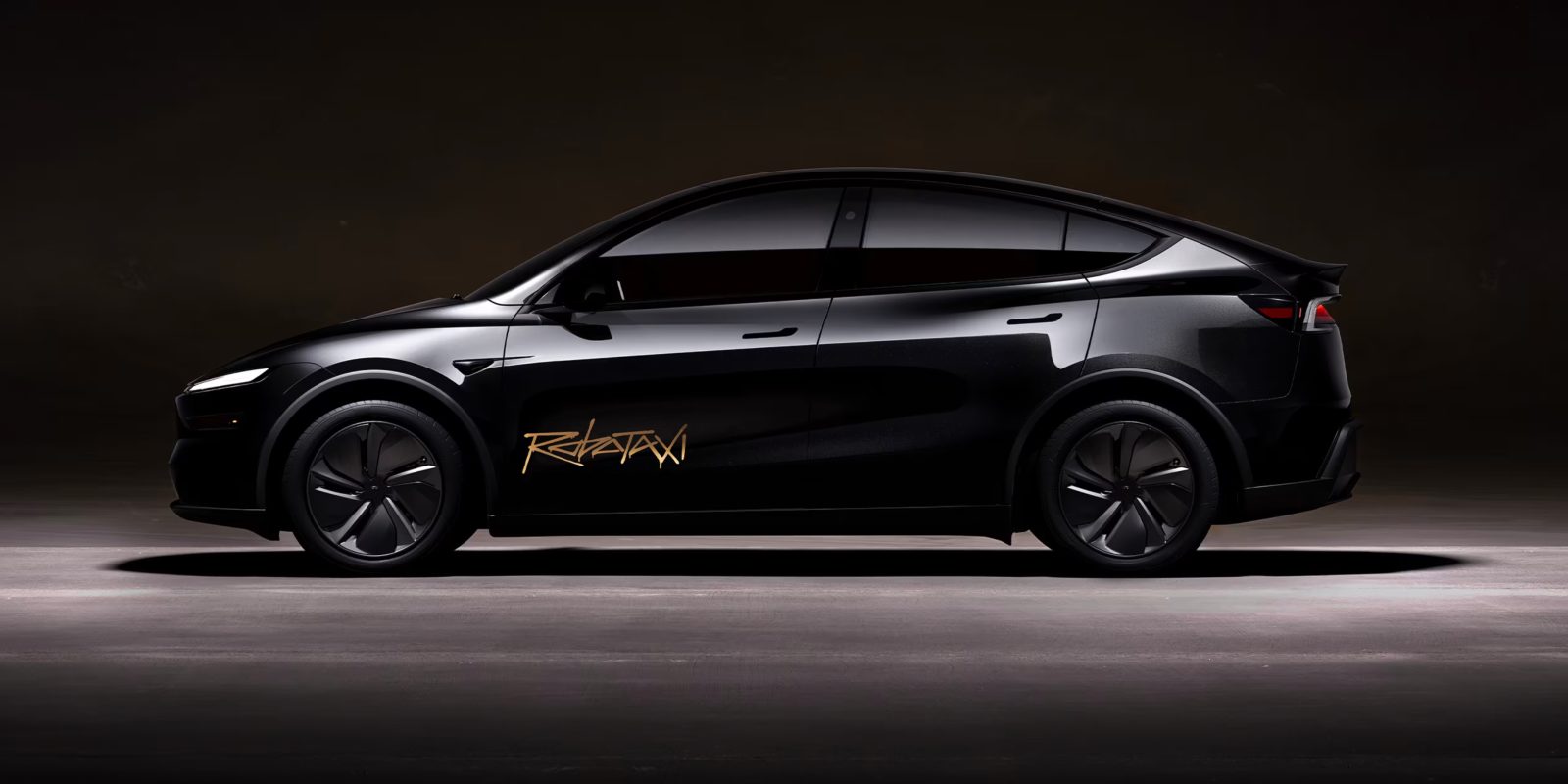
Tesla initially deployed its nascent Robotaxi service in Austin, Texas, in June 2025. The rollout was met with a mixture of fan enthusiasm and operational friction. Early test rides revealed numerous software gaffes, localization hiccups, and unpredictable navigation errors.
During this initial phase, every vehicle required a human "safety driver" positioned in the front seat. These monitors maintained access to physical vehicle controls to intervene if the Full Self-Driving (FSD) software compromised safety.
Late 2025 – Early 2026: Shifting the Safety Architecture
As the software matured, Tesla began expanding its footprint to additional cities, including Tampa and Orlando. Concurrently, the company faced pressure to eliminate human safety drivers to prove its economic model.
Rather than achieving true unassisted autonomy immediately, Tesla initially experimented with workarounds, such as utilizing trailing "chase cars." Eventually, the company transitioned to remote operator oversight, allowing off-site personnel to intervene via remote control during edge cases or unexpected obstacles in cities like Houston.
By the beginning of 2026, Tesla finally initiated true "unsupervised" runs—meaning the onboard vehicle software handled all perception, path planning, and driving controls without human intervention in the immediate chain of command.

July 2026: The Q2 Earnings Reality Check
During Tesla’s Q2 earnings call on July 22, 2026, leadership confirmed that the fleet had achieved 380,000 cumulative unsupervised miles, maintaining what executives described as "zero notable incidents." However, independent analysts and government documents (such as NHTSA crash narrative unredactions) pointed out minor fender-benders and traffic anomalies that complicated the spotless corporate narrative.
More importantly, financial data revealed that paid ridership growth had stalled. Tesla’s total paid miles hovered around 2.5 million, with growth virtually flat across consecutive quarters.
September 2026: The Cybercab Event and the 1-Million-Mile Mark
At the Cybercab event, Ashok Elluswamy took the stage to announce that the fleet had broken past the 1-million-mile threshold. Propelled by the removal of safety monitors across wider deployments, the program added 620,000 unsupervised miles in a remarkably brief six-week window.
Supporting Data & Fleet Metrics
A closer examination of Tesla’s operational data reveals a nuanced picture of growth, sample size, and market positioning relative to established autonomous vehicle leaders.
- The Scale of the Milestone: While 1 million unsupervised miles sounds like a massive technical achievement, automotive statisticians point out that it is roughly equivalent to the distance driven by a single average American over the course of a lifetime. As a statistical sample for safety validation across complex urban environments, it remains relatively modest.
- Geographic and Fleet Constraints: Reports indicate that approximately 45 dedicated Cybercabs have been registered for deployment in Austin. This represents roughly one-tenth of the Model Y Robotaxis already registered in the region—only a fraction of which are active at any given time.
- The Waymo Disparity: Tesla’s 1-million-mile milestone is heavily dwarfed by its primary U.S. competitor, Waymo. Waymo crossed its own 1-million-mile threshold years ago (in early 2023) and has since accumulated over 200 million driverless miles across 14 operational cities, with several more markets slated for launch.
| Metric / Feature | Tesla Robotaxi Program | Waymo Autonomous Fleet |
|---|---|---|
| Total Unsupervised Miles | ~1 million miles (as of Sept 2026) | 200+ million miles |
| Active Cities | Austin, select expansions in Florida | 14+ major U.S. cities |
| Vehicle Architecture | Model Y / New Cybercabs (Vision-only) | Custom-outfitted Jaguar I-PACE / Geely (LiDAR + Radar + Cameras) |
| Operator Oversight | Remote operators / Unsupervised software | Fully remote assistance for edge-cases |
Official Responses and Industry Reactions
Tesla executives have framed the sudden jump in unsupervised mileage as definitive proof of exponential technological progress. During the Cybercab presentation, Elluswamy emphasized the distinction between Tesla’s true unsupervised capability and the human-driven ride-hailing services the company previously operated in the San Francisco Bay Area (which relied on Tesla employees chauffeuring passengers in Model Ys with FSD engaged).

Independent safety analysts, however, urge caution. While the software is clearly handling significantly more miles without direct human intervention, the sudden surge from 380,000 to 1,000,000 miles in six weeks reflects a change in deployment strategy—unleashing the software more broadly—rather than an instantaneous quantum leap in core algorithmic safety.
Furthermore, consumer advocacy groups have expressed frustration regarding Tesla’s commercial strategy. Rather than fulfilling long-standing promises that everyday consumers could monetize their personal vehicles via a peer-to-peer Robotaxi network, Tesla has initiated outreach to corporate and business clients. By courting business fleets for commercial deployment, Tesla appears to be prioritizing enterprise accounts over retail FSD owners who purchased software packages years ago under the premise of future passive income generation.
Implications for the Future of Autonomous Transit
Tesla crossing the 1-million-mile threshold is a symbolic milestone for the company’s vision of a scalable, vision-only autonomous future. Several key implications emerge from this latest development:
- Re-Acceleration of Fleet Growth: Following a flat Q2 where paid ridership stalled, the rapid accumulation of unsupervised miles indicates that Tesla’s network growth is poised to rebound. As more vehicles transition from supervised testing to fully autonomous operation, revenue metrics for the upcoming quarter are expected to improve.
- The Sensor Suite Debate: Tesla continues to rely exclusively on camera-based "Tesla Vision" without LiDAR or high-definition radar. Achieving 1 million unsupervised miles serves as internal validation for CEO Elon Musk’s stubborn refusal to adopt redundant sensor suites, though critics argue that camera-only systems face heightened vulnerability in severe weather and complex urban occlusion scenarios.
- The Commercial Pivot: The active search for Cybercab business clients signals a structural shift in how Tesla expects to monetize autonomy. By targeting corporate fleets rather than everyday vehicle owners, Tesla is attempting to bypass regulatory and logistical hurdles associated with consumer-owned autonomous fleets, mirroring the B2B approach long utilized by Waymo and Cruise.
- The Long Shadow of Competitors: Despite Tesla’s celebratory tone, the 200-million-mile lead held by Waymo underscores the steep mountain Tesla must climb to achieve market dominance in autonomous ride-hailing. Trust, regulatory approval, and faultless safety records will dictate whether Tesla can convert its 1 million unsupervised miles into a viable, nationwide commercial threat.
