

Published: September 4, 2026
Author: Matthew Thibault (Adapted and Expanded)
Main Facts
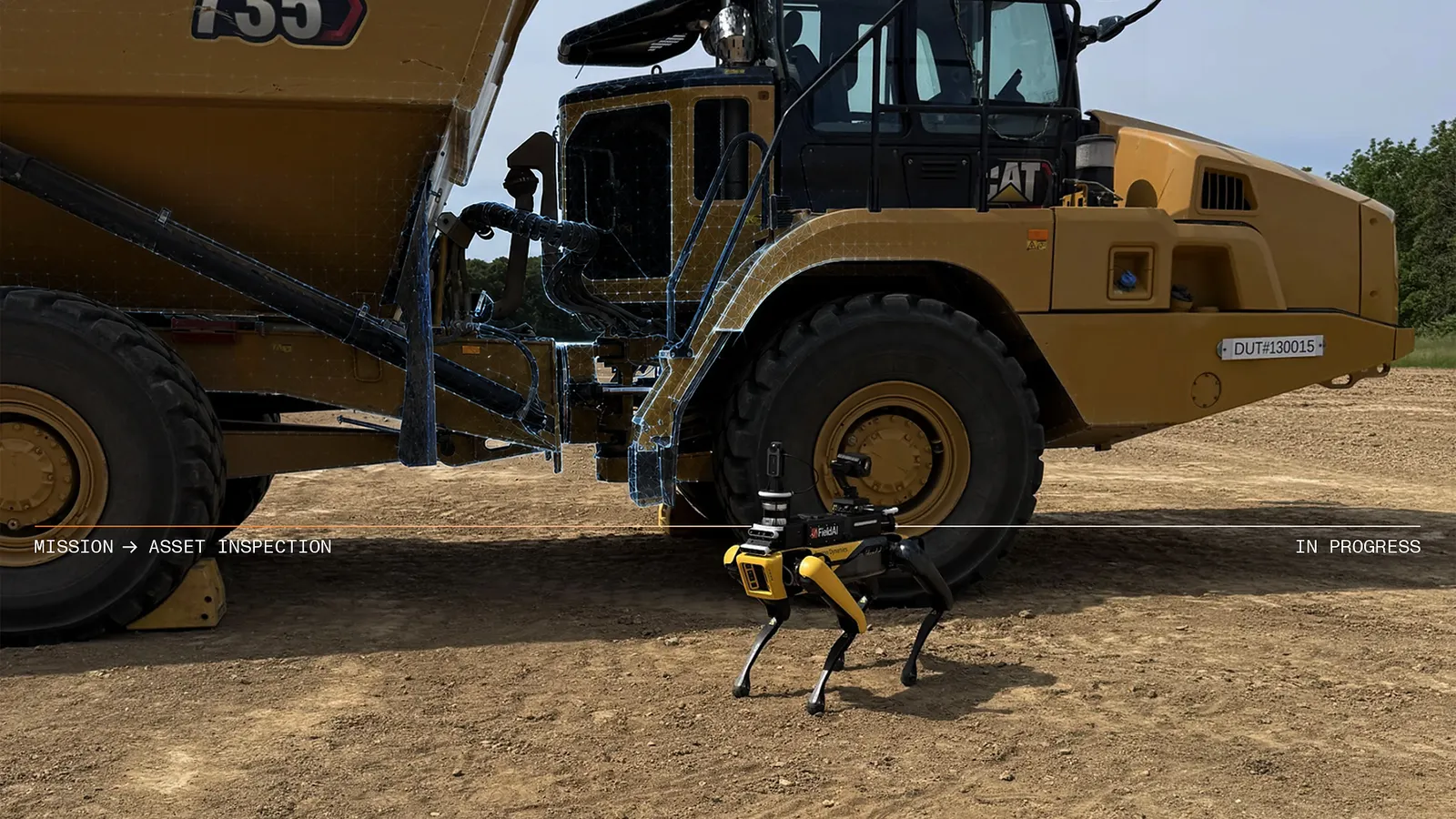
Heavy equipment manufacturing giant Caterpillar has announced a strategic partnership with advanced robotics software startup FieldAI to usher in a new era of autonomous construction and industrial operations. The collaboration, officially unveiled in September 2026, aims to bridge the gap between decades of Caterpillar’s heavy machinery manufacturing expertise and FieldAI’s cutting-edge artificial intelligence and autonomy software.
At its core, the partnership is designed to equip traditional and next-generation Caterpillar machines with robust, scalable autonomous capabilities. Rather than building robots from scratch, FieldAI’s robot-agnostic software platform and foundation models can be integrated into diverse machinery, enabling automated workflows, safer site navigation, and real-time data processing.
Initial use cases slated for rollout include:
- Autonomous Site Inspections: Routine surveillance and quality checks performed by autonomous machinery and companion robots without direct human intervention.
- Digital Twins: Generating real-time, highly accurate digital replicas of active jobsites and industrial facilities to improve project tracking and predictive modeling.
- Enhanced Situational Awareness: Leveraging advanced AI sensors and machine learning to proactively identify safety hazards, equipment bottlenecks, and environmental risks before they cause delays or accidents.
The partnership arrives at a pivotal moment for the construction sector, which is increasingly turning to automation to combat persistent labor shortages, rising material costs, and strict project deadlines. By combining Caterpillar’s global footprint with FieldAI’s adaptable software architecture, the two companies aim to solve one of the most stubborn challenges in the construction technology sector: making robotics functional in dynamic, unpredictable real-world environments.
Chronology: The Evolution of Jobsite Autonomy
To understand the significance of the Caterpillar-FieldAI alliance, it is helpful to look at the timeline of how automation has steadily crept into the traditionally conservative construction and heavy industrial sectors.
Early Experiments and Controlled Environments (Pre-2020)
For decades, heavy equipment autonomy was largely restricted to heavily controlled, highly predictable environments—most notably, massive surface mining operations. Caterpillar’s Command for hauling was a pioneer in this space, allowing ultra-class mining trucks to operate driverless in remote open-pit mines. However, translating this technology to fast-paced, ever-changing commercial and civil construction sites remained a bridge too far due to the sheer complexity of unstructured environments.
The Rise of Specialized Construction Robotics (2020–2024)
As artificial intelligence, computer vision, and LIDAR technologies matured, a wave of venture-backed startups began targeting the construction sector. Companies developed autonomous quadrupeds for progress tracking, drone fleets for aerial mapping, and semi-autonomous grading systems. Despite these innovations, adoption was frequently hindered by high costs, proprietary lock-ins, and a lack of interoperability between different machine brands and software stacks.
The Groundswell of Commercial Deployments (2025–Early 2026)
Over the twelve months leading up to the Caterpillar-FieldAI partnership, the construction technology landscape experienced a massive surge in real-world deployments. Venture capital poured into firms working on physical AI, backed by technology giants like NVIDIA.
A notable watershed moment occurred when Bedrock Robotics deployed fully autonomous excavators on active commercial jobsites for major builders such as Zachry Construction and Sundt Construction. These deployments proved that heavy machinery could safely execute repetitive earthmoving tasks alongside human crews, laying the groundwork for broader industry acceptance.
The Caterpillar-FieldAI Partnership (September 2026)
Cementing their alliance in September 2026, Caterpillar and FieldAI signaled a shift from experimental jobsite trials to mainstream commercial integration. By leveraging FieldAI’s robot-agnostic foundation models, Caterpillar positioned itself to rapidly deploy autonomy features across its massive, globally distributed fleet of yellow iron and supporting robotic infrastructure.
Supporting Data and Industry Context
The market forces driving Caterpillar toward this partnership are rooted in labor demographics, technological breakthroughs, and historical barriers to construction automation.
The Labor Crisis and Productivity Pressures
According to various industry estimates, the global construction sector continues to grapple with a chronic shortage of skilled labor, including heavy equipment operators, site inspectors, and safety coordinators. Concurrently, project margins are tightening under inflationary pressures.
Autonomous machinery addresses these pressures in two critical ways:
- Force Multiplication: Allowing a single skilled supervisor to oversee multiple autonomous or semi-autonomous machines simultaneously.
- Uptime Optimization: Enabling machines to operate during non-peak hours, shift changes, or in hazardous conditions where human deployment poses unacceptable safety risks.
Overcoming the "Unstructured Environment" Barrier
Historically, one of the primary knocks against robotics in construction has been their inability to adapt to jobsites. Unlike automotive assembly lines—which are flat, well-lit, and entirely predictable—construction sites are dynamic landscapes where mud, shifting terrain, weather, temporary structures, and human activity change daily.
Early robotics often failed because they relied on rigid programming rather than adaptive learning. FieldAI differentiates itself in the market through software that can be rapidly deployed in complex industrial environments without requiring pre-mapped, sterile conditions.

Harnessing Data into Actionable Insights
Modern construction sites generate petabytes of data daily through telematics, machine sensors, cameras, and building information modeling (BIM) software. However, contractors have long struggled to leverage this proprietary data into actionable intelligence.
Caterpillar selected FieldAI precisely because the startup’s foundational AI models excel at translating raw, unstructured environmental data into structured, real-time operational insights. This capability allows machines not only to move autonomously but to "understand" their surroundings and adjust their operations accordingly.
Official Responses and Executive Insights
Leadership from both organizations emphasized that the collaboration is not about replacing human labor, but rather about augmenting human expertise with machine intelligence.
Jaime Mineart, Caterpillar’s Chief Technology Officer, highlighted the philosophical approach driving the initiative in the official announcement:
"The future of our industries will be shaped by how effectively we combine human expertise with AI-powered machines."
Mineart’s statement underscores Caterpillar’s long-term strategy: maintaining human oversight and strategic decision-making while offloading dangerous, repetitive, and computationally heavy physical tasks to autonomous systems.
Representatives from FieldAI echoed these sentiments, noting that partnering with an industry titan like Caterpillar provides the validation and scaling power necessary to bring advanced physical AI out of the laboratory and onto thousands of active jobsites worldwide. By marrying FieldAI’s agile software development framework with Caterpillar’s rigorous engineering, safety standards, and global distribution network, the partnership bridges the gap between Silicon Valley software innovation and heavy-duty industrial execution.
Implications for the Future of Construction
The Caterpillar-FieldAI partnership carries profound implications for the future of the built environment, touching upon safety, workforce evolution, competitive dynamics, and environmental sustainability.

1. A Paradigm Shift in Jobsite Safety
Safety remains the ultimate selling point for construction robotics. By deploying autonomous inspection bots and heavy machinery equipped with FieldAI’s enhanced situational awareness tools, contractors can significantly reduce the number of workers exposed to hazardous zones—such as deep excavations, unstable slopes, early-stage structural steel frames, and hazardous material environments. Identifying potential risks sooner means incidents can be prevented before they occur, drastically lowering workers’ compensation claims and project downtime.
2. Evolution of the Construction Workforce
While fears of automation replacing human workers inevitably surface with every technological leap, the reality on the ground is more nuanced. The deployment of autonomous heavy machinery will likely accelerate the evolution of the construction workforce. Traditional machine operators will transition into "fleet managers" and "systems supervisors," requiring higher-tech digital literacy skills. Furthermore, the creation of roles focused on maintaining, programming, and monitoring autonomous systems will elevate the technological profile of the construction industry, potentially attracting younger, tech-savvy generations to the trade.
3. Competitive Pressures Across the Equipment Ecosystem
Caterpillar’s aggressive move into robot-agnostic AI integration is expected to put pressure on competing heavy equipment manufacturers—such as Komatsu, Volvo Construction Equipment, and Hitachi—to accelerate their own proprietary or partnered autonomy roadmaps. As software increasingly becomes the primary differentiator in heavy machinery, traditional hardware manufacturing is converging rapidly with software-as-a-service (SaaS) business models. Contractors may soon expect seamless, app-like updates to their equipment’s autonomous capabilities, mirroring the evolution seen in the modern automotive sector.
4. Environmental and Operational Efficiency
Autonomous machinery optimized by foundational AI models operates with greater fuel efficiency and precision than human-operated equivalents. By optimizing earthmoving paths, reducing engine idling time, and preventing grading errors that require rework, autonomous Caterpillar fleets will help contractors lower their carbon footprints and reduce material waste. In an era where ESG (Environmental, Social, and Governance) metrics are increasingly prioritized by project owners and institutional investors, these efficiency gains will translate directly into competitive bidding advantages.
Conclusion
The partnership between Caterpillar and FieldAI marks a major milestone in the modernization of heavy industry. By transforming heavy yellow iron into intelligent, autonomous agents capable of navigating the chaos of real-world jobsites, the collaboration moves the construction industry past the phase of isolated technological experiments. As these tools roll out in the coming years, the jobsite of the future will be defined not just by raw muscle and horsepower, but by the seamless synergy between human ingenuity and artificial intelligence.
