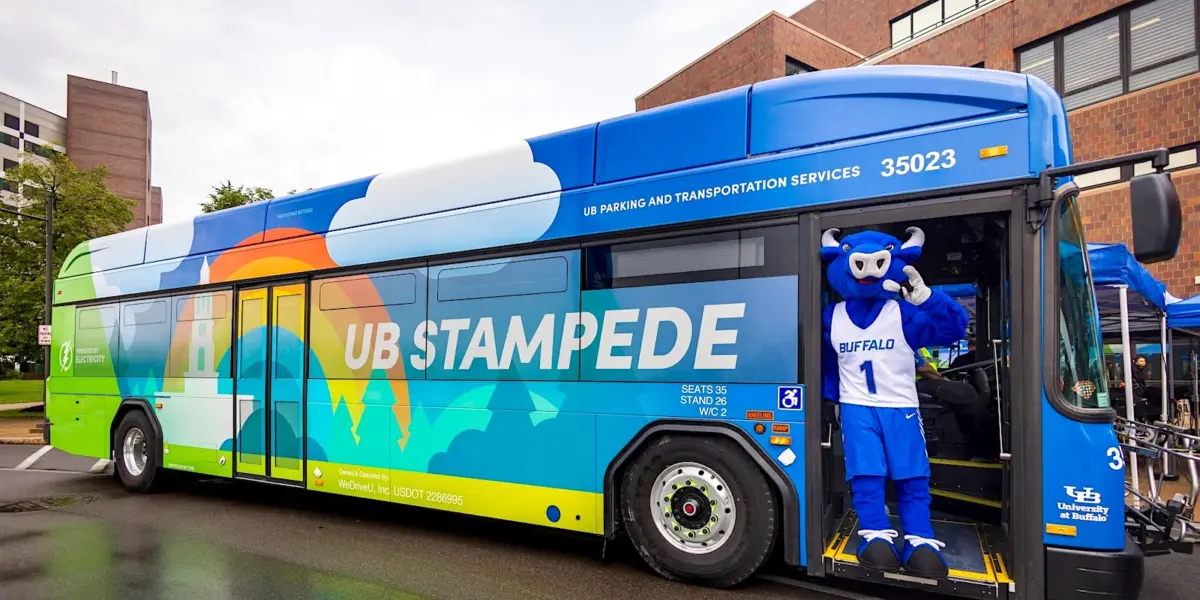
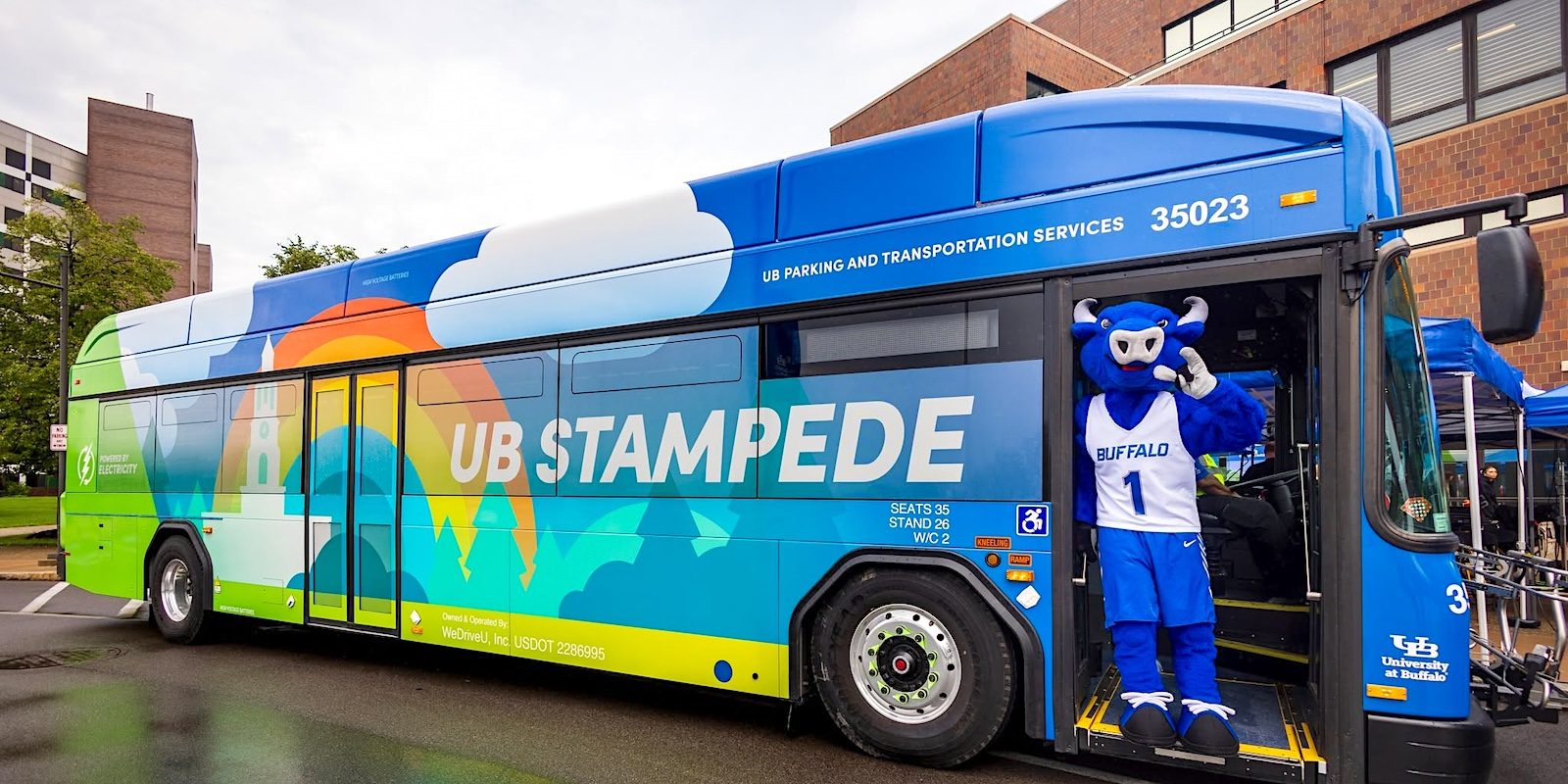
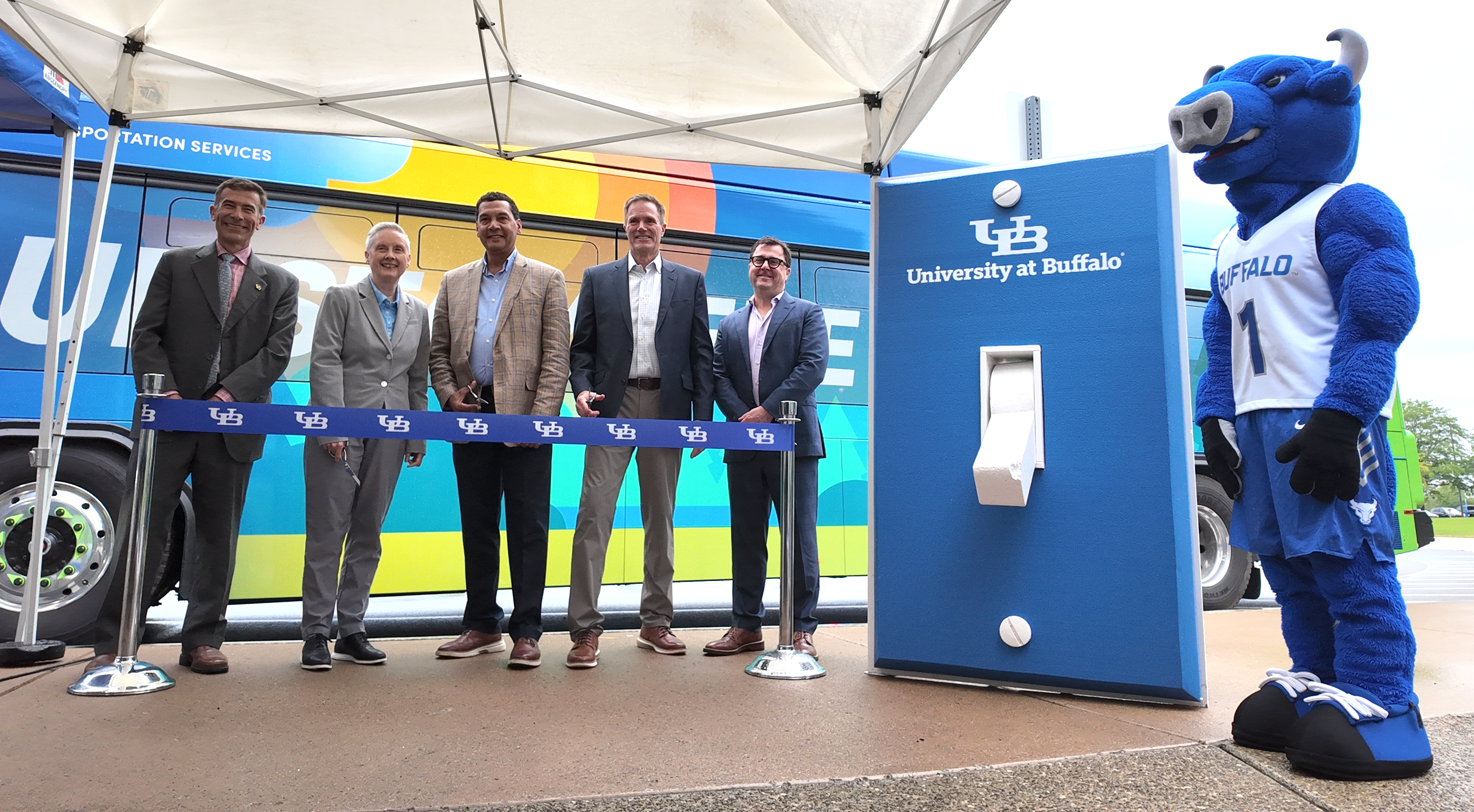
BUFFALO, N.Y. — The University at Buffalo (UB) has officially marked a major milestone in its institutional history, rolling out its first fleet of 40-foot electric transit buses. Operating quietly across campus routes, the new vehicles represent a definitive departure from traditional diesel-powered transit.
Developed in strategic partnership with transit solutions provider WeDriveU and fleet electrification specialists Zenobē North America, these cutting-edge, zero-emission buses are the pioneers of a multi-year overhaul. The deployment serves as the launching pad for UB’s aggressive four-year plan to completely electrify its entire campus transit ecosystem, setting a high standard for sustainable higher education infrastructure nationwide.
Main Facts: The Transition to Zero-Emissions
The arrival of the initial batch of eight 40-foot electric transit buses introduces a quiet, clean, and modern commuting experience for the tens of thousands of students, faculty, staff, and campus visitors who rely on the UB Stampede transit network daily.
Key highlights of the initial deployment include:
Fleet Size: Eight new 40-foot heavy-duty electric transit buses.
Daily Ridership Impact: Projected to serve approximately 16,000 passengers daily across campus routes.
Environmental Impact: Estimated to eliminate nearly 6,000 tons of carbon dioxide equivalent ($textCO_2texte$) emissions.
Emissions Reduction: Represents a staggering 55.6% reduction in greenhouse gas emissions compared to legacy diesel operations.
Equivalency: The carbon reduction is roughly equivalent to permanently removing 1,395 internal combustion engine (ICE) passenger cars from public roadways.
Key Partners: Collaboration involving the University at Buffalo Parking and Transportation department, WeDriveU, and Zenobē North America.
Chronology: The Road to Electrification
The deployment of the new electric Stampede buses did not happen overnight; it is the physical manifestation of years of strategic environmental planning, policy alignment, and infrastructure development.
Phase 1: Institutional Target Setting (The "10 in 10" Roadmap)
Recognizing the urgent need to address Scope 1 and Scope 2 emissions, the University at Buffalo established its 10 in 10 roadmap. The overarching goal of this strategic initiative is to achieve a completely zero-emissions campus by the year 2030. Notably, this self-imposed deadline outpaces state mandates—landing a full 15 years ahead of the 2045 deadline established under New York Executive Order 22 for heavy-duty vehicle transitions across public fleets.
Phase 2: Partner Selection and Infrastructure Planning
Transitioning a massive campus transit system from fossil fuels to electricity requires more than simply purchasing new vehicles; it demands comprehensive charging architectures, grid capacity evaluations, and operational resiliency models. UB partnered with WeDriveU, an experienced transit management and operations provider, and Zenobē, a global leader in fleet electrification. Zenobē took charge of designing the supporting charging infrastructure, software monitoring, and long-term operational support systems required to guarantee daily reliability.
Phase 3: Vehicle Delivery and Launch
Following rigorous testing of the charging depots and driver training programs, the eight 40-foot electric buses were formally integrated into the active UB Stampede rotation. These vehicles now form the vanguard of a four-year rollout that will eventually see every diesel bus in the university’s fleet replaced by a modern electric equivalent by the close of the decade.
Supporting Data and Environmental Metrics
To truly understand the scale of UB’s transition, one must examine the heavy carbon footprint traditionally associated with university transit systems. Campuses the size of UB function essentially as small cities, requiring continuous fleet rotation to move thousands of students between academic quads, residential complexes, and athletic facilities.
Emissions and Carbon Offsets
Diesel transit buses are notorious emitters of particulate matter (PM), nitrogen oxides ($textNO_x$), and carbon dioxide ($textCO_2$). By transitioning the first segment of the Stampede fleet to 100% battery-electric power, UB is achieving immediate environmental wins:
55.6% GHG Reduction: The net reduction in greenhouse gases accounts for a more than half-way step toward complete operational decarbonization of the transit line.
6,000 Tons of $textCO_2$ Saved: Over the baseline evaluation period, the removal of thousands of tons of greenhouse gases directly contributes to regional air quality improvements in Western New York.
Health Co-Benefits: Beyond greenhouse gases, the elimination of tailpipe emissions drastically reduces local exposure to toxic diesel exhaust particulates right at student pick-up zones and campus thoroughfares.
Fleet Scalability and Grid Integration
The infrastructure deployed by Zenobē is designed with scalability in mind. As UB takes delivery of additional electric buses over the next four years, the charging depots can be expanded without requiring a complete redesign of the electrical service entrance. Smart-charging software ensures that buses are charged during off-peak energy hours, minimizing strain on local utility grids and reducing operational electricity costs for the university.
Official Responses and Stakeholder Perspectives
University leaders and corporate partners emphasized that this project is as much about operational reliability as it is about environmental stewardship.
Christopher Austin, UB Director of Parking and Transportation, highlighted the dual focus of the initiative:
"Our goal is to provide safe, reliable transportation while continuing to reduce our environmental impact. These buses help us do both. They improve the rider experience today and represent another investment in the future of mobility at UB."
Ensuring that heavy-duty commercial electric vehicles maintain high uptime in upstate New York’s harsh winter conditions requires specialized planning. Matt Curwood, Vice President of Business Development – Transit at Zenobē North America, addressed the engineering and operational confidence required for such deployments:
"Fleet operators and institutions need confidence that their electric buses will be ready to perform every day. Zenobē’s giving that certainty through thoughtful planning, reliable charging infrastructure, and long-term operational support. It’s gratifying to see UB’s fleet in service."
Furthermore, the integration of WeDriveU’s transit management expertise guarantees that passenger scheduling, route optimization, and driver management remain seamless throughout the transition period, ensuring that students experience zero disruption to their daily academic commutes.
Broader Implications for Higher Education and Public Transit
The University at Buffalo’s transition holds significance far beyond the borders of its Amherst and Buffalo campuses. It serves as a blueprint for how large public institutions can successfully navigate the complex operational hurdles of fleet electrification.
1. Accelerating State and National Climate Goals
By committing to a 2030 net-zero campus target, UB is demonstrating that institutional ambitions can outpace government minimums. While New York Executive Order 22 mandates zero-emission heavy-duty vehicle adoption by 2045, pioneering entities like UB prove that the technology, financing structures, and operational models exist to achieve these goals decades ahead of schedule.
2. Transforming the Student Experience
Modern students increasingly factor institutional sustainability commitments into their educational choices. Quiet, vibration-free electric buses elevate the quality of campus life. Furthermore, these vehicles serve as rolling classrooms—living laboratories where engineering and environmental studies students can observe real-world smart-grid integration, battery lifecycle management, and green transit logistics.
3. De-risking Fleet Electrification
One of the primary historical barriers to bus fleet electrification has been "range anxiety" and concerns over charging infrastructure reliability—particularly in regions prone to extreme seasonal weather, such as Western New York’s heavy snowfall winters. By working alongside specialized energy partners like Zenobē, UB has effectively de-risked the transition, providing a replicable framework for other universities, municipalities, and regional transit authorities looking to break their addiction to diesel fuel.
As the University at Buffalo continues its four-year rollout, the silent, zero-emission Stampede buses rolling across its campus signal a permanent shift in how higher education approaches mobility, sustainability, and community health.