

By Abrar Al-Heeti
Senior Technology Reporter
Main Facts: The Magic and Mechanics of the Samsung Galaxy Z Fold 8
Reviewing smartphones for a living often breeds a sense of clinical detachment. For most critics and tech enthusiasts alike, moving from one handset to the next is a transactional routine—unbox, benchmark, test cameras, write critique, and pack it away. Yet, the Samsung Galaxy Z Fold 8 introduced an entirely unforeseen professional and personal dilemma: I genuinely did not want to stop using it.
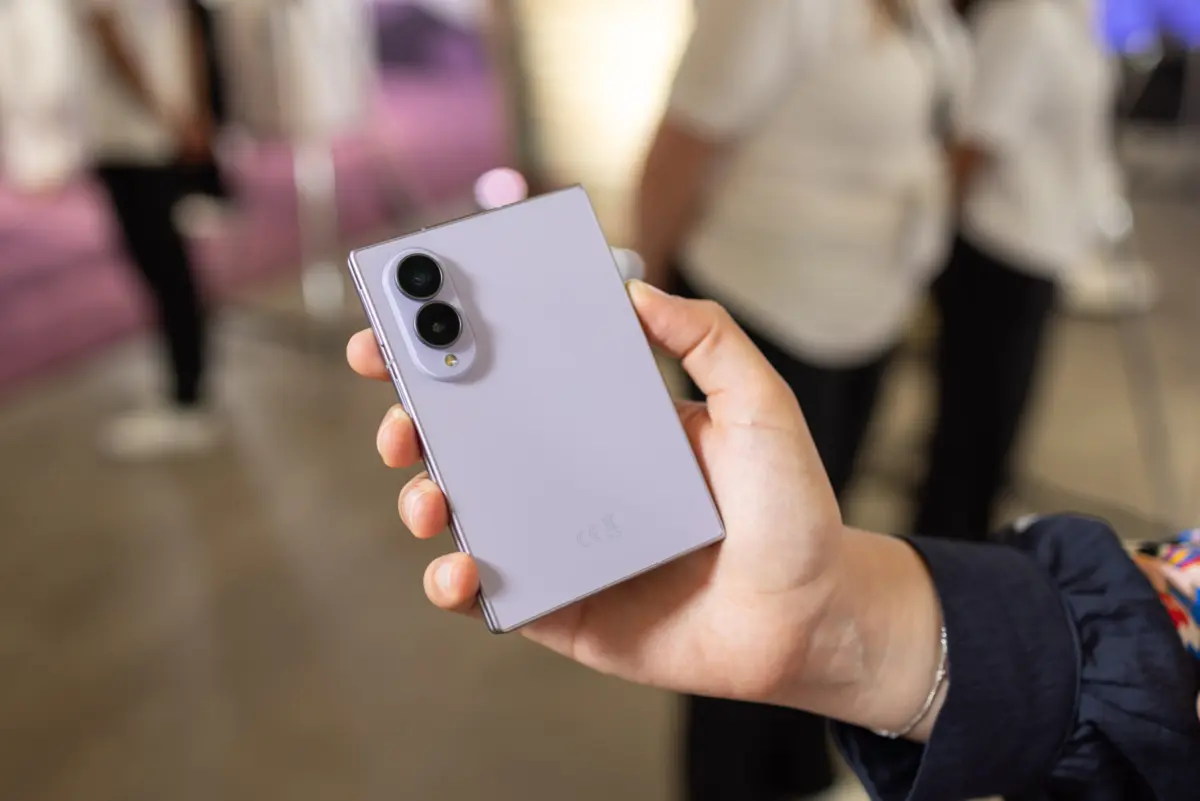
I first fell for this adorable, passport-sized foldable back in June during an exclusive hands-on preview at Samsung’s headquarters in South Korea. It immediately presented itself as a compact digital nomad’s dream. The device bridges the gap between pocket-friendly portability and expansive workspace utility, boasting a versatile inner display tailored for landscape movie-watching or portrait-mode social media scrolling.
Physically, the Z Fold 8 is an engineering triumph. When unfolded, it measures an astonishingly thin 4.5 millimeters; folded shut, it sits at a modest 9.7 millimeters. Tipping the scales at a mere 201 grams, it is light enough to disappear entirely into a front pocket while offering a tactile satisfaction that standard slab phones simply cannot replicate.
Beyond sheer ergonomics, the device functions as an undeniable statement piece. Across countless public gatherings and casual meetings, it consistently commanded the center of attention, eliciting genuine gasps and curious inquiries from tech aficionados and casual onlookers alike.
However, this luxury comes with caveats. The Z Fold 8 starts at a staggering $1,900, housing a streamlined dual-rear camera array—featuring 50-megapixel wide and 50-megapixel ultrawide lenses—while completely omitting a dedicated telephoto zoom. Its 4,800-mAh battery comfortably clears the threshold for a full day of mixed use, but it shatters no endurance records. Most frustratingly for a flagship launched in 2026, it lacks built-in magnets for modern Qi2-standard wireless charging.

Chronology: From Early Previews to the Eve of Apple’s Big Reveal
- June: The tech world catches its first official glimpse of the Samsung Galaxy Z Fold 8 during a closed-door media event at Samsung’s corporate headquarters in Suwon, South Korea, where its compact, passport-like footprint instantly turns heads.
- Late August: Industry analysts begin forecasting a massive shift in consumer adoption trends, highlighting how ultra-thin devices like the Galaxy S25 Edge, iPhone Air, and the Z Fold series are breathing fresh life into a stagnant mobile market.
- Late August / Early September: Market research firms, including the International Data Corporation (IDC), release updated forecasts predicting global foldable smartphone shipments will surge by over 12% throughout the year, catalyzed heavily by expected market entries from Silicon Valley competitors.
- September 9: Apple prepares to host its high-profile product showcase, where industry insiders anticipate the official unveiling of the company’s long-rumored, passport-sized foldable iPhone—setting up a high-stakes clash in design philosophy against Samsung’s reigning champion.
Supporting Data: Market Shifts and Hardware Trade-Offs
While the mobile landscape over the past few years has witnessed a flurry of radical design experiments—ranging from ultraslim marvels like the Galaxy S25 Edge and the iPhone Air to the futuristic mechanics of the Honor Robot Phone—none have quite matched the lasting impression left by the palm-sized Z Fold 8.
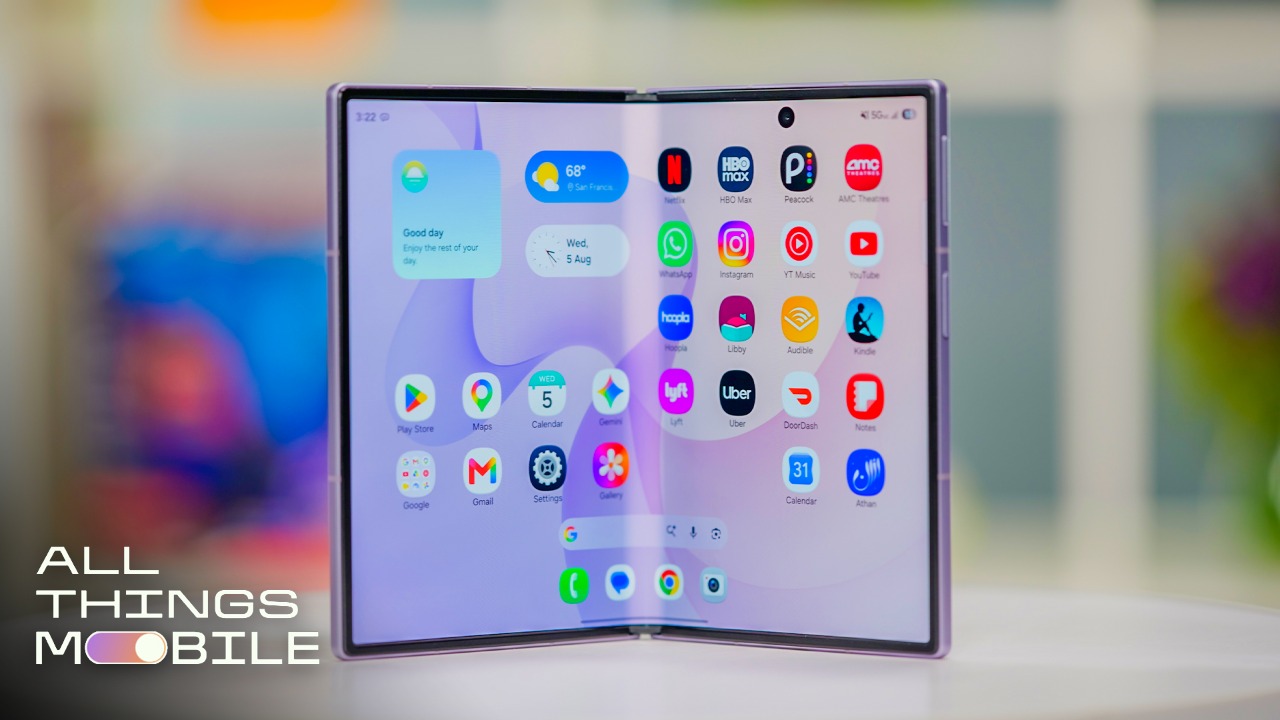
The device succeeds because it solves a fundamental usability friction point. Day-to-day interactions on the 5.5-inch cover screen never feel cramped, allowing for rapid-fire emails and text messaging. Unfolding the device reveals a sprawling 7.6-inch inner display that provides ample canvas for rigorous multitasking, split-screen workflows, and media consumption. Rotating the device transforms it into an agile hybrid tablet, perfect for long-form reading or productivity tasks in Google Docs.
Nevertheless, consumer choices in the foldable category continue to rely on a delicate balancing act of hardware compromises. According to data tracked by the International Data Corporation (IDC), global smartphone shipments face challenging headwinds in 2026 amid broader component cost fluctuations. Yet, foldable devices remain a rare bright spot. IDC’s market intelligence projects that foldable shipments will grow by more than 12% globally over the course of the year.
Furthermore, IDC anticipates that Apple’s anticipated debut in the foldable sector will shift market dynamics entirely. The research firm estimates that Apple will ship more than 17 million foldable iPhones by the end of 2027, capturing nearly 40% of the total global market share within roughly a year of commercial availability.
| Metric / Feature | Samsung Galaxy Z Fold 8 | Expected Foldable iPhone (Rumored) |
|---|---|---|
| Starting Price | $1,900 | Projected Premium Tier ($1,800+) |
| Cover Screen Size | 5.5 inches | ~5.4 to 5.6 inches (Passport Style) |
| Inner Display Size | 7.6 inches | ~7.5 to 7.8 inches (4:3 Aspect Ratio) |
| Thickness (Unfolded) | 4.5 mm | Ultra-slim profile targeted |
| Weight | 201 grams | Lightweight carbon-composite focus |
| Camera Configuration | Dual 50MP (Wide, Ultrawide) | Scaled-back multi-lens system |
| Wireless Charging | Standard Qi (No built-in Qi2 magnets) | MagSafe / Qi2 integration expected |
Official Responses and Industry Perspectives
The existential question facing Samsung’s design philosophy is whether consumers are willing to embrace the inherent compromises of a compact foldable form factor. Industry leaders suggest that the psychological appeal of a novel design often supersedes raw spec-sheet supremacy, particularly when backed by powerful brand ecosystems.
"With Apple, even when consumers are not getting the best value for money, but it’s a novelty, they care less," notes Francisco Jeronimo, Vice President of Client Devices at the International Data Corporation (IDC).
Jeronimo emphasizes that Apple’s entry into the foldable space will rewrite consumer evaluation metrics. "For the iPhone ‘Fold,’ consumers will not compare specs; either they want the form factor or not," Jeronimo explained. "They will be willing to compromise on the camera because they want the foldable."
This sentiment captures the core dilemma of modern mobile enthusiasts. The Z Fold 8’s greatest obstacle isn’t its steep price tag or its lack of a telephoto lens—it is the psychological gravity of the Apple ecosystem. For many users, switching to Android means abandoning familiar messaging threads, navigating cross-platform media compression issues, and risking social exile for turning group chat message bubbles green. It is an entirely superficial deterrent, yet it remains one of the most powerful retention tools in consumer technology.
Implications: The Battle for the Passport-Sized Form Factor
As the industry looks ahead to Apple’s September 9 event, the implications for Samsung and the broader mobile market are profound.
If Apple introduces a device that mirrors the 4:3 passport-style aspect ratio and compact portability of the Z Fold 8—speculatively dubbed by tech commentators as the iPhone Ultra or iPhone Fold—it will validate Samsung’s risk-taking design language. Historically, Apple’s entry into a nascent product category does not merely carve out market share; it legitimizes the category for mainstream consumers who viewed previous iterations as expensive niche experiments.
However, this dynamic also leaves alternative foldable philosophies in a precarious position. While traditional book-style foldables like the Galaxy Z Fold 8 Ultra and the Google Pixel 11 Pro Fold remain engineering masterpieces that consistently earn stellar critical reviews, their larger, more traditional form factors lack the effortless, pocket-friendly charm of smaller devices. Reviewers and everyday users alike find themselves naturally gravitating toward the form factor that prioritizes everyday carry over maximum screen real estate.
If Apple successfully captures the imagination of mainstream buyers with a compact foldable design, devices like the Z Fold 8 will either find themselves cast into the shadow of a dominant Cupertino competitor or reap the benefits of a massive, industry-wide renaissance in foldable adoption. For now, mobile tech enthusiasts who value both cutting-edge engineering and pocket-friendly ergonomics can only wait, cross their fingers, and watch how the foldable wars unfold.
