

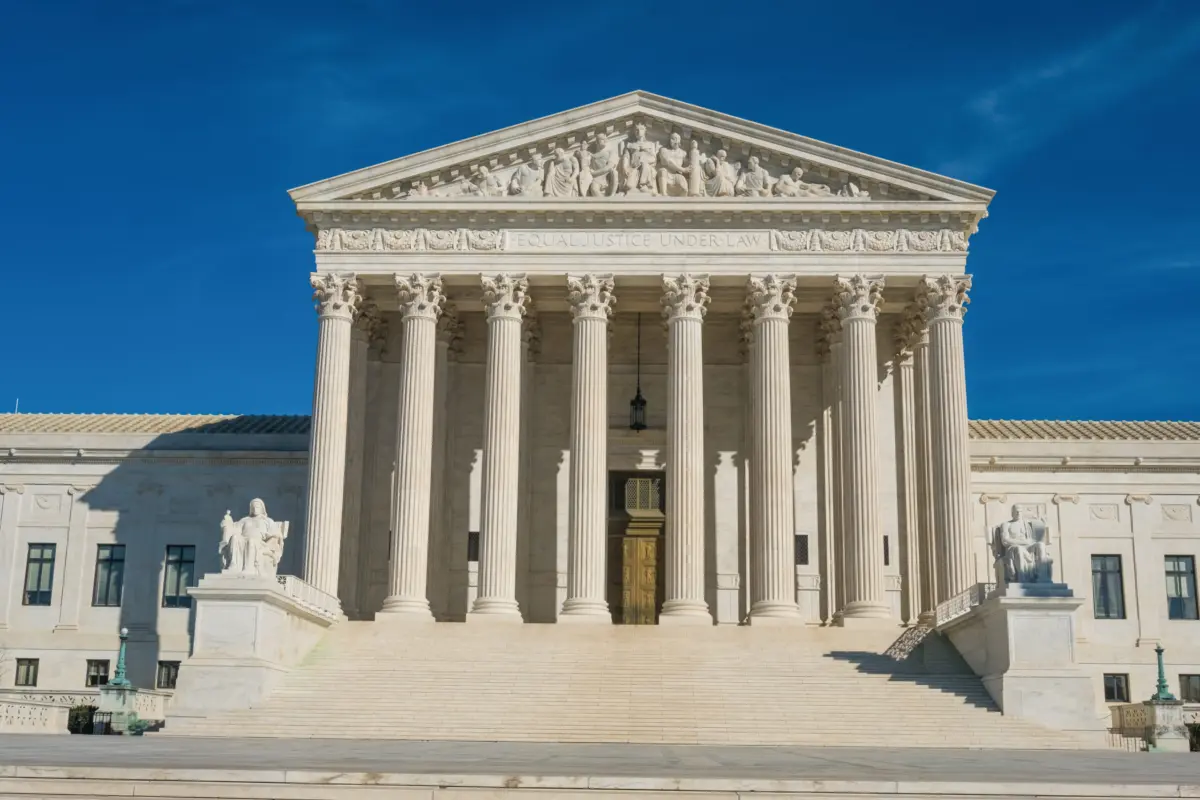
WASHINGTON/TRENTON — The fierce, high-stakes battle over the future of American sports gambling has officially reached the nation’s highest threshold. In a decisive legal maneuver, New Jersey authorities formally petitioned the U.S. Supreme Court on Wednesday, asking the justices to resolve whether individual states retain the sovereign power to police and regulate sports-related prediction markets operated by fintech heavyweights like Kalshi and its various competitors.
The petition sets the stage for what could become one of the most consequential federalism and gaming law cases of the decade. At the heart of the dispute is a fundamental question: Does a federal financial agency hold exclusive authority over event-based financial contracts, or can states enforce their own robust gaming regulations—including strict consumer protections, geofencing, and bans on wagering by young adults—on platforms that allow everyday users to bet on the outcomes of sporting events?
New Jersey’s aggressive push to the Supreme Court follows a deeply fractured appellate landscape, mounting economic pressures, and an escalating multi-state rebellion against a rapidly expanding prediction market industry.
Main Facts of the Case
The legal petition filed by New Jersey asks the U.S. Supreme Court to overturn an April ruling by the Philadelphia-based 3rd U.S. Circuit Court of Appeals. In that 2-1 decision, the appellate court ruled in favor of New York-based Kalshi, concluding that the federal Commodity Exchange Act (CEA)—overseen by the U.S. Commodity Futures Trading Commission (CFTC)—likely preempts state-level gaming laws when it comes to sports-related event contracts.
New Jersey argues that the 3rd Circuit’s decision strips states of their historic, traditional police powers to regulate gambling within their borders.
"These companies have no right to offer their sports bets without following state law, which is why dozens of states across the ideological spectrum have opposed them," New Jersey Attorney General Jennifer Davenport, a Democrat, said in a sharp statement following the filing.
The core tension revolves around how financial derivatives and digital event contracts are classified. Kalshi and similar prediction market platforms allow retail users to buy and sell contracts based on real-world outcomes, ranging from political elections to the final score of a National Football League game. While Kalshi frames these instruments as sophisticated financial hedging and forecasting tools regulated under federal oversight, state gaming regulators view them as thinly veiled sportsbooks operating entirely outside the legal frameworks established after the Supreme Court struck down the federal ban on sports betting in 2018.
States point out that these platforms allow users to bypass critical local consumer safeguards. Most notably, state gaming laws typically enforce strict age limits (banning wagers by anyone under 21), mandate compulsive gambling prevention tools, and require platforms to hold expensive state gaming licenses that generate millions of dollars in tax revenue for local governments. Kalshi, valued at a staggering $22 billion in a recent funding round, has rapidly scaled its operations nationwide, becoming the epicenter of this modern regulatory clash.
Chronology of the Legal Battle
The conflict between state regulators and federal prediction markets did not materialize overnight. It is the culmination of years of regulatory gray areas, aggressive corporate scaling, and escalating courtroom skirmishes.
- Post-2008 Financial Crisis: Following the financial meltdown, Congress enacted the Dodd-Frank Wall Street Reform and Consumer Protection Act. This sweeping legislation directed the CFTC to expand its regulatory oversight over "swaps" and complex financial derivative contracts to prevent systemic market risk.
- May 2018: The U.S. Supreme Court issues its landmark ruling in Murphy v. National Collegiate Athletic Association, striking down the federal Professional and Amateur Sports Protection Act (PASPA). This opens the floodgates for individual states to legalize, regulate, and tax sports betting locally.
- The Rise of Prediction Markets: Fintech platforms like Kalshi emerge, securing approval or operating under the premise of CFTC oversight to offer event contracts. Over the next several years, these platforms expand from political forecasting into high-volume sports wagering.
- Late 2023 to 2024: As Kalshi’s sports-related event contracts gain massive traction, state gaming regulators across the country begin issuing cease-and-desist orders and filing emergency lawsuits, arguing that these prediction markets are functioning as unlicensed sportsbooks.
- April 2025: The 3rd U.S. Circuit Court of Appeals hands Kalshi a major victory, ruling 2-1 that the federal Commodity Exchange Act preempts New Jersey’s state gaming laws regarding these financial contracts.
- Mid-2025 (The Split Emerges): A conflicting federal appeals court rules in favor of Nevada, deciding that state regulators can require Kalshi to hold a local gaming license to offer sports bets. This circuit split creates an untenable legal contradiction for nationwide operators.
- September 2025: New Jersey officially petitions the U.S. Supreme Court to intervene, seeking to overturn the 3rd Circuit ruling and re-establish state sovereignty over sports wagering.
Supporting Data and the Split Among Circuits
The urgency of New Jersey’s Supreme Court petition is underscored by a glaring conflict in federal jurisprudence—a classic "circuit split" that almost always draws the attention of the nation’s highest court.
Just days before New Jersey filed its Supreme Court brief, a separate federal appeals court handed down a ruling that directly contradicted the 3rd Circuit’s logic. That court sided with Nevada gaming regulators, ruling that the state could not be blocked from requiring Kalshi to obtain a traditional gaming license before allowing users within its borders to bet on sports outcomes.
This deep division among federal circuits has created a chaotic regulatory patchwork across the United States. While the 3rd Circuit’s ruling shields Kalshi from state enforcement in states within its jurisdiction (such as New Jersey, Pennsylvania, and Delaware), courts in other regions have taken a radically different view.
To date, at least four major states—Nevada, Massachusetts, Michigan, and Washington—have successfully won court orders restricting or outright halting Kalshi’s unlicensed sports-related activities within their borders.
Furthermore, the economic stakes are immense. Kalshi’s valuation skyrocketed to $22 billion during a recent private funding round, propelled by soaring consumer demand for real-time event trading. Conversely, state governments are watching billions of dollars in handle (total bets placed) escape state-level regulatory oversight, bypassing local taxation and consumer protection mandates.
Legal scholars note that the core disagreement hinges on statutory interpretation of the Dodd-Frank Act. New Jersey’s legal team argued in their petition that the 3rd Circuit’s ruling rests on a fundamentally flawed premise: that Congress, when drafting Dodd-Frank to regulate financial swaps, silently stripped states of their historic authority over sports gambling and handed it over to a federal financial watchdog.
"At the very least, Dodd-Frank is not nearly clear enough to transfer authority over a multi-billion-dollar sportsgaming industry to a federal regulatory agency with no gambling expertise," New Jersey’s lawyers wrote in their Supreme Court filing.
Official Responses and Stakeholder Positions
The battle lines in this Supreme Court petition extend far beyond the Garden State. It has triggered a massive lobbying and legal alignment involving state attorneys general, federal regulators, and multi-billion-dollar fintech entities.
State Governments and Bipartisan Coalition
Dozens of states, representing a diverse ideological spectrum from progressive West Coast jurisdictions to conservative Southern and Midwestern states, have lined up in opposition to prediction market platforms. State attorneys general argue that allowing federally regulated financial derivatives to double as sportsbooks creates a dangerous regulatory loophole. Without state enforcement, minors can access gambling apps without robust age-verification protocols, problem gambling safety nets evaporate, and local tax coffers are deprived of critical revenue streams meant to support public education and infrastructure.
The Federal Stance (The CFTC)
Under the administration of Republican President Donald Trump, the Commodity Futures Trading Commission has firmly backed the prediction market companies. The CFTC maintains that trading on prediction markets falls exclusively under federal jurisdiction as defined by the Commodity Exchange Act. From the federal regulator’s perspective, event contracts are sophisticated financial instruments designed for risk management and price discovery, and allowing fifty individual states to impose fragmented, conflicting licensing requirements would paralyze national financial markets.
Kalshi’s Silence and Defense
New York-based Kalshi did not immediately respond to requests for comment following New Jersey’s Supreme Court filing. However, in previous court filings and public statements, the company has consistently defended its business model. Kalshi argues that its platform operates under strict federal oversight, providing a transparent, regulated marketplace for public sentiment and economic forecasting. The company contends that applying archaic, state-level brick-and-mortar casino and sports betting laws to digital, exchange-traded financial contracts stifles innovation and violates federal preemption principles.
Broader Implications for the Future of American Gambling
If the U.S. Supreme Court ultimately chooses to hear New Jersey’s case, the resulting decision will send shockwaves through the American financial and entertainment landscapes, carrying profound implications for multiple sectors.
- The Future of State Sovereignty: A ruling in favor of New Jersey would reaffirm the Tenth Amendment rights of states to police moral, social, and economic activity within their borders, specifically preserving the multi-billion-dollar state-regulated sports betting ecosystem that has generated immense tax windfalls since 2018.
- Fintech and Prediction Market Innovation: Conversely, if the Supreme Court upholds the 3rd Circuit’s decision, it will cement federal dominance over event-based contracts. This could trigger an explosive migration of consumers away from traditional, state-taxed sportsbooks toward federally supervised prediction markets—fundamentally disrupting the commercial sports betting industry.
- Consumer Protection and Age Limits: Legal experts warn that a federal-only regulatory regime under the CFTC could leave significant gaps in consumer safety. Unlike state gaming commissions, which enforce strict mandates on compulsive gambling intervention, self-exclusion registries, and stringent 21-and-older age gates, federal financial regulators are structurally unequipped to manage the social externalities of consumer gambling addiction.
- Broader Scope Beyond Sports: While the immediate battle centers on sports betting, the legal precedent established by the Supreme Court will directly impact prediction markets tied to elections, geopolitical events, macroeconomic indicators, and pop culture. If states can regulate sports event contracts, can they also regulate political or economic prediction markets? The answer will define the boundaries of modern digital commerce.
As the legal briefs are reviewed in Washington, the eyes of the multi-billion-dollar gaming industry, Wall Street investors, and state lawmakers nationwide remain fixed on the Supreme Court. Whether the justices will step in to untangle the growing circuit split—and whether state lines will continue to define where a wager can be legally placed—remains one of the most critical legal questions of the modern digital era.
