

Main Facts
The global commercial roofing industry is experiencing a profound operational shift. Driven by prolonged supply chain disruptions that have choked the availability of single-ply membrane systems—such as Thermoplastic Polyolefin (TPO) and Ethylene Propylene Diene Monomer (EPDM)—contractors are increasingly returning to traditional asphalt-based roofing methods. Specifically, the industry has seen a massive resurgence in torch-down (modified bitumen) applications and hot-mopped built-up roofing (BUR).
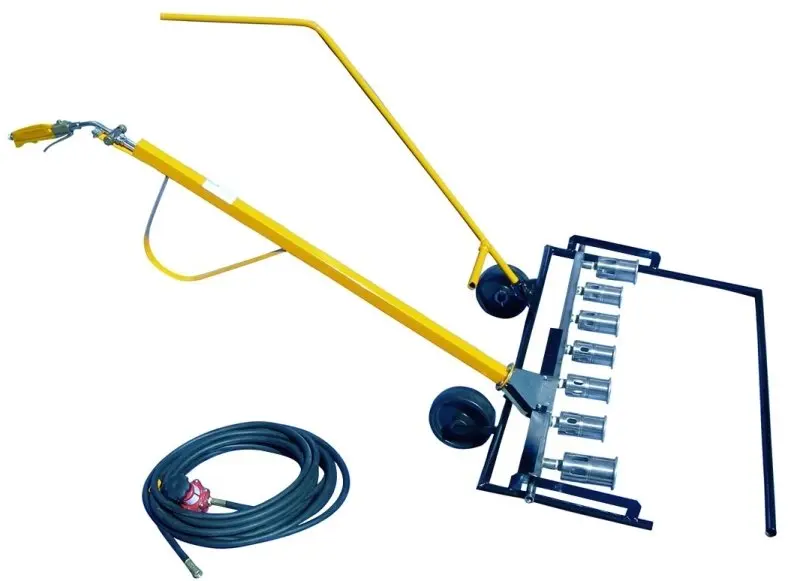
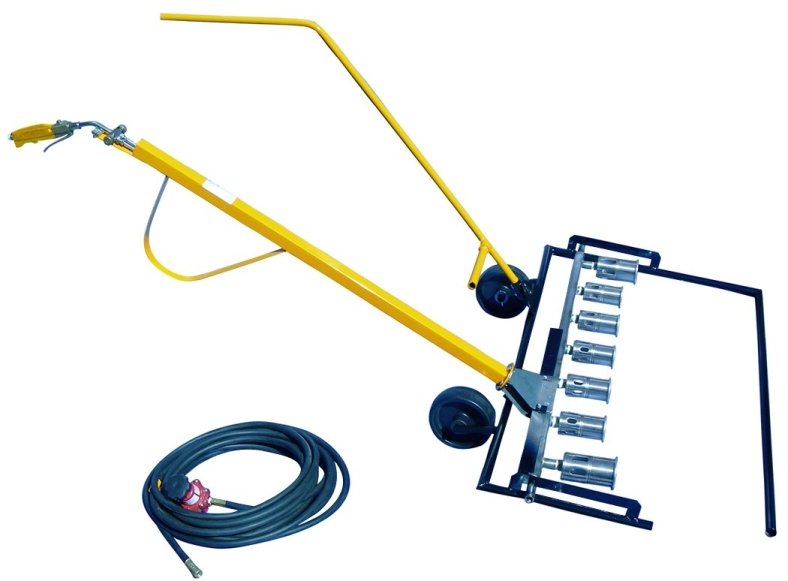
This transition is highly visible in equipment purchasing and maintenance trends. Industry suppliers report a significant spike in the sales of liquid propane gas (LPG) torches and specialized multi-burner equipment, such as the Dragin Wagon. Concurrently, repair shops are seeing an influx of older, mothballed asphalt kettles being brought back online after years of dormancy in contractors’ yards.
However, this retro-shift presents a steep operational challenge: a significant portion of the modern roofing workforce has been trained exclusively on "cold" single-ply installations, which utilize adhesives, tapes, and mechanical fasteners. The reintroduction of open flames (reaching temperatures up to 2,000°F) and liquefied asphalt (heated to over 400°F) to the roof deck demands a rigorous, urgent re-evaluation of personal protective equipment (PPE), jobsite risk management, and specialized training protocols.
+-------------------------------------------------------------------------+
|                       THE "HOT-WORK" SAFETY TRIAD                       |
+-------------------------------------------------------------------------+
|                                                                         |
|  1. PERSONAL SAFETY             2. JOBSITE SAFETY       3. EQUIPMENT    |
|     - Kevlar® & leather           - Written safety plan    - LPG tank   |
|       protective apparel            signed by all crews      inspections|
|     - Face shields & eye protective - Proper class ABC     - Infrared   |
|     - Fall protection systems       fire extinguishers       scanners   |
|                                                                         |
+-------------------------------------------------------------------------+
Chronology
The pathway back to torch-down systems is a direct consequence of macroeconomic factors spanning the last several years:
2020–2021: The Genesis of the Shortage
During the height of the COVID-19 pandemic, global supply chains suffered unprecedented disruptions. Extreme weather events along the U.S. Gulf Coast, including Winter Storm Uri in early 2021, crippled petrochemical plants responsible for producing the resins, polymers, and adhesives essential for TPO, EPDM, and polyisocyanurate (polyiso) insulation.
Late 2021–2022: Extreme Lead Times and Backlogs
Lead times for single-ply commercial roofing materials swelled from weeks to upwards of nine to twelve months. Contractors faced severe project delays, escalating material costs, and contract penalty clauses. To keep projects moving, architects, building owners, and roofing contractors began seeking alternative assemblies that bypassed the scarce chemical adhesives and synthetic membranes.
Late 2022–Present: The Resurgence of Modified Bitumen
Contractors turned back to modified bitumen (both Atactic Polypropylene [APP] and Styrene-Butadiene-Styrene [SBS] systems). Because these systems rely heavily on asphalt and fiberglass or polyester mats—materials with more stable domestic supply chains—they became the most viable path forward.
This pivot triggered a secondary wave of activity:
- The Resurrection of Equipment: Contractors began extracting idle asphalt kettles from storage, requiring extensive maintenance, cleaning, and burner repairs.
- Capital Equipment Investment: Sales of specialized torching equipment, such as Dragin Wagon multi-burner systems, surged as contractors sought to maximize labor efficiency on large-scale torch-down projects.
- The Labor Knowledge Gap: As hot-work projects returned to active schedules, safety directors quickly identified that a generation of workers hired over the past decade lacked hands-on experience with open flames and hot asphalt, leading to an immediate need for safety retraining.
Supporting Data
The operational realities of torch-down roofing require precise thermodynamic control and specialized mechanical aids to ensure both structural integrity and worker safety.
Thermal Dynamics and Application Precision
A successful torch-down installation relies on achieving a delicate thermal balance. Underheating causes a "cold weld," where the modified bitumen does not reach its melting point, preventing proper adhesion to the substrate and leading to premature roof failure. Conversely, overheating degrades the polymer modifiers within the asphalt, destroying the material’s UV resistance, flexibility, and waterproofing capabilities.
To manage this, manufacturers emphasize the visual indicator of "bleed-out"—a consistent $1/4$-inch to $3/8$-inch bead of melted asphalt that flows out from the seam edge as the roll is applied.
   [ Torch Flame (approx. 2000°F) ]
                │
                ▼
   ┌──────────────────────────┐  ◄── Upper Membrane Roll
   │   Modified Bitumen       │
   ├──────────────────────────┤  ◄── Melting Interface (creates "flow")
   │██████████████████████████│  ◄── Bleed-Out Bead (1/4" to 3/8")
   ├──────────────────────────┤
   │   Substrate / Base Sheet │
   └──────────────────────────┘
Achieving this uniform flow requires specialized tools:
- Multi-Burner Systems (e.g., Dragin Wagons): These units mount multiple burners on a wheeled carriage to distribute heat evenly across the width of the roll. Manufacturers warn that these units must be used strictly for heating and never as a roll dolly or transport cart, as structural stress can misalign the burners and cause catastrophic gas leaks.
- Roll Pullers: Using a mechanical roll puller is significantly more efficient and safer than manually kicking the hot rolls, ensuring a steady, uniform pressure that embeds the membrane without creating voids or air pockets.
- Granule Embedders: For end laps (where the membrane overlaps onto a granule-surfaced sheet), a specialized granule embedder tool is used to sink the granules into the hot asphalt matrix, ensuring a watertight, polymer-to-polymer bond.
Personal Protective Equipment (PPE) Standards
Working with open flames and elevated temperature materials requires specialized safety apparel. Standard construction PPE is insufficient. The table below details the enhanced safety requirements for hot-work roofing applications:
| PPE Item | Technical Specification | Operational Purpose |
|---|---|---|
| Kevlar® Sleeves & Leather Forearms | Cut-resistant, flame-resistant (FR) material rated for high-temperature contact. | Protects arms from accidental torch contact and severe asphalt splashes. |
| Heavy-Duty Leather Gloves | Gauntlet-style, heavy-duty leather with insulated lining. | Prevents thermal burns when handling hot tools, LPG hoses, or managing roll alignment. |
| Face & Eye Protection | ANSI Z87.1-approved safety glasses paired with a full-face shield. | Protects against sudden asphalt splatters, flying debris, and intense thermal radiation. |
| Respiratory Protection | NIOSH-approved N95 or organic vapor respirators. | Mitigates inhalation of asphalt fumes and particulate dust during deck preparation. |
| Flame-Resistant Clothing | Tight-woven cotton or treated FR denim; no synthetic materials (such as polyester or nylon) which can melt onto the skin. | Minimizes the risk of clothing catching fire or melting when exposed to stray sparks or flames. |
Official Responses
Industry regulatory bodies and trade associations have responded to this shift by emphasizing compliance, rigorous certification, and standardized safety protocols.
OSHA (Occupational Safety and Health Administration)
OSHA continues to enforce strict guidelines regarding "hot work" (defined as any activity involving open flames or producing heat and/or sparks). Under OSHA Standard 1926.352 (Fire Prevention), employers are mandated to:
- Establish a written fire prevention and safety plan for every jobsite.
- Conduct a daily hazard assessment before any hot work begins.
- Ensure that fully charged, inspected Class ABC fire extinguishers (minimum 10-lb capacity) are positioned within a 15-to-26-foot travel distance of all active torch operations.
NRCA (National Roofing Contractors Association)
The NRCA has raised concerns about the "knowledge gap" in the current labor pool. The association has aggressively promoted the CERTA (Certified Roofing Torch Applicator) program. Developed in partnership with the Midwest Roofing Contractors Association (MRCA), CERTA provides authoritative training on safe torch-down installation.
An NRCA representative recently noted:
"With the influx of new workers who have spent their entire careers installing single-ply systems, the risk of fire incidents is a major concern. CERTA training is not just a best practice—it is an essential safeguard for the contractor, the worker, and the building owner. We strongly advise that no worker be permitted to ignite a torch on a commercial roof without active CERTA certification."
Insurance Underwriters and Risk Managers
The insurance industry has reacted sharply to the resurgence of torch-down and kettle operations. Because fire claims associated with roofing torches are historically high-severity events, several major commercial liability carriers have adjusted their underwriting guidelines:
- Premium Surcharges: Contractors performing hot work are experiencing higher premiums and increased deductibles.
- Mandatory Fire Watches: Many insurers now require a written log of a post-job "Fire Watch." This protocol dictates that a designated worker, equipped with a calibrated handheld infrared thermometer, must remain on the roof for a minimum of two hours (some policies require up to four hours) after the last torch is extinguished. The worker must scan all flashing, penetrations, parapet walls, and expansion joints to detect hidden, smoldering embers that could ignite hours after the crew leaves the site.
Implications
The industry-wide pivot back to torch-down systems and hot-mopped asphalt carries broad, long-term implications for commercial construction.
Labor Dynamics and Training Infrastructure
The immediate consequence of this shift is an urgent need for workforce retraining. Contractors cannot simply reallocate a TPO installation crew to a torch-down project without introducing severe safety and quality risks.
[ Traditional Single-Ply Crew ] ──► (Transition Gap: No Flame Experience)
                                           │
                                           ▼
                                 [ CERTA Certification ]
                                 [ Flame-Resistant PPE ]
                                 [ Thermal Monitoring  ]
                                           │
                                           ▼
                             [ Qualified Hot-Work Crew ]
Companies must invest heavily in hands-on training, certifying workers through the CERTA program and conducting daily "toolbox talks" focused on LPG cylinder safety, hose inspections (checking for dry rot or crimps), and proper regulator settings.
Operational Costs and Efficiency
While modified bitumen membranes may be more readily available than single-ply alternatives, the overall operational cost of hot-work is often higher. This is driven by:
- Increased Insurance Costs: Liability coverage for hot-work can be cost-prohibitive for smaller contractors.
- Labor Intensity: The requirement for dedicated safety roles, such as a permanent fire-watch monitor and a kettle tender, increases the man-hours required per square of roofing installed.
- Equipment Maintenance: Operating and maintaining LPG torches, multi-burner carriages, and asphalt kettles requires specialized mechanical knowledge and regular downtime for cleaning and safety inspections.
Engineering and Architectural Specifications
Architects and specifiers are adjusting their designs to accommodate these supply chain realities. Many are writing "hybrid" specifications that allow for SBS modified bitumen base sheets to be installed via cold-applied adhesives or hot asphalt, with an APP cap sheet torched in place.
Additionally, designers must pay closer attention to the building substrate. Torch-down systems should never be applied directly over combustible decks, such as wood or wood fiberboard, without an approved thermal barrier or base sheet. The use of infrared thermometers has become a standard specification requirement to verify that the temperature of nearby walls, penetrations, and curbs does not exceed safe thresholds during application.
Long-Term Market Balance
Even as supply chains for TPO and EPDM eventually normalize, the resurgence of torch-down roofing has reminded the industry of the durability, redundancy, and multi-ply strength of modified bitumen systems. Many contractors have rebuilt their hot-work infrastructure and retrained their crews, meaning that modified bitumen and hot-applied systems are likely to retain a larger share of the commercial market than they held pre-2020.
Ultimately, the contractors who thrive in this evolving landscape will be those who balance the high production rates of modern machinery, like the Dragin Wagon, with an uncompromising commitment to workforce safety, rigorous training, and disciplined jobsite risk management.
