

By Automotive and Personal Mobility Desk
Published: September 2026
Main Facts
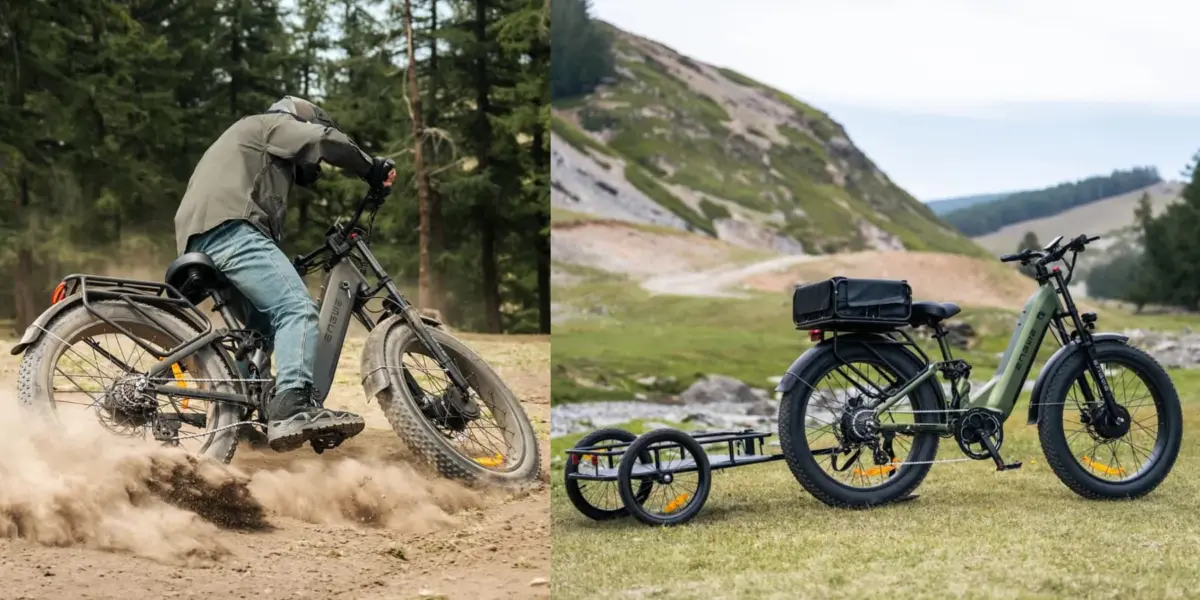
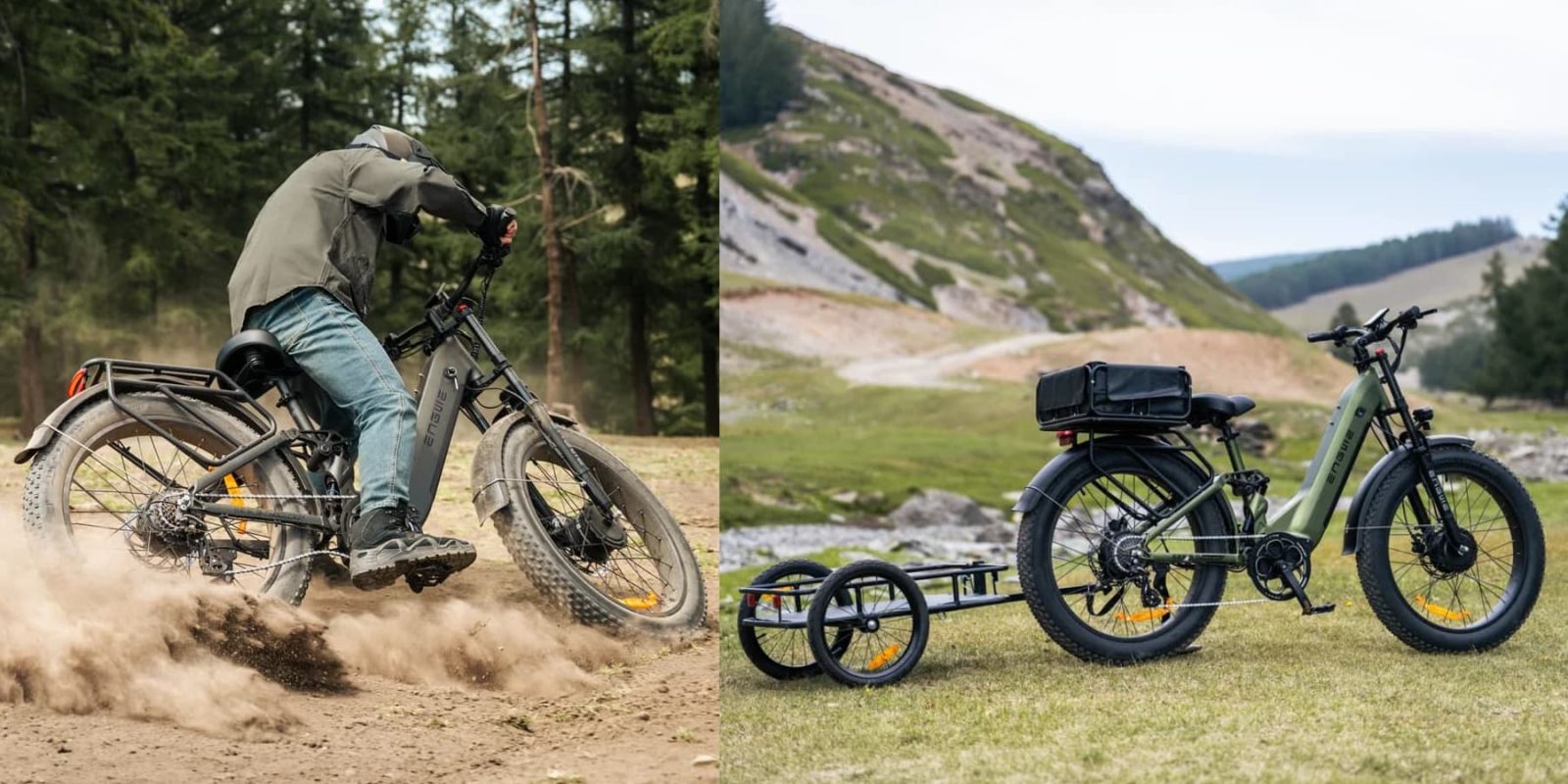
The electric bicycle market has long catered to the urban commuter, focusing on lightweight frames, streamlined batteries, and discreet, low-wattage motors designed to seamlessly blend into bicycle lanes. However, a major paradigm shift is underway for riders who demand heavy-duty performance far beyond paved pathways. Enter the ENGWE E26 3.0, a rugged, uncompromising all-terrain electric bike engineered explicitly for dirt, loose gravel, steep inclines, and off-grid exploration.
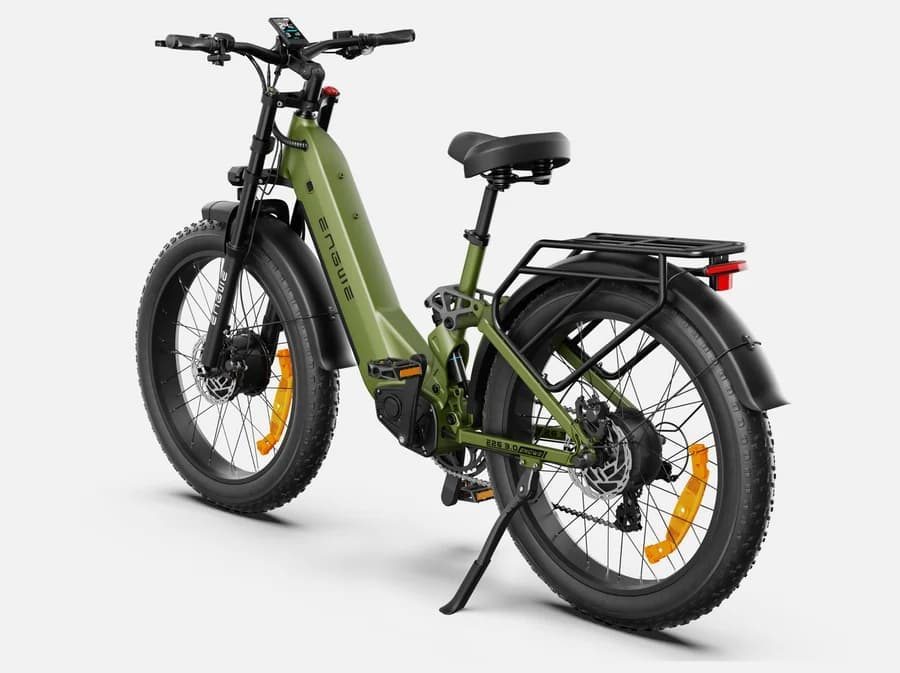
Dropping the subtlety often associated with city-centric models, the E26 3.0 relies on a high-output powertrain featuring dual hub motors that deliver a combined peak output of 2,000 watts and an astonishing 160 Nm of torque. This dual-motor layout is paired with a generous 48V, 20Ah battery pack (960Wh capacity), full-suspension architecture, chunky 4-inch fat tires, and robust hydraulic disc brakes.
Priced at an aggressive launch rate of $1,799 (discounted from its standard $2,399 MSRP), the E26 3.0 aims to redefine what consumers can expect from a high-powered, multi-surface adventure bike. Yet, with a top speed of up to 31 mph and a beefy physical weight tipping the scales at nearly 86 pounds, this machine sits squarely outside standard Class 1, 2, or 3 legal definitions, sparking new conversations about power, utility, and trail access.
Chronology of Development: From Commuter Staple to Off-Road Heavyweight
To understand the trajectory of the E26 3.0, it is helpful to look at ENGWE’s strategic evolution over recent product cycles.
Phase One: Establishing Urban Foundations
For years, ENGWE carved out a distinct niche by delivering budget-friendly, highly accessible e-bikes targeted at everyday commuters and casual riders. Throughout early and mid-2026, the company successfully rolled out several lightweight, low-cost commuter variants—some even integrating modern conveniences like USB-C charging frameworks. These models focused heavily on efficiency, portability, and compliance with strict municipal e-bike classifications.
Phase Two: Identifying the Off-Road Gap
Despite its success in the urban sector, ENGWE’s engineering and product development teams recognized an underserved demographic: outdoor enthusiasts, rural property owners, and adventure riders who required heavy-duty traction and climbing prowess. Standard single-motor commuter e-bikes frequently stalled, overheated, or lacked sufficient torque when forced to navigate steep mud, deep sand, or rocky inclines.
Phase Three: The E26 Iteration Journey
The evolution from the original E26 concept to the newly unveiled E26 3.0 marks a transition toward absolute mechanical capability. By iterating on previous frames, ENGWE integrated a second hub motor, upgraded the suspension travel, and optimized the electrical architecture to safely handle continuous high-amp draws.
Phase Four: The Official Launch
The E26 3.0 officially debuted in September 2026, launching directly into the consumer market via ENGWE’s digital storefront. Initial rollout strategies targeted outdoor hobbyists, hunters, and private-land property managers who prioritize raw power and payload capacity over legal compliance on restricted public bike paths.
Supporting Data: Specifications and Performance Metrics
The specification sheet for the ENGWE E26 3.0 reveals a machine built without compromise regarding raw materials and hardware capabilities.
| Feature / Metric | Specification Details |
|---|---|
| Powertrain | Dual hub motors (Front and Rear) |
| Peak Power | 2,000 Watts total |
| Torque | Up to 160 Nm |
| Battery Specifications | 48V, 20Ah (960Wh total capacity) |
| Max Range (Single Motor, Eco) | Up to 100 miles (161 km) |
| Max Range (Dual Motor, High) | Up to 70 miles (113 km) |
| Top Speed (Throttle) | 28 mph (45 km/h) |
| Top Speed (Pedal Assist) | 31 mph (50 km/h) |
| Tires | 26 x 4-inch puncture-resistant fat tires |
| Front Suspension | 120mm travel suspension fork |
| Rear Suspension | 80mm adjustable rear air suspension |
| Braking System | Hydraulic disc brakes with 203mm rotors |
| Payload Capacity | 400 lbs (181 kg) |
| Vehicle Weight | 85.9 lbs (39 kg) |
| Launch Price | $1,799 (MSRP $2,399) |
Powertrain and Battery Analysis
The integration of dual hub motors changes the dynamics of how power is applied to the ground. In single-motor setups, traction loss on loose gravel can immediately stall forward momentum. By distributing torque across both wheels, the E26 3.0 maintains grip and stability during steep ascents.
However, energy management is a vital consideration. While ENGWE’s marketing highlights a best-case range of up to 100 miles using a single motor on the lowest pedal-assist setting, activating both motors simultaneously under heavy loads reduces maximum range closer to 70 miles. Real-world testing under aggressive off-road conditions will likely yield even lower figures, though the 960Wh battery ensures that riders still retain a substantial energy reserve compared to standard 500Wh commuter packs.
Chassis, Brakes, and Ergonomics
Handling a 2,000W powertrain requires robust structural support. The E26 3.0 features a 120mm travel front fork paired with 80mm of adjustable rear air suspension, effectively smoothing out punishing terrain. Stopping power is handled by heavy-duty hydraulic disc brakes clamping onto oversized 203mm rotors—a necessity given the bike’s combined momentum and heavy frame weight.
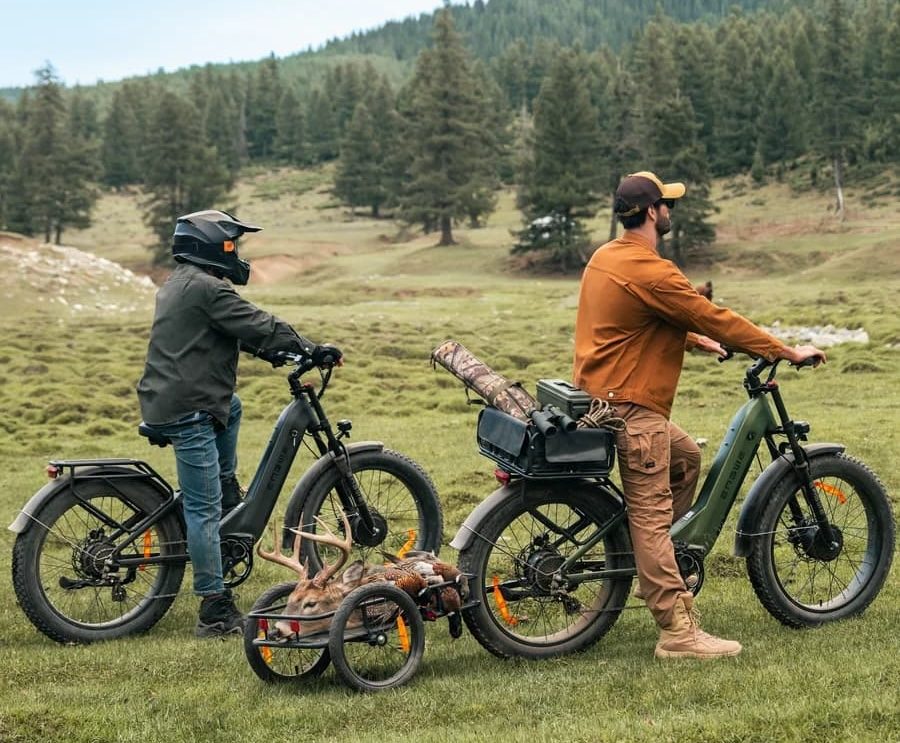
Weighing in at 85.9 lbs, the E26 3.0 is exceptionally heavy. Transporting it requires careful planning; loading it into a pickup truck bed is a multi-person task or requires specialized loading ramps, and carrying it up stairwells is practically out of the question. Nevertheless, this heft enables a robust 400 lb payload capacity, making it suitable for carrying heavy gear, camping supplies, or hunting equipment.
Official Responses and Manufacturer Positioning
ENGWE has positioned the E26 3.0 as an uncompromising vehicle for users who subscribe to the philosophy that "too much motor is never enough." In official product briefs and promotional campaigns, the company emphasizes the bike’s utility as an all-terrain workhorse.
While marketing visuals—such as promotional images featuring outdoor settings and game—lean heavily into the hunting and wilderness exploration demographic, brand representatives maintain that the bike’s versatility extends to farm management, rural commuting, and recreational trail riding on private estates.

Industry analysts note that ENGWE’s pricing strategy ($1,799 down from $2,399) is a calculated move to undercut competitor brands offering high-end hunting and dual-motor e-bikes, which frequently retail north of $3,000 to $4,000. By packing dual motors, nearly 1 kWh of battery capacity, full suspension, and hydraulic braking into a sub-$2,000 package, ENGWE aims to capture cost-conscious adventure riders who previously found high-performance off-road e-bikes financially out of reach.
Implications: Legal Frameworks, Trail Access, and Market Trends
The introduction of high-powered, dual-motor machines like the ENGWE E26 3.0 brings several critical industry and legal implications to the forefront.
1. The Regulatory Disconnect
Across most United States jurisdictions and international markets, electric bicycles are categorized into three distinct classes:
- Class 1: Pedal-assist only, with a maximum speed of 20 mph.
- Class 2: Throttle-assisted (can be propelled without pedaling), with a maximum speed of 20 mph.
- Class 3: Pedal-assist only, with a maximum speed of 28 mph.
With a throttle speed of 28 mph, a pedal-assist top speed of 31 mph, and dual 2,000W peak motors, the E26 3.0 comfortably exceeds these statutory boundaries. It operates more like an electric moped or light off-road motorcycle than a traditional bicycle. Consequently, riders cannot legally operate the vehicle on standard public bike paths, multi-use greenways, or national forest trails that strictly enforce Class 1–3 regulations.

2. Private Property vs. Public Land Use
ENGWE addresses this distinction by marketing the E26 3.0 toward all-terrain applications where traditional street regulations hold less sway. On private farms, ranches, hunting leases, and dedicated off-road parks, classification frameworks are irrelevant.
However, experts caution that consumers must exercise diligence. Uninformed buyers purchasing high-performance e-bikes for public recreational spaces risk hefty fines, confiscation of equipment, and contributing to the growing backlash from non-motorized trail users and conservation groups who lobby for stricter e-bike enforcement.
3. Industry Shift Toward Specialized Utility
The E26 3.0 highlights a broader market trend: segmentation within the e-bike industry. As the commuter market becomes saturated with affordable, low-powered models, manufacturers are increasingly pushing into extreme performance niches. Dual-motor architectures, once considered exotic novelties, are becoming more mainstream as battery costs drop and motor control software matures.
Conclusion
The ENGWE E26 3.0 is not designed for the faint of heart, nor is it engineered for the casual weekend coffee run. It is a heavy, powerful, specialized tool built to conquer grueling landscapes. For riders with access to private land or unrestrictive off-road environments who demand maximum torque, substantial battery range, and robust suspension at a competitive price point, ENGWE’s latest flagship delivers immense capability. Yet, prospective buyers must weigh these impressive specifications against the practical realities of vehicle weight, transportation logistics, and local legal restrictions before hitting the dirt.
